
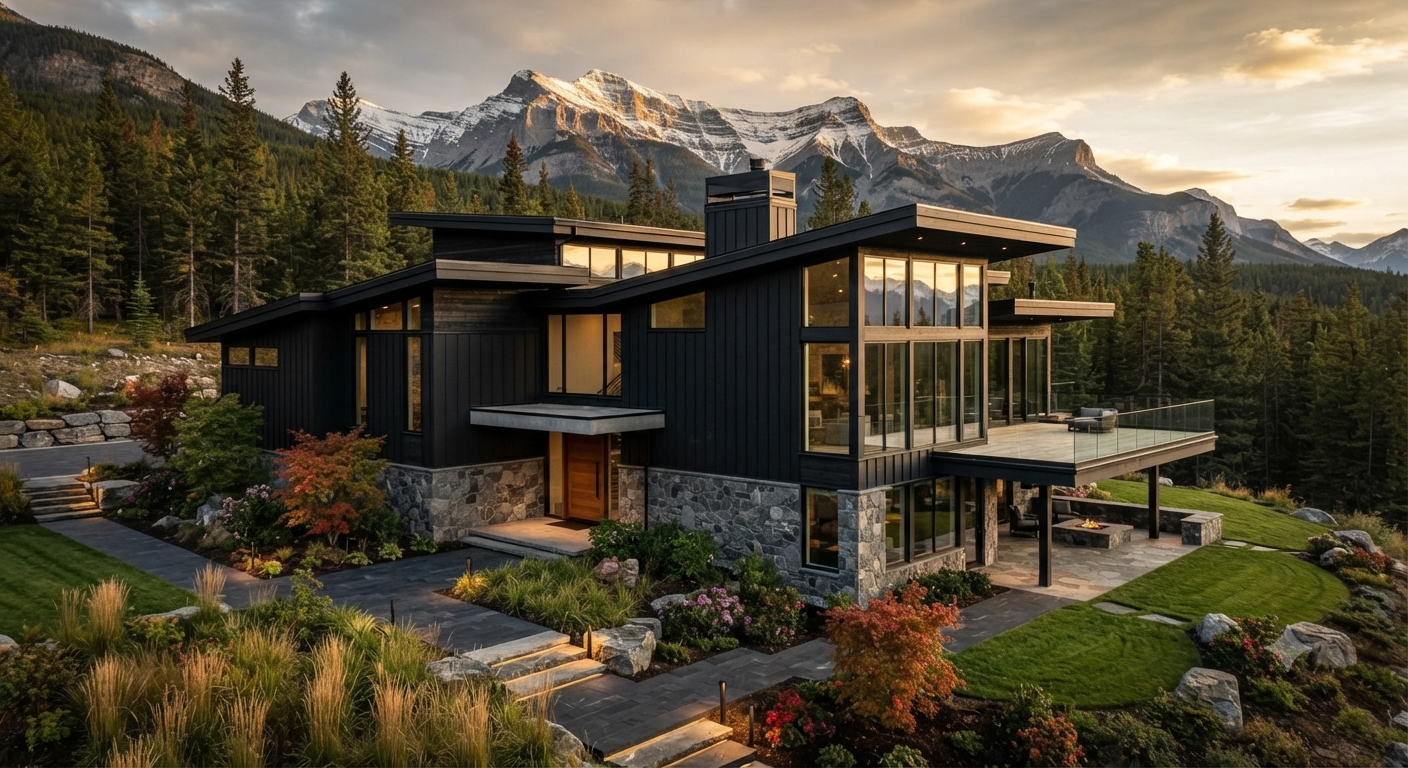
Imagine driving through your neighborhood and instantly noticing one home that stands out from all the rest. It isn’t the largest house or the most expensive one—it’s the one with a bold, elegant black siding exterior that feels modern, sophisticated, and unforgettable.
Over the last few years, the black siding house trend has become one of the most sought-after exterior design styles among homeowners, architects, and professional designers. Once considered too daring, black exteriors are now recognized for their timeless appeal, striking curb appeal, and ability to complement a wide range of architectural styles—from modern minimalist homes to rustic farmhouses.
However, choosing black siding isn’t as simple as selecting a paint color. The right material, finish, roof color, landscaping, lighting, and maintenance plan all play an important role in creating an exterior that remains beautiful for years to come.
In this complete guide, you’ll learn everything you need to know about black siding houses, including the best siding materials, design styles, color combinations, maintenance tips, cost considerations, and expert recommendations. Whether you’re building a new home or renovating an existing one, this guide will help you make informed decisions with confidence.
What Is a Black Siding House?
A black siding house is a home with exterior cladding finished in black or deep charcoal tones. The siding may be made from vinyl, fiber cement, engineered wood, natural wood, or metal, creating a bold, contemporary appearance while protecting the home’s structure from weather and moisture.
Black siding isn’t limited to one architectural style. It works beautifully with:
- Modern homes
- Contemporary designs
- Scandinavian-inspired houses
- Farmhouses
- Mountain cabins
- Industrial-style homes
- Luxury custom residences
The versatility of black allows homeowners to create an exterior that feels both dramatic and timeless.
Why Are Black Siding Houses So Popular?
The popularity of black exteriors is driven by more than just aesthetics. Homeowners appreciate the way black siding creates a clean, sophisticated look while highlighting architectural details.
Some of the main reasons include:
- Strong curb appeal
- Timeless elegance
- Modern architectural appearance
- Excellent contrast with natural materials
- Compatibility with large windows
- Works well with minimalist landscaping
- Creates a premium, custom-built appearance
Unlike many design trends that fade over time, black siding has proven to remain stylish because it emphasizes simplicity rather than decoration.
Benefits at a Glance
| Benefit | Why It Matters |
|---|---|
| Modern appearance | Creates a premium look |
| High curb appeal | Makes the home stand out |
| Timeless design | Less likely to go out of style |
| Excellent contrast | Highlights wood, stone, and glass |
| Architectural focus | Emphasizes clean lines |
| Versatile | Fits many home styles |
| Strong resale appeal | Attractive to many buyers |
💡 Pro Tip
Choose a matte or low-sheen finish for black siding. It hides imperfections better than glossy finishes and creates a more sophisticated appearance.
Why Homeowners Love Black Exterior Design
A home’s exterior creates its first impression.
Black siding communicates confidence, elegance, and simplicity.
Rather than relying on decorative trim or multiple colors, black allows the architecture itself to become the focal point.
Professional designers often describe black exteriors as “quiet luxury” because they look expensive without appearing overly elaborate.
The Psychology Behind Black Homes
Color psychology plays an important role in exterior design.
Black is associated with:
- Sophistication
- Confidence
- Strength
- Luxury
- Simplicity
- Timelessness
When balanced with natural materials like wood or stone, black creates warmth rather than feeling cold or intimidating.
🏡 Designer Advice
To soften a black exterior, incorporate natural textures such as cedar, oak, or stone. These materials add warmth and create visual balance.
Advantages of a Black Siding House
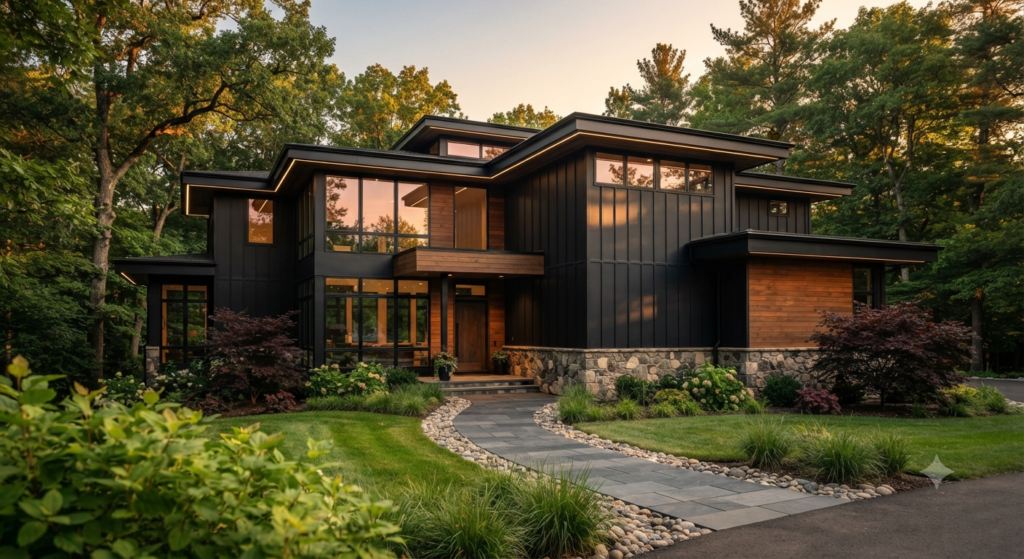
A black siding house offers exceptional curb appeal, a timeless modern aesthetic, versatility across architectural styles, and the ability to highlight natural materials like wood and stone. With proper planning and quality materials, it can remain stylish for decades.
1. Exceptional Curb Appeal
A black exterior immediately draws attention without appearing flashy.
It creates a memorable first impression and often increases perceived property value.
2. Timeless Style
Unlike trendy color palettes that quickly become dated, black has remained a classic choice in architecture for generations.
From Scandinavian cabins to luxury villas, black continues to complement evolving design trends.
3. Beautiful Contrast
Black pairs beautifully with:
- White trim
- Warm cedar
- Natural stone
- Brick
- Concrete
- Glass
- Steel
This contrast creates depth and highlights architectural features.
4. Versatility
Black siding works well with a variety of roof colors, window styles, and landscaping designs.
Whether your home is traditional or ultra-modern, black can be adapted to suit its character.
5. Strong Architectural Presence
Dark exteriors emphasize the shape and proportions of a home, making clean lines and unique rooflines more noticeable.
Pros and Cons Comparison
| Pros | Cons |
|---|---|
| Modern appearance | Absorbs more heat in sunny climates |
| High curb appeal | Can show dust or pollen more easily |
| Timeless style | Requires quality materials to prevent fading |
| Pairs with many materials | Poor installation is more noticeable |
| Strong resale appeal | Dark colors may need occasional cleaning |
⚠ Mistake to Avoid
Choosing black siding solely because it’s trendy without considering your climate, neighborhood, and maintenance preferences. A successful design balances style with practicality.
Is a Black Siding House Right for You?
Before making a decision, consider the following questions:
- Do you prefer modern or timeless architecture?
- Are you comfortable with occasional exterior cleaning?
- Does your climate experience extreme heat?
- Will the home receive significant direct sunlight?
- Are you planning to stay in the property long-term?
- Does the surrounding landscape complement darker colors?
If you answered “yes” to most of these questions, a black siding house could be an excellent investment.
Popular Architectural Styles for Black Siding
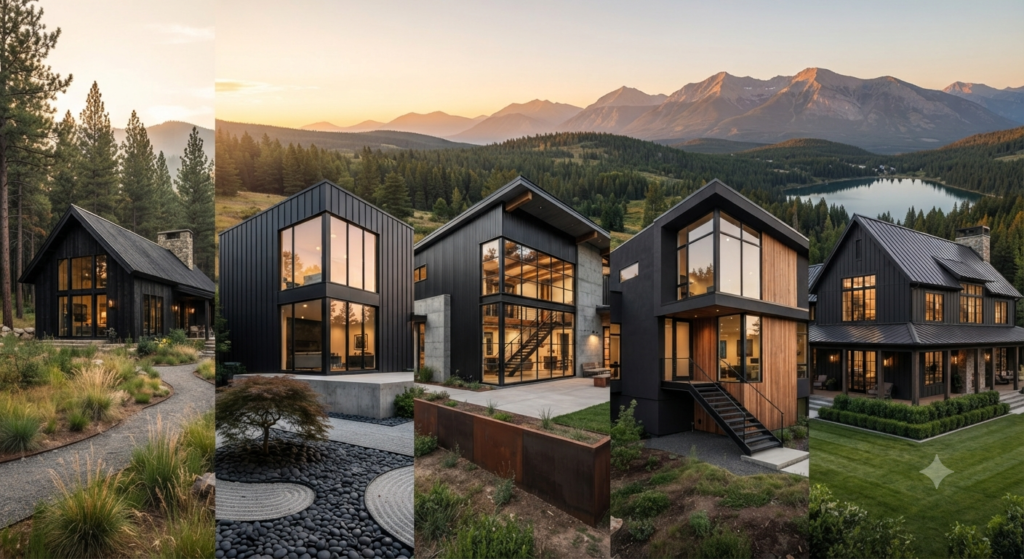
Black siding complements many architectural styles. Here are some of the most popular:
| Style | Why Black Works Well |
|---|---|
| Modern | Highlights clean lines and geometric shapes |
| Contemporary | Creates a sleek, minimalist appearance |
| Scandinavian | Pairs beautifully with natural wood and large windows |
| Modern Farmhouse | Adds contrast with white trim and timber accents |
| Industrial | Complements steel, concrete, and glass |
| Mountain Cabin | Blends naturally with wooded surroundings |
👉 Interior Design MintPalDecor: Expert Home Design Guide 🏡✨ Click this keyword to explore expert interior design tips, modern home ideas, and stylish inspiration for every space.
Choosing the Perfect Shade of Black
Not all black siding looks the same. The undertone can dramatically change the overall appearance.
Common Black Shades
- Matte Black
- Charcoal Black
- Soft Black
- Graphite
- Onyx
- Iron Black
- Carbon Black
A matte finish tends to create a softer, more refined appearance, while satin finishes add subtle depth without becoming overly reflective.
📌 Quick Tip
View siding samples outdoors at different times of the day. Natural light can make the same shade appear warmer or cooler depending on the weather and orientation of your home.
Design Principles for a Balanced Black Exterior
A successful black siding house relies on balance rather than using black everywhere.
Consider combining black siding with:
- Warm wood soffits
- Natural stone foundations
- White or bronze window frames
- Black steel accents
- Neutral landscaping
- Outdoor lighting
- Textured materials
Simple Exterior Concept
+--------------------------------------+
| Matte Black Fiber Cement Siding      |
|                                      |
| Large Black-Framed Windows           |
|                                      |
| Natural Cedar Entry Door             |
|                                      |
| Stone Base & Minimal Landscaping     |
+--------------------------------------+
This combination creates contrast, warmth, and architectural interest without overwhelming the design.
Best Siding Materials for a Black Siding House
The best siding materials for a black siding house include fiber cement, engineered wood, vinyl, natural wood, metal, and composite siding. The ideal choice depends on your budget, climate, maintenance preferences, and desired architectural style.
Choosing the right siding material is just as important as choosing the right color. While black creates a striking appearance, different materials affect durability, maintenance, insulation, and long-term performance.
Before selecting a siding product, consider:
- Local climate
- Budget
- Maintenance requirements
- Energy efficiency
- Installation costs
- Expected lifespan
- Manufacturer warranty
A high-quality siding material ensures your home’s exterior remains attractive for decades.
Fiber Cement Siding
Fiber cement is one of the most popular options for modern black homes because it combines durability with a premium appearance.
Advantages
- Extremely durable
- Fire resistant
- Rot resistant
- Insect resistant
- Low maintenance
- Holds dark colors well
- Long lifespan
Drawbacks
- Higher installation cost
- Heavier than vinyl
- Professional installation recommended
Fiber cement is an excellent choice for homeowners seeking a luxury finish with minimal upkeep.
For a contemporary look, pair matte black fiber cement panels with warm cedar accents and large black-framed windows.
Vinyl Siding
Vinyl remains one of the most affordable siding materials.
Today’s premium vinyl products are available in darker colors designed to resist fading.
Advantages
- Budget-friendly
- Low maintenance
- Easy installation
- Moisture resistant
- Wide variety of textures
Disadvantages
- Can expand in extreme heat
- Lower-end products may fade faster
- Less authentic texture than wood
Vinyl is ideal for homeowners seeking an affordable black siding solution.
Engineered Wood Siding
Engineered wood offers the natural appearance of timber with improved durability.
Benefits
- Beautiful wood texture
- More moisture resistant than natural wood
- Easier maintenance
- Strong structural performance
This material works particularly well for farmhouse and Scandinavian-inspired homes.
Natural Wood Siding
Natural cedar, pine, and redwood remain timeless choices.
When finished in black stain or paint, wood creates warmth that synthetic materials often cannot replicate.
Advantages
- Authentic appearance
- Excellent curb appeal
- Natural texture
- Eco-friendly when responsibly sourced
Drawbacks
- Requires periodic maintenance
- Needs repainting or re-staining
- More vulnerable to moisture without proper care
💡 Pro Tip
Use black stain instead of thick exterior paint if you want the wood grain to remain visible.
Metal Siding
Metal siding is increasingly popular for contemporary architecture.
Materials include:
- Aluminum
- Steel
- Zinc
Advantages
- Modern appearance
- Fire resistant
- Extremely durable
- Recyclable
- Low maintenance
Metal siding pairs beautifully with concrete and glass.
Composite Siding
Composite products combine recycled materials with engineered polymers.
Advantages include:
- Excellent durability
- Low maintenance
- Moisture resistance
- Long manufacturer warranties
Composite siding often mimics wood while requiring much less upkeep.
Material Comparison Table
| Material | Lifespan | Maintenance | Cost | Best Style |
|---|---|---|---|---|
| Fiber Cement | 40–50 years | Low | $$$ | Modern |
| Vinyl | 20–35 years | Very Low | $ | Traditional & Contemporary |
| Engineered Wood | 30–40 years | Medium | $$ | Farmhouse |
| Natural Wood | 25–40 years | High | $$$ | Rustic & Cabin |
| Metal | 40–70 years | Very Low | $$$ | Modern & Industrial |
| Composite | 30–50 years | Low | $$$ | Luxury Homes |
Choosing the Right Shade of Black
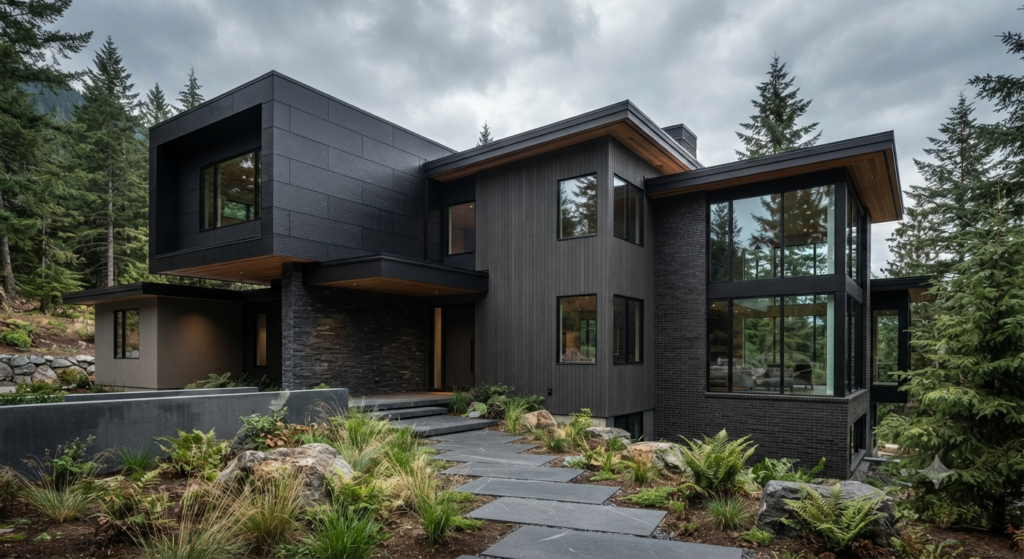
Not every black siding product looks the same.
Popular options include:
- Matte Black
- Charcoal Black
- Carbon Black
- Graphite
- Onyx
- Soft Black
- Deep Slate
The undertone can significantly affect your home’s overall appearance.
Warm Blacks
Contain subtle brown undertones.
Ideal with:
- Cedar
- Stone
- Brick
Cool Blacks
Contain blue or gray undertones.
Ideal with:
- Glass
- Steel
- Concrete
- Aluminum
📌 Quick Tip
Always view siding samples outdoors during morning, afternoon, and evening light before making your final decision.
Exterior Color Combinations
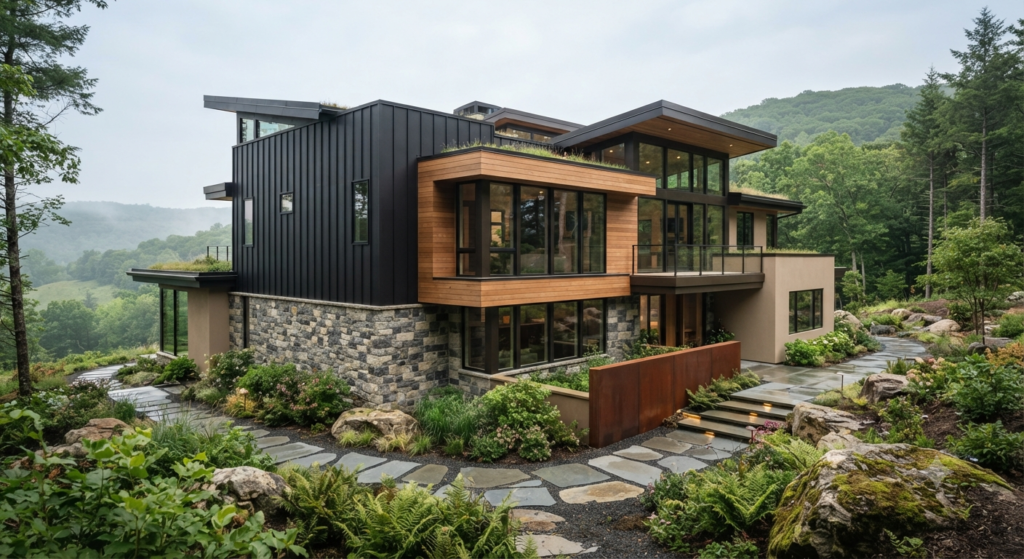
The best black siding color combinations use contrasting natural materials and neutral tones. Popular pairings include black with cedar wood, white trim, gray stone, bronze accents, and black-framed windows.
Color balance prevents black homes from appearing too dark or flat.
Black + Natural Cedar
Perhaps the most popular combination today.
Creates:
- Warmth
- Texture
- Luxury appearance
Perfect for:
- Modern homes
- Scandinavian architecture
- Cabins
Black + White
A timeless combination.
Use white for:
- Window trim
- Fascia
- Porch columns
Creates crisp architectural contrast.
Black + Stone
Stone softens black exteriors.
Recommended stones:
- Limestone
- Granite
- Fieldstone
- Gray stacked stone
Excellent for luxury homes.
Black + Brick
Black siding paired with red or white brick creates an attractive blend of traditional and contemporary styles.
Black + Glass
Large windows allow natural light to balance darker exteriors.
Floor-to-ceiling glass is especially popular in modern homes.
Exterior Color Combination Comparison
| Main Color | Accent Material | Overall Style |
|---|---|---|
| Black | Cedar | Scandinavian |
| Black | White | Modern Farmhouse |
| Black | Stone | Luxury Contemporary |
| Black | Brick | Transitional |
| Black | Concrete | Industrial |
| Black | Bronze | High-End Modern |
🏡 Interior Designer Advice
Limit accent materials to two or three. Too many textures can make a sophisticated black exterior appear cluttered.
Choosing the Right Roof Color
The roof has a major impact on your home’s overall appearance.
Black Roof
Creates a seamless, dramatic look.
Best for:
- Modern homes
- Contemporary architecture
Gray Roof
Adds subtle contrast while maintaining a cohesive appearance.
Works well with:
- Fiber cement
- Vinyl
- Stone accents
Metal Roof
Standing seam metal roofs remain one of the most popular choices for black houses.
Advantages:
- Long lifespan
- Clean appearance
- Excellent durability
- Modern design
Brown Roof
Complements homes with significant wood accents.
Ideal for:
- Rustic homes
- Cabins
- Farmhouses
Window Selection
Windows dramatically affect a black home’s appearance.
Popular choices include:
Black Frames
Create a sleek, uninterrupted look.
Perfect for:
- Contemporary homes
- Minimalist architecture
White Frames
Provide striking contrast.
Best suited for:
- Farmhouses
- Colonial homes
Bronze Frames
Offer warmth without overpowering the exterior.
Increasingly popular in luxury custom homes.
Front Door Ideas
Your front door should become the focal point.
Popular colors include:
| Door Color | Style |
|---|---|
| Natural Cedar | Warm Modern |
| Walnut | Luxury |
| White | Farmhouse |
| Matte Black | Minimalist |
| Olive Green | Organic |
| Dark Blue | Classic |
💡 Pro Tip
Oversized wood pivot doors create an impressive entrance on modern black homes.
Garage Door Design
The garage door often occupies a large portion of the front elevation.
Choose carefully.
Popular options:
- Black steel
- Cedar wood
- Frosted glass panels
- Vertical wood slats
- Modern aluminum
Avoid highly decorative garage doors if your home follows a minimalist design.
Landscaping for Black Siding Houses
Landscaping softens the bold appearance of a black siding house by introducing natural textures, seasonal color, and visual balance. Trees, ornamental grasses, flowering shrubs, and stone pathways work especially well.
Plants create contrast and help connect the home to its surroundings.
Recommended landscaping elements:
- Ornamental grasses
- Evergreen shrubs
- Japanese maple
- Hydrangeas
- Lavender
- Boxwood
- Natural boulders
- Mulch beds
Landscape Layout Example
+------------------------------------------------+

Japanese Maple

Stone Walkway

Native Grasses

Black House

Hydrangeas

Outdoor Seating

Low Landscape Lighting

+------------------------------------------------+
This design balances modern architecture with soft natural elements.
Outdoor Lighting
Lighting makes a dramatic difference after sunset.
Recommended fixtures:
- Wall sconces
- Path lights
- Uplighting for trees
- Recessed soffit lighting
- Step lighting
Warm white lighting (2700K–3000K) complements black siding without appearing harsh.
Exterior Design Checklist
Before finalizing your black siding house design, ask yourself:
✔ Does the siding suit your climate?
✔ Have you selected complementary accent materials?
✔ Are the roof and siding colors balanced?
✔ Do the windows enhance the architectural style?
✔ Is the landscaping planned alongside the exterior?
✔ Will the lighting highlight key design features?
✔ Have you considered long-term maintenance?
Installing Black Siding: A Step-by-Step Guide
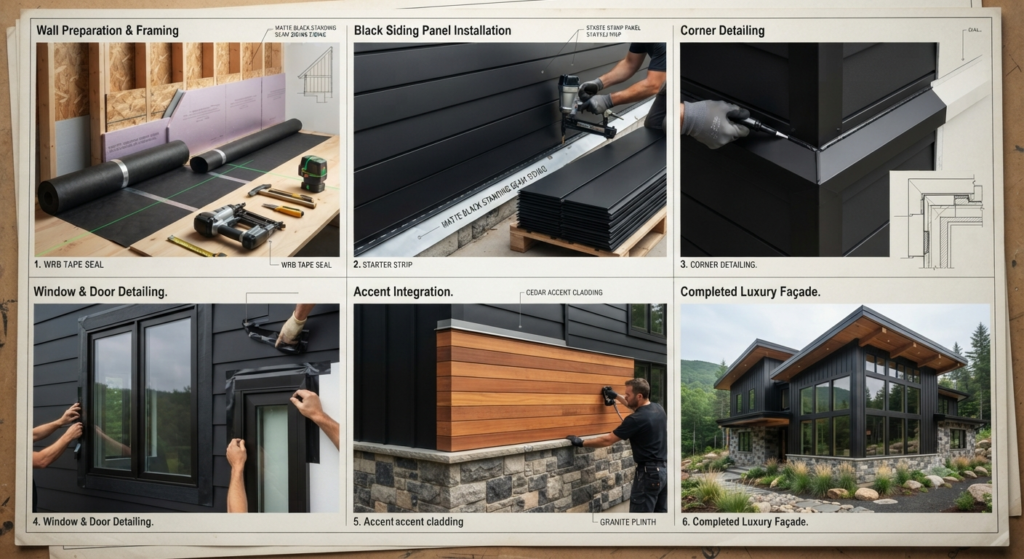
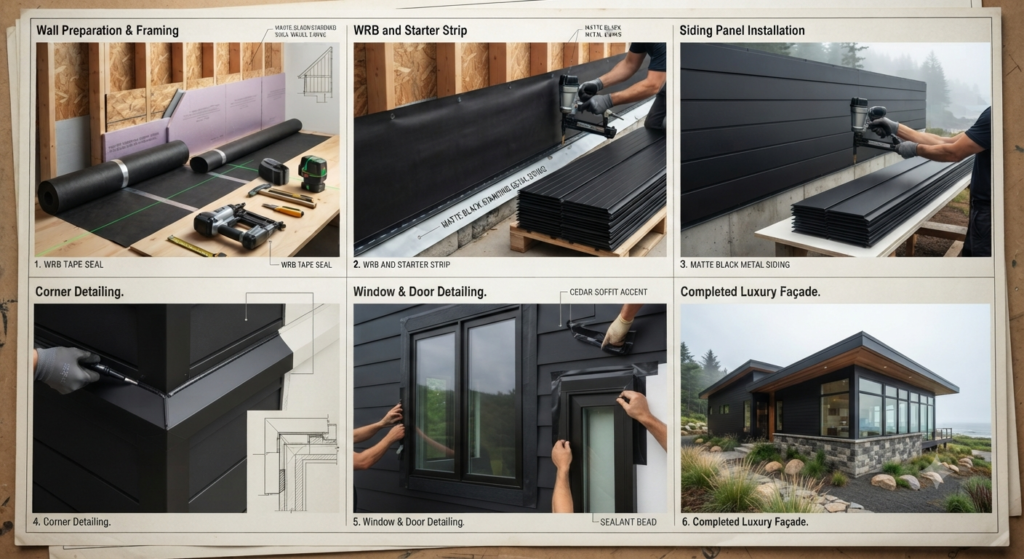
Installing black siding involves preparing the wall structure, adding a weather-resistant barrier, installing flashing, attaching siding panels according to manufacturer guidelines, sealing joints, and completing a final inspection. Proper installation is essential for durability, moisture protection, and a professional finish.
Even the highest-quality siding can fail if it’s installed incorrectly. Proper preparation ensures your home’s exterior remains weather-resistant and attractive for decades.
Professional installers focus on precision, ventilation, and moisture management rather than simply attaching siding panels.
Step 1: Inspect the Existing Structure
Before any siding is installed, inspect the home’s exterior.
Check for:
- Rotten wood
- Water damage
- Mold
- Loose sheathing
- Structural cracks
- Pest damage
Repairs should always be completed before installation begins.
Step 2: Install a Weather-Resistant Barrier
A weather-resistant barrier protects your home’s framing from moisture while allowing trapped vapor to escape.
Benefits include:
- Improved moisture protection
- Better insulation performance
- Reduced mold risk
- Longer siding lifespan
Step 3: Install Flashing
Flashing prevents water from entering vulnerable areas.
Critical locations include:
- Windows
- Doors
- Roof intersections
- Deck attachments
- Corners
Skipping flashing is one of the most common causes of moisture damage.
Step 4: Install Starter Strips
Starter strips ensure the first row of siding remains perfectly level.
Since every additional row depends on the first one, accuracy is essential.
Step 5: Install the Siding Panels
Professional installers work from the bottom upward.
Each panel should:
- Be level
- Be properly fastened
- Allow for expansion (if required)
- Maintain consistent spacing
Installation Process
Inspect Wall
      │
      ▼
Repair Damage
      │
      ▼
Install Weather Barrier
      │
      ▼
Install Flashing
      │
      ▼
Starter Strip
      │
      ▼
Install Siding
      │
      ▼
Trim & Seal
      │
      ▼
Final Inspection
💡 Pro Tip
Never overtighten fasteners on vinyl siding. It needs room to expand and contract with temperature changes.
Should You DIY or Hire a Professional?
Many homeowners wonder whether installing black siding is a suitable DIY project.
The answer depends on the material, your experience, and the complexity of the home.
| Project | DIY | Professional |
|---|---|---|
| Vinyl Siding | ✅ Possible | ✅ Recommended |
| Fiber Cement | ❌ Difficult | ✅ Best Choice |
| Natural Wood | ⚠ Experienced DIY | ✅ Recommended |
| Metal Panels | ❌ Complex | ✅ Best Choice |
| Composite Siding | ⚠ Experienced DIY | ✅ Recommended |
If your home has multiple stories, complex rooflines, or expensive siding materials, hiring a professional installer is usually the safer investment.
How Much Does a Black Siding House Cost?
The cost of a black siding house depends on the siding material, labor, home size, insulation upgrades, trim details, and regional pricing. Premium materials such as fiber cement and metal generally cost more than vinyl but offer greater durability and longevity.
Several factors influence the final project cost:
- Home size
- Siding material
- Labor rates
- Removal of old siding
- Insulation upgrades
- Window and door trim
- Architectural complexity
Material Cost Comparison
| Material | Material Cost | Installation Difficulty | Overall Value |
|---|---|---|---|
| Vinyl | Low | Easy | Excellent Budget Choice |
| Fiber Cement | Medium–High | High | Premium Value |
| Engineered Wood | Medium | Medium | Balanced Option |
| Natural Wood | High | Medium | Luxury Appearance |
| Metal | High | High | Exceptional Durability |
| Composite | Medium–High | Medium | Low Maintenance |
Factors That Increase Project Costs
- Two-story homes
- Multiple roof angles
- Custom trim work
- Large windows
- Decorative architectural features
- Premium insulation
- Difficult site access
Understanding these factors helps you create a more realistic renovation budget.
📌 Quick Tip
Request at least three detailed estimates before choosing a contractor. Compare materials, warranties, labor, and project timelines—not just the final price.
Is Black Siding Energy Efficient?
A common concern is whether black siding absorbs too much heat.
The answer depends on several factors.
While darker colors absorb more solar energy than lighter colors, modern siding systems are designed with ventilation and insulation in mind.
Energy efficiency depends more on:
- Wall insulation
- Air sealing
- Ventilation
- Roof insulation
- Window performance
than siding color alone.
Climate Considerations
Hot Climates
Black siding can absorb additional heat.
To improve comfort:
- Install high-quality insulation.
- Choose reflective roofing materials.
- Use ventilated rain-screen systems.
- Plant shade trees.
- Install energy-efficient windows.
Cold Climates
Black siding may provide a slight benefit by absorbing solar warmth during sunny winter days.
Combined with proper insulation, it performs well in colder regions.
👉 Tips Decoradyard: Stylish Home Inspiration ✨ Click this keyword to explore stylish home décor ideas, modern design inspiration, and practical decorating tips for every room. 🏡
Maintaining a Black Siding House
Maintaining a black siding house involves regular cleaning, annual inspections, prompt repairs, and protecting the finish from prolonged dirt buildup. Consistent maintenance preserves color, extends lifespan, and maintains curb appeal.
Black siding doesn’t necessarily require more maintenance than lighter colors, but dust, pollen, and water spots may be more noticeable.
A simple maintenance routine keeps your exterior looking its best.
Annual Maintenance Schedule
| Season | Recommended Tasks |
|---|---|
| Spring | Wash siding, inspect caulking, check gutters |
| Summer | Inspect for fading, clean outdoor fixtures |
| Autumn | Remove leaves, inspect drainage |
| Winter | Check for ice damage, monitor moisture |
Cleaning Black Siding
Most homeowners only need to clean their siding once or twice each year.
Use:
- Garden hose
- Soft brush
- Mild soap
- Microfiber cloth (for small areas)
Avoid:
- Abrasive brushes
- Strong chemical cleaners
- High-pressure washing at close range
These can damage finishes or force water behind the siding.
💡 Pro Tip
Clean from the bottom upward when applying soap and rinse from the top downward. This helps prevent streaks.
Preventing Color Fading
Premium siding manufacturers use UV-resistant finishes, but long-term exposure to sunlight can still affect color over many years.
To reduce fading:
- Choose high-quality siding.
- Follow manufacturer maintenance recommendations.
- Wash dirt regularly.
- Trim nearby vegetation to improve airflow.
- Repair damaged sections promptly.
Common Black Siding Problems
Even well-maintained homes may experience occasional issues.
1. Dirt Buildup
Cause:
- Dust
- Rain
- Pollen
Solution:
Routine cleaning.
2. Scratches
Cause:
- Lawn equipment
- Moving furniture
- Storm debris
Solution:
Touch-up products or panel replacement, depending on the material.
3. Moisture Damage
Usually caused by:
- Poor flashing
- Improper installation
- Damaged caulking
Professional inspection is recommended if moisture is suspected.
4. Loose Panels
High winds or improper fastening may loosen siding.
Repairing loose panels early prevents larger problems.
⚠ Mistake to Avoid
Ignoring small cracks or loose trim can allow water to enter behind the siding, leading to expensive structural repairs.
Long-Term Performance
The lifespan of black siding depends largely on the material and maintenance.
| Material | Expected Lifespan |
|---|---|
| Vinyl | 20–35 Years |
| Fiber Cement | 40–50 Years |
| Engineered Wood | 30–40 Years |
| Natural Wood | 25–40 Years |
| Metal | 40–70 Years |
| Composite | 30–50 Years |
Regular maintenance helps every material reach its full potential.
Signs It’s Time to Replace Siding
Watch for:
- Persistent cracking
- Warping
- Rot
- Mold behind panels
- Loose sections
- Significant fading
- Moisture infiltration
- Rising energy bills caused by poor insulation
Replacing damaged siding early often prevents more costly structural repairs.
Professional Maintenance Checklist
✔ Inspect siding annually.
✔ Clean gutters regularly.
✔ Wash siding once or twice each year.
✔ Check caulking around windows and doors.
✔ Trim plants away from exterior walls.
✔ Repair damage immediately.
✔ Inspect flashing after major storms.
✔ Follow manufacturer maintenance guidelines.
Black Siding House Buying Guide
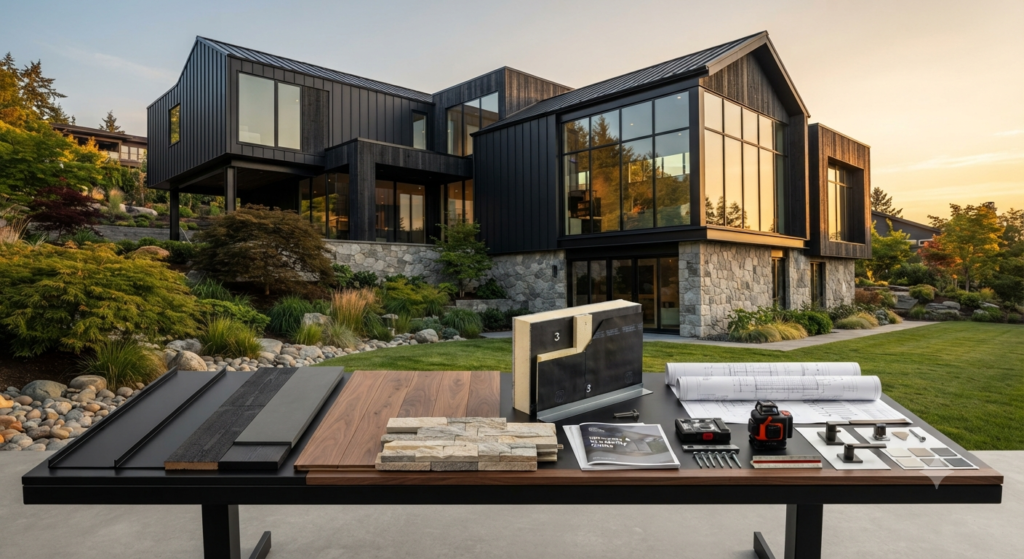
Before choosing black siding, compare materials, warranties, climate performance, maintenance requirements, and installation quality. The best siding isn’t always the least expensive—it should match your home’s architecture, local weather, and long-term budget.
A beautiful exterior starts long before installation. Careful planning helps you avoid costly mistakes and ensures your investment lasts for decades.
Questions to Ask Before Buying
Before purchasing siding, ask yourself:
- What is my total renovation budget?
- Which siding material suits my climate?
- How much maintenance am I willing to perform?
- Will this color complement my roof and landscaping?
- Is the manufacturer reputable?
- What warranty is included?
- Does my contractor have experience installing this material?
Taking time to answer these questions will make the selection process much easier.
Contractor Hiring Checklist
Hiring the right installer is just as important as choosing the right siding.
Use this checklist before signing a contract.
✔ Licensed and insured
✔ Experience with black siding installations
✔ Written quotation
✔ Detailed project timeline
✔ Product warranty
✔ Labor warranty
✔ References from previous clients
✔ Portfolio of completed projects
✔ Local building code knowledge
✔ Cleanup included
💡 Pro Tip
Ask to see completed homes that are at least three to five years old. This gives you a realistic idea of how the siding ages over time.
Exterior Renovation Planning Checklist
A successful renovation follows a logical sequence.
Before Construction
✔ Finalize your budget
✔ Select siding material
✔ Choose the shade of black
✔ Confirm roof color
✔ Select windows and doors
✔ Plan exterior lighting
✔ Design landscaping
✔ Obtain necessary permits (if required)
✔ Schedule installation during suitable weather
Expert Design Secrets
Professional designers use subtle techniques that dramatically improve a black siding house.
1. Add Warm Materials
Black can appear bold on its own, so balance it with natural elements such as:
- Cedar cladding
- Stone veneer
- Timber beams
- Wood soffits
- Hardwood front doors
These materials soften the exterior and create visual warmth.
2. Use Large Windows
Expansive windows prevent dark exteriors from feeling heavy.
Benefits include:
- More natural light
- Strong indoor-outdoor connection
- Contemporary appearance
- Improved curb appeal
3. Create Layered Landscaping
Instead of planting a single row of shrubs, combine different heights and textures.
Example:
Tall Trees
     ↓
Medium Shrubs
     ↓
Flower Beds
     ↓
Ground Cover
Layering creates depth and year-round interest.
4. Keep the Color Palette Simple
Many luxury homes follow the 60–30–10 principle for exterior materials.
| Percentage | Material |
|---|---|
| 60% | Black siding |
| 30% | Natural wood or stone |
| 10% | Metal accents, lighting, planters |
This keeps the exterior balanced and cohesive.
🏡 Interior Designer Advice
Resist the temptation to add too many accent colors. A restrained palette often looks more expensive and timeless.
Common Black Siding House Mistakes
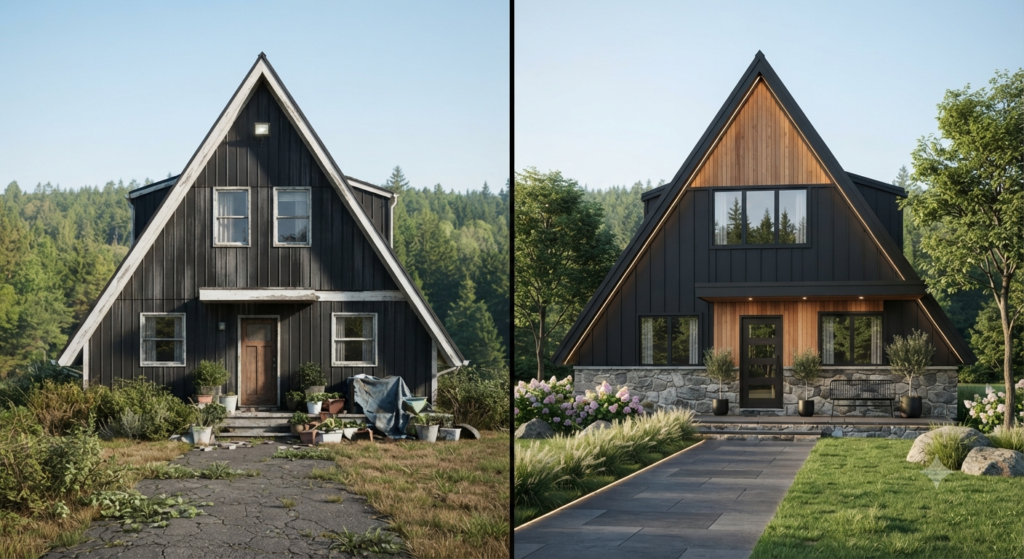
Common mistakes include choosing the wrong siding material, ignoring climate conditions, using too many accent colors, neglecting maintenance, and hiring inexperienced installers. Proper planning prevents these issues and improves long-term performance.
Mistake 1: Choosing Low-Quality Materials
Cheap siding may fade, warp, or crack prematurely.
Investing in higher-quality products often reduces maintenance costs over time.
Mistake 2: Ignoring Sun Exposure
South- and west-facing walls receive more direct sunlight.
Choose UV-resistant finishes if your home experiences intense sun.
Mistake 3: Poor Exterior Lighting
Black homes can appear flat at night without adequate lighting.
Install:
- Wall sconces
- Path lights
- Landscape uplights
- Porch lighting
Mistake 4: Overcrowding the Exterior
Too many decorative elements distract from the clean, modern look of black siding.
Instead, focus on:
- Clean lines
- Quality materials
- Simple landscaping
Mistake 5: Forgetting Maintenance
Regular inspections help identify:
- Loose panels
- Damaged caulking
- Water intrusion
- Fading
- Impact damage
Addressing small issues early prevents expensive repairs.
⚠ Mistake to Avoid
Don’t select black siding based solely on online photos. Always request physical samples and view them outdoors under different lighting conditions.
Black Siding House Decision Guide
Are You Building New?

        │
        ├── Yes
        │       │
        │       ├── Modern Style
        │       │        │
        │       │        ├── Fiber Cement
        │       │        └── Metal Panels
        │       │
        │       └── Farmhouse
        │                │
        │                ├── Engineered Wood
        │                └── Fiber Cement
        │
        └── Existing Home
                 │
                 ├── Tight Budget
                 │        │
                 │        └── Vinyl
                 │
                 └── Long-Term Investment
                          │
                          ├── Composite
                          └── Fiber Cement
Printable Maintenance Checklist
Monthly
✔ Walk around the house
✔ Check for visible damage
✔ Remove leaves from walls
✔ Inspect landscaping
Every Six Months
✔ Wash siding
✔ Clean gutters
✔ Inspect caulking
✔ Check flashing
Every Year
✔ Professional inspection (if needed)
✔ Touch up damaged areas
✔ Evaluate drainage
✔ Trim vegetation
Related Resources
Continue learning with these helpful guides:
- Home Improvement Tips
- Home Decor Ideas
- Kitchen Upgrading Tips
- Room Design
- Interior Design Guide
- Space Planning Guide
- Furniture Planning
- Living Room Design
- Bedroom Design
- Small Space Decorating
Is black siding still in style?
Yes. It remains one of the most popular choices for modern, farmhouse, Scandinavian, and contemporary homes.
Which material is best for a black siding house?
Fiber cement is widely regarded as one of the best options because of its durability, appearance, and resistance to weather.
Does black siding require more cleaning?
It may show dust more readily, but regular washing keeps it looking fresh.
Can black siding work in warm climates?
Yes. Proper insulation, ventilation, and thoughtful landscaping help maintain comfort.
What colors complement black siding?
Natural wood, white, gray stone, bronze, and muted green landscaping pair beautifully with black exteriors.
How long does black siding last?
Depending on the material, quality siding can last anywhere from 20 to 70 years.
Is black siding more expensive?
The color itself usually has little impact on price. Costs depend primarily on the siding material and installation.
Does black siding increase home value?
A professionally designed and well-maintained black exterior can improve curb appeal and contribute positively to resale value.
Final Conclusion
A black siding house is more than a design trend—it’s a timeless architectural choice that combines elegance, durability, and modern curb appeal. Whether you’re building a new home or renovating an existing one, success comes from balancing bold aesthetics with practical decisions such as selecting the right siding material, planning complementary colors, investing in quality installation, and maintaining the exterior over time.
By following the strategies in this guide, you can confidently create a black exterior that not only stands out today but continues to look sophisticated for decades. Focus on quality materials, thoughtful design, and regular maintenance, and your black siding house will remain a beautiful, functional, and valuable investment.