
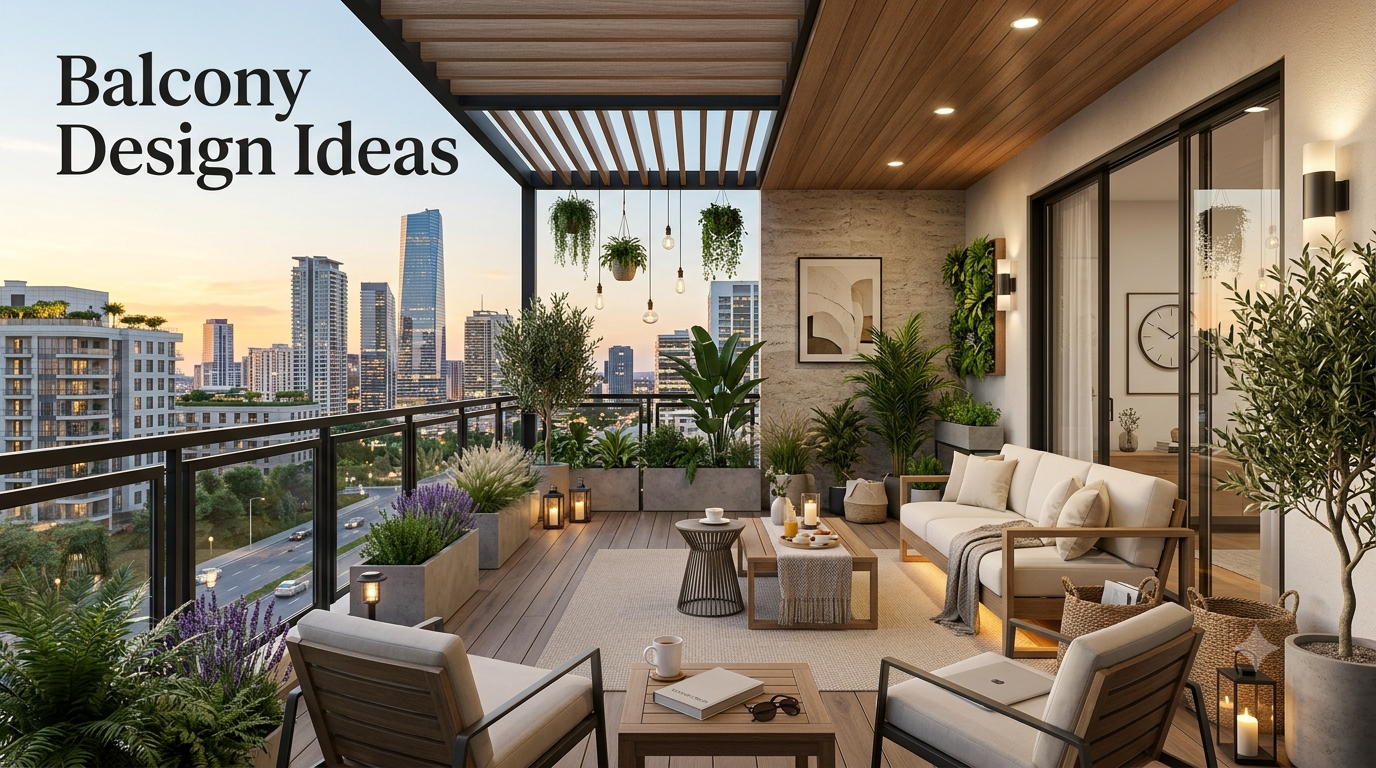
Balcony Design Ideas-A balcony is more than an extension of your home. When thoughtfully designed, it becomes a comfortable retreat for relaxing, entertaining, gardening, working, or simply enjoying fresh air without leaving your property. Whether you have a compact apartment balcony or a spacious terrace, smart design choices can dramatically improve both aesthetics and functionality.
For Best Home improvements & Fency designs Modern homeowners increasingly view balconies as valuable living spaces rather than overlooked outdoor areas. Rising interest in biophilic design, sustainable materials, space-saving furniture, and outdoor wellness has transformed balcony design into an important part of home improvement. A well-planned balcony can increase everyday comfort, improve property appeal, and make even small homes feel more spacious.
This guide covers every essential aspect of balcony design—from planning and layout to furniture, materials, lighting, safety, maintenance, and decorating ideas. Whether you are renovating an existing balcony or designing a new one, you’ll learn practical strategies, professional recommendations, and design principles that help you make informed decisions.
Why Balcony Design Matters
A balcony is one of the few places where indoor comfort meets outdoor living. Unlike a garden or backyard, a balcony allows homeowners and apartment residents to enjoy sunlight, natural ventilation, and outdoor views without requiring a large property. When designed properly, this relatively small area can support multiple daily activities while enhancing the overall character of the home.
Good balcony design is not only about decoration. It balances comfort, durability, safety, maintenance, and efficient use of available space. Every decision—from flooring and furniture to lighting and plant selection—affects how enjoyable the balcony becomes over time. A thoughtfully planned balcony also adapts to changing needs, allowing the space to evolve with different seasons, family sizes, or lifestyles.
Another important benefit is property value. Attractive outdoor spaces are increasingly considered desirable features in modern housing. Buyers and renters often appreciate balconies that feel like usable rooms rather than empty concrete slabs, making careful design a worthwhile long-term investment.
Understanding Different Types of Balconies
Not every balcony offers the same opportunities or limitations. Understanding the type of balcony you have helps guide decisions about furniture, layout, storage, and decoration.
| Balcony Type | Best For | Design Considerations |
|---|---|---|
| Apartment Balcony | Daily relaxation | Compact furniture and vertical storage |
| Juliet Balcony | Decorative appeal | Limited functional space |
| Cantilever Balcony | Modern homes | Weight distribution is important |
| Recessed Balcony | Privacy | Often receives less sunlight |
| Wraparound Balcony | Large seating areas | Multiple functional zones |
| Rooftop Balcony | Entertainment | Wind protection and durable materials |
| Corner Balcony | Wide views | Flexible furniture arrangements |
Each balcony style presents unique possibilities. For example, recessed balconies naturally provide more privacy, while cantilever balconies often require extra attention to furniture weight and load distribution.
Planning Before Designing Your Balcony
Successful balcony projects begin long before buying furniture or selecting decorations. Careful planning prevents expensive mistakes while ensuring the finished space meets both practical and aesthetic goals.
Professional designers usually evaluate several factors before creating a layout. These include dimensions, sunlight exposure, prevailing winds, drainage, structural limitations, intended use, maintenance requirements, and available budget. Addressing these elements early reduces future modifications and creates a more cohesive design.
Planning also helps prioritize investments. Rather than purchasing decorative items first, it is usually more effective to establish the foundation through flooring, seating, lighting, and storage before adding accessories.
Setting Your Balcony Goals
Every great balcony begins with a clear purpose. Trying to fit too many activities into a limited space often leads to clutter and reduced comfort.
Ask yourself how the balcony will be used most frequently.
Possible goals include:
- Morning coffee area
- Outdoor dining space
- Reading corner
- Home office extension
- Mini garden
- Meditation space
- Family seating area
- Entertainment zone
- Pet-friendly outdoor area
- Urban relaxation retreat
Choosing one primary purpose makes every design decision easier. Additional features can then support that main objective without overwhelming the available space.
Measuring and Assessing the Space
Accurate measurements form the foundation of every successful balcony design. Even small errors can lead to furniture that blocks walkways, prevents doors from opening, or creates awkward layouts.
Record important dimensions such as:
- Overall width
- Overall depth
- Door swing clearance
- Railing height
- Wall height
- Ceiling height (if covered)
- Drain location
- Electrical outlets
- Water connections
- Structural columns
Creating a simple floor sketch allows homeowners to experiment with different layouts before purchasing furniture. This saves money and helps visualize how each element fits within the available area.
Choosing the Right Design Style
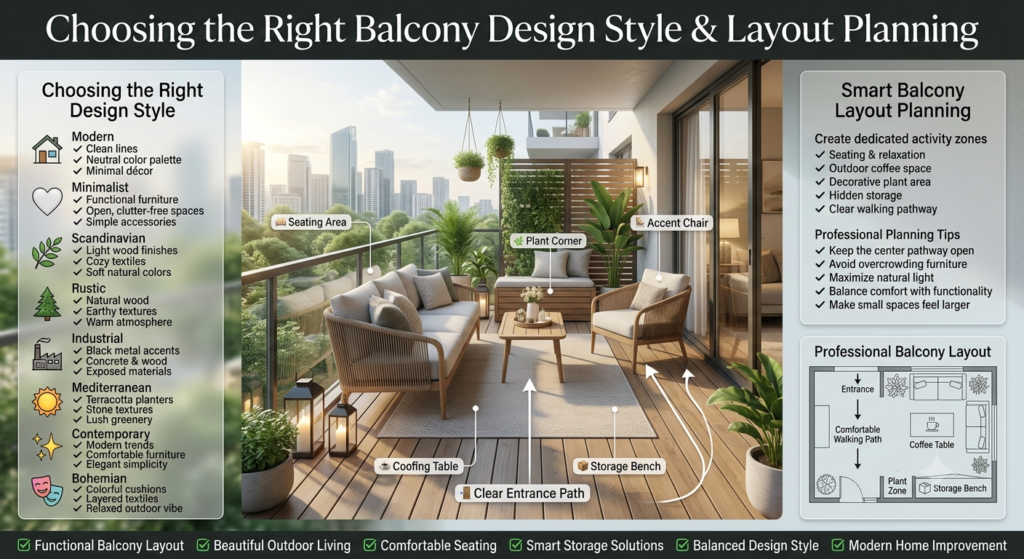
Selecting a consistent design style helps create a balcony that feels intentional rather than randomly decorated. The chosen style should complement both the home’s architecture and the homeowner’s personal preferences.
| Style | Main Characteristics |
|---|---|
| Modern | Clean lines, neutral colors, minimal décor |
| Minimalist | Functional furniture, clutter-free appearance |
| Scandinavian | Light woods, cozy textiles, soft colors |
| Rustic | Natural materials, earthy finishes |
| Industrial | Metal accents, exposed textures |
| Mediterranean | Terracotta, stone, vibrant plants |
| Contemporary | Mix of current trends and practical comfort |
| Bohemian | Layered textiles, colorful accessories, relaxed atmosphere |
Rather than mixing unrelated themes, maintaining consistency creates a more polished and visually balanced outdoor space.
Balcony Layout Planning
The arrangement of furniture determines how comfortable and functional a balcony becomes. Even luxurious furniture can feel impractical if the layout restricts movement or blocks important features.
A practical balcony layout usually divides the space into activity zones. Larger balconies may include separate seating, dining, and gardening areas, while smaller balconies often combine multiple functions within one flexible arrangement.
Example Layout
+--------------------------------+
| Plants        Seating Area     |
|                                |
| Small Table      Chair         |
|                                |
| Storage Bench                 |
|                                |
| Door Entrance                  |
+--------------------------------+
Keeping the central pathway clear allows comfortable movement while making the balcony feel larger than its actual dimensions.
Traffic Flow and Space Optimization
Comfort depends on how easily people move through the balcony. Narrow pathways, oversized furniture, or poorly positioned decorations quickly reduce usability.
Professional designers generally recommend maintaining sufficient walking space between major furniture pieces. Foldable chairs, nesting tables, and modular seating help maximize flexibility without sacrificing comfort.
Useful space-saving strategies include:
- Wall-mounted shelves
- Fold-down tables
- Corner seating
- Vertical planters
- Hanging storage
- Multi-purpose benches
- Stackable chairs
- Slim-profile furniture
These solutions make small balconies feel organized while preserving valuable floor space.
Climate and Weather Considerations
Outdoor environments constantly face changing weather conditions. Balcony materials and furniture should be selected based on the local climate rather than appearance alone.
Consider factors such as:
- Intense sunlight
- Heavy rainfall
- High humidity
- Strong winds
- Dust accumulation
- Snow or frost
- Salt exposure near coastal regions
Weather-resistant materials generally require less maintenance and remain attractive for many years. Powder-coated aluminum, treated hardwoods, synthetic wicker, composite decking, and outdoor-rated fabrics often perform well in a variety of climates.
Adding retractable shades, waterproof cushions, or protective furniture covers can further extend the lifespan of outdoor furnishings.
Building Safety and Structural Awareness
Safety should always take priority over decoration. Before adding heavy furniture, planters, or decorative features, it is important to understand that balconies are designed with structural load limits. These limits vary depending on the building’s design, age, and local construction standards.
Large stone planters, outdoor kitchens, water features, or excessive storage may add significant weight. If major renovations are planned, consulting a qualified contractor or structural professional is advisable to ensure the balcony can safely support additional loads.
Other important safety considerations include:
- Secure railings
- Slip-resistant flooring
- Proper drainage
- Stable furniture
- Child-safe spacing between railings
- Weather-resistant electrical fixtures
- Adequate nighttime lighting
Safe design protects both occupants and the long-term condition of the building.
Budget Planning
Balcony projects can range from simple weekend makeovers to extensive renovations. Establishing a realistic budget before purchasing materials helps prioritize spending and prevents unnecessary expenses.
| Budget Level | Typical Focus |
|---|---|
| Basic | Paint, plants, lighting, simple seating |
| Moderate | New flooring, quality furniture, storage solutions |
| Premium | Custom furniture, premium materials, smart lighting, luxury finishes |
Instead of replacing everything at once, many homeowners improve their balconies in phases. Beginning with foundational elements allows future upgrades without wasting earlier investments.
Choosing a Color Palette
Color significantly influences how spacious and welcoming a balcony feels. Lighter shades tend to reflect more natural light, creating an open atmosphere, while darker colors introduce contrast and sophistication.
Popular combinations include:
| Primary Color | Accent Colors |
|---|---|
| White | Wood, green plants |
| Beige | Black, olive green |
| Gray | Blue, white |
| Charcoal | Warm wood tones |
| Sage Green | Cream, natural stone |
| Navy | White, brass accents |
Using a limited palette helps unify furniture, flooring, textiles, and decorative accessories into a cohesive design.
Designing for Comfort Throughout the Year
A balcony should remain enjoyable across different seasons rather than being limited to warm weather.
Comfort can be improved through thoughtful additions such as adjustable shade structures, outdoor rugs, weather-resistant cushions, wind screens, portable heaters where appropriate, and layered lighting for evening use. Selecting durable textiles and removable accessories also makes seasonal transitions easier.
Planning for year-round usability ensures the balcony becomes a regularly used extension of the home rather than an occasional outdoor space.
Common Planning Mistakes to Avoid
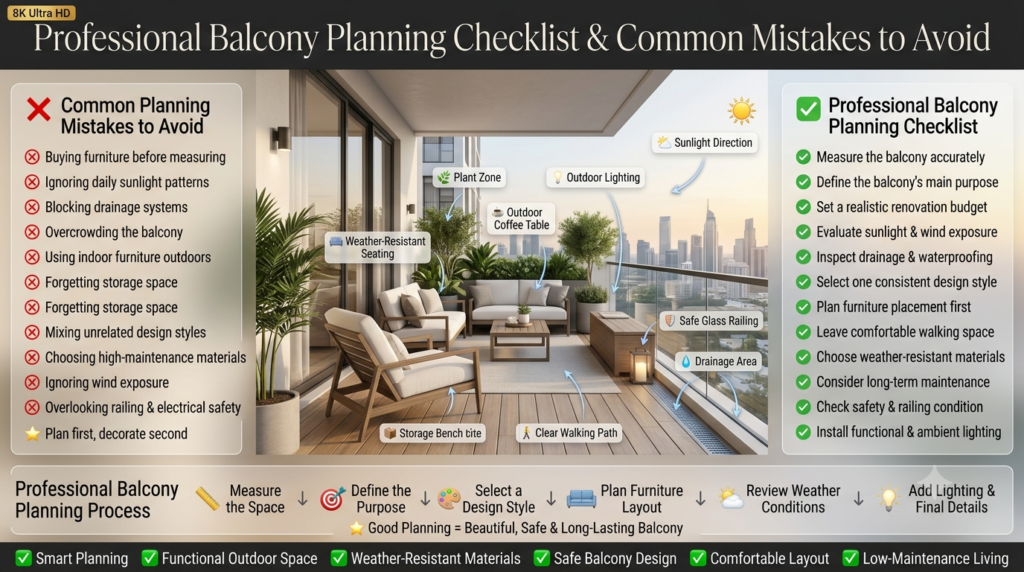
Many balcony renovations become less successful because of avoidable planning errors rather than poor decorating choices.
Some of the most common mistakes include:
- Buying furniture before measuring the space
- Ignoring sunlight throughout the day
- Blocking drainage systems
- Overcrowding the balcony
- Choosing indoor furniture for outdoor use
- Forgetting storage needs
- Mixing too many design styles
- Selecting high-maintenance materials without considering upkeep
- Underestimating wind exposure
- Neglecting safety around railings and electrical fixtures
Recognizing these issues early leads to better long-term results and fewer costly adjustments.
Professional Balcony Planning Checklist
Before purchasing materials or beginning renovations, review the following checklist:
✅ Measure the entire balcony accurately.
✅ Decide on the primary purpose of the space.
✅ Establish a realistic budget.
✅ Evaluate sunlight and wind exposure.
✅ Check drainage and waterproofing.
✅ Select a consistent design style.
✅ Plan furniture placement before buying.
✅ Leave comfortable walking space.
✅ Choose weather-resistant materials.
✅ Consider long-term maintenance requirements.
✅ Review safety features and railing conditions.
✅ Plan lighting for both function and ambiance.
Summary
Designing a successful balcony begins with thoughtful planning rather than decorating. Understanding the available space, defining clear goals, selecting an appropriate style, and considering weather, safety, and maintenance all contribute to a space that is both attractive and practical. Whether your balcony is large or small, careful planning lays the foundation for every improvement that follows.
Balcony Design Ideas That Maximize Every Inch
A small balcony may have limited square footage, but thoughtful planning can transform it into one of the most enjoyable areas of your home. The key is to focus on functionality first and decoration second. Every item should serve a purpose, contribute to visual harmony, or provide practical storage. Rather than trying to fit oversized furniture into a compact space, professional designers prioritize scale, proportion, and flexibility.
One advantage of small balconies is that they are generally easier and less expensive to upgrade. A few carefully chosen pieces of furniture, layered lighting, weather-resistant textiles, and healthy plants can create a welcoming outdoor retreat without requiring a major renovation. Vertical space also becomes a valuable design asset, allowing homeowners to introduce greenery and storage while preserving floor area.
Design Principles for Small Balconies
Professional designers commonly recommend the following strategies:
- Use foldable or stackable furniture.
- Keep the center walkway unobstructed.
- Decorate vertically instead of horizontally.
- Limit the color palette to create visual openness.
- Choose multi-functional furniture whenever possible.
- Avoid oversized planters that consume valuable floor space.
- Incorporate mirrors carefully if privacy allows.
- Select slim-profile furniture with exposed legs to create a lighter appearance.
These principles help small balconies feel organized rather than crowded.
Cozy Coffee Corner Balcony
A coffee corner remains one of the most popular balcony layouts because it requires minimal space while offering maximum daily enjoyment. A compact bistro table paired with two lightweight chairs creates an inviting place for morning coffee, evening tea, or casual conversation.
Weather-resistant materials such as powder-coated aluminum, synthetic wicker, or treated hardwood are ideal for this setup. Soft cushions, an outdoor rug, and a small lantern or LED candle complete the atmosphere without overwhelming the space. If privacy is limited, decorative screens or climbing plants can create a more intimate environment.
Reading Nook Balcony
For homeowners who enjoy quiet moments outdoors, a reading nook offers both comfort and functionality. Instead of traditional dining furniture, consider a cushioned lounge chair or a compact outdoor armchair with a side table for books and beverages.
Comfort is especially important in a reading area. Weather-resistant cushions, a small throw blanket for cooler evenings, and adjustable lighting extend usability throughout the year. Placing the chair where natural light is available during the day but shaded during peak afternoon heat creates a more comfortable experience.
Compact Dining Balcony
Even narrow balconies can accommodate outdoor dining with careful furniture selection. Fold-down wall-mounted tables or compact round tables often provide enough surface area for two people without restricting movement.
When selecting dining furniture, prioritize chairs that slide completely under the table or fold flat against the wall. This flexibility allows the balcony to serve multiple purposes throughout the day while remaining uncluttered.
Apartment Balcony Design Ideas
Apartment balconies often face unique challenges such as limited privacy, strict building regulations, restricted structural modifications, and compact dimensions. Successful apartment balcony designs focus on portable improvements rather than permanent alterations.
Unlike private homes, apartment residents frequently need solutions that can be removed when relocating. Modular furniture, freestanding planters, removable decking tiles, and battery-powered lighting provide flexibility without violating building policies.
Modern Apartment Retreat
Modern apartment balconies emphasize simplicity through clean lines, neutral colors, and carefully selected accessories. A small loveseat, geometric planters, minimalist lighting, and subtle decorative accents create an elegant outdoor extension of the living room.
The overall appearance should remain uncluttered. Instead of numerous decorative objects, focus on a few high-quality pieces that provide both beauty and durability.
Apartment Garden Balcony
Urban residents increasingly transform balconies into personal gardens that reconnect them with nature. Raised planters, vertical garden systems, railing-mounted containers, and hanging baskets allow homeowners to grow flowers, herbs, vegetables, and ornamental plants even in limited spaces.
Popular balcony-friendly plants include:
| Plant Type | Best For |
|---|---|
| Herbs | Cooking and fragrance |
| Succulents | Low maintenance |
| Ferns | Shade areas |
| Lavender | Aroma and pollinators |
| Snake Plant | Easy care |
| Pothos | Hanging displays |
| Cherry Tomatoes | Small edible gardens |
| Strawberries | Container growing |
A balanced combination of greenery and seating creates a relaxing outdoor sanctuary.
Balcony Home Office
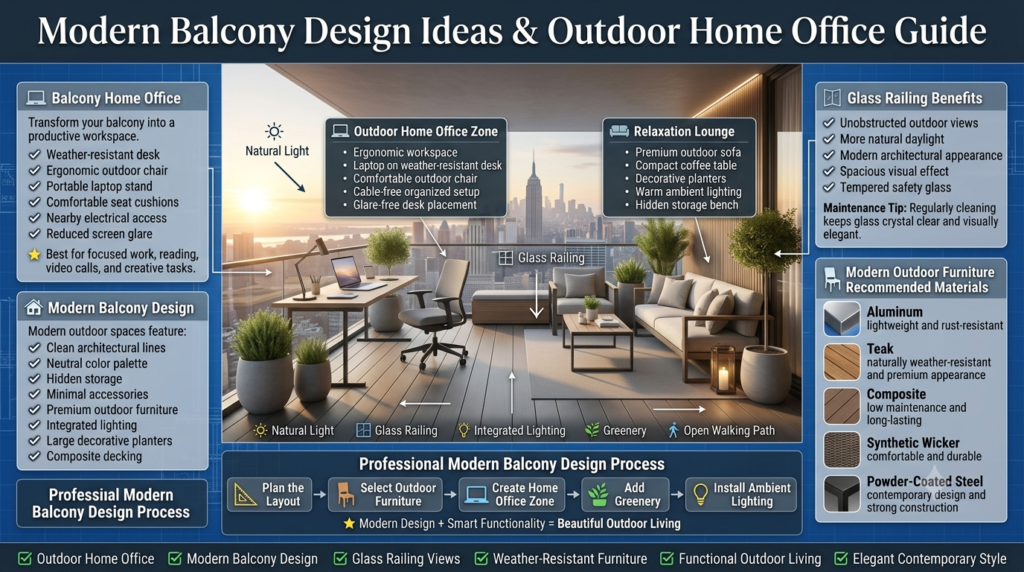
Remote work has increased demand for outdoor workspaces. While balconies cannot replace dedicated offices, they can provide refreshing work environments for certain tasks.
Choose weather-resistant furniture with ergonomic support and position the workspace where glare is minimized. Portable laptop stands, outdoor cushions, and nearby power access improve comfort during shorter work sessions.
Modern Balcony Design Ideas
Modern balcony design focuses on clean architecture, premium materials, and uncluttered layouts. Instead of excessive decoration, each design element contributes to a cohesive visual identity.
Common characteristics include:
- Straight architectural lines
- Neutral color palettes
- Hidden storage
- Minimal accessories
- Premium outdoor furniture
- Integrated lighting
- Large planters
- Durable composite materials
This design approach complements contemporary homes while remaining timeless enough to avoid frequent redesigns.
Glass Railing Modern Balcony
Glass railings maximize views while allowing natural light to flow freely across the balcony. They work particularly well in apartments overlooking city skylines, mountains, lakes, or coastal scenery.
Although visually appealing, glass requires regular cleaning to maintain transparency. Tempered safety glass designed specifically for exterior applications should always be used where permitted by local building requirements.
Minimal Modern Furniture
Furniture selection strongly influences the success of modern balcony design.
Popular materials include:
| Material | Benefits |
|---|---|
| Aluminum | Lightweight and rust-resistant |
| Teak | Natural weather resistance |
| Composite | Low maintenance |
| Synthetic Wicker | Comfortable and durable |
| Powder-Coated Steel | Modern appearance |
Neutral-colored cushions paired with natural wood or matte black finishes create an elegant contemporary look.
Luxury Balcony Design Ideas
Luxury balcony design extends beyond expensive furniture. It combines premium materials, thoughtful lighting, sophisticated layouts, and exceptional comfort to create an outdoor living experience comparable to high-end interior spaces.
Professional designers often layer multiple textures, lighting sources, and seating arrangements while maintaining visual balance.
Luxury elements may include:
- Designer outdoor furniture
- Natural stone flooring
- Premium hardwood decking
- Built-in seating
- Fire tables (where appropriate)
- Smart lighting systems
- Outdoor speakers
- Large statement planters
- Water features
- High-quality outdoor fabrics
Luxury design emphasizes quality over quantity.
Resort-Inspired Balcony
Resort-inspired balconies recreate the relaxing atmosphere of luxury hotels through layered comfort and natural materials.
Typical features include:
- Oversized lounge chairs
- Neutral cushions
- Outdoor curtains
- Wooden accents
- Decorative lanterns
- Tropical plants
- Soft ambient lighting
The goal is to create a calm, vacation-like environment suitable for relaxation after a busy day.
Entertainment Balcony
Larger balconies can function as outdoor entertainment spaces for family gatherings or small social events.
A successful entertainment layout typically includes separate zones:
+--------------------------------------+
| Lounge Seating      Dining Area      |
|                                      |
| Coffee Table       Portable Bar      |
|                                      |
| Planters           Accent Lighting   |
|                                      |
| Entry Door                       Exit|
+--------------------------------------+
Separating activity zones improves movement while preventing the space from feeling crowded.
Minimalist Balcony Design Ideas
Minimalism is particularly effective on balconies because limited space naturally benefits from simplicity.
Instead of filling every corner, minimalist design focuses on essential furniture, uncluttered surfaces, and restrained decoration. Empty space is treated as an intentional design feature rather than unused area.
Minimalist Color Palette
- White
- Light gray
- Beige
- Black accents
- Natural wood
- Soft green from plants
This restrained palette creates a calming atmosphere while making compact balconies appear larger.
Japandi Balcony
Japandi combines Scandinavian functionality with Japanese simplicity. Natural wood, handcrafted accessories, neutral textiles, and carefully selected greenery produce a peaceful outdoor retreat.
Furniture tends to remain low-profile, encouraging relaxation while maintaining open sightlines across the balcony.
Scandinavian Balcony Design
Scandinavian design continues to influence outdoor spaces because it prioritizes warmth, comfort, and practicality.
Key elements include:
| Feature | Recommendation |
|---|---|
| Colors | White, gray, beige |
| Wood | Light oak or ash |
| Textiles | Wool and cotton blends |
| Lighting | Warm LED string lights |
| Furniture | Simple functional pieces |
| Plants | Green foliage with minimal flowers |
Layered textures help create visual warmth even with a restrained color palette.
Hygge-Inspired Balcony
The Danish concept of hygge centers on comfort and relaxation. Balcony designs inspired by this philosophy feature soft blankets, warm lighting, comfortable seating, and natural materials that encourage slow, enjoyable moments outdoors.
Rather than emphasizing luxury, hygge focuses on emotional comfort and everyday wellbeing.
Rustic Balcony Design Ideas
Rustic balconies celebrate natural materials and handcrafted character. Reclaimed wood, stone accents, woven baskets, vintage lanterns, and weathered finishes contribute to an inviting outdoor atmosphere.
Unlike modern styles that emphasize precision, rustic design embraces texture and natural imperfections.
Popular rustic materials include:
- Cedar
- Reclaimed timber
- Natural stone
- Terracotta
- Wrought iron
- Jute
- Linen
- Clay planters
Regular sealing and maintenance help preserve these natural materials against weather exposure.
Industrial Balcony Design
Industrial balcony design blends urban architecture with durable materials and understated color palettes.
Characteristic features include:
- Black steel furniture
- Concrete flooring
- Exposed brick walls
- Metal shelving
- Edison-style lighting
- Neutral fabrics
- Large geometric planters
Adding a few green plants softens the industrial aesthetic while maintaining its contemporary appeal.
Mediterranean Balcony Design
Mediterranean balconies evoke the warmth of coastal Europe through sun-washed colors, natural textures, and lush greenery.
Common elements include:
- Terracotta pots
- White stucco walls
- Blue accents
- Olive trees
- Lavender
- Mosaic tables
- Wrought iron furniture
- Stone flooring
These features create a timeless outdoor space that feels bright, airy, and invitin.
Journalist Reviews 30+
Balcony Design Ideas begin with understanding how you want to use the space. Whether your goal is relaxation, dining, gardening, or working outdoors, defining the purpose helps guide every design decision.
Balcony Design Ideas should prioritize functionality before decoration. A well-planned layout ensures that every piece of furniture and décor contributes to comfort without making the area feel crowded.
Balcony Design Ideas work best when the available space is measured carefully. Accurate measurements help you choose furniture and accessories that fit comfortably while maintaining clear walking areas.
Balcony Design Ideas often start with selecting durable flooring. Weather-resistant deck tiles, outdoor rugs, or composite flooring can instantly improve appearance while increasing comfort underfoot.
Balcony Design Ideas become more inviting with comfortable seating. Foldable chairs, compact sofas, benches with storage, or hanging chairs can maximize both comfort and available space.
Balcony Design Ideas benefit from lightweight furniture that is easy to move and rearrange. Flexible layouts allow the balcony to adapt to different activities throughout the year.
Balcony Design Ideas should include weather-resistant materials that can withstand sunlight, rain, humidity, and changing temperatures without requiring frequent maintenance.
Balcony Design Ideas feel more welcoming when natural greenery is incorporated. Potted plants, vertical gardens, and hanging planters introduce color while creating a refreshing outdoor atmosphere.
Balcony Design Ideas become visually appealing when different plant heights and textures are combined to create depth without overwhelming the available space.
Balcony Design Ideas can improve outdoor living by combining comfort, style, and practical features. A well-planned balcony creates a relaxing space for everyday use.
Balcony Design Ideas help homeowners turn unused outdoor areas into comfortable extensions of their living spaces. With the right planning, even a small balcony can become a relaxing place for daily enjoyment.
Balcony Design Ideas focus on creating layouts that match different lifestyles, whether you need a peaceful reading corner, a small dining area, a garden space, or an outdoor workspace.
Balcony Design Ideas include selecting the right furniture size because oversized pieces can make the area feel crowded. Compact and functional furniture keeps the balcony comfortable and practical.
Balcony Design Ideas improve visual appeal by using attractive flooring options such as wooden tiles, outdoor rugs, stone finishes, or weather-resistant materials that add style and comfort.
Balcony Design Ideas encourage the use of greenery to create a fresh atmosphere. Plants, hanging pots, and vertical gardens can add natural beauty without taking too much space.
Balcony Design Ideas help improve privacy through creative solutions like decorative screens, outdoor curtains, bamboo panels, and tall plants that create a more personal environment.
Balcony Design Ideas make evening spaces more enjoyable by adding suitable lighting. Soft lights, lanterns, and decorative fixtures create a warm and welcoming outdoor atmosphere.
Balcony Design Ideas support better organization by including smart storage solutions. Storage benches, shelves, and hidden compartments help maintain a clean and clutter-free space.
Balcony Design Ideas consider weather conditions before choosing materials and decorations. Durable furniture and outdoor-friendly accessories perform better against sunlight, rain, and humidity.
Balcony Design Ideas enhance comfort by adding outdoor cushions, rugs, and textiles that make the balcony feel like an extension of the indoor living area.
Balcony Design Ideas maximize limited space through vertical solutions such as wall-mounted planters, hanging decorations, and compact furniture arrangements.
Balcony Design Ideas create stylish appearances by combining colors, textures, and decorative elements that match the overall style of the home.
Balcony Design Ideas promote sustainable living by using eco-friendly materials, solar lighting, recycled décor, and plants that require less water and maintenance.
Balcony Design Ideas improve functionality by creating flexible spaces where furniture can be adjusted for relaxation, entertainment, gardening, or family activities.
Balcony Design Ideas transform ordinary outdoor areas into valuable home features by combining smart planning, attractive designs, comfortable elements, and practical solutions.
Balcony Design Ideas should consider privacy solutions such as bamboo screens, outdoor curtains, decorative panels, or climbing plants to create a more peaceful environment.
Balcony Design Ideas are enhanced by layered lighting. Combining string lights, lanterns, solar lighting, and LED fixtures creates a comfortable atmosphere during the evening.
Balcony Design Ideas should include practical storage whenever possible. Storage benches, wall-mounted shelves, and compact cabinets help keep the balcony organized without sacrificing usable space.
Balcony Design Ideas become more functional when furniture serves multiple purposes, such as benches with hidden storage or foldable dining tables.
Balcony Design Ideas benefit from using weather-resistant cushions and fabrics designed specifically for outdoor environments, ensuring durability and comfort throughout the seasons.
Balcony Design Ideas often use neutral color palettes as a foundation, adding personality through colorful cushions, decorative accessories, and seasonal plants.
Balcony Design Ideas should maximize vertical space by installing wall planters, shelving, or hanging baskets instead of filling valuable floor space.
Balcony Design Ideas become more relaxing when noise-reducing elements such as dense plants, privacy screens, or outdoor textiles help create a quieter atmosphere.
Balcony Design Ideas should provide adequate shade using umbrellas, retractable awnings, pergolas, or shade sails to improve comfort during sunny weather.
Balcony Design Ideas work especially well when outdoor textiles, rugs, and cushions create the feeling of an extension of the indoor living area.
Balcony Design Ideas become more enjoyable when seasonal decorations are updated throughout the year, keeping the outdoor space fresh and visually interesting.
Balcony Design Ideas should include safe electrical solutions for outdoor lighting and accessories, always following local safety recommendations and manufacturer guidelines.
Balcony Design Ideas benefit from incorporating small dining areas where space allows, making the balcony suitable for meals, coffee breaks, or casual gatherings.
Balcony Design Ideas become highly practical when every decorative element also serves a functional purpose, reducing clutter while maintaining visual appeal.
Balcony Design Ideas should complement the home’s architectural style, creating a smooth transition between indoor and outdoor living spaces.
Balcony Design Ideas encourage selecting low-maintenance plants if regular gardening time is limited, helping maintain an attractive appearance with minimal effort.
Balcony Design Ideas become more comfortable by considering wind direction, sunlight exposure, and seasonal weather conditions before arranging furniture and décor.
Balcony Design Ideas support sustainable living by incorporating recycled materials, solar lighting, water-efficient plants, and environmentally friendly outdoor furnishings.
Balcony Design Ideas should be reviewed periodically so furniture placement, decorations, and plant arrangements continue meeting changing household needs and preferences.
Balcony Design Ideas transform even compact balconies into valuable living spaces by combining thoughtful planning, functional furniture, durable materials, and personalized decorative touches.
Balcony Design Ideas ultimately demonstrate that a successful balcony design balances comfort, functionality, durability, and aesthetics. By carefully planning the layout, selecting weather-resistant materials, incorporating greenery, maximizing storage, and creating a welcoming atmosphere, homeowners can transform balconies of any size into attractive outdoor retreats that provide relaxation, entertainment, and everyday enjoyment throughout the year.
Summary
The best balcony design depends on your available space, lifestyle, budget, and personal preferences. Small balconies benefit from space-saving solutions, apartment balconies require flexible and removable features, while larger spaces can accommodate luxury, entertainment, or themed designs. Whether you prefer modern minimalism, Scandinavian comfort, rustic charm, industrial character, or Mediterranean warmth, choosing a consistent design style helps create a cohesive and functional outdoor retreat.
-
How do I choose a functional layout for a very narrow balcony?
A functional layout begins by identifying the balcony’s primary purpose. Decide whether the space will be used for relaxing, dining, gardening, working, or entertaining. Designing around one main function prevents overcrowding and helps every item contribute to the overall usability of the space.
Measure the balcony carefully before purchasing furniture. Record the width, depth, railing height, and door clearance so that furniture fits comfortably without blocking access. Accurate measurements reduce costly mistakes and ensure the balcony remains easy to move through.
Choose compact, multi-functional furniture that maximizes limited space. Foldable chairs, nesting tables, storage benches, and wall-mounted shelves provide everyday functionality while minimizing the footprint. Furniture with built-in storage also helps reduce clutter.
Take advantage of vertical space instead of filling the floor. Wall planters, hanging baskets, railing shelves, and slim storage units keep the balcony organized while preserving valuable walking space. Vertical design also creates visual interest without making the area feel crowded.
Maintain a clear circulation path throughout the balcony. Avoid placing furniture where it blocks doors or creates narrow walkways. A simple, open layout feels more spacious and improves both safety and comfort. -
What are the best weatherproofing strategies for balconies exposed to heavy rain and sun?
Start by protecting the balcony’s structural surfaces. Apply suitable waterproof sealants to exposed concrete where appropriate, inspect tile joints regularly, and ensure drainage outlets remain free of debris. Preventing water accumulation is the first step toward avoiding long-term damage.
Select outdoor furniture made from weather-resistant materials such as powder-coated aluminum, teak, high-density polyethylene, or synthetic wicker. These materials withstand moisture, strong sunlight, and changing temperatures better than untreated wood or standard indoor furniture.
Invest in high-quality outdoor fabrics designed to resist fading, mildew, and moisture. Cushions with quick-drying foam and removable, washable covers stay in better condition and require less maintenance throughout the year.
Protect furniture and accessories with breathable waterproof covers during periods of heavy rain or extended sun exposure. Covers reduce UV damage, minimize moisture penetration, and help extend the lifespan of outdoor furnishings.
Inspect the balcony regularly for early signs of deterioration, including cracks, peeling finishes, rust, loose fasteners, or water stains. Addressing small maintenance issues promptly helps prevent more expensive repairs in the future. -
How can I build an effective outdoor privacy screen without drilling into apartment walls?
Begin by reviewing your apartment’s rules regarding balcony modifications. Understanding lease restrictions helps you choose privacy solutions that protect both your living space and your security deposit.
Freestanding privacy screens offer one of the most flexible solutions because they require no permanent installation. They can be moved, repositioned, or removed whenever necessary, making them ideal for renters.
Outdoor privacy curtains supported by tension rods or freestanding frames provide adjustable coverage while adding softness and style to the balcony. They also allow you to control sunlight and airflow throughout the day.
Use tall planters filled with dense ornamental grasses, evergreen shrubs, or climbing plants to create a natural privacy barrier. Living screens improve both privacy and the overall appearance of the outdoor space.
Privacy mesh, balcony fabric, or artificial hedge panels can often be attached securely using zip ties or removable clips instead of screws. These lightweight materials provide effective screening while avoiding permanent alterations.
Ensure every privacy solution is properly secured against wind. Lightweight panels, fabric screens, and decorative elements should remain stable during changing weather conditions to maintain safety. -
What lightweight flooring options can quickly cover ugly concrete surfaces?
Before installing any flooring, thoroughly clean the existing concrete surface and inspect it for cracks, uneven areas, or drainage problems. A stable, clean base improves both appearance and long-term performance.
Interlocking deck tiles remain one of the most practical solutions because they install without adhesives or permanent modifications. They are easy to remove, simple to maintain, and available in a wide range of materials and finishes.
Artificial grass provides a soft, comfortable surface that instantly transforms plain concrete into a more inviting outdoor environment. Modern products also offer improved drainage and greater resistance to fading. -
How do I safely set up ambient lighting without outdoor electrical outlets?
Choose lighting specifically designed for outdoor environments. Products with weather-resistant construction offer better protection against moisture, dust, and changing temperatures while reducing safety risks.
Solar-powered lighting provides an energy-efficient solution that requires no electrical wiring. String lights, lanterns, and decorative fixtures recharge during daylight hours and automatically illuminate the balcony after sunset.
Rechargeable LED lamps and portable lanterns offer excellent flexibility because they can be moved anywhere on the balcony and recharged indoors when necessary. They provide reliable lighting even in areas with limited sunlight.
Battery-operated candles and decorative lights create a warm atmosphere without the fire hazards associated with traditional candles. Many models include timers and adjustable brightness for added convenience.
Layer different lighting sources instead of relying on a single bright fixture. Combining string lights, lanterns, tabletop lighting, and accent illumination creates depth while producing a comfortable outdoor ambiance.
Secure all lighting carefully to prevent movement during strong winds. Hanging fixtures, string lights, and portable lamps should be installed according to the manufacturer’s safety recommendations.
Inspect lighting equipment regularly for signs of moisture damage, worn batteries, or loose components. Routine maintenance helps ensure safe operation while extending the lifespan of your outdoor lighting system.