
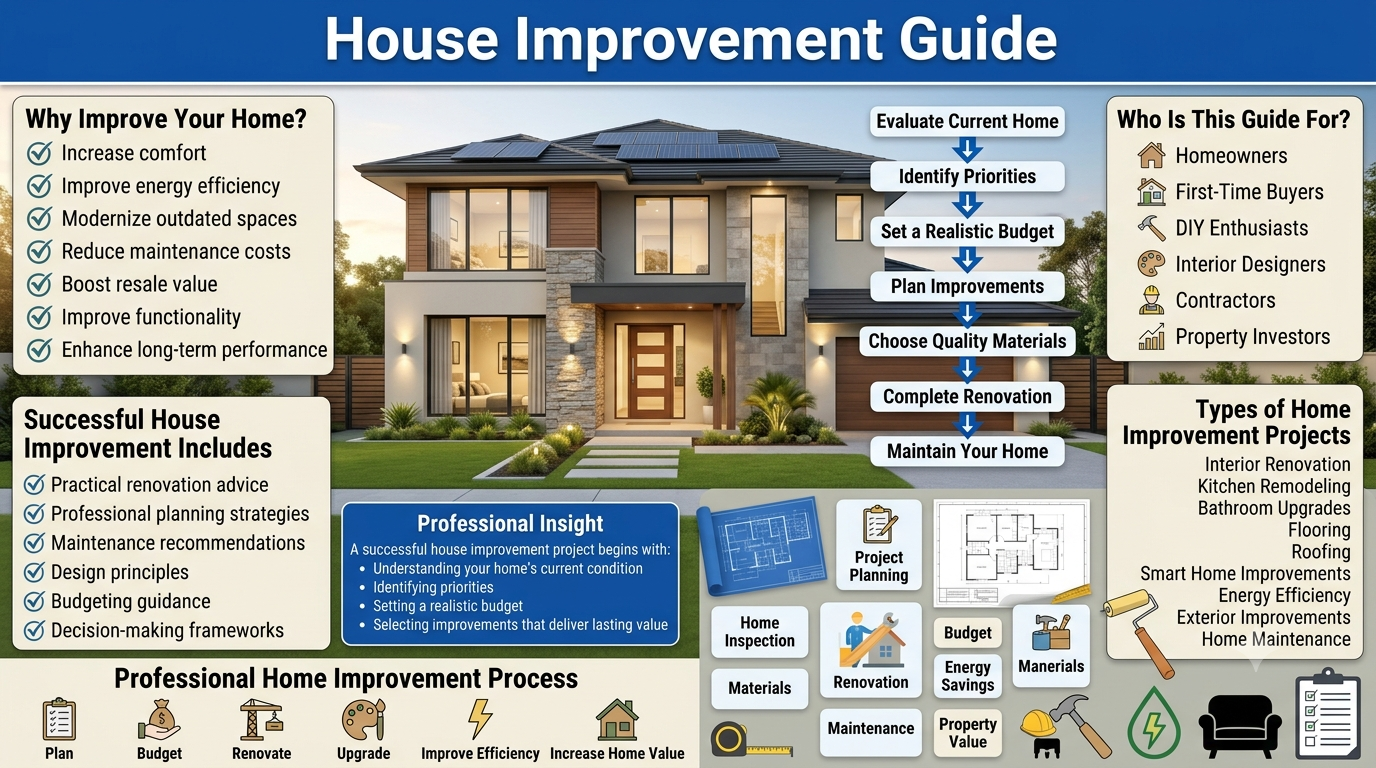
House Improvement Guide: Improving a home is one of the most rewarding investments a homeowner can make. Whether your goal is to increase comfort, improve energy efficiency, modernize outdated spaces, reduce maintenance costs, or boost resale value, a well-planned home improvement project delivers benefits that extend far beyond appearance.
A successful house improvement project is rarely about choosing expensive materials or following the latest design trend. Instead, it begins with understanding your home’s current condition, identifying priorities, setting a realistic budget, and selecting improvements that offer lasting value. From small DIY upgrades to full-scale renovations, every decision affects your home’s functionality, durability, safety, and long-term performance.
This comprehensive house improvement guide is designed for homeowners, first-time buyers, DIY enthusiasts, interior designers, contractors, and property investors. It combines practical renovation advice, professional planning strategies, maintenance recommendations, design principles, budgeting guidance, and decision-making frameworks into one complete resource. Whether you’re renovating a single room or planning improvements across your entire property, this guide will help you make informed decisions with confidence.
What Is a House Improvement Guide?
A house improvement guide is a comprehensive resource that helps homeowners plan, prioritize, complete, and maintain renovation and maintenance projects efficiently. Rather than focusing on a single room or project, it provides a structured approach to improving every aspect of a home’s functionality, comfort, appearance, safety, and value.
Unlike decorating guides, which primarily focus on aesthetics, a complete house improvement guide covers structural considerations, maintenance planning, budgeting, material selection, energy efficiency, building systems, interior design, exterior upgrades, and long-term property care.
Professional home improvement planning considers several interconnected factors:
- Structural integrity
- Interior functionality
- Exterior durability
- Energy performance
- Safety standards
- Maintenance requirements
- Lifestyle needs
- Budget limitations
- Future resale potential
When these elements work together, renovations become long-term investments rather than short-term cosmetic changes.
Why Home Improvements Matter More Than Ever
Modern homes serve many purposes beyond providing shelter. They function as workplaces, entertainment spaces, learning environments, fitness areas, and long-term financial assets. As lifestyles evolve, homes must adapt to changing family needs, technological advancements, and environmental considerations.
Strategic home improvements can provide numerous benefits:
| Improvement Goal | Long-Term Benefit |
|---|---|
| Better insulation | Lower utility costs |
| Kitchen renovation | Improved functionality and resale appeal |
| Bathroom upgrades | Greater comfort and higher property value |
| Smart home technology | Convenience, security, and energy management |
| Storage improvements | Better organization and space utilization |
| Exterior upgrades | Enhanced curb appeal and weather protection |
| Preventive maintenance | Reduced repair costs over time |
Professional renovators often recommend prioritizing improvements that solve existing problems before investing in purely cosmetic upgrades. Addressing moisture issues, outdated electrical systems, roof damage, or inefficient insulation typically delivers greater long-term value than replacing decorative finishes alone.
Understanding Different Types of Home Improvements
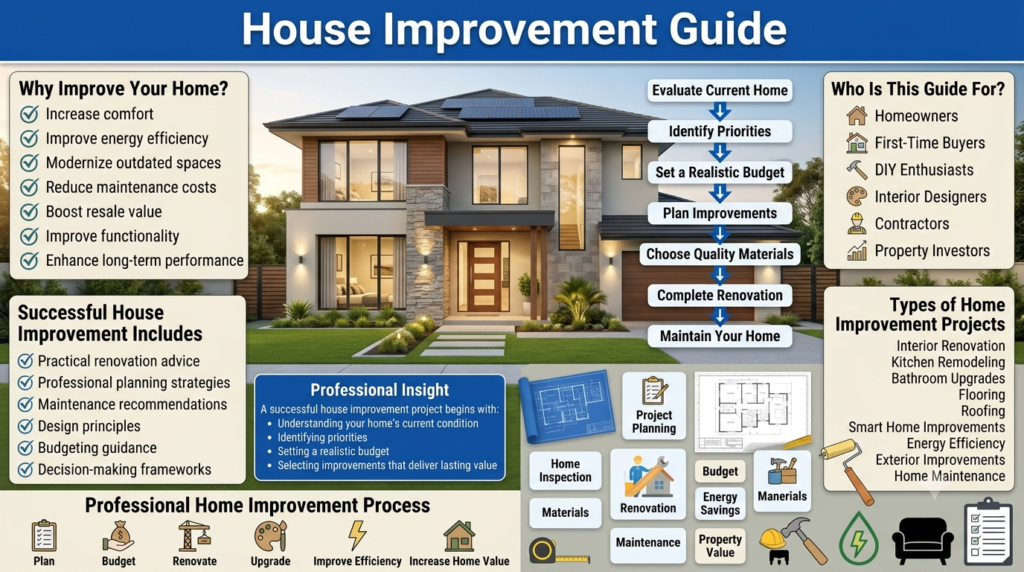
Not every project serves the same purpose. Understanding the categories of home improvements helps homeowners allocate budgets effectively and avoid investing in upgrades that offer limited practical value.
Cosmetic Improvements
Cosmetic improvements focus on enhancing the appearance of a home without altering its structural components.
Examples include:
- Interior painting
- Wallpaper installation
- Decorative lighting
- Cabinet hardware replacement
- New window treatments
- Accent walls
- Decorative moldings
- Updated fixtures
These projects generally have shorter completion times and are often suitable for DIY enthusiasts with basic tools and skills.
Functional Improvements
Functional improvements enhance how a home operates on a daily basis.
Examples include:
- Kitchen layout optimization
- Additional storage
- Closet systems
- Smart lighting controls
- Built-in shelving
- Improved ventilation
- Better lighting placement
- Workspace creation
These upgrades improve daily living while often increasing the overall usability of the property.
Structural Improvements
Structural improvements address the integrity and longevity of the building itself.
Examples include:
- Foundation repairs
- Roof replacement
- Structural framing
- Wall reinforcement
- Drainage improvements
- Load-bearing modifications
Because these projects directly affect building safety, they often require professional design, inspections, and compliance with local building regulations.
Energy Efficiency Improvements
Improving energy efficiency reduces operating costs while making homes more comfortable throughout the year.
Common examples include:
- High-performance insulation
- Energy-efficient windows
- Weather sealing
- Heat pump installation
- LED lighting
- Smart thermostats
- Solar-ready electrical systems
- Water-saving plumbing fixtures
Many homeowners recover part of these investments through lower utility bills over the long term.
Lifestyle Improvements
Lifestyle improvements are designed around how people actually use their homes.
Popular examples include:
- Home offices
- Entertainment rooms
- Outdoor kitchens
- Home gyms
- Reading nooks
- Multi-purpose guest rooms
- Children’s playrooms
- Pet-friendly spaces
Rather than following trends, these upgrades reflect personal routines and evolving household needs.
How to Evaluate Your Home Before Starting Any Project
The most successful renovations begin with a thorough assessment of the home’s current condition. Skipping this step often leads to unexpected costs, project delays, or discovering hidden issues after work has already begun.
A whole-house evaluation helps prioritize projects based on urgency rather than appearance.
Step 1: Inspect Structural Components
Start by examining the building’s primary structural systems.
Look for:
- Foundation cracks
- Uneven floors
- Roof sagging
- Water intrusion
- Damaged framing
- Ceiling movement
- Exterior wall cracks
- Chimney separation
Any structural concerns should be addressed before cosmetic improvements.
Step 2: Evaluate Major Home Systems
Next, assess the systems that keep the home functioning efficiently.
These include:
- Electrical wiring
- Plumbing
- HVAC systems
- Water heaters
- Ventilation
- Drainage
- Insulation
- Windows and doors
Older systems may still operate but could be inefficient, unsafe, or nearing the end of their service life.
Step 3: Identify Moisture Problems
Moisture is one of the most damaging issues a home can experience because it often leads to mold growth, wood rot, insulation damage, and indoor air quality problems.
Inspect areas such as:
- Bathrooms
- Kitchens
- Basements
- Crawl spaces
- Roof penetrations
- Around windows
- Exterior siding
- Plumbing fixtures
Early detection usually reduces repair costs significantly.
Step 4: Assess Interior Functionality
Ask practical questions about how each room performs.
Consider:
- Is there enough storage?
- Is the lighting sufficient?
- Does traffic flow naturally?
- Are rooms serving their intended purpose?
- Is furniture placement efficient?
- Are electrical outlets conveniently located?
- Is ventilation adequate?
- Are spaces adaptable for future needs?
Functional improvements often deliver greater everyday satisfaction than decorative updates.
Home Assessment Checklist
Before beginning any renovation, review the following checklist:
| Inspection Area | Status |
|---|---|
| Roof condition | □ |
| Foundation | □ |
| Exterior walls | □ |
| Gutters and drainage | □ |
| Plumbing system | □ |
| Electrical system | □ |
| Heating and cooling | □ |
| Insulation | □ |
| Windows | □ |
| Doors | □ |
| Flooring | □ |
| Moisture damage | □ |
| Paint condition | □ |
| Lighting | □ |
| Storage | □ |
| Ventilation | □ |
| Outdoor spaces | □ |
| Landscaping | □ |
Completing this assessment provides a clear picture of which improvements are urgent, which can wait, and which will provide the greatest return on investment.
Setting Goals for Your Renovation
Every successful home improvement project starts with clear objectives. Without defined goals, it’s easy to overspend on upgrades that look appealing but don’t solve real problems or support your long-term plans.
A practical way to set priorities is to group projects into four categories:
| Goal | Typical Projects |
|---|---|
| Improve Safety | Electrical upgrades, roof repairs, structural fixes |
| Increase Comfort | Better insulation, lighting, HVAC improvements |
| Enhance Appearance | Painting, flooring, décor, landscaping |
| Increase Home Value | Kitchen remodel, bathroom renovation, exterior upgrades |
Professional renovators often recommend completing projects in this order:
- Address safety and structural concerns.
- Improve building systems and energy efficiency.
- Upgrade functionality and layout.
- Complete cosmetic improvements and decorative finishes.
Following this sequence helps avoid redoing finished work and ensures every improvement builds on a solid foundation.
Creating a Realistic Home Improvement Budget
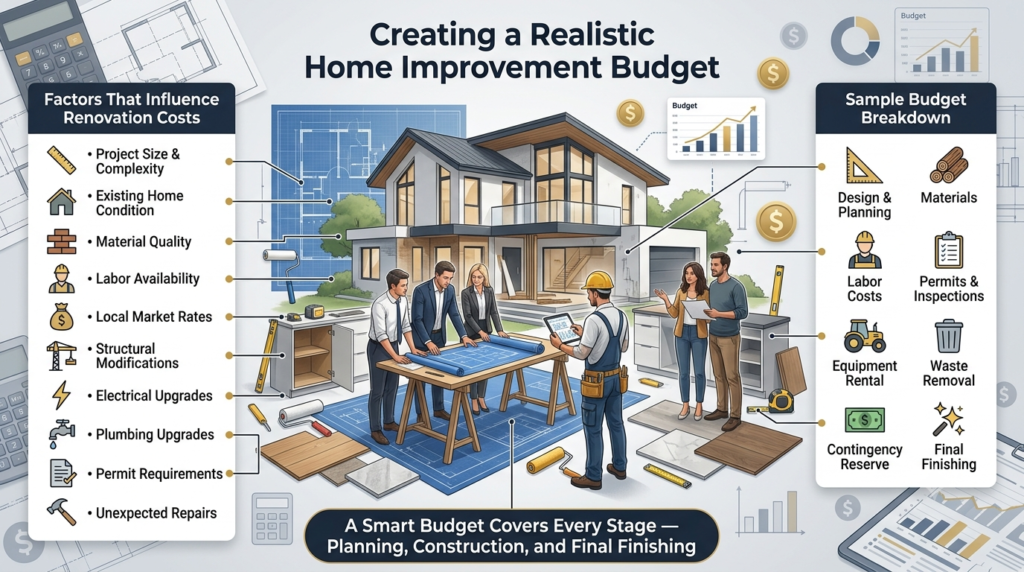
Direct answer: A successful home improvement budget accounts for the full project cost—not just materials and labor. It should include planning expenses, permits (where required), delivery fees, waste disposal, contingency funds, and post-project finishing work.
Many renovation projects exceed their original budgets because homeowners focus only on visible expenses. A realistic budget considers the entire lifecycle of the project, from initial planning to final cleanup.
Factors That Influence Renovation Costs
Every home is different, and so is every renovation. The final cost depends on several variables rather than a single price per square foot.
Common cost factors include:
- Project size and complexity
- Existing home condition
- Material quality
- Labor availability
- Local market rates
- Structural modifications
- Electrical or plumbing upgrades
- Permit requirements
- Site accessibility
- Unexpected repairs discovered during construction
For example, replacing kitchen cabinets is generally straightforward. However, relocating plumbing, removing walls, or upgrading electrical wiring can significantly increase both costs and project duration.
Sample Budget Breakdown
| Budget Category | Typical Purpose |
|---|---|
| Design and Planning | Drawings, measurements, consultations |
| Materials | Flooring, paint, fixtures, cabinets, hardware |
| Labor | Installation and construction work |
| Permits and Inspections | Local regulatory requirements |
| Equipment Rental | Specialized tools or machinery |
| Waste Removal | Dumpster or debris disposal |
| Contingency Reserve | Unexpected issues during renovation |
| Final Finishing | Cleaning, touch-ups, decorations |
A contingency reserve is especially important in older homes, where hidden damage behind walls or beneath flooring is more likely.
Professional Tip: Avoid spending your entire budget before work begins. Keeping a financial buffer helps you respond to unforeseen problems without compromising quality.
Prioritizing Home Improvement Projects
Direct answer: Not every renovation should happen at once. Prioritize projects that protect the home’s structure, improve safety, and reduce future repair costs before focusing on cosmetic upgrades.
Professional contractors often use a priority system that balances urgency with long-term value.
Priority Matrix
| Priority | Project Examples | Why It Comes First |
|---|---|---|
| Critical | Roof leaks, foundation repairs, electrical hazards | Prevents damage and safety risks |
| High | HVAC replacement, insulation, plumbing repairs | Improves comfort and efficiency |
| Medium | Kitchen updates, flooring, storage improvements | Enhances functionality |
| Low | Decorative finishes, furniture, accent walls | Mostly aesthetic improvements |
This approach prevents situations where newly painted walls must later be opened to repair plumbing or electrical systems.
Building a Home Improvement Roadmap
Rather than treating renovations as isolated tasks, create a long-term improvement plan.
A roadmap helps spread expenses over several years while ensuring projects happen in the correct sequence.
Example roadmap:
Year 1
- Roof inspection
- Electrical safety updates
- Plumbing repairs
- Insulation improvements
Year 2
- Kitchen renovation
- Flooring replacement
- Interior painting
Year 3
- Bathroom remodel
- Landscaping
- Outdoor living area
Year 4
- Smart home upgrades
- Garage organization
- Decorative improvements
Planning ahead often results in better contractor scheduling, improved purchasing decisions, and less disruption to daily life.
Planning Your Renovation Timeline
Direct answer: A realistic renovation timeline reduces stress, improves coordination, and minimizes costly delays. Every phase should have clear milestones before work begins.
One of the biggest mistakes homeowners make is assuming that every project will proceed exactly as scheduled. Material delays, weather conditions, inspections, and hidden structural issues can all affect completion dates.
Typical Renovation Workflow
Project Idea
      │
      ▼
Home Assessment
      │
      ▼
Budget Planning
      │
      ▼
Design Development
      │
      ▼
Material Selection
      │
      ▼
Contractor Selection
      │
      ▼
Permits (if required)
      │
      ▼
Construction
      │
      ▼
Inspections
      │
      ▼
Final Touches
      │
      ▼
Project Completion
Breaking the renovation into manageable phases also makes it easier to monitor progress and maintain quality.
Renovation Preparation Checklist
Before construction begins, confirm that each of the following has been completed:
- □ Defined project goals
- □ Approved budget
- □ Complete measurements
- □ Material selections finalized
- □ Contractor agreements signed
- □ Necessary permits obtained
- □ Temporary storage arranged
- □ Furniture protected or relocated
- □ Utilities identified if affected
- □ Project schedule communicated to everyone involved
Preparation is one of the most effective ways to avoid delays once work starts.
DIY vs Professional Renovation
Direct answer: Choose DIY projects when they involve low-risk tasks that match your skills. Hire licensed professionals for structural, electrical, plumbing, roofing, or complex remodeling work.
DIY projects can reduce labor costs and provide personal satisfaction, but they also require time, planning, and the right tools. Attempting work beyond your experience can result in safety hazards, failed inspections, or expensive repairs.
DIY vs Professional Comparison
| Factor | DIY | Professional |
|---|---|---|
| Initial Cost | Lower | Higher |
| Time Required | Usually longer | Typically faster |
| Quality | Depends on experience | More consistent |
| Specialized Equipment | Limited | Professional-grade |
| Warranty | Usually none | Often available |
| Building Code Compliance | Homeowner responsibility | Usually managed professionally |
| Safety Risk | Higher | Lower |
Good DIY Projects
- Interior painting
- Installing shelves
- Replacing cabinet hardware
- Basic landscaping
- Minor drywall repairs
- Caulking windows and tubs
- Installing weatherstripping
- Assembling storage systems
Projects Best Left to Professionals
- Structural modifications
- Foundation repairs
- Roof replacement
- Electrical panel upgrades
- Major plumbing work
- Gas line installation
- Window structural changes
- Load-bearing wall removal
Common Mistake: Saving money by attempting specialized work without sufficient knowledge often leads to higher repair costs later.
Building Codes, Permits, and Safety Considerations
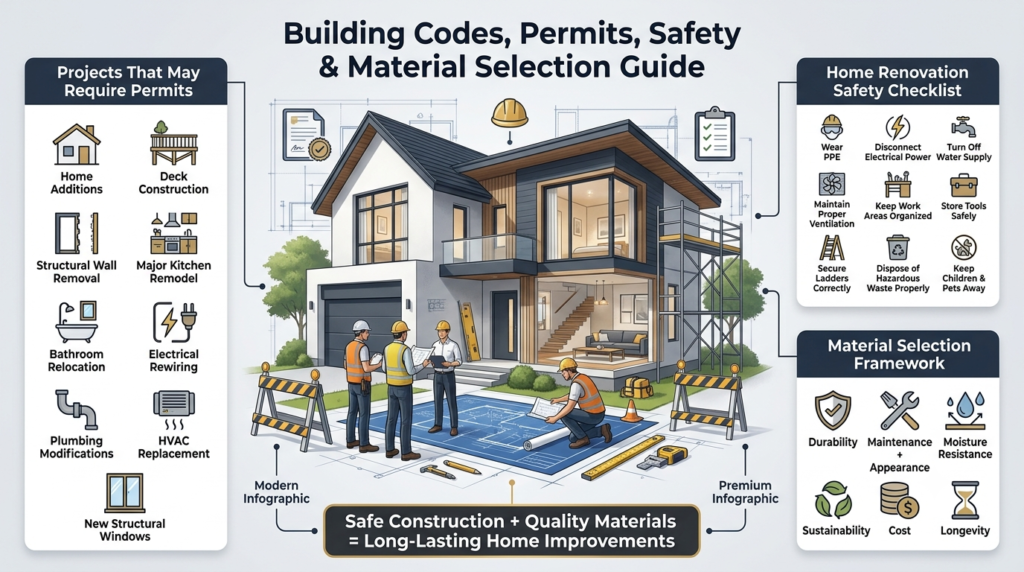
Direct answer: Many renovation projects require permits and inspections to ensure they meet local building regulations and safety standards.
Permit requirements vary by country, state, province, or municipality. Projects involving structural changes, electrical systems, plumbing, or major additions commonly require approval before construction begins.
Typical projects that may require permits include:
- Home additions
- Deck construction
- Structural wall removal
- Major kitchen remodels
- Bathroom relocations
- Electrical rewiring
- Plumbing modifications
- HVAC replacement
- New windows in structural openings
Minor cosmetic work such as painting, flooring replacement, or cabinet installation often does not require permits, but homeowners should always verify local regulations before beginning work.
Home Renovation Safety Checklist
Every project should prioritize safety from the first day through final cleanup.
Checklist:
- Wear appropriate personal protective equipment (PPE)
- Disconnect electrical power before working on wiring
- Turn off water supply before plumbing repairs
- Maintain adequate ventilation when painting or using adhesives
- Keep work areas organized
- Store tools safely after use
- Secure ladders correctly
- Follow manufacturer instructions for all materials
- Dispose of hazardous waste properly
- Keep children and pets away from active work zones
Professional-quality results begin with professional safety practices.
Selecting the Right Materials
Direct answer: Choose materials based on durability, maintenance requirements, climate suitability, appearance, and long-term value—not simply the lowest purchase price.
The least expensive material is not always the most economical over its lifespan. Higher-quality products often last longer, require less maintenance, and perform better under daily use.
Material Selection Framework
Evaluate every material using these criteria:
| Evaluation Factor | Questions to Ask |
|---|---|
| Durability | Will it withstand daily use? |
| Maintenance | How often does it require upkeep? |
| Moisture Resistance | Is it suitable for wet areas? |
| Appearance | Does it complement the home’s design? |
| Sustainability | Is it environmentally responsible? |
| Cost | Does it fit the budget? |
| Longevity | What is its expected service life? |
Common Building Materials
Wood
Best for:
- Flooring
- Trim
- Cabinets
- Furniture
- Framing
Advantages:
- Warm appearance
- Easy to customize
- Renewable material
Considerations:
- Requires protection from moisture
- Needs periodic maintenance depending on the finish
Tile
Ideal for:
- Bathrooms
- Kitchens
- Laundry rooms
- Entryways
Benefits include:
- Excellent water resistance
- Easy cleaning
- Long lifespan
- Wide design variety
Engineered Stone and Natural Stone
Common uses include:
- Countertops
- Fireplaces
- Feature walls
- Bathroom vanities
These materials offer durability and premium aesthetics, though installation often requires specialized tools and expertise.
Metal
Frequently used for:
- Roofing
- Railings
- Structural supports
- Decorative accents
Modern protective coatings improve corrosion resistance and reduce maintenance requirements.
Essential Home Improvement Tools
Direct answer: The right tools improve accuracy, safety, efficiency, and the overall quality of a home improvement project. Even small DIY jobs become easier and more professional when completed with the proper equipment.
You do not need a workshop filled with expensive equipment to complete many home improvement tasks. However, investing in reliable, high-quality tools pays off over time because they last longer, perform better, and reduce the risk of mistakes.
Basic Tool Kit Every Homeowner Should Own
A well-rounded starter toolkit should include tools for measuring, cutting, fastening, repairing, and basic maintenance.
| Tool | Primary Use |
|---|---|
| Tape Measure | Accurate measurements |
| Claw Hammer | Framing, repairs, nail removal |
| Screwdriver Set | Furniture, fixtures, electrical covers |
| Cordless Drill | Drilling and fastening |
| Adjustable Wrench | Plumbing and assembly |
| Utility Knife | Cutting drywall, carpet, packaging |
| Spirit Level | Ensuring straight installations |
| Pliers | Gripping, twisting, wire work |
| Stud Finder | Locating wall framing |
| Safety Glasses | Eye protection |
| Work Gloves | Hand protection |
| Flashlight | Inspections and repairs |
These tools cover many everyday maintenance and improvement projects.
Specialized Tools for Larger Renovations
As projects become more complex, specialized equipment may improve both efficiency and precision.
Examples include:
- Circular saw
- Miter saw
- Oscillating multi-tool
- Angle grinder
- Tile cutter
- Laser level
- Orbital sander
- Shop vacuum
- Air compressor
- Nail gun
- Moisture meter
- Pipe cutter
For occasional projects, renting specialized equipment is often more cost-effective than purchasing it.
Professional Tip: Buy quality measuring tools first. Accurate measurements reduce waste, improve installation quality, and prevent expensive mistakes.
Interior Design Principles That Improve Every Home
Direct answer: Good interior design balances functionality, comfort, proportion, lighting, and aesthetics. A beautiful room should also support the way people live and move through it.
Many homeowners focus on finishes before considering how a room functions. Professional designers begin by understanding how a space is used, then select layouts, materials, colors, and furniture that support those activities.
Balance
Balance creates visual stability.
Three common approaches include:
- Symmetrical balance: Matching elements on both sides of a room.
- Asymmetrical balance: Different objects that create equal visual weight.
- Radial balance: Furniture or design elements arranged around a central feature, such as a dining table or fireplace.
Each style creates a different atmosphere while maintaining harmony.
Proportion and Scale
Furniture and architectural elements should match both the room size and each other.
Examples include:
- Oversized sofas may overwhelm a small living room.
- Tiny coffee tables often appear out of place beside large sectional seating.
- Large artwork can make expansive walls feel more balanced.
- Proper ceiling-height considerations influence lighting choices.
Professional designers think about the relationship between every object, not just individual pieces.
Color Harmony
Color influences mood, perceived space, and natural light.
General guidelines include:
| Color Type | Typical Effect |
|---|---|
| Light colors | Make rooms feel larger |
| Dark colors | Create warmth and intimacy |
| Neutral palettes | Timeless and versatile |
| Bold accents | Add personality without overwhelming the space |
Rather than following trends, choose colors that complement your home’s architecture and receive appropriate natural lighting.
Texture and Materials
Rooms feel richer when different textures are combined thoughtfully.
Examples include:
- Wood
- Stone
- Glass
- Metal
- Fabric
- Leather
- Natural fibers
- Ceramic finishes
Combining smooth and textured surfaces creates visual depth without relying solely on color.
Space Planning and Layout Optimization
Direct answer: Space planning ensures that every room supports comfortable movement, efficient storage, and practical daily use.
A larger room is not always more functional. Well-designed layouts often outperform larger but poorly organized spaces.
Analyze Room Function
Before moving walls or buying furniture, define how the room will actually be used.
Ask questions such as:
- How many people use this room?
- What activities take place here?
- Is storage adequate?
- Are there unused corners?
- Does furniture block movement?
- Is natural light fully utilized?
Design decisions become much easier when the room’s purpose is clearly defined.
Improve Traffic Flow
Good layouts allow people to move comfortably without obstacles.
Professional recommendations include:
- Keep major walkways unobstructed.
- Avoid oversized furniture in compact rooms.
- Leave sufficient clearance around doors.
- Position seating to encourage conversation.
- Create natural pathways between frequently used areas.
Comfortable movement often matters more than fitting additional furniture into a room.
Maximize Vertical Space
Many homes have unused wall space that can improve storage without reducing floor area.
Ideas include:
- Floor-to-ceiling shelving
- Built-in cabinets
- Wall-mounted desks
- Floating shelves
- Hanging organizers
- Vertical gardens
- Over-door storage
Making use of vertical space is particularly valuable in apartments and smaller homes.
Kitchen Improvement Guide
Direct answer: A successful kitchen renovation improves workflow, storage, durability, and lighting while creating a space that is both practical and welcoming.
The kitchen is one of the most frequently used rooms in any home. Improvements should focus on functionality before decorative upgrades.
Plan Around the Kitchen Work Triangle
The traditional kitchen work triangle connects three essential areas:
 Refrigerator
      ▲
      │
      │
Sink ◄──► Stove
Keeping these three work zones efficiently connected reduces unnecessary movement during meal preparation.
Although modern kitchens often include islands and multiple workstations, the work triangle remains a useful planning principle.
Prioritize Storage
Well-organized storage improves efficiency more than adding additional cabinets.
Popular storage solutions include:
- Deep drawers
- Pull-out pantry shelves
- Corner cabinet organizers
- Vertical tray storage
- Spice pull-outs
- Hidden recycling bins
- Drawer dividers
- Appliance garages
The goal is to make everyday items easily accessible while reducing countertop clutter.
Select Durable Countertops
Countertops should balance appearance with long-term durability.
Comparison:
| Material | Strengths | Considerations |
|---|---|---|
| Quartz | Durable, low maintenance | Higher initial cost |
| Granite | Natural appearance | Periodic sealing may be required |
| Butcher Block | Warm appearance | Requires regular maintenance |
| Laminate | Budget-friendly | Less resistant to damage |
| Solid Surface | Seamless repairs | Moderate durability |
Material selection should reflect cooking habits, maintenance preferences, and budget.
Kitchen Lighting Layers
Professional kitchen lighting combines multiple light sources.
Use:
- Ambient lighting
- Task lighting
- Under-cabinet lighting
- Pendant lighting
- Accent lighting
Layered lighting improves both safety and visual comfort.
Bathroom Remodeling Guide
Direct answer: A quality bathroom renovation prioritizes moisture control, ventilation, durability, accessibility, and efficient space planning.
Bathrooms experience frequent exposure to humidity, making waterproof construction especially important.
Improve Ventilation
Proper ventilation helps reduce:
- Mold growth
- Mildew
- Peeling paint
- Condensation
- Moisture damage
- Indoor humidity
An effective exhaust fan should be appropriately sized for the room and used during and after showers.
Water-Resistant Materials
Suitable materials include:
- Porcelain tile
- Ceramic tile
- Waterproof vinyl flooring
- Quartz countertops
- Moisture-resistant drywall
- Glass shower enclosures
Choosing moisture-resistant products extends the lifespan of the renovation.
Bathroom Layout Tips
Professional layouts typically prioritize:
- Easy movement
- Accessible storage
- Proper lighting
- Comfortable fixture spacing
- Slip-resistant flooring
- Efficient plumbing placement
Good layouts improve usability without necessarily increasing room size.
Living Room Improvements
Direct answer: Living room upgrades should improve comfort, conversation, flexibility, and natural light while supporting everyday activities.
The living room often serves multiple purposes, including entertaining, relaxing, working, and family gatherings.
Create a Functional Focal Point
A room benefits from one clear visual anchor.
Common focal points include:
- Fireplace
- Television
- Large window
- Feature wall
- Artwork
- Built-in shelving
Furniture should complement the focal point rather than compete with it.
Improve Lighting
Instead of relying on one ceiling fixture, combine:
- Floor lamps
- Table lamps
- Wall sconces
- Recessed lighting
- Accent lighting
Layered lighting allows the room to adapt to different activities throughout the day.
Flexible Furniture
Modular furniture supports changing family needs.
Examples include:
- Sectional sofas
- Nesting tables
- Storage ottomans
- Expandable seating
- Multi-purpose shelving
Flexible layouts remain useful as lifestyles change over time.
Bedroom Improvement Strategies
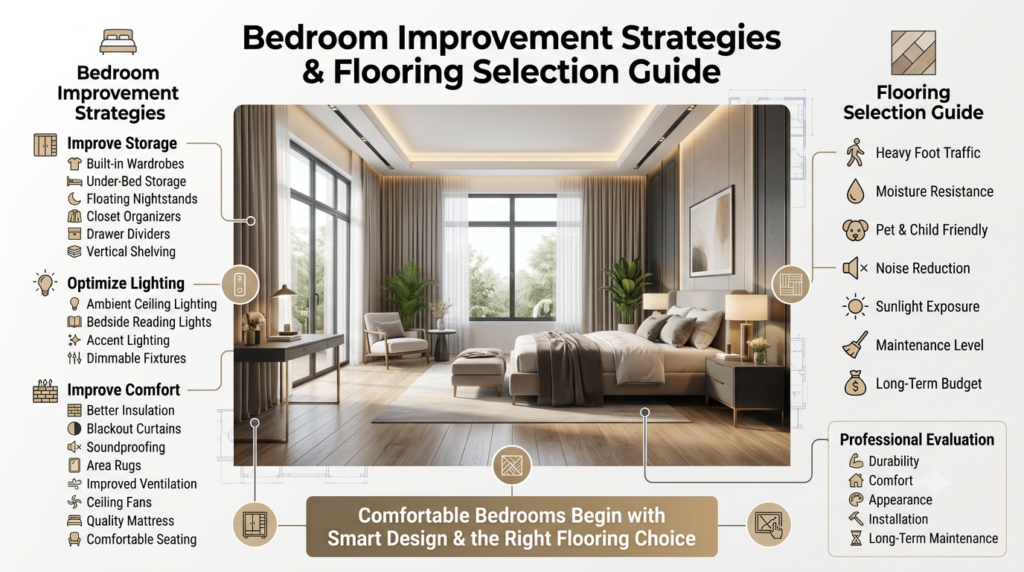
Direct answer: Bedrooms should promote relaxation, organization, and quality sleep through thoughtful design, lighting, storage, and noise control.
Professional bedroom design emphasizes simplicity over excessive decoration.
Improve Storage
Effective bedroom storage reduces visual clutter.
Options include:
- Built-in wardrobes
- Under-bed storage
- Floating nightstands
- Closet organizers
- Drawer dividers
- Vertical shelving
Organized bedrooms often feel larger without increasing floor space.
Optimize Lighting
Include multiple lighting options such as:
- Ambient ceiling lighting
- Bedside reading lights
- Accent lighting
- Dimmable fixtures
Flexible lighting supports reading, relaxation, and nighttime routines.
Improve Comfort
Simple upgrades can significantly enhance comfort.
Examples include:
- Better insulation
- Blackout curtains
- Soundproofing improvements
- Area rugs
- Improved ventilation
- Ceiling fans
- Quality mattresses
- Comfortable seating
A peaceful bedroom contributes to overall well-being and daily productivity.
Flooring Guide: Choosing the Right Flooring for Every Room
Direct answer: The best flooring depends on the room’s purpose, moisture exposure, foot traffic, maintenance expectations, and budget. There is no single flooring material that is ideal for every area of a home.
Professional renovators evaluate flooring based on durability, comfort, appearance, installation requirements, and long-term maintenance rather than choosing solely by price.
Key Factors to Consider Before Selecting Flooring
Before comparing materials, answer these questions:
- Will the room experience heavy foot traffic?
- Is moisture common in this space?
- Will pets or children regularly use the area?
- Is noise reduction important?
- Does the room receive direct sunlight?
- How much maintenance are you willing to perform?
- What is your long-term budget?
These considerations narrow the options and help avoid costly replacements later.
Flooring Comparison Table
| Flooring Type | Best For | Advantages | Considerations |
|---|---|---|---|
| Hardwood | Living rooms, bedrooms | Timeless appearance, long lifespan | Sensitive to excessive moisture |
| Engineered Wood | Most living areas | More stable than solid hardwood | Limited refinishing compared to hardwood |
| Luxury Vinyl Plank (LVP) | Kitchens, bathrooms, basements | Water-resistant, durable, easy maintenance | Lower-quality products may scratch more easily |
| Laminate | Bedrooms, offices | Budget-friendly, easy installation | Less suitable for standing water |
| Ceramic Tile | Bathrooms, kitchens | Excellent water resistance | Hard underfoot |
| Porcelain Tile | High-moisture areas | Highly durable, low maintenance | Professional installation often recommended |
| Natural Stone | Premium interiors | Unique appearance, long-lasting | Higher installation and maintenance costs |
| Carpet | Bedrooms | Comfortable, warm, noise reduction | Requires regular cleaning |
No material is universally superior. The best choice depends on how the space will be used.
Flooring Recommendations by Room
| Room | Recommended Flooring |
|---|---|
| Kitchen | Luxury vinyl, porcelain tile |
| Bathroom | Porcelain tile, ceramic tile |
| Living Room | Hardwood, engineered wood |
| Bedroom | Hardwood, carpet, laminate |
| Laundry Room | Luxury vinyl, tile |
| Basement | Luxury vinyl, engineered flooring designed for below-grade use |
| Entryway | Tile, luxury vinyl |
Selecting flooring according to room conditions improves durability and reduces maintenance over the life of the home.
Painting and Wall Finishes
Direct answer: Proper preparation is more important than the paint itself. Clean surfaces, repaired imperfections, and quality primers produce finishes that last longer and look more professional.
Painting is one of the highest-impact improvements for both appearance and resale value when completed correctly.
Surface Preparation Checklist
Before opening a paint can:
- □ Repair cracks
- □ Fill nail holes
- □ Sand rough areas
- □ Clean dust and grease
- □ Protect flooring
- □ Remove outlet covers
- □ Apply primer where needed
- □ Allow adequate drying time
Skipping preparation often results in uneven finishes and reduced paint durability.
Choosing the Right Paint Finish
| Finish | Best Uses |
|---|---|
| Flat | Ceilings, low-traffic areas |
| Matte | Bedrooms, living rooms |
| Eggshell | Hallways, dining rooms |
| Satin | Kitchens, children’s rooms |
| Semi-gloss | Bathrooms, trim, doors |
| High-gloss | Cabinets, decorative woodwork |
Higher-gloss finishes generally resist moisture and cleaning better but highlight wall imperfections more easily.
Professional Painting Tips
- Paint ceilings before walls.
- Complete walls before trim.
- Maintain a wet edge while rolling.
- Use quality brushes and rollers.
- Allow proper drying between coats.
- Test colors under both natural and artificial lighting.
- Purchase enough paint from the same batch whenever possible.
Common Mistake: Choosing paint colors under store lighting only. Always test samples inside your home because lighting conditions significantly affect how colors appear.
Lighting Design for a Better Home
Direct answer: Effective lighting combines ambient, task, and accent lighting to create comfortable, functional spaces throughout the home.
Lighting influences productivity, safety, mood, and even the perceived size of a room.
The Three Layers of Lighting
Professional lighting plans include multiple layers.
1. Ambient Lighting
Provides general illumination.
Examples:
- Ceiling fixtures
- Recessed lights
- Chandeliers
- Flush-mount fixtures
2. Task Lighting
Supports activities requiring focused visibility.
Examples:
- Desk lamps
- Under-cabinet kitchen lights
- Vanity lighting
- Reading lamps
3. Accent Lighting
Highlights architectural or decorative features.
Examples:
- Wall sconces
- Display cabinet lighting
- Picture lights
- LED strip lighting
- Landscape lighting
Using all three layers creates a balanced environment suitable for different activities and times of day.
Maximizing Natural Light
Natural light improves comfort while reducing daytime electricity use.
Ways to increase daylight include:
- Installing larger windows where practical
- Using light-colored walls
- Adding mirrors strategically
- Choosing lighter window coverings
- Keeping window areas uncluttered
- Trimming outdoor vegetation that blocks sunlight
Professional designers often maximize daylight before adding artificial lighting.
Smart Storage Solutions
Direct answer: Smart storage improves organization without necessarily increasing the size of a home. The goal is to make better use of existing space.
Storage planning should be integrated into every renovation rather than added afterward.
Storage Ideas for Small Homes
Effective solutions include:
- Built-in shelving
- Under-stair storage
- Wall-mounted cabinets
- Floating shelves
- Fold-down desks
- Storage benches
- Hidden compartments
- Multi-functional furniture
These options increase usable storage while preserving floor space.
Room-by-Room Storage Guide
| Room | Storage Ideas |
|---|---|
| Kitchen | Pantry pull-outs, drawer organizers |
| Bathroom | Medicine cabinets, floating shelves |
| Bedroom | Closet systems, under-bed storage |
| Living Room | Built-in media units, storage ottomans |
| Garage | Wall racks, ceiling storage |
| Laundry Room | Vertical shelving, cabinets |
A well-organized storage system reduces clutter and simplifies daily routines.
Smart Home Upgrades
Direct answer: Smart home technology improves convenience, security, energy management, and home monitoring. The most valuable upgrades solve everyday problems rather than adding unnecessary complexity.
Modern smart homes often begin with a few practical improvements and expand gradually.
Popular Smart Home Improvements
Examples include:
- Smart thermostats
- Smart lighting systems
- Video doorbells
- Smart locks
- Security cameras
- Water leak detectors
- Smart smoke alarms
- Automated window coverings
- Smart garage door openers
Many devices can be managed through a central mobile application or compatible voice assistant.
Smart Upgrade Priorities
| Priority | Smart Upgrade |
|---|---|
| High | Smart thermostat |
| High | Smoke and carbon monoxide detectors |
| High | Video doorbell |
| Medium | Smart lighting |
| Medium | Security cameras |
| Medium | Smart locks |
| Optional | Whole-home automation systems |
Start with devices that improve safety or reduce energy consumption before investing in convenience features.
Energy-Efficient Home Improvements
Direct answer: Energy-efficient upgrades reduce utility costs, improve indoor comfort, and often extend the life of building systems.
Improving energy performance usually delivers ongoing savings over many years.
High-Impact Improvements
Examples include:
- Air sealing around doors and windows
- Additional attic insulation
- Energy-efficient windows
- High-efficiency HVAC systems
- Programmable or smart thermostats
- LED lighting
- Efficient water heaters
- Ceiling fans
- Proper attic ventilation
Small efficiency improvements often combine to produce significant long-term benefits.
Energy Improvement Priority Table
| Improvement | Potential Benefit |
|---|---|
| Air sealing | Reduced heating and cooling loss |
| Insulation | Better temperature stability |
| LED lighting | Lower electricity use |
| Smart thermostat | Improved HVAC efficiency |
| Efficient appliances | Reduced energy consumption |
| Weatherstripping | Improved comfort and lower drafts |
Professional energy assessments can help identify the upgrades that provide the greatest return for a specific home.
Sustainable Home Improvement Practices
Direct answer: Sustainable renovations reduce environmental impact while improving durability, efficiency, and long-term operating costs.
Sustainability does not always require expensive technology. Many environmentally responsible decisions also save money over time.
Examples include:
- Choosing durable materials with long service lives
- Reusing existing fixtures where practical
- Recycling construction waste
- Selecting low-VOC paints and finishes
- Installing water-efficient fixtures
- Improving insulation
- Reducing unnecessary demolition
- Purchasing locally sourced materials when available
Planning for durability is one of the most effective sustainability strategies.
Accessibility and Universal Design
Direct answer: Universal design creates homes that remain safe, comfortable, and usable for people of all ages and abilities.
Many accessibility improvements are easiest and most affordable when incorporated during planned renovations.
Common improvements include:
- Wider doorways
- Lever-style door handles
- Walk-in showers
- Non-slip flooring
- Improved lighting
- Step-free entrances
- Accessible storage heights
- Reinforced bathroom walls for future grab bars
These features benefit children, older adults, guests, and people with temporary or permanent mobility limitations.
Cost-Saving Strategies Without Sacrificing Quality
Professional renovators focus on maximizing value rather than simply minimizing expenses.
Practical ways to control costs include:
- Complete detailed planning before construction begins.
- Compare multiple contractor quotes.
- Purchase durable materials instead of the cheapest options.
- Refinish existing features when appropriate.
- Complete cosmetic upgrades yourself if you have the necessary skills.
- Schedule projects during less busy seasons when possible.
- Avoid making design changes after construction has started.
Expert Qoute Reviews 60+ | For your Guidance
Expert Recommendation: The most expensive renovation mistake is changing plans after installation has begun. Finalize layouts, finishes, and material selections before ordering supplies.
- House Improvement Guide begins with evaluating your home’s current condition before planning any renovation or upgrade.
- House Improvement Guide helps homeowners prioritize projects based on safety, functionality, and long-term value.
- House Improvement Guide recommends creating a realistic budget before purchasing materials or hiring professionals.
- House Improvement Guide encourages focusing on improvements that solve everyday problems rather than following short-lived design trends.
- House Improvement Guide starts with repairing structural issues before investing in cosmetic upgrades.
- House Improvement Guide highlights the importance of improving energy efficiency to reduce long-term utility costs.
- House Improvement Guide recommends upgrading insulation and sealing air leaks for better indoor comfort.
- House Improvement Guide encourages selecting durable materials that require minimal maintenance over time.
- House Improvement Guide supports choosing designs that complement the home’s existing architectural style.
- House Improvement Guide emphasizes proper planning before beginning kitchen, bathroom, or living space renovations.
- House Improvement Guide recommends improving lighting to create brighter, safer, and more comfortable living areas.
- House Improvement Guide encourages maximizing natural light whenever possible through thoughtful window placement and design.
- House Improvement Guide highlights the value of organized storage solutions for maintaining a clutter-free home.
- House Improvement Guide supports using multifunctional furniture to maximize space in smaller homes.
- House Improvement Guide recommends updating flooring with materials that balance durability, comfort, and appearance.
- House Improvement Guide encourages regular roof inspections to prevent costly repairs caused by water damage.
- House Improvement Guide highlights the importance of maintaining plumbing systems before leaks become serious problems.
- House Improvement Guide recommends modernizing electrical systems to improve safety and support today’s technology needs.
- House Improvement Guide encourages repainting interior walls to refresh living spaces without major renovation costs.
- House Improvement Guide supports improving outdoor spaces to increase both usability and property value.
- House Improvement Guide recommends maintaining heating and cooling systems for better efficiency and indoor comfort.
- House Improvement Guide encourages selecting low-maintenance landscaping that remains attractive throughout the year.
- House Improvement Guide highlights the benefits of upgrading windows to improve insulation and reduce outside noise.
- House Improvement Guide recommends improving home security through quality locks, lighting, and smart monitoring solutions.
- House Improvement Guide supports regular home maintenance to prevent small issues from becoming expensive repairs.
- House Improvement Guide encourages homeowners to schedule renovations in logical phases rather than attempting every project at once.
- House Improvement Guide recommends balancing personal preferences with improvements that maintain long-term resale value.
- House Improvement Guide highlights that quality workmanship often provides greater value than selecting the lowest project cost.
- House Improvement Guide encourages careful planning, realistic expectations, and continuous maintenance for lasting results.
- House Improvement Guide ultimately demonstrates that successful home improvement combines thoughtful planning, quality materials, practical design, energy efficiency, regular maintenance, and long-term investment strategies to create a safer, more comfortable, and more valuable home for years to come.
- House Improvement Guide encourages homeowners to inspect every room carefully before deciding which improvements deserve the highest priority.
- House Improvement Guide recommends creating a renovation timeline that minimizes disruption to everyday family life.
- House Improvement Guide supports upgrading outdated fixtures to improve both functionality and the overall appearance of the home.
- House Improvement Guide encourages choosing timeless finishes that remain attractive for many years instead of following temporary trends.
- House Improvement Guide highlights the importance of improving ventilation to maintain healthier indoor air quality.
- House Improvement Guide recommends installing moisture-resistant materials in kitchens, bathrooms, and laundry areas for greater durability.
- House Improvement Guide encourages maximizing storage with built-in cabinets, shelves, and multifunctional furniture.
- House Improvement Guide supports improving room layouts to create better movement and more efficient use of available space.
- House Improvement Guide recommends selecting paint colors that enhance natural light and make rooms feel larger.
- House Improvement Guide highlights the value of replacing worn flooring with durable materials designed for daily use.
- House Improvement Guide encourages upgrading doors and windows to improve insulation, security, and energy efficiency.
- House Improvement Guide recommends maintaining gutters and drainage systems to protect the home’s foundation from water damage.
- House Improvement Guide supports improving outdoor lighting to increase both safety and curb appeal.
- House Improvement Guide encourages creating outdoor seating areas that extend comfortable living space beyond the home.
- House Improvement Guide highlights the importance of regular HVAC maintenance for efficient heating and cooling performance.
- House Improvement Guide recommends using environmentally friendly materials whenever practical to support sustainable home improvement.
- House Improvement Guide encourages selecting furniture that complements room dimensions instead of overcrowding living spaces.
- House Improvement Guide supports updating outdated kitchens with practical layouts that improve cooking efficiency.
- House Improvement Guide recommends modern bathroom upgrades that increase comfort while reducing water consumption.
- House Improvement Guide highlights the value of maintaining consistent design themes throughout the entire home.
- House Improvement Guide encourages investing in quality craftsmanship to ensure long-lasting renovation results.
- House Improvement Guide supports regular inspections that identify maintenance needs before major repairs become necessary.
- House Improvement Guide recommends improving home organization through customized storage systems and thoughtful space planning.
- House Improvement Guide encourages balancing visual appeal with everyday practicality in every renovation decision.
- House Improvement Guide highlights that small improvements completed consistently often provide greater long-term value than infrequent major renovations.
- House Improvement Guide recommends choosing easy-to-maintain finishes that simplify cleaning and reduce ongoing maintenance requirements.
- House Improvement Guide supports improving every living area according to the family’s changing needs and lifestyle.
- House Improvement Guide encourages reviewing completed projects regularly to ensure they continue performing as expected over time.
- House Improvement Guide highlights that careful planning, quality materials, and regular maintenance work together to protect your investment.
- House Improvement Guide ultimately demonstrates that successful home improvement is an ongoing process built on smart planning, durable materials, efficient layouts, energy-conscious upgrades, consistent maintenance, and practical design choices that increase comfort, functionality, and long-term property value.
- House Improvement Guide encourages homeowners to document every renovation project, making future maintenance and upgrades easier to plan and manage.
- House Improvement Guide recommends investing in improvements that enhance everyday comfort while also increasing the home’s long-term market value.
- House Improvement Guide supports evaluating completed projects regularly to ensure they continue meeting safety, efficiency, and functional requirements.
- House Improvement Guide highlights that successful renovations are achieved through careful planning, realistic budgeting, quality workmanship, and consistent maintenance rather than expensive materials alone.
- House Improvement Guide ultimately proves that thoughtful home improvements create healthier living spaces, reduce long-term maintenance costs, improve energy efficiency, enhance daily comfort, and strengthen the overall value of your property for many years to come.
Professional Home Improvement Decision Matrix
| Your Goal | Recommended Priority |
|---|---|
| Reduce utility bills | Improve insulation, seal air leaks, upgrade HVAC |
| Increase resale value | Kitchen, bathroom, curb appeal |
| Improve comfort | Lighting, storage, flooring, climate control |
| Reduce maintenance | Durable finishes, quality roofing, exterior improvements |
| Modernize the home | Smart technology, updated lighting, contemporary finishes |
| Improve safety | Electrical upgrades, roofing, structural repairs |
This framework helps homeowners invest in projects that align with their goals instead of following short-term design trends.
Frequently Asked Questions (FAQs)
-
1. What is a house improvement guide?
A house improvement guide is a comprehensive resource that helps homeowners plan, prioritize, and complete renovation, maintenance, and remodeling projects effectively. Rather than focusing on a single room or upgrade, it provides practical advice on budgeting, space planning, material selection, energy efficiency, safety, and long-term property maintenance. A well-structured guide helps homeowners make informed decisions that improve both everyday living and the overall value of their property.
Whether you’re making small cosmetic updates or planning a complete renovation, a house improvement guide serves as a roadmap for every stage of the project—from setting goals and choosing materials to hiring contractors and maintaining completed improvements. Following a structured approach minimizes costly mistakes while ensuring each upgrade contributes to the home’s functionality, comfort, and resale potential.
A complete house improvement guide typically includes:
Home maintenance and repair planning.
Interior and exterior renovation ideas.
Budgeting and cost management tips.
Material selection and product comparisons.
DIY projects and professional renovation advice.
Energy-efficient and sustainable home upgrades. -
2. Where should I start when improving my house?
The best place to begin is by evaluating your home’s current condition rather than immediately choosing cosmetic upgrades. Walk through every room and identify issues affecting safety, structural integrity, plumbing, electrical systems, roofing, insulation, or moisture control. Solving these problems first protects your investment and creates a solid foundation for future improvements.
Once essential repairs are complete, establish clear renovation goals based on your budget, lifestyle, and long-term plans. Whether your priority is increasing property value, improving comfort, or modernizing the appearance of your home, a phased improvement plan helps you stay organized and avoid unnecessary expenses.
Smart first steps include:
Inspect the home’s overall condition.
Fix structural or safety concerns first.
Create a list of renovation priorities.
Set a realistic budget and timeline.
Measure rooms before purchasing materials.
Complete one project at a time for better results. -
3. How do I prioritize home improvement projects?
Prioritizing home improvement projects begins by separating essential repairs from optional upgrades. Improvements that affect safety, structural stability, water damage, electrical systems, plumbing, or energy efficiency should always receive immediate attention because delaying them often increases repair costs later.
After addressing critical issues, focus on projects that deliver the greatest improvement in functionality, comfort, and long-term value. Organizing renovations by urgency, budget, and expected return on investment allows homeowners to complete projects strategically without becoming overwhelmed.
A practical order of priority is:
Structural and foundation repairs.
Roofing, plumbing, and electrical work.
Heating, cooling, and insulation upgrades.
Kitchen and bathroom improvements.
Flooring and interior finishes.
Decorative upgrades and landscaping. -
What is the most valuable home improvement project?
Although every home is different, kitchen and bathroom renovations consistently rank among the most valuable improvements because they significantly influence buyer perception, everyday functionality, and resale appeal. Modernizing these spaces with quality materials, efficient layouts, and updated fixtures often delivers one of the strongest returns on investment.
However, valuable improvements extend beyond appearance alone. Projects that improve energy efficiency, increase storage, enhance curb appeal, or resolve long-standing maintenance issues can also provide substantial financial and practical benefits over time.
High-value improvement projects include:
Kitchen remodeling.
Bathroom renovations.
Energy-efficient window replacement.
Exterior improvements and curb appeal.
Roofing and insulation upgrades.
Fresh interior paint and updated flooring. -
5. How can I create a realistic renovation budget?
A realistic renovation budget begins with careful planning rather than rough estimates. List every expected expense, including materials, labor, permits, delivery charges, equipment rentals, and finishing costs. Research current market prices before starting work so your budget reflects actual project costs instead of assumptions.
It’s equally important to prepare for unexpected expenses. Hidden structural issues, outdated wiring, plumbing repairs, or material price increases can affect nearly every renovation. Setting aside a contingency fund helps prevent financial stress if unforeseen problems arise.
Budget planning tips:
Define your renovation goals clearly.
Research current material and labor costs.
Compare multiple contractor estimates.
Include permit and inspection fees.
Reserve 10–20% for unexpected expenses.
Track spending throughout the project. -
Which home improvements can I do myself?
Many cosmetic and maintenance projects can be completed successfully by homeowners with basic tools, careful planning, and attention to safety. Painting walls, installing shelves, replacing cabinet hardware, assembling furniture, landscaping, and applying peel-and-stick backsplashes are common DIY projects that require limited technical experience.
However, specialized work involving electrical systems, plumbing, structural modifications, roofing, or gas lines should generally be handled by qualified professionals. Knowing your skill level is just as important as choosing the right project.
DIY-friendly home improvements include:
Interior painting.
Installing floating shelves.
Replacing cabinet handles and fixtures.
Landscaping and garden improvements.
Installing peel-and-stick flooring or backsplash.
Basic caulking and weatherproofing. -
Do all home improvement projects require permits?
No. Many minor cosmetic improvements, such as painting, flooring replacement, decorating, or installing cabinets, typically do not require permits. However, projects involving structural changes, electrical work, plumbing modifications, additions, or major renovations often require approval from the appropriate local building authority.
Permit requirements vary depending on your location, building regulations, and project scope. Checking local requirements before starting construction helps avoid fines, delays, and complications when selling the property in the future.
Projects that commonly require permits:
Structural alterations.
Home additions.
Electrical upgrades.
Plumbing modifications.
HVAC installation or replacement.
Major remodeling projects. -
8. How do I choose the right materials?
Selecting the right materials involves balancing durability, maintenance requirements, appearance, environmental conditions, and overall budget. Instead of choosing products based solely on price or style, consider how each material will perform under everyday use and whether it suits your home’s climate and lifestyle.
High-quality materials often cost more initially but provide greater durability, lower maintenance costs, and better long-term value. Comparing warranties, product specifications, and independent reviews can help you make more informed purchasing decisions.
Factors to consider when selecting materials:
Durability and lifespan.
Maintenance requirements.
Moisture and weather resistance.
Budget and long-term value.
Environmental sustainability.
Compatibility with your home’s design. -
Which flooring is best for high-traffic areas?
The best flooring for high-traffic areas combines durability, easy maintenance, and resistance to scratches, moisture, and everyday wear. Luxury vinyl plank (LVP), porcelain tile, engineered hardwood, and laminate flooring are among the most popular choices because they perform well in busy households while maintaining an attractive appearance.
The ideal flooring also depends on where it will be installed. Kitchens, hallways, entryways, and family rooms each experience different levels of moisture, foot traffic, and impact, so selecting flooring based on the room’s specific conditions produces the best long-term results.
Popular high-traffic flooring options:
Luxury vinyl plank (LVP).
Porcelain or ceramic tile.
Engineered hardwood.
High-quality laminate flooring.
Polished concrete.
Natural stone in suitable locations. -
How can I make a small home feel larger?
Making a small home feel larger depends more on thoughtful design than increasing square footage. Strategic furniture placement, efficient storage, light color palettes, and maximizing natural light can dramatically improve the perception of space while maintaining everyday functionality.
Reducing visual clutter is equally important. Multi-functional furniture, built-in storage, mirrors, and consistent flooring throughout connected rooms create a more open, cohesive environment that feels brighter and significantly more spacious.
Ways to create the illusion of more space:
Use light, neutral color schemes.
Maximize natural daylight.
Install mirrors to reflect light.
Choose multi-functional furniture.
Keep walkways open and uncluttered.
Incorporate smart vertical storage solutions.