
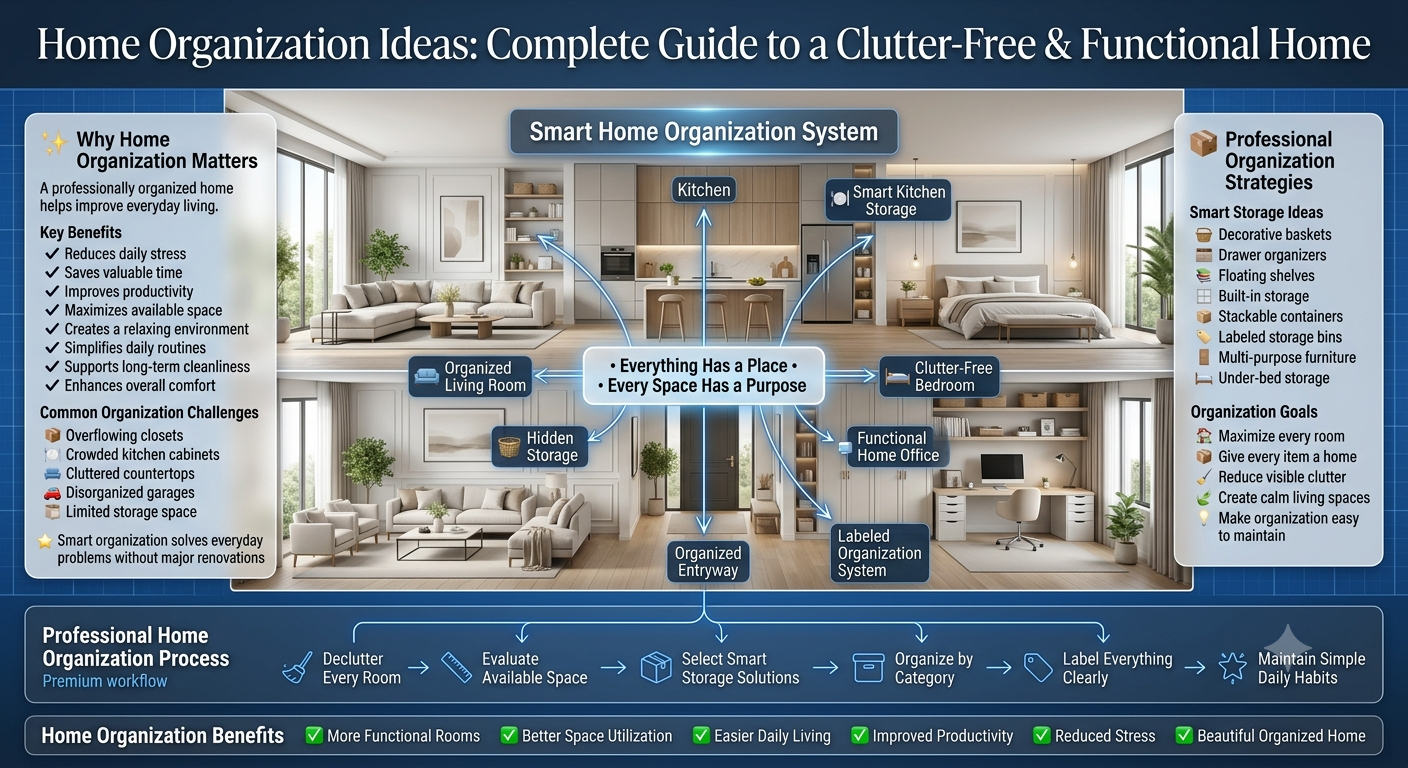
Home Organization Ideas:A well-organized home is more than just visually appealing—it creates a space that supports productivity, reduces stress, saves time, and makes daily routines significantly easier. Whether you live in a compact apartment, a growing family home, or a spacious property, the right home organization ideas can transform every room into a practical and comfortable environment. Organization isn’t about owning fewer possessions; it’s about giving every item a purposeful place while designing systems that are easy to maintain over time.
Many homeowners struggle for home designs with overflowing closets, crowded kitchen cabinets, cluttered countertops, overflowing garages, and storage spaces that never seem large enough. These challenges often arise because homes evolve while storage systems remain unchanged. By applying thoughtful organization strategies, you can maximize existing space without immediately investing in expensive renovations or custom cabinetry.
This comprehensive guide explains how professional organizers, interior designers, and home improvement experts approach residential organization. You’ll learn practical methods for decluttering, selecting the right storage solutions, organizing every room efficiently, avoiding common mistakes, maintaining long-term organization, and making informed decisions based on your home’s size, lifestyle, and budget. Whether your goal is simplifying daily life, preparing for a renovation, increasing property value, or creating a more relaxing living environment, this guide provides actionable solutions for every stage of the organization process.
Quick Answer
Home organization ideas are practical strategies that improve how household items are stored, arranged, and accessed. Effective organization combines decluttering, smart storage solutions, functional layouts, and easy-to-maintain systems to maximize available space while reducing daily stress. The most successful organization plans focus on long-term usability rather than simply making a room look tidy for a short period.
Why Home Organization Matters More Than Ever
Modern homes serve many purposes beyond simply providing shelter. They function as workplaces, classrooms, entertainment spaces, fitness areas, and places for relaxation. As daily activities increase, clutter naturally accumulates, making thoughtful organization essential rather than optional.
A well-organized home offers benefits that extend far beyond appearance. Proper organization can:
- Improve daily efficiency by reducing time spent searching for items.
- Make cleaning and routine maintenance easier.
- Increase usable storage without expanding your home’s footprint.
- Create a calmer and more comfortable living environment.
- Improve household safety by eliminating unnecessary obstacles.
- Protect valuable belongings from damage.
- Simplify future renovations or remodeling projects.
- Enhance your home’s overall functionality and resale appeal.
Instead of relying on temporary cleaning sessions, effective organization creates systems that naturally encourage tidiness every day.
Who Will Benefit From This Guide?
This guide is designed for:
- Homeowners planning to improve everyday living.
- First-time home buyers creating organized spaces from the beginning.
- Families managing children’s toys, clothing, and school supplies.
- Apartment residents working with limited storage.
- DIY enthusiasts interested in affordable organization projects.
- Interior designers developing functional room layouts.
- Home renovators planning storage improvements.
- Property owners preparing homes for resale.
- Contractors incorporating built-in storage during renovations.
- Anyone seeking a clutter-free and easier-to-maintain home.
Regardless of your home’s size, these organization principles can be adapted to fit different layouts, budgets, and lifestyles.
Home Organization Fundamentals
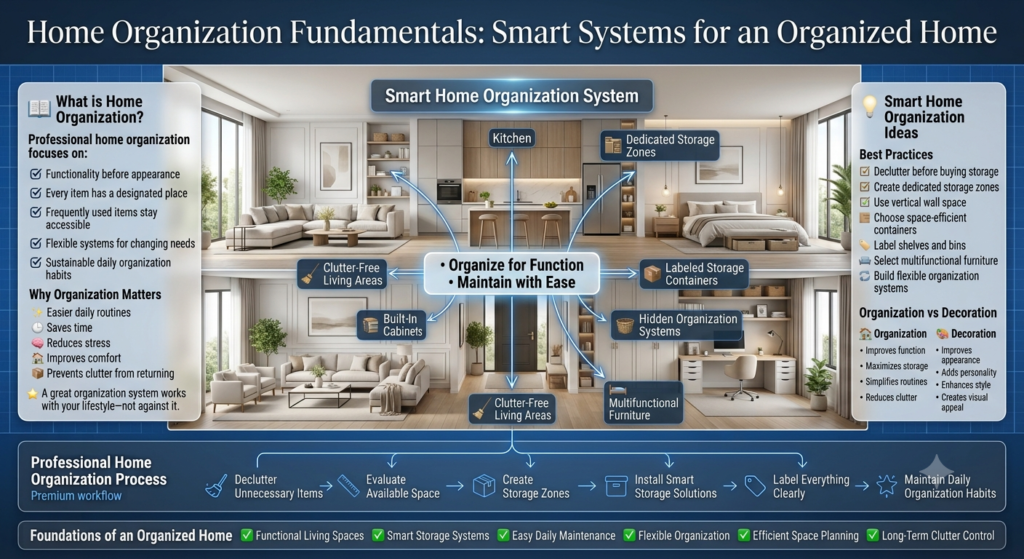
Home organization is the process of creating practical systems that make every area of your home easier to use, maintain, and enjoy. While attractive storage products can enhance the appearance of a room, true organization focuses on improving functionality. Every item should have a designated place, frequently used belongings should remain easily accessible, and storage solutions should support your family’s daily habits rather than complicate them.
Professional organizers often emphasize that organization is not a one-time project. Instead, it is an ongoing system that adapts as your household changes. Whether welcoming a new family member, transitioning to remote work, renovating part of the home, or simply accumulating more belongings over time, organized spaces should remain flexible enough to accommodate changing needs without becoming cluttered again.
A successful organization plan also balances convenience with efficiency. Storing everything out of sight may create a clean appearance initially, but if retrieving or returning items becomes inconvenient, clutter will quickly return. Sustainable organization prioritizes ease of use, ensuring that everyday habits naturally support a tidy environment.
What Are Home Organization Ideas?
Home organization ideas are practical methods, storage techniques, and layout improvements that help homeowners maximize available space while keeping belongings neat, accessible, and protected. These ideas range from simple solutions like drawer dividers and labeled storage bins to comprehensive room redesigns incorporating built-in cabinetry, multifunctional furniture, and customized storage systems.
Unlike decorating, which focuses primarily on aesthetics, organization concentrates on improving how a home functions. The goal is to reduce wasted space, eliminate unnecessary clutter, streamline daily routines, and make every room easier to maintain.
Effective organization strategies often include:
- Decluttering unnecessary possessions before purchasing storage products.
- Creating dedicated storage zones based on how frequently items are used.
- Utilizing vertical wall space for shelving and hanging systems.
- Selecting storage containers that fit available space efficiently.
- Labeling storage areas to improve consistency among family members.
- Designing flexible systems that remain useful as household needs evolve.
Rather than relying on expensive renovations, many organization improvements can be achieved through thoughtful planning and better use of existing storage areas.
Core Principles of Effective Home Organization
Professional home organization is built upon several foundational principles that remain effective regardless of home size or layout.
Everything Needs a Permanent Home
Items without designated storage locations tend to accumulate on countertops, tables, and floors. Assigning every possession a consistent location reduces clutter and simplifies cleanup.
Store Items Near Their Point of Use
Frequently used objects should remain close to where they are regularly needed. Kitchen utensils belong near cooking areas, cleaning supplies near the spaces they service, and office materials within easy reach of workstations.
Prioritize Accessibility
Items used daily deserve the most convenient storage locations. Seasonal decorations, archived documents, and infrequently used equipment can occupy higher shelves or less accessible storage areas.
Maximize Vertical Space
Walls, doors, and tall shelving units provide valuable storage opportunities without reducing usable floor space. Vertical organization is especially beneficial in apartments, compact homes, and rooms with limited square footage.
Keep Similar Items Together
Grouping related belongings improves efficiency and prevents duplicate purchases. Organizing by category rather than location allows homeowners to quickly locate supplies whenever needed.
Benefits of an Organized Home
A thoughtfully organized home provides advantages that extend far beyond appearance.
| Benefit | Practical Impact |
|---|---|
| Reduced Daily Stress | Cleaner surroundings create a calmer living environment. |
| Time Savings | Less time searching for misplaced belongings. |
| Better Space Utilization | Existing storage areas become significantly more efficient. |
| Easier Cleaning | Organized rooms require less effort to maintain. |
| Improved Safety | Fewer trip hazards and better storage of hazardous items. |
| Lower Replacement Costs | Properly stored belongings are less likely to become damaged or lost. |
| Increased Home Value | Well-organized storage areas make homes more attractive to prospective buyers. |
| Greater Productivity | Functional spaces support work, study, and daily routines more effectively. |
These benefits become increasingly noticeable as organization systems become part of everyday habits rather than occasional cleaning efforts.
Common Myths About Home Organization
Many homeowners delay organizing because they believe several common misconceptions.
One widespread myth is that larger homes naturally stay organized. In reality, additional square footage often encourages the accumulation of more possessions, making organization even more important.
Another misconception is that buying storage containers automatically solves clutter problems. Storage products can only organize belongings that genuinely deserve to remain. Without decluttering first, containers often hide clutter rather than eliminate it.
Some people believe organization requires expensive custom cabinetry or professional designers. While custom storage can improve certain spaces, many highly effective organization systems rely on affordable shelving, baskets, labels, hooks, and multifunctional furniture.
Finally, many assume organization is a one-time project. The most successful homes remain organized because their systems are reviewed, adjusted, and maintained regularly as family needs, routines, and possessions change.
Transition to Planning
Understanding the principles of home organization provides a strong foundation, but successful results begin long before purchasing storage products or rearranging furniture. The next step is learning how to evaluate your home’s current layout, identify problem areas, establish realistic goals, and create an organization plan that delivers lasting improvements rather than temporary solutions.
Planning Before You Organize
Successful home organization begins with careful planning rather than immediately purchasing storage bins or rearranging furniture. Professional organizers consistently follow a structured process: evaluate the space, understand how it is used, identify the causes of clutter, and then design storage systems that support everyday routines. Planning first helps prevent wasted money, unnecessary purchases, and organization methods that fail after only a few weeks.
Taking time to analyze your home’s strengths and weaknesses allows you to create solutions tailored to your lifestyle instead of copying organization trends that may not fit your space. Whether organizing a single closet or an entire house, a thoughtful plan lays the foundation for long-term success.
Assess Your Home Before Making Changes
Before moving furniture or buying storage products, evaluate each room objectively. Walk through your home and observe how every space functions during a typical day. Pay attention to areas where clutter frequently accumulates, items that are difficult to access, and storage spaces that are either overcrowded or underused.
Consider questions such as:
- Which rooms create the most daily frustration?
- Where do family members naturally leave belongings?
- Which storage areas remain difficult to access?
- What spaces consistently become cluttered within a few days?
- Are there unused areas that could serve as additional storage?
Documenting these observations provides a clear picture of where improvements will have the greatest impact.
Conduct a Room-by-Room Evaluation
Organizing an entire home at once can quickly become overwhelming. Breaking the project into manageable sections allows you to complete meaningful progress without disrupting daily life.
During your evaluation, examine each room individually:
| Area | What to Evaluate |
|---|---|
| Entryway | Shoes, coats, keys, mail, bags |
| Kitchen | Cabinets, pantry, countertops, refrigerator |
| Living Room | Electronics, books, toys, decorative storage |
| Bedrooms | Clothing, closets, bedside storage |
| Bathrooms | Toiletries, towels, cleaning supplies |
| Laundry Room | Detergents, baskets, folding space |
| Garage | Tools, equipment, seasonal items |
| Basement & Attic | Long-term storage, moisture concerns |
Working room by room makes organization feel achievable while helping you prioritize spaces that affect everyday routines the most.
Identify the Root Causes of Clutter
Clutter is often the result of ineffective systems rather than a lack of effort. Understanding why clutter develops allows you to solve the problem permanently instead of repeatedly cleaning the same areas.
Common causes include:
- Insufficient storage for frequently used items.
- Keeping possessions that are no longer useful.
- Storage locations that are inconvenient to access.
- Lack of labels or clearly defined storage zones.
- Purchasing duplicate items because existing ones cannot be found.
- Family members following different organization habits.
Addressing these underlying issues creates sustainable improvements rather than temporary tidiness.
Declutter Before Buying Storage Products
One of the biggest mistakes homeowners make is purchasing storage containers before reducing unnecessary belongings. Organizing items you no longer need simply transfers clutter from one location to another.
A practical decluttering process involves sorting belongings into four categories:
- Keep
- Donate
- Sell
- Recycle or Dispose
Evaluate each item honestly by asking:
- Have I used this within the last year?
- Does it still serve a practical purpose?
- Would I purchase it again today?
- Is it worth the space it occupies?
Removing unnecessary possessions first allows you to purchase only the storage solutions your home genuinely requires.
Set Clear Organization Goals
Every organization project should begin with realistic and measurable objectives. Instead of simply aiming for a “clean house,” define outcomes that improve daily life.
Examples include:
- Reduce kitchen countertop clutter.
- Create a functional home office workspace.
- Double available closet storage.
- Organize children’s toys for easier cleanup.
- Simplify seasonal decoration storage.
- Improve garage accessibility.
Specific goals help guide storage decisions and make it easier to measure progress throughout the project.
Create an Organization Plan That Fits Your Lifestyle
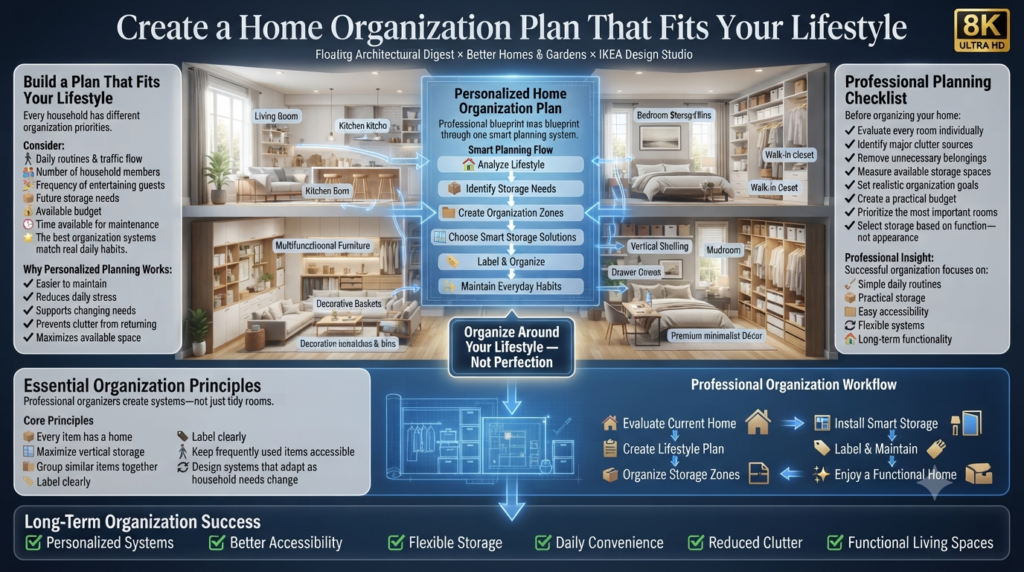
The best organization systems support the way your household naturally lives rather than forcing unrealistic routines. Families with young children, remote workers, pet owners, and retirees all have different storage priorities.
When developing your plan, consider:
- Daily routines and traffic flow.
- Number of household members.
- Frequency of entertaining guests.
- Future storage needs.
- Available budget.
- Time available for maintenance.
A personalized organization plan remains practical because it reflects real habits instead of idealized ones.
Professional Planning Checklist
Before beginning any organization project, confirm that you have completed the following steps:
- ✓ Evaluated every room individually.
- ✓ Identified major clutter sources.
- ✓ Removed unnecessary belongings.
- ✓ Measured available storage spaces.
- ✓ Established realistic organization goals.
- ✓ Determined an appropriate budget.
- ✓ Prioritized the most important rooms first.
- ✓ Selected storage solutions based on actual needs rather than appearance.
Completing this planning stage significantly increases the likelihood that your organization system will remain effective for years instead of requiring constant adjustments.
Transition to the Next Section
With a clear understanding of your home’s current condition and a practical organization plan in place, the next step is learning the essential organization principles that professionals use to maximize storage, improve accessibility, and create systems that remain functional as household needs evolve.
Essential Organization Principles
An organized home is built on consistent systems rather than occasional cleaning sessions. Professional organizers don’t simply arrange belongings—they create practical workflows that make it easy for every family member to find, use, and return items to their proper place. These core organization principles apply to every room, regardless of your home’s size, budget, or architectural style.
When these principles become part of your daily routine, maintaining an organized home requires far less time and effort because the system naturally supports good habits instead of relying on constant motivation.
Declutter With Purpose, Not Emotion
Decluttering is the foundation of every successful organization project. Instead of asking whether an item has sentimental value alone, consider whether it continues to serve a useful purpose in your current lifestyle. Every unnecessary possession occupies valuable storage space that could be used more effectively.
Professional organizers often recommend making decisions based on function rather than guilt. Clothing that no longer fits, duplicate kitchen utensils, broken electronics, expired products, and forgotten hobby supplies often contribute significantly to household clutter.
When deciding what to keep, ask yourself:
- Does this item still have a purpose?
- Do I use it regularly?
- Is it worth the storage space?
- Could someone else benefit from it more?
Making thoughtful decisions during decluttering creates room for better organization without requiring additional storage furniture.
Create Functional Storage Zones
One of the most effective organization strategies is assigning specific zones for different categories of belongings. Instead of scattering similar items throughout the home, store related objects together where they are most frequently used.
For example:
| Zone | Recommended Items |
|---|---|
| Cooking Zone | Pots, pans, utensils, spices |
| Cleaning Zone | Cleaning products, cloths, brushes |
| Work Zone | Office supplies, chargers, documents |
| Entry Zone | Shoes, keys, bags, umbrellas |
| Laundry Zone | Detergent, baskets, stain removers |
| Pet Zone | Food, toys, grooming supplies |
Clearly defined storage zones reduce confusion, simplify cleaning, and help every family member know where items belong.
Prioritize Accessibility
Not every possession deserves premium storage space. Frequently used items should remain within comfortable reach, while rarely used belongings can occupy higher shelves, attic storage, or other less accessible areas.
A practical accessibility hierarchy includes:
Daily Use
- Counter-level storage
- Eye-level shelves
- Easily accessible drawers
Weekly Use
- Middle cabinets
- Standard shelving
Occasional Use
- Upper shelves
- High cabinets
- Under-bed storage
Seasonal or Rarely Used
- Attic
- Basement
- Garage overhead storage
Organizing according to usage frequency reduces unnecessary movement while making everyday routines more efficient.
Make Vertical Space Work Harder
Many homes have unused wall space that can significantly increase storage capacity. Instead of expanding outward, professional organizers often maximize vertical surfaces to preserve valuable floor space.
Popular vertical storage ideas include:
- Floating shelves
- Wall-mounted cabinets
- Pegboards
- Hanging baskets
- Over-the-door organizers
- Tall bookcases
- Ladder shelving
- Magnetic wall storage
- Ceiling-mounted garage racks
Vertical organization is especially valuable in apartments, compact homes, laundry rooms, garages, and small kitchens where every square foot matters.
Use Containers Wisely
Storage containers should organize belongings—not simply hide clutter. Selecting containers that match both the available space and the stored items creates a cleaner appearance while improving accessibility.
Consider these general guidelines:
- Transparent bins for seasonal decorations and archived items.
- Stackable containers for closets and garages.
- Drawer dividers for utensils, office supplies, and cosmetics.
- Decorative baskets for living areas.
- Airtight containers for pantry foods.
- Waterproof storage bins for basements and garages.
Buying containers after decluttering ensures that each storage solution fits your actual needs instead of encouraging unnecessary accumulation.
Label Everything That Needs Consistency
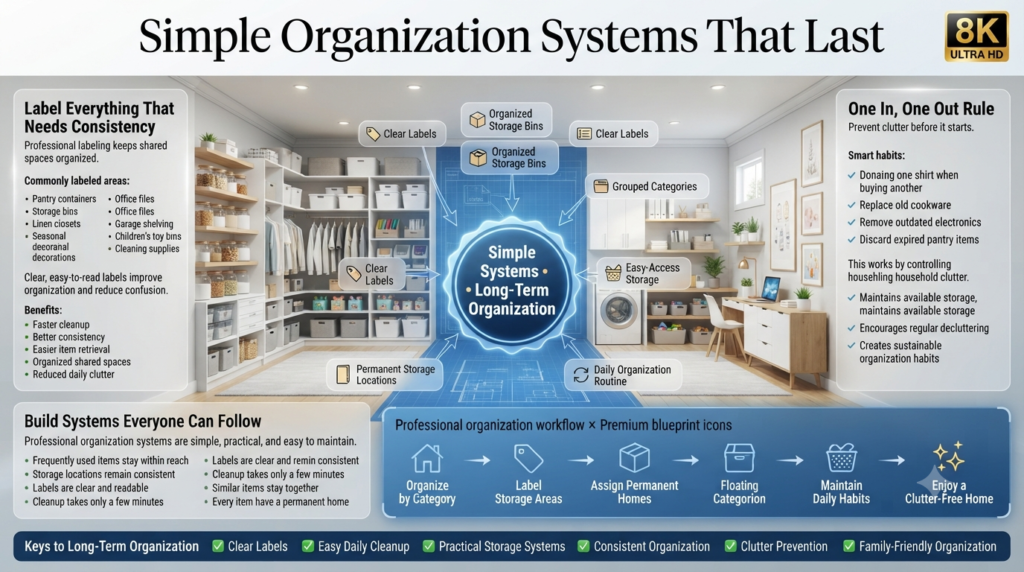
Labels are particularly useful in shared households where multiple people use the same storage areas. Proper labeling reduces confusion, speeds up cleanup, and helps maintain organization over time.
Items commonly labeled include:
- Pantry containers
- Storage bins
- Linen closets
- Seasonal decorations
- Office files
- Garage shelving
- Children’s toy bins
- Cleaning supplies
Simple, easy-to-read labels are often more effective than decorative designs because they prioritize function over appearance.
Follow the “One In, One Out” Rule
One of the easiest ways to prevent future clutter is adopting the “One In, One Out” principle. Whenever a new item enters your home, remove another similar item that is no longer needed.
Examples include:
- Donate one shirt when purchasing a new one.
- Replace old cookware instead of adding duplicates.
- Remove outdated electronics before buying upgrades.
- Discard expired pantry items during grocery restocking.
This simple habit prevents gradual accumulation and helps maintain balanced storage capacity.
Build Systems Everyone Can Follow
Even the most attractive organization system will fail if it is too complicated to maintain. Storage solutions should feel intuitive for every member of the household, including children.
Professional systems typically share these characteristics:
- Frequently used items are easy to reach.
- Storage locations remain consistent.
- Labels are clear.
- Cleanup requires minimal effort.
- Similar items stay together.
- Every object has a permanent home.
Simple systems encourage long-term success because they become part of everyday routines rather than additional chores.
Professional Best Practices
To create organization systems that last for years, professionals recommend:
- Organize based on daily habits rather than appearance alone.
- Leave some empty storage space for future needs.
- Avoid overfilling shelves and drawers.
- Review storage systems every few months.
- Replace ineffective solutions before clutter returns.
- Focus on functionality first and decorative styling second.
These best practices help homes remain organized even as families grow, lifestyles change, and storage requirements evolve.
Transition to the Next Section
With the fundamental organization principles established, it’s time to apply them room by room. The first area most guests and family members encounter is the entryway, where smart storage solutions can reduce daily clutter, improve convenience, and create a welcoming first impression throughout the home.
Profesional Reviews for your Best Knowledge coverage
- Home Organization Ideas begin with removing unnecessary items before reorganizing any living space.
- Home Organization Ideas help create cleaner, more functional rooms for everyday living.
- Home Organization Ideas encourage assigning every household item a permanent storage location.
- Home Organization Ideas support organizing one room at a time for better long-term results.
- Home Organization Ideas recommend using storage containers to group similar belongings together.
- Home Organization Ideas improve efficiency by labeling shelves, bins, and storage boxes clearly.
- Home Organization Ideas encourage keeping frequently used items within easy reach.
- Home Organization Ideas support maximizing vertical storage through shelves and wall organizers.
- Home Organization Ideas recommend using multifunctional furniture with hidden storage compartments.
- Home Organization Ideas help reduce clutter by maintaining simple daily organization habits.
- Home Organization Ideas encourage organizing closets according to clothing type and seasonal use.
- Home Organization Ideas improve kitchen efficiency through organized cabinets and pantry storage.
- Home Organization Ideas support arranging cookware and utensils based on daily usage.
- Home Organization Ideas recommend storing food in clear containers for easier visibility.
- Home Organization Ideas improve bathroom organization with shelves, baskets, and drawer dividers.
- Home Organization Ideas encourage separating personal care products into organized categories.
- Home Organization Ideas support maintaining tidy countertops by reducing unnecessary decorative items.
- Home Organization Ideas recommend using drawer organizers to maximize available storage.
- Home Organization Ideas improve bedroom comfort through organized wardrobes and bedside storage.
- Home Organization Ideas encourage storing seasonal clothing separately to free everyday closet space.
- Home Organization Ideas support creating dedicated workspaces with organized office supplies.
- Home Organization Ideas recommend keeping important documents in labeled folders for quick access.
- Home Organization Ideas improve productivity through clean and organized study areas.
- Home Organization Ideas encourage managing electronic cables with simple cable organizers.
- Home Organization Ideas support creating organized entryways for shoes, bags, and everyday essentials.
- Home Organization Ideas recommend using hooks to maximize unused wall space.
- Home Organization Ideas improve laundry room efficiency through organized cleaning supplies.
- Home Organization Ideas encourage separating cleaning products into clearly labeled storage areas.
- Home Organization Ideas support maintaining organized garages with wall-mounted storage systems.
- Home Organization Ideas recommend storing tools according to category and frequency of use.
- Home Organization Ideas improve outdoor storage through weather-resistant cabinets and containers.
- Home Organization Ideas encourage organizing gardening equipment for easier maintenance.
- Home Organization Ideas support creating designated storage areas for children’s toys.
- Home Organization Ideas recommend rotating toys regularly to reduce household clutter.
- Home Organization Ideas improve family routines through consistent organization habits.
- Home Organization Ideas encourage involving every family member in maintaining organized spaces.
- Home Organization Ideas support weekly decluttering sessions to prevent unnecessary accumulation.
- Home Organization Ideas recommend donating unused belongings instead of storing them indefinitely.
- Home Organization Ideas improve home appearance through simple and consistent organization practices.
- Home Organization Ideas encourage selecting storage solutions that match room dimensions.
- Home Organization Ideas support balancing functionality with attractive interior design.
- Home Organization Ideas recommend reviewing storage systems regularly as family needs change.
- Home Organization Ideas improve accessibility by grouping related household items together.
- Home Organization Ideas encourage maintaining open surfaces for a cleaner visual appearance.
- Home Organization Ideas support simplifying daily routines through organized living spaces.
- Home Organization Ideas recommend using transparent containers to identify stored items quickly.
- Home Organization Ideas improve long-term organization through consistent maintenance rather than occasional deep cleaning.
- Home Organization Ideas encourage replacing ineffective storage systems with more practical solutions.
- Home Organization Ideas support maximizing available space without overcrowding rooms.
- Home Organization Ideas recommend creating personalized organization systems that fit your lifestyle.
- Home Organization Ideas improve household efficiency by reducing time spent searching for everyday items.
- Home Organization Ideas encourage organizing decorative accessories without creating unnecessary visual clutter.
- Home Organization Ideas support maintaining organized digital documents alongside physical records.
- Home Organization Ideas recommend scheduling regular reviews of storage areas throughout the home.
- Home Organization Ideas improve room functionality by eliminating unnecessary furniture and decorations.
- Home Organization Ideas encourage choosing durable storage products designed for long-term daily use.
- Home Organization Ideas support maintaining calm, comfortable environments through thoughtful organization.
- Home Organization Ideas recommend establishing simple habits that prevent clutter from returning.
- Home Organization Ideas demonstrate that organized homes require consistent daily attention rather than large occasional efforts.
- Home Organization Ideas ultimately create cleaner, more efficient, and more enjoyable living spaces by combining practical storage solutions, thoughtful planning, regular decluttering, organized routines, and consistent maintenance that improve comfort, reduce stress, and simplify everyday life.
Most Frequently Asked Faqs
What are the best home organization ideas for small spaces?
Small homes become far more functional when every square foot serves a purpose. The most effective organization strategies focus on maximizing vertical space, choosing multi-functional furniture, and eliminating unnecessary clutter before adding storage solutions. Instead of purchasing more containers, begin by identifying items you use regularly and removing those that no longer add value. This creates space while making the home easier to maintain.
Smart organization also involves dividing each room into dedicated activity zones. Bedrooms, kitchens, living rooms, and entryways should each have clearly defined storage areas that support daily routines. Well-planned organization improves accessibility, reduces visual clutter, and makes even compact homes feel more open and comfortable.
Effective small-space organization ideas:
Install floating shelves and wall storage.
Use under-bed storage containers.
Choose furniture with hidden storage.
Add over-the-door organizers.
Utilize vertical closet space.
Store seasonal items separately.
How do I organize my home when I have too much clutter?
The first step is decluttering before organizing. Trying to organize unnecessary belongings only creates more storage problems. Work through one room at a time, sorting items into categories such as keep, donate, recycle, or discard. Focusing on small areas instead of the entire home makes the process more manageable and helps maintain motivation.
After removing excess items, assign a permanent storage location for everything you keep. When every object has a designated place, daily cleaning becomes much faster and clutter is less likely to accumulate again. Developing consistent habits is just as important as purchasing storage products.
Simple decluttering process:
Organize one room at a time.
Remove unused or duplicate items.
Donate items in good condition.
Group similar belongings together.
Assign permanent storage locations.
Maintain a regular decluttering schedule.
Which storage solutions are best for maximizing space in every room?
The best storage solutions combine functionality, accessibility, and efficient use of available space. Rather than relying only on cabinets or closets, homeowners should utilize vertical surfaces, hidden storage compartments, modular shelving, and multi-purpose furniture. These solutions increase storage capacity without making rooms feel crowded.
Every room has different storage requirements, so selecting products based on daily use leads to better long-term organization. Frequently used items should remain easily accessible, while seasonal or rarely used belongings can be stored in less accessible spaces.
Highly effective storage solutions:
Adjustable shelving systems.
Stackable storage bins.
Built-in cabinets.
Under-bed storage drawers.
Storage ottomans and benches.
Closet organizers and drawer dividers.
How can I keep my home organized long-term without spending hours cleaning?
Long-term organization depends more on daily habits than occasional deep cleaning. Returning items to their designated places immediately after use prevents clutter from building up and reduces the need for time-consuming cleaning sessions. Even spending a few minutes each day maintaining organization can significantly improve household efficiency.
Creating simple routines for every family member also helps maintain consistency. Regularly reviewing storage areas and removing unnecessary items prevents overcrowding while ensuring the organization system continues to work as household needs change over time.
Habits that maintain organization:
Put items away immediately after use.
Spend 10–15 minutes tidying each day.
Declutter regularly.
Label storage containers.
Review storage areas monthly.
Involve every family member in organization.
What are the most common home organization mistakes to avoid?
One of the biggest mistakes is purchasing storage products before decluttering. Adding more containers without reducing unnecessary belongings often hides clutter instead of solving it. Another common error is creating overly complicated organization systems that are difficult to maintain during everyday life.
Successful organization should be simple, practical, and suited to your lifestyle. Storage systems that require excessive effort are unlikely to remain organized over the long term. Focusing on accessibility and consistency produces much better results than pursuing perfection.
Mistakes to avoid:
Buying storage before decluttering.
Keeping unnecessary duplicate items.
Ignoring vertical storage opportunities.
Overfilling closets and cabinets.
Creating overly complicated systems.
Failing to maintain regular organization habits.
Should I hire a professional home organizer or organize my home myself?
The right choice depends on the size of the project, your available time, and the level of assistance you need. Many homeowners successfully organize their homes independently using practical planning, decluttering strategies, and affordable storage solutions. DIY organization also allows you to work at your own pace while reducing costs.
A professional organizer may be beneficial for large homes, major life transitions, downsizing, moving, or situations involving severe clutter. Their expertise can help develop efficient storage systems, improve workflow, and save considerable time during complex organization projects.
DIY is ideal for:
Small organization projects.
Budget-conscious homeowners.
Routine decluttering.
Individual rooms.
Seasonal organization.
Regular household maintenance.
Hire a professional for:
Whole-home organization.
Major downsizing.
Moving into a new home.
Severe clutter challenges.
Custom storage planning.
Time-sensitive projects.
What are the most affordable home organization ideas that actually work?
Effective home organization does not require expensive storage systems. Many affordable solutions focus on making better use of existing space while adopting consistent organization habits. Repurposing containers, installing inexpensive shelves, using drawer dividers, and adding hooks can significantly improve organization without exceeding a modest budget.
The most successful low-cost improvements emphasize functionality over appearance. Investing in practical storage that supports everyday routines provides greater long-term value than purchasing decorative products that do not solve actual storage problems.
Budget-friendly organization ideas:
Install inexpensive floating shelves.
Use clear storage bins.
Add wall hooks and pegboards.
Repurpose baskets and containers.
Organize drawers with simple dividers.
Label storage areas for easy identification.