
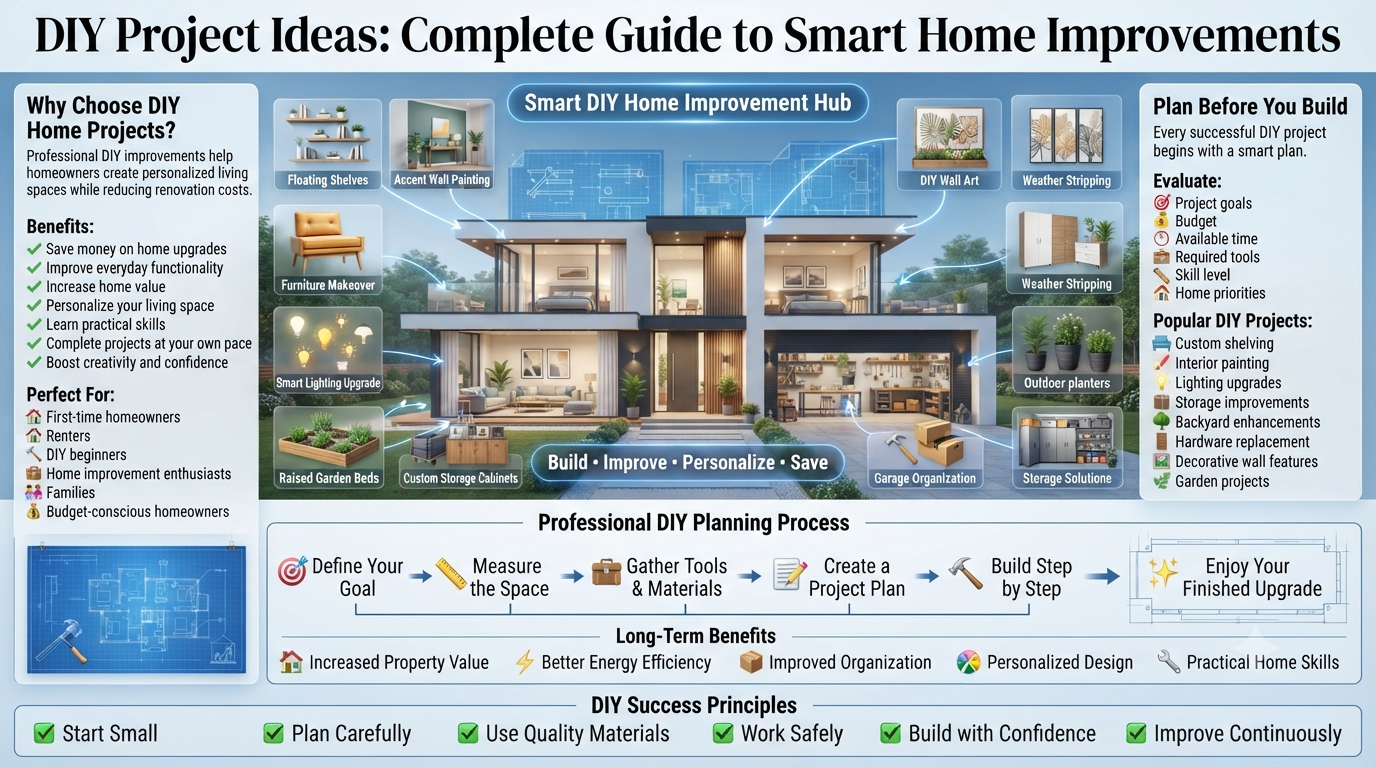
DIY Project Ideas:Home improvement doesn’t always require hiring contractors or investing thousands of dollars. With the right DIY project ideas, almost anyone can upgrade their living space, improve functionality, and add personal style while keeping costs under control. Whether you’re a first-time homeowner, a renter looking for removable upgrades, or an experienced DIY enthusiast, taking on projects yourself can be both rewarding and practical. From simple decorative improvements to more advanced renovations, DIY projects allow you to customize your home according to your needs, schedule, and budget.
The popularity of DIY home improvement has grown significantly as more people seek affordable ways to improve their homes without sacrificing quality. Easy access to online tutorials, modern power tools, and beginner-friendly materials has made it possible for people with little experience to complete projects that once required professional skills. At the same time, homeowners have become more interested in creating personalized spaces that reflect their lifestyles while increasing property value through thoughtful improvements.
Choosing the right DIY project begins with understanding your goals. Some homeowners want to maximize storage in small rooms, while others focus on improving energy efficiency, refreshing outdated interiors, or enhancing outdoor living spaces. Successful DIY planning also involves evaluating available time, budget, tools, and personal skill level. Starting with manageable projects helps build confidence before moving on to more complex renovations that involve carpentry, plumbing, painting, or electrical work.
One of the greatest advantages of DIY home projects is flexibility. You can complete work in stages, adjust designs as your needs change, and prioritize improvements based on your budget. Unlike full-scale renovations that often require significant planning and scheduling, many DIY projects can be completed over a weekend, making them ideal for busy homeowners who want continuous improvements without major disruptions.
DIY projects also encourage creativity. Instead of purchasing expensive ready-made furniture or décor, you can build custom shelving, repurpose old furniture, create unique wall art, or design storage solutions tailored specifically to your home’s layout. These personalized improvements often provide greater satisfaction because they combine functionality with individual style, making every finished project feel unique.
Beyond aesthetics, many DIY improvements deliver practical long-term benefits. Installing weather stripping, improving insulation, organizing storage spaces, replacing outdated hardware, upgrading lighting, or building raised garden beds can improve daily comfort while reducing maintenance costs. Small improvements completed consistently often have a greater cumulative impact than waiting years for one large renovation.
This comprehensive guide explores DIY project ideas for every skill level, room, budget, and season. You’ll learn how to choose the right projects, prepare safely, select appropriate materials and tools, avoid common mistakes, and decide when professional assistance is the smarter option. Whether your goal is increasing home value, improving organization, enhancing outdoor spaces, or simply enjoying the satisfaction of building something yourself, this guide provides practical knowledge to help you complete successful DIY projects with confidence.
What Are DIY Project Ideas?
DIY project ideas are home improvement, decorating, repair, organization, and construction tasks that individuals complete themselves instead of hiring professionals. These projects range from simple upgrades like painting walls or installing shelves to more advanced tasks such as building furniture, remodeling rooms, landscaping gardens, or improving energy efficiency. The primary goal of DIY projects is to solve practical problems, personalize living spaces, reduce costs, and develop useful skills while maintaining control over the design and execution of the work.
Unlike professional renovations that often involve contractors, architects, and specialized labor, DIY projects are designed to match the homeowner’s available skills and resources. Beginners may start with low-risk tasks requiring minimal tools, while experienced DIY enthusiasts can gradually tackle structural improvements, custom woodworking, or outdoor construction projects. Regardless of complexity, successful DIY work depends on careful planning, proper safety practices, accurate measurements, quality materials, and realistic expectations.
DIY projects also play an important role in modern homeownership because they encourage ongoing maintenance rather than waiting for major repairs. Small improvements completed regularly help preserve property value, improve comfort, and prevent minor issues from becoming expensive problems. As a result, DIY home improvement has evolved beyond a hobby into a practical strategy for maintaining and enhancing residential properties over the long term.
Why DIY Home Improvement Continues to Grow
DIY home improvement continues to gain popularity because it offers homeowners greater control over their living spaces while helping them save money and learn valuable practical skills. Rising labor costs, increased access to online tutorials, affordable tools, and readily available building materials have made home improvement projects more approachable than ever. Instead of waiting for professional availability or paying premium service fees, many homeowners now choose to complete projects on their own whenever possible.
Modern technology has also transformed the DIY experience. Step-by-step video guides, mobile measuring applications, digital design software, and virtual planning tools allow beginners to understand complex projects before purchasing materials. This accessibility reduces uncertainty and encourages more people to attempt projects that previously seemed too difficult. Whether building custom shelving, installing flooring, or refreshing interior paint, homeowners can now learn at their own pace while following proven techniques.
Economic factors have further accelerated DIY adoption. Many families prefer improving their current homes rather than moving to larger properties, making renovation and space optimization increasingly important. Instead of investing in expensive additions, homeowners often focus on practical upgrades that improve comfort, storage, efficiency, and appearance while staying within a manageable budget. Small weekend projects completed consistently can gradually transform an entire home without creating significant financial strain.
Another major reason for DIY’s continued growth is personalization. Professional renovations often follow standard designs, whereas DIY projects allow homeowners to customize every detail according to their preferences. From selecting unique finishes and materials to creating furniture that perfectly fits awkward spaces, DIY offers creative freedom that mass-produced products cannot always provide. This personal involvement often results in spaces that feel more meaningful and functional for everyday living.
Sustainability has also become a driving force behind many DIY projects. Rather than replacing usable furniture or building materials, homeowners increasingly restore, repaint, recycle, or repurpose existing items. Upcycling old cabinets, converting wooden pallets into outdoor furniture, or refinishing vintage tables reduces waste while lowering renovation costs. These environmentally responsible practices align with growing interest in sustainable home improvement.
Perhaps the most rewarding aspect of DIY home improvement is the sense of accomplishment it creates. Completing a project successfully builds confidence, develops practical problem-solving abilities, and encourages homeowners to tackle increasingly ambitious renovations. Over time, these experiences help individuals develop valuable skills in woodworking, painting, decorating, organization, landscaping, and basic home maintenance that continue to benefit them for years.
Benefits of DIY Projects for Homeowners and Renters
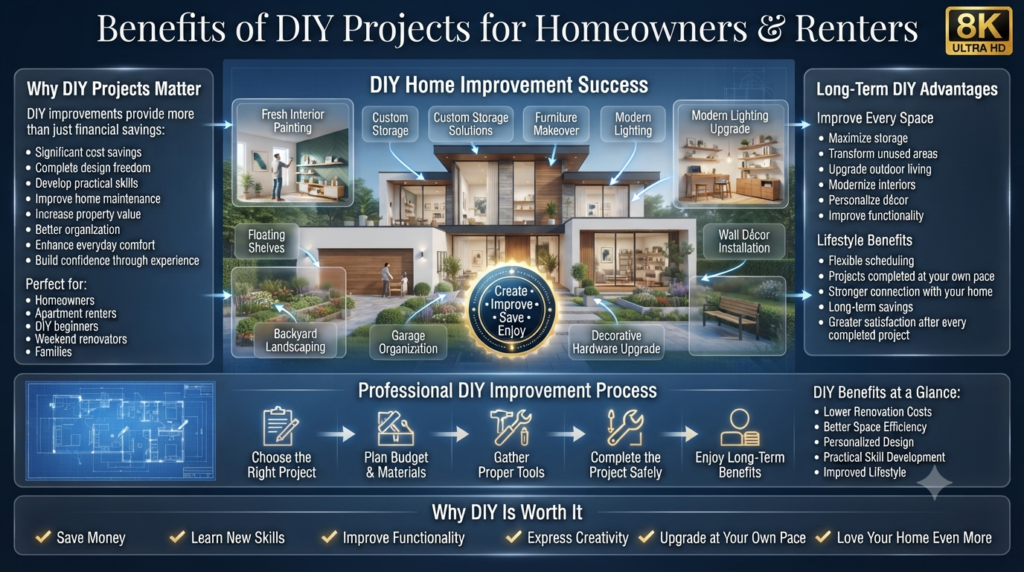
DIY projects offer advantages that extend well beyond financial savings. Whether you own your home or rent an apartment, carefully selected projects can improve comfort, functionality, organization, and overall quality of life while helping you make better use of available space.
Significant Cost Savings
One of the biggest advantages of DIY home improvement is reducing labor expenses. Professional installation often accounts for a large percentage of renovation costs. By completing appropriate tasks yourself, you pay primarily for materials and tools rather than hourly labor charges. Even simple improvements like painting rooms, installing shelving, replacing cabinet hardware, or building storage units can result in substantial savings.
Complete Design Freedom
DIY projects allow homeowners to make decisions without relying on standard contractor packages or limited product selections. Every detail—including materials, colors, finishes, layouts, and decorative elements—can be tailored to personal preferences. This flexibility helps create living spaces that better reflect individual lifestyles and functional requirements.
Skill Development
Each completed project teaches valuable practical skills. Beginners gradually learn accurate measuring, safe tool operation, material selection, project planning, surface preparation, finishing techniques, and basic repair methods. These skills become increasingly useful for future maintenance and renovation work throughout homeownership.
Better Home Maintenance
DIY encourages homeowners to inspect their property more closely. During projects, individuals often discover small issues such as loose trim, minor leaks, damaged caulking, worn weather stripping, or developing moisture problems before they become expensive repairs. Preventive maintenance protects both the home’s structure and long-term value.
Increased Property Value
Well-executed DIY improvements can enhance market appeal when performed to a professional standard. Fresh paint, updated lighting, improved storage, attractive landscaping, refinished cabinetry, and organized living spaces often create a stronger first impression for potential buyers while increasing everyday enjoyment for current occupants.
Greater Space Efficiency
Many homes contain underutilized areas that can be transformed through thoughtful DIY projects. Empty corners, wall space, stair storage, closets, garages, attics, and outdoor areas can all become more functional through custom-built shelving, storage benches, workstations, or organizational systems designed specifically for the available space.
Creative Expression
DIY projects allow homeowners to express creativity in ways that commercially manufactured products cannot always provide. Handmade decorations, custom furniture, feature walls, decorative lighting, and personalized storage solutions create unique interiors that reflect personal taste rather than following mass-market trends.
Flexible Scheduling
Unlike contractor-managed renovations, DIY projects can be completed according to your own schedule. Homeowners may spread work across evenings or weekends, pause projects when necessary, and adjust timelines based on budget, weather, or family commitments. This flexibility reduces disruption while making large improvement goals easier to achieve over time.
Greater Appreciation for Your Home
People often develop a stronger connection to spaces they have personally improved. Every completed project represents time, effort, and craftsmanship, making the home feel more personal and rewarding. This sense of ownership frequently motivates continued maintenance and future improvements that preserve both appearance and functionality.
How to Choose the Right DIY Project
Choosing the right DIY project is the foundation of a successful home improvement experience. A project that matches your available time, budget, skill level, and long-term goals is far more likely to be completed safely and produce satisfying results. Rather than selecting projects based solely on popularity, evaluate your home’s actual needs and prioritize improvements that deliver lasting value.
Before purchasing materials, walk through your home and identify areas that need attention. Look for wasted storage space, outdated finishes, damaged fixtures, inefficient layouts, poor lighting, or maintenance issues. Creating a simple priority list helps you invest your time and money where improvements will have the greatest impact instead of starting multiple unfinished projects.
Choose Based on Your Skill Level
Every DIY enthusiast starts somewhere. Beginners should focus on projects that involve minimal risk while building confidence and practical experience.
| Skill Level | Recommended Projects |
|---|---|
| Beginner | Painting walls, installing shelves, organizing closets, replacing cabinet handles, decorating walls |
| Intermediate | Building furniture, laying laminate flooring, installing backsplashes, constructing garden beds |
| Advanced | Bathroom remodeling, deck construction, custom cabinetry, extensive woodworking, structural improvements |
Starting with manageable projects reduces mistakes while allowing you to become comfortable using tools, measuring accurately, and following step-by-step instructions before attempting more technical renovations.
Consider Your Budget
A realistic budget prevents unfinished projects and unnecessary spending. Divide your budget into four categories:
- Materials
- Tools
- Safety equipment
- Emergency contingency (10–20%)
Many homeowners already own basic tools, allowing them to invest more in higher-quality materials. Purchasing durable materials often improves the longevity and appearance of finished projects while reducing future maintenance.
Evaluate Available Time
Time is often underestimated during DIY renovations. Small decorative projects may take only a few hours, while larger improvements require several weekends. Consider family schedules, weather conditions for outdoor work, and drying or curing times for paint, adhesives, and finishes before beginning.
Match Projects to Your Home
Every property has different priorities. Older homes may require maintenance and repairs before cosmetic upgrades, while newer homes often benefit from improved organization, storage, landscaping, or personalization. Selecting projects that solve real problems creates greater long-term value than simply following current design trends.
Essential DIY Tools Every Beginner Should Own
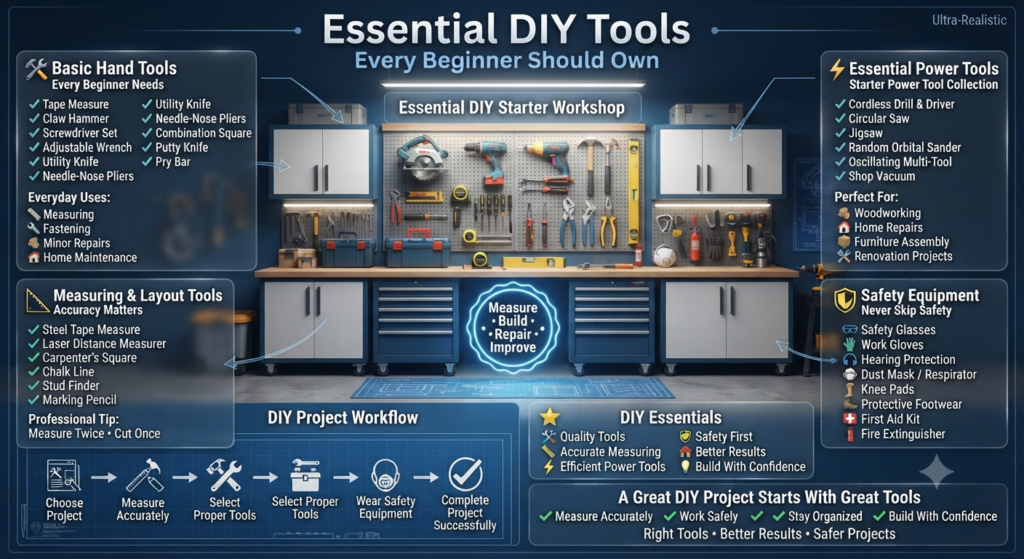
Having the right tools makes DIY projects safer, faster, and more accurate. While professional workshops contain dozens of specialized tools, beginners only need a carefully selected collection of reliable essentials. Investing in quality tools early often saves money over time because well-built equipment lasts longer, performs better, and produces more precise results.
Basic Hand Tools
These tools form the foundation of nearly every home improvement project.
- Tape measure
- Claw hammer
- Adjustable wrench
- Screwdriver set
- Utility knife
- Needle-nose pliers
- Level
- Combination square
- Putty knife
- Pry bar
These simple tools handle measuring, fastening, adjustments, minor repairs, and general household maintenance.
Measuring and Layout Tools
Accurate measurements are critical for professional-looking results. Even small measuring mistakes can affect cabinetry, flooring, shelving, and furniture construction.
Useful measuring tools include:
- Steel tape measure
- Laser distance measurer
- Carpenter’s square
- Chalk line
- Marking pencils
- Stud finder
Careful measuring before cutting materials significantly reduces waste and improves installation accuracy.
Essential Power Tools
As your experience grows, a few versatile power tools dramatically increase efficiency.
Recommended starter power tools include:
- Cordless drill and driver
- Circular saw
- Jigsaw
- Random orbital sander
- Oscillating multi-tool
- Shop vacuum
These tools are suitable for a wide variety of woodworking, installation, repair, and renovation projects without requiring a fully equipped workshop.
Safety Equipment
Safety should never be treated as optional. Every DIY workspace should include protective equipment appropriate for the task being performed.
Essential safety items include:
- Safety glasses
- Work gloves
- Hearing protection
- Dust masks or respirators
- Knee pads
- Protective footwear
- First aid kit
- Fire extinguisher
Proper safety equipment helps prevent injuries while allowing homeowners to work comfortably for extended periods.
Tool Storage and Maintenance
Well-maintained tools perform better and last much longer. Store equipment in a clean, dry location to prevent rust and damage. Keep cutting blades sharp, replace worn accessories promptly, clean tools after every project, and periodically inspect electrical cords and batteries for wear. Organized storage systems also save time by making tools easier to locate before each project.
Professional DIY enthusiasts often recommend purchasing tools gradually rather than buying large kits filled with equipment that may never be used. Building a collection based on actual project needs ensures every purchase provides long-term value while supporting future home improvement goals.
DIY Safety Tips Before Starting Any Project
Safety is the most important part of any DIY project, regardless of your experience level. Even simple home improvements can lead to injuries or property damage if proper precautions are ignored. A few minutes spent preparing your workspace, inspecting your tools, and wearing the correct protective equipment can prevent accidents that may delay your project or result in costly repairs. Professional contractors prioritize safety before beginning any task, and homeowners should follow the same approach.
Before starting any project, read the instructions for all tools, materials, adhesives, paints, and hardware you plan to use. Many products have specific safety requirements, drying times, temperature limitations, and ventilation recommendations that directly affect both performance and personal safety. Never assume all products work the same way simply because they appear similar.
Wear Appropriate Personal Protective Equipment
Protective equipment helps reduce the risk of injury while improving confidence during DIY work. The type of protection required depends on the project, but several items should always be available in your workshop.
Essential protective gear includes:
- Safety glasses to protect against flying debris
- Heavy-duty work gloves for handling rough materials
- Hearing protection when using power tools
- Dust masks or respirators when sanding or painting
- Steel-toe or closed-toe shoes for foot protection
- Knee pads for flooring and low-level installations
Proper clothing is equally important. Avoid loose sleeves, dangling jewelry, or long hair that could become caught in rotating tools or machinery.
Prepare a Safe Workspace
A clean and organized workspace reduces distractions while improving efficiency. Remove unnecessary clutter, secure extension cords away from walking paths, and ensure there is enough lighting to clearly see measurements, cutting lines, and work surfaces.
Good workspace preparation should include:
- Adequate ventilation
- Stable workbenches
- Dry, non-slip flooring
- Proper lighting
- Easy access to emergency exits
- A stocked first aid kit nearby
Outdoor projects also require consideration of weather conditions. Rain, excessive heat, or strong winds can affect both safety and project quality.
Inspect Tools Before Use
Never begin work with damaged or poorly maintained equipment. Inspect power cords, batteries, blades, drill bits, handles, and safety guards before each use. Replace worn accessories immediately rather than attempting to complete “just one more project” with damaged equipment.
Sharp tools are actually safer than dull ones because they require less force and provide better control. Keeping blades clean and sharp reduces slipping while improving cutting accuracy.
Practice Electrical Safety
Many home improvement projects involve electricity, even when electrical wiring itself is not being modified. Extension cords, power tools, lighting, and outdoor equipment should all be used carefully.
Always:
- Keep electrical tools away from standing water.
- Disconnect power before changing blades or drill bits.
- Avoid overloading electrical outlets.
- Use outdoor-rated extension cords when working outside.
- Turn off the home’s circuit breaker before working near electrical wiring.
Electrical repairs involving household wiring should only be attempted if you fully understand local electrical codes and safe installation procedures.
Handle Materials Properly
Construction materials can present unexpected hazards. Paints, stains, solvents, adhesives, insulation, and treated lumber may require special handling or ventilation.
Store chemicals in their original containers, follow manufacturer instructions carefully, and avoid mixing products unless specifically recommended. Proper storage also prevents accidental spills and extends product lifespan.
Best DIY Project Ideas for Every Room
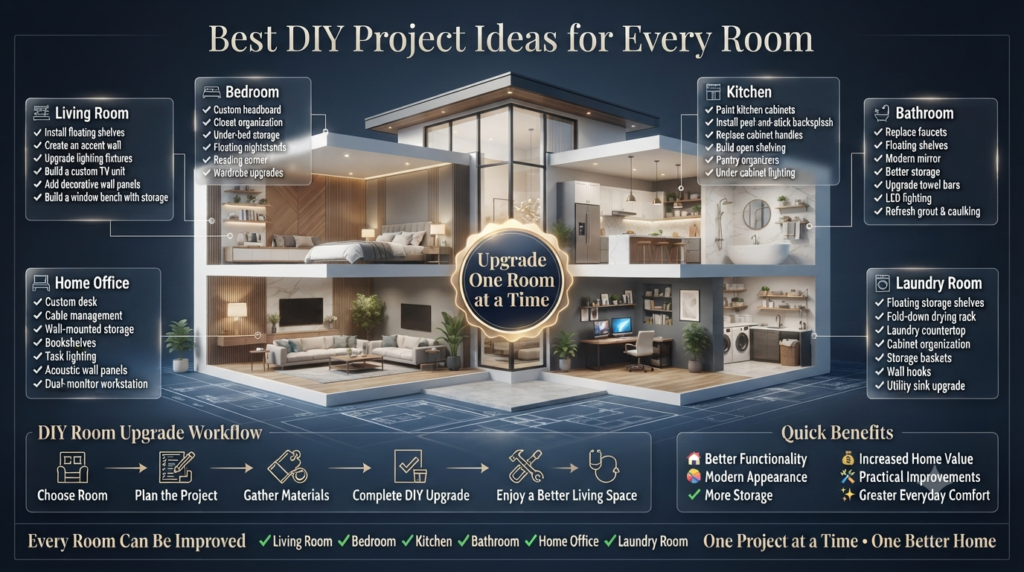
Every room in a home offers opportunities for practical improvements that increase comfort, functionality, and visual appeal. Rather than renovating an entire house at once, many homeowners achieve better results by improving one room at a time. This phased approach keeps projects manageable while allowing each completed space to provide immediate benefits.
Living Room DIY Projects
The living room is often the most frequently used area of the home, making it an excellent place to begin DIY improvements.
Popular projects include:
- Installing floating shelves
- Creating an accent wall
- Building a custom entertainment center
- Upgrading lighting fixtures
- Installing decorative wall panels
- Building window benches with hidden storage
- Repainting walls using modern neutral colors
Simple improvements such as updated lighting and custom shelving can dramatically change both functionality and appearance without requiring major renovations.
Bedroom DIY Projects
Bedrooms should prioritize comfort, organization, and efficient use of space.
Excellent bedroom DIY ideas include:
- Building custom headboards
- Installing closet organization systems
- Creating under-bed storage
- Adding floating nightstands
- Installing blackout curtain rods
- Building reading corners
- Upgrading wardrobe storage
Small bedrooms particularly benefit from vertical storage solutions that maximize available wall space without making the room feel crowded.
Kitchen DIY Projects
Kitchen improvements often provide some of the highest returns on investment while improving everyday convenience.
Popular kitchen projects include:
- Painting kitchen cabinets
- Installing peel-and-stick backsplashes
- Replacing cabinet handles
- Building open shelving
- Creating pantry organizers
- Installing under-cabinet lighting
- Building rolling kitchen islands
Many of these upgrades can be completed over a weekend while giving the kitchen a refreshed, modern appearance.
Bathroom DIY Projects
Bathrooms offer numerous opportunities for affordable improvements that make the space feel cleaner, brighter, and more functional.
Common DIY bathroom projects include:
- Replacing faucets
- Installing floating shelves
- Updating mirrors
- Improving storage cabinets
- Replacing towel bars
- Installing better lighting
- Refreshing grout and caulking
Moisture-resistant materials should always be selected for bathroom renovations to improve durability and reduce long-term maintenance.
Home Office DIY Projects
As remote work continues to grow, home offices have become increasingly important.
Useful office projects include:
- Building custom desks
- Installing cable management systems
- Creating wall-mounted storage
- Building bookshelves
- Improving task lighting
- Installing acoustic wall panels
- Creating dual-monitor workstations
An organized workspace increases productivity while making daily work more comfortable.
Laundry Room DIY Projects
Laundry rooms are often overlooked despite offering excellent opportunities for improved organization.
Useful upgrades include:
- Wall-mounted drying racks
- Storage cabinets
- Folding stations
- Detergent organizers
- Floating shelves
- Utility sink storage
- Rolling laundry carts
Efficient storage helps maximize limited space while simplifying household chores.
Entryway DIY Projects
The entryway creates the first impression of your home while serving as a practical transition area.
Great DIY entryway improvements include:
- Shoe storage benches
- Coat hooks
- Wall organizers
- Decorative mirrors
- Mail sorting stations
- Key holders
- Built-in cubbies
Well-designed entryway storage reduces clutter throughout the rest of the home while improving everyday organization.
Profesional Experts Reveal thier Reviews ! 50 + here’s
- DIY Project Ideas begin with selecting projects that match your skill level and available tools.
- DIY Project Ideas help homeowners improve living spaces while developing practical home improvement skills.
- DIY Project Ideas encourage careful planning before purchasing materials or starting construction.
- DIY Project Ideas become more successful when every project includes a realistic budget.
- DIY Project Ideas support creating customized home solutions that reflect personal style.
- DIY Project Ideas recommend measuring carefully before cutting or assembling materials.
- DIY Project Ideas improve project quality through patience and attention to detail.
- DIY Project Ideas encourage using quality materials for stronger and longer-lasting results.
- DIY Project Ideas support repainting furniture to give older pieces a fresh appearance.
- DIY Project Ideas recommend building simple shelves to increase home storage.
- DIY Project Ideas improve organization by creating custom storage boxes and organizers.
- DIY Project Ideas encourage designing decorative wall art using affordable materials.
- DIY Project Ideas support creating personalized picture frames for family photographs.
- DIY Project Ideas recommend building simple garden planters for flowers and vegetables.
- DIY Project Ideas improve outdoor spaces through handcrafted benches or seating areas.
- DIY Project Ideas encourage installing floating shelves to maximize vertical storage.
- DIY Project Ideas support upgrading lighting fixtures for a modern interior appearance.
- DIY Project Ideas recommend refreshing kitchen cabinets with new paint and hardware.
- DIY Project Ideas improve bathrooms through simple storage and organization upgrades.
- DIY Project Ideas encourage creating attractive entryway organizers for everyday essentials.
- DIY Project Ideas support building custom desks for home offices and study spaces.
- DIY Project Ideas recommend creating decorative mirrors that enhance natural light.
- DIY Project Ideas improve bedrooms through handcrafted headboards and storage solutions.
- DIY Project Ideas encourage making customized closet organizers for better space management.
- DIY Project Ideas support creating practical laundry room storage systems.
- DIY Project Ideas recommend building outdoor garden paths using durable materials.
- DIY Project Ideas improve landscaping through handmade edging and decorative borders.
- DIY Project Ideas encourage creating outdoor lighting projects for improved evening visibility.
- DIY Project Ideas support restoring worn furniture instead of replacing it completely.
- DIY Project Ideas recommend organizing workshops before beginning larger construction projects.
- DIY Project Ideas improve safety by using appropriate protective equipment throughout every project.
- DIY Project Ideas encourage reading instructions carefully before using unfamiliar tools.
- DIY Project Ideas support completing one project fully before starting another.
- DIY Project Ideas recommend keeping workspaces clean and organized during construction.
- DIY Project Ideas improve craftsmanship through careful finishing and quality inspection.
- DIY Project Ideas encourage selecting projects that provide both beauty and functionality.
- DIY Project Ideas support reducing household costs through practical home improvements.
- DIY Project Ideas recommend maintaining tools properly for safer and more efficient work.
- DIY Project Ideas improve confidence by gradually completing more advanced home projects.
- DIY Project Ideas encourage learning new techniques through regular hands-on experience.
- DIY Project Ideas support sustainable living by repurposing existing household materials.
- DIY Project Ideas recommend choosing environmentally friendly products whenever possible.
- DIY Project Ideas improve long-term durability through proper construction techniques.
- DIY Project Ideas encourage reviewing completed work before considering a project finished.
- DIY Project Ideas support adding personal creativity to every home improvement project.
- DIY Project Ideas recommend documenting successful projects for future inspiration.
- DIY Project Ideas improve home value through thoughtful, well-executed improvements.
- DIY Project Ideas encourage balancing creativity with safety and structural reliability.
- DIY Project Ideas demonstrate that simple projects can produce meaningful improvements throughout the home.
- DIY Project Ideas ultimately combine creativity, careful planning, quality materials, practical skills, and consistent attention to detail to create attractive, functional, and cost-effective home improvements that enhance everyday living while building confidence through hands-on experience.
Most Frequently Asked Faqs
-
What are the best DIY project ideas for beginners?
DIY projects for beginners should be simple, affordable, and designed to build confidence while teaching essential home improvement skills. Start with projects that require basic tools and minimal technical experience, such as painting a room, installing floating shelves, updating cabinet hardware, creating wall décor, or improving garden spaces. These projects deliver noticeable results without involving structural, electrical, or plumbing work.
As your skills improve, you can gradually move to more advanced projects involving flooring, trim installation, furniture restoration, or outdoor improvements. Beginning with manageable tasks reduces mistakes, improves safety, and helps you develop practical skills for larger renovations in the future.
Great beginner DIY projects:
Paint walls or furniture.
Install floating shelves.
Replace cabinet handles and knobs.
Build simple wooden planters.
Create decorative wall art.
Organize closets with storage solutions. -
How can I choose the right DIY project for my home?
The best DIY project matches your skill level, available time, budget, and the specific needs of your home. Instead of selecting projects based only on current trends, evaluate areas that would benefit most from improved functionality, maintenance, or appearance. Prioritize projects that solve everyday problems while staying within your experience level.
Before purchasing materials, estimate costs, gather the necessary tools, and understand each step of the project. Careful planning helps avoid unnecessary expenses and ensures the finished project meets both practical and aesthetic goals.
Choose projects based on:
Your current DIY experience.
Home improvement priorities.
Available budget.
Required tools and materials.
Expected completion time.
Potential long-term value. -
Which DIY home improvement projects add the most value to a house?
Not every DIY project increases property value equally. Improvements that enhance functionality, energy efficiency, curb appeal, and overall presentation generally provide the strongest return on investment. Fresh interior paint, updated lighting, improved landscaping, modern cabinet hardware, and simple kitchen or bathroom upgrades are among the most cost-effective projects for increasing buyer appeal.
Focus on improvements that create a clean, well-maintained appearance rather than highly personalized designs. Timeless upgrades are more likely to attract future buyers and provide lasting value.
High-value DIY improvements:
Interior painting.
Kitchen cabinet updates.
Modern lighting fixtures.
Landscaping improvements.
Bathroom fixture replacements.
Energy-efficient weather sealing. -
What basic tools do I need before starting DIY projects?
A well-equipped basic toolbox allows homeowners to complete a wide variety of DIY projects safely and efficiently. Instead of purchasing every tool available, invest in high-quality essentials that can be used across multiple home improvement tasks. Durable tools not only perform better but also last significantly longer with proper care.
As your DIY experience grows, you can gradually expand your collection based on the types of projects you plan to complete. Buying tools only when needed helps manage costs while ensuring you have the right equipment for each job.
Essential DIY tools include:
Tape measure.
Claw hammer.
Screwdriver set.
Cordless drill and drill bits.
Adjustable wrench.
Utility knife.
Level.
Safety goggles and work gloves. -
How can I complete DIY projects safely at home?
Safety should always be the first priority when working on any DIY project. Before starting, read all manufacturer instructions, inspect your tools, wear appropriate protective equipment, and prepare a clean, organized workspace. Rushing through a project or using incorrect tools significantly increases the risk of accidents and poor-quality results.
It’s equally important to recognize your limitations. If a project involves structural modifications, electrical wiring, gas systems, or major plumbing work, professional assistance is usually the safest and most cost-effective choice.
DIY safety checklist:
Wear protective glasses and gloves.
Use the correct tool for each task.
Keep the workspace clean and organized.
Disconnect power before electrical work.
Read product instructions carefully.
Never rush through a project. -
When should I hire a professional instead of doing a DIY project myself?
While many home improvement projects are suitable for DIY, some tasks require specialized knowledge, technical skills, and professional equipment. Structural changes, electrical installations, plumbing modifications, roofing work, HVAC systems, and gas-related projects often involve safety risks and building regulations that should be handled by qualified professionals.
Hiring an expert may cost more initially, but it can prevent expensive repairs, improve construction quality, and ensure the work complies with local building codes. Knowing when to seek professional help is an important part of successful home improvement.
Hire a professional for:
Electrical installations.
Plumbing system modifications.
Structural renovations.
Roof repairs or replacement.
Gas appliance installation.
Major foundation work. -
How can I save money on DIY home improvement projects?
Saving money begins with careful planning rather than cutting corners. Create a detailed project budget, compare material prices from multiple suppliers, reuse existing materials where possible, and purchase quality tools that can be used repeatedly. Planning every step before starting also reduces waste and prevents costly mistakes.
Another effective strategy is completing projects in phases instead of attempting multiple renovations simultaneously. This approach allows you to spread expenses over time while maintaining better control over quality and spending.
Smart ways to reduce DIY costs:
Plan projects before buying materials.
Compare prices from different retailers.
Reuse or repurpose existing materials.
Buy quality tools that last longer.
Complete projects one phase at a time.
Avoid unnecessary purchases and impulse upgrades.