
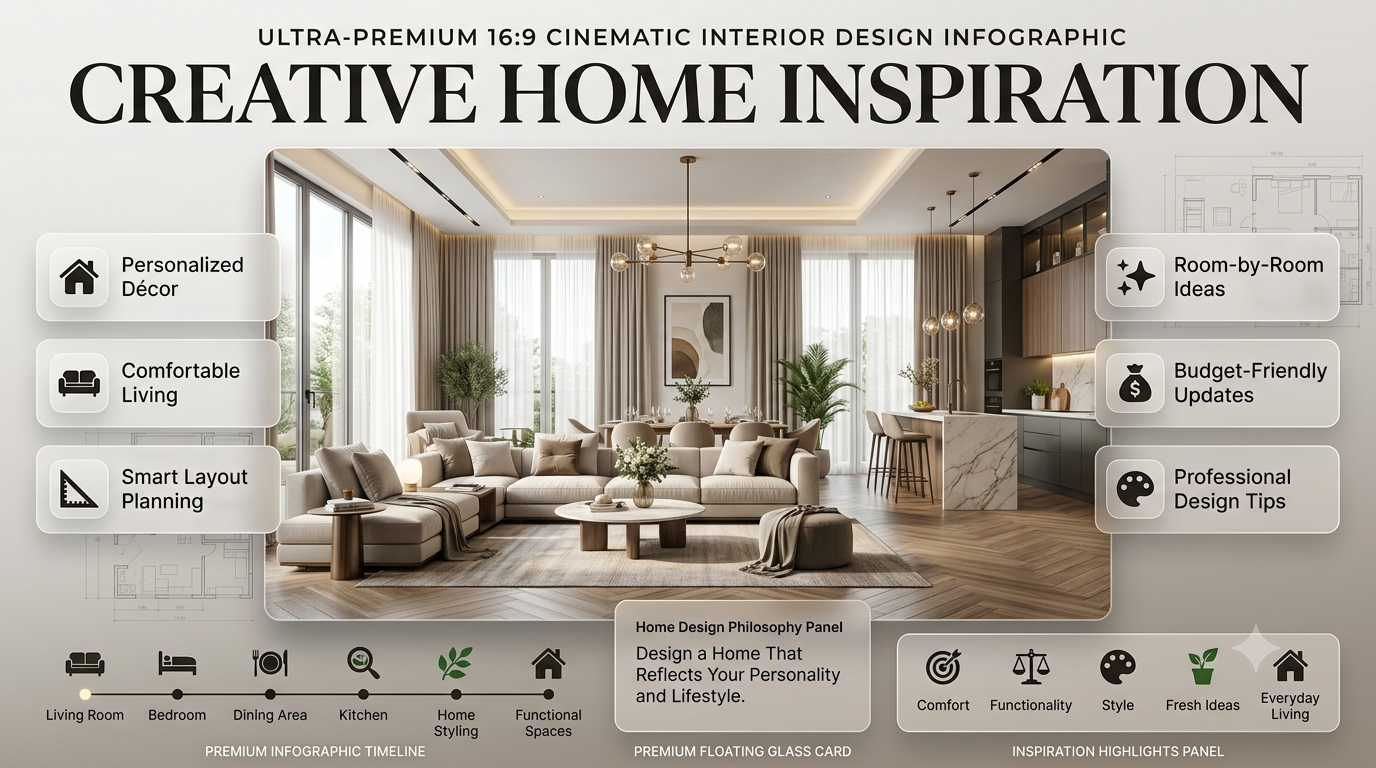
Creative Home Inspiration:Have you ever looked around your home and felt like something was missing, even though everything seemed to be in the right place? Maybe your living room feels dull, your bedroom lacks personality, or your kitchen no longer inspires you. The good news is that creating a beautiful home doesn’t always require expensive renovations or hiring a professional designer. Sometimes, a few thoughtful changes can completely transform how your home looks and feels.
That’s where creative home inspiration comes in. Instead of copying trends, it encourages you to create spaces that reflect your personality, support your lifestyle, and make everyday living more enjoyable. Whether you’re decorating a small apartment, refreshing a family home, or designing a brand-new space, the right ideas can help you make smart decisions that balance comfort, function, and style.
In this comprehensive guide, you’ll discover practical decorating techniques, room-by-room inspiration, professional interior design strategies, budget-friendly ideas, layout planning tips, and expert advice that will help you confidently transform every corner of your home.
What Is Creative Home Inspiration?
Creative home inspiration goes beyond decorating with expensive furniture or following social media trends. It’s about designing spaces that feel welcoming, organized, functional, and uniquely yours.
A creatively designed home tells a story about the people who live there. Every piece of furniture, color choice, artwork, plant, and decorative accessory contributes to the overall atmosphere.
Instead of asking:
“What looks expensive?”
Ask:
“What makes this room feel comfortable, practical, and enjoyable?”
That’s the true goal of creative home inspiration.
Why It Matters
A thoughtfully designed home can improve much more than appearance.
It can also improve:
- Daily comfort
- Productivity
- Relaxation
- Family interaction
- Mental well-being
- Organization
- Home value
Many homeowners are surprised by how much their mood changes after improving lighting, reducing clutter, or rearranging furniture.
💡 Pro Tip
Beautiful homes aren’t always expensive homes.
Professional designers often achieve amazing results simply by improving furniture placement, lighting, color balance, and organization.
The Foundations of Great Interior Design
Before buying furniture or decorating accessories, it’s important to understand the basic principles professional designers use.
| Principle | Why It Matters |
|---|---|
| Balance | Creates visual stability |
| Harmony | Makes rooms feel connected |
| Contrast | Adds excitement |
| Rhythm | Guides the eye naturally |
| Scale | Keeps furniture proportional |
| Functionality | Improves everyday living |
| Personality | Makes spaces unique |
When these principles work together, even simple rooms feel professionally designed.
Finding Your Personal Decorating Style
One of the biggest decorating mistakes is copying someone else’s home without considering your own lifestyle.
Instead, identify what genuinely appeals to you.
Some popular interior styles include:
| Style | Characteristics |
|---|---|
| Modern | Clean lines, simplicity |
| Scandinavian | Bright, cozy, natural materials |
| Contemporary | Current trends with flexibility |
| Traditional | Elegant details and classic furniture |
| Rustic | Natural wood and warm textures |
| Industrial | Metal, brick, exposed materials |
| Farmhouse | Comfortable, welcoming, timeless |
| Bohemian | Colorful, artistic, layered décor |
| Japandi | Japanese simplicity with Scandinavian warmth |
You don’t have to choose only one.
Many beautiful homes successfully combine two or three complementary styles.
🏡 Interior Designer Advice
Collect inspiration for several weeks before purchasing anything.
Save photos you genuinely love.
You’ll quickly notice recurring colors, materials, furniture styles, and layouts that naturally fit your taste.
Planning Before Decorating
Professional designers spend far more time planning than shopping.
Good planning prevents expensive mistakes.
Before decorating any room, ask yourself:
- What is this room mainly used for?
- Who spends the most time here?
- How much storage is needed?
- How much natural light enters?
- What existing furniture should stay?
- What problems need solving?
Room Planning Checklist
✔ Measure the room
✔ Measure windows
✔ Measure doors
✔ Note electrical outlets
✔ Identify walking paths
✔ Record ceiling height
✔ Measure existing furniture
✔ Determine storage needs
✔ Set a realistic budget
Example Room Measurement
Living Room
Length: 18 ft

Width: 14 ft

Ceiling Height: 9 ft
Furniture Placement Example
---------------------------------
|            Window             |
|                               |
|   Sofa        Coffee Table    |
|                               |
| Chair        Rug        Chair |
|                               |
| TV Console                 Door
---------------------------------
Simple layouts like this prevent buying oversized furniture.
⚠ Mistake to Avoid
Never buy furniture before measuring your room.
A beautiful sofa that overwhelms the space will make the room feel cramped instead of luxurious.
Choosing the Perfect Color Palette
Color influences both appearance and emotion.
Professional designers usually begin with a neutral base before introducing accent colors.
A balanced color palette often follows the 60-30-10 rule.
| Percentage | Purpose |
|---|---|
| 60% | Main wall color |
| 30% | Furniture |
| 10% | Accent colors |
Example:
- Soft white walls
- Warm gray furniture
- Olive green cushions
- Brass accessories
- Wooden coffee table
The result feels cohesive without becoming boring.
Popular Color Combinations
| Style | Colors |
|---|---|
| Calm | White + Beige + Oak |
| Luxury | Charcoal + Gold + Cream |
| Modern | Black + White + Walnut |
| Nature | Sage Green + Wood + Stone |
| Coastal | Blue + White + Sand |
| Earthy | Terracotta + Olive + Linen |
💡 Quick Tip
If you’re afraid of bold colors, use them in artwork, cushions, rugs, or curtains instead of painting entire walls.
Creating Balance Throughout Your Home
Every room should feel connected.
This doesn’t mean every room must look identical.
Instead, repeat certain elements throughout your home.
Examples include:
- Similar wood finishes
- Matching metal hardware
- Coordinated color palette
- Repeating fabrics
- Consistent flooring
- Similar lighting style
These subtle details create flow from one room to another.
Living Room Inspiration
The living room is often the heart of the home.
It’s where families relax, guests gather, children play, and conversations happen.
A successful living room combines beauty with practicality.
Start with the Layout
Arrange furniture around a focal point.
Possible focal points include:
- Fireplace
- Television
- Large window
- Statement artwork
- Feature wall
Avoid pushing every piece of furniture against the walls.
Floating furniture often makes rooms feel larger.
Example Layout
Window

Chair      Sofa      Chair

Coffee Table

Console

TV
Layer Different Textures
Professional designers rarely rely on color alone.
Instead, they combine textures.
Examples include:
- Linen cushions
- Wool throws
- Wooden furniture
- Glass accessories
- Metal lamps
- Natural plants
- Ceramic décor
Texture creates depth even in neutral-colored rooms.
Lighting Layers
Great lighting includes multiple sources.
Instead of relying on one ceiling fixture, combine:
- Ceiling lighting
- Floor lamps
- Table lamps
- Wall sconces
- Accent lighting
Layered lighting allows you to adjust the mood throughout the day.
⭐ Expert Tip
Place lamps at different heights to create visual interest and eliminate harsh shadows.
Add Personal Character
Avoid creating a room that looks like a furniture showroom.
Instead, include:
- Family photographs
- Travel souvenirs
- Handmade pottery
- Books
- Artwork
- Indoor plants
These details make the space feel authentic.
If you’re planning a complete room redesign, exploring Furniture Planning can help you determine the ideal furniture sizes, spacing, and layout before making any purchases.
Bedroom Inspiration
Your bedroom should feel peaceful rather than crowded.
Unlike social spaces, bedrooms are designed primarily for rest and recovery.
Every design decision should support relaxation.
Choose Soft Colors
Popular bedroom colors include:
- Warm white
- Sage green
- Dusty blue
- Soft gray
- Beige
- Cream
- Muted taupe
These shades encourage relaxation while remaining timeless.
Build Around the Bed
The bed should naturally become the room’s focal point.
Everything else should support it.
Example Layout
--------------------------

Window

Nightstand   Bed   Nightstand

Bench

Dresser

Door

--------------------------
Maintain comfortable walking space around both sides of the bed whenever possible.
Layer Bedding
Professional-looking bedrooms use multiple layers.
For example:
- Sheets
- Quilt
- Duvet
- Throw blanket
- Decorative pillows
Layering creates warmth and visual richness without making the room feel cluttered.
Introduce Soft Lighting
Instead of bright overhead lights alone, include:
- Bedside lamps
- Wall sconces
- Warm LED strips
- Reading lights
Soft lighting instantly creates a relaxing atmosphere.
🏡 Interior Designer Advice
Install dimmable lighting whenever possible. Being able to adjust brightness throughout the evening significantly improves both comfort and sleep quality.
Bring Nature Indoors
Natural elements help bedrooms feel calm.
Consider adding:
- Wooden furniture
- Linen bedding
- Cotton curtains
- Indoor plants
- Stone accessories
- Woven baskets
Even one or two natural materials can completely change the room’s atmosphere.
Keep Decorations Purposeful
Avoid overcrowding shelves and bedside tables.
Instead, display only meaningful items such as:
- A favorite book
- Fresh flowers
- Small artwork
- Decorative candles
- Personal keepsakes
Minimal clutter often creates maximum comfort.
📌 Quick Tip
When you’re searching for fresh decorating ideas beyond the bedroom, browsing collections of Decoration Ideas Decoradyard can spark new concepts for mixing colors, textures, and accessories throughout your home.
Creative Kitchen Inspiration
Your kitchen is more than a place to cook—it’s where mornings begin, families gather, and memories are made. A creative kitchen blends functionality with personality, making everyday tasks easier while creating a welcoming atmosphere.
Whether you have a compact apartment kitchen or a spacious open-plan layout, thoughtful design choices can dramatically improve both appearance and efficiency.
Quick Answer
A creative kitchen combines smart storage, efficient layouts, layered lighting, durable materials, and decorative accents to create a space that’s practical, organized, and visually appealing.
Start with the Kitchen Work Triangle
Professional kitchen designers use the work triangle to minimize unnecessary movement between the three most-used areas.
          Sink
           ▲
          / \
         /   \
        /     \
Fridge ------- Stove
The distance between these three points should feel natural—not too close and not too far.
Why the Work Triangle Matters
A well-planned layout:
- Saves time while cooking
- Reduces unnecessary walking
- Improves workflow
- Makes the kitchen feel larger
- Enhances safety
🏡 Interior Designer Advice
If your kitchen layout doesn’t allow for a perfect triangle, create efficient “work zones” instead. Keep preparation tools, cookware, and ingredients close to where they’re used.
Add Character Without Clutter
Many homeowners assume they need expensive renovations to make their kitchen look impressive.
Instead, focus on simple upgrades such as:
- Decorative open shelving
- Stylish cabinet handles
- Under-cabinet lighting
- Wooden cutting boards
- Glass storage jars
- Indoor herbs
- Statement backsplash
Small details often create the biggest visual impact.
Example Kitchen Layout
------------------------------------
 Refrigerator     Pantry

 Counter   Sink   Counter

 Island / Dining

 Stove     Oven

 Entry Door
------------------------------------
Maintain at least 36–42 inches (90–107 cm) of walking space around islands whenever possible.
Kitchen Color Inspiration
| Style | Recommended Colors |
|---|---|
| Scandinavian | White, Oak, Light Gray |
| Modern | White, Black, Walnut |
| Farmhouse | Cream, Wood, Sage Green |
| Coastal | White, Blue, Sand |
| Luxury | Charcoal, Marble, Brass |
| Nature Inspired | Olive, Stone, Warm Wood |
💡 Pro Tip
Choose timeless cabinet colors and use trendy colors in accessories. This keeps your kitchen looking current without expensive remodels every few years.
Smart Kitchen Storage Ideas
Creative kitchens prioritize organization.
Consider adding:
- Pull-out pantry shelves
- Corner cabinet organizers
- Vertical tray storage
- Drawer dividers
- Hanging utensil rails
- Hidden recycling bins
- Magnetic knife strips
- Ceiling-mounted pot racks
A well-organized kitchen feels larger regardless of its size.
If you’re planning a complete remodel, exploring Kitchen Upgrading Tips can help you prioritize upgrades that improve both functionality and long-term value.
Creative Dining Room Inspiration
Dining rooms should encourage conversation, comfort, and connection.
Even if your dining area is small, thoughtful styling can make it feel inviting.
Choose the Right Table Shape
| Room Shape | Best Table |
|---|---|
| Narrow Room | Rectangle |
| Square Room | Round |
| Open Concept | Oval |
| Large Space | Extendable Rectangle |
| Small Apartment | Round Pedestal |
Round tables improve movement in compact spaces.
Recommended Dining Space Measurements
| Item | Ideal Clearance |
|---|---|
| Chair Pull-Out Space | 36 inches |
| Walking Space | 42 inches |
| Table to Wall | 36–48 inches |
| Pendant Height Above Table | 30–36 inches |
These measurements help maintain comfort during meals.
Dining Room Styling Formula
A balanced dining room often includes:
- Statement light fixture
- Comfortable chairs
- Area rug
- Centerpiece
- Wall art
- Indoor plant
- Sideboard or buffet
Together, these elements create visual harmony.
⭐ Expert Tip
A single oversized pendant light often looks more elegant than several small fixtures competing for attention.
Dining Room Layout Example
----------------------------

Window

      Pendant

   Dining Table

 Chair Chair Chair

 Buffet Cabinet

Door

----------------------------
Creative Bathroom Inspiration
Bathrooms deserve just as much attention as living spaces.
A few thoughtful upgrades can make even a small bathroom feel luxurious.
Focus on Simplicity
Avoid overcrowding countertops.
Instead, keep only daily essentials visible.
Store everything else inside cabinets or drawers.
Bathroom Color Ideas
- White and wood
- Gray and marble
- Beige and stone
- Navy and brass
- Soft green and oak
Natural colors make bathrooms feel cleaner and brighter.
Add Layers of Texture
Instead of relying solely on tile, introduce:
- Wooden stools
- Woven baskets
- Cotton towels
- Ceramic accessories
- Live plants
- Glass containers
These materials soften hard bathroom surfaces.
⚠ Mistake to Avoid
Choosing style over durability.
Bathrooms experience constant humidity, so always select moisture-resistant materials.
Home Office Inspiration
Working from home has become increasingly common.
A creative workspace improves both productivity and comfort.
Essentials of a Productive Home Office
Include:
- Comfortable ergonomic chair
- Adjustable desk
- Natural lighting
- Task lighting
- Organized storage
- Cable management
- Plants
- Personal artwork
Office Layout Example
------------------------

Window

Desk

Chair

Bookshelf

Storage Cabinet

Door

------------------------
Productivity Color Suggestions
| Goal | Color |
|---|---|
| Focus | Blue |
| Creativity | Green |
| Energy | Yellow |
| Calmness | Beige |
| Professional | Gray |
🏡 Interior Designer Advice
Position your desk perpendicular to a window whenever possible. This reduces glare while maximizing natural light.
Entryway Inspiration
Your entryway creates the first impression of your home.
Even a small entrance can become welcoming with thoughtful planning.
Entryway Essentials
Include:
- Shoe storage
- Coat hooks
- Bench
- Mirror
- Decorative basket
- Small rug
- Accent lighting
Small Entryway Layout
Door

Bench

Hooks

Mirror

Console

Basket

Hallway
Why Mirrors Work
Mirrors:
- Reflect light
- Make spaces appear larger
- Improve brightness
- Add decorative interest
They’re one of the easiest ways to transform compact entrances.
Creative Home Inspiration for Small Apartments
Limited square footage doesn’t limit creativity.
Small homes simply require smarter planning.
Maximize Vertical Space
Think upward.
Install:
- Floating shelves
- Tall bookcases
- Wall-mounted desks
- Hanging plants
- Vertical storage cabinets
Unused wall space offers valuable storage opportunities.
Choose Multifunctional Furniture
Examples include:
| Furniture | Multiple Uses |
|---|---|
| Storage Ottoman | Seating + Storage |
| Sofa Bed | Living Room + Guest Bed |
| Extendable Table | Dining + Workspace |
| Murphy Bed | Bedroom + Office |
| Nesting Tables | Flexible Surface Area |
💡 Quick Tip
Whenever possible, choose furniture with visible legs. Raised furniture allows light to pass underneath, making rooms feel larger.
Small Apartment Layout Example
----------------------------

Kitchen

Dining

Living Area

Storage

Bedroom

Bathroom

----------------------------
Open sightlines help compact homes feel spacious.
Creative Inspiration for Large Homes
Large homes require a different design strategy.
Instead of trying to fill every corner, focus on creating purposeful spaces.
Divide Large Rooms into Zones
Examples include:
- Reading corner
- Conversation area
- Entertainment zone
- Workspace
- Children’s play area
Each zone should have its own purpose while remaining visually connected.
Repeat Design Elements
To create consistency across a larger home, repeat:
- Wood finishes
- Metal accents
- Color palette
- Flooring
- Fabrics
- Lighting styles
This creates flow without making rooms feel identical.
DIY Creative Home Projects
Personal DIY projects make your home unique while saving money.
Beginner-Friendly Projects
- Floating shelves
- Picture gallery wall
- Painted accent wall
- Decorative planters
- Wooden entry bench
- Customized storage baskets
- Handmade candle holders
- Seasonal wreaths
Weekend DIY Projects
| Project | Difficulty | Time |
|---|---|---|
| Paint a Feature Wall | Easy | 4–6 Hours |
| Install Floating Shelves | Easy | 2 Hours |
| Build a Coffee Table | Medium | Weekend |
| Create a Gallery Wall | Easy | 3 Hours |
| Refresh Cabinet Hardware | Easy | 1 Hour |
⭐ Expert Tip
Complete one room before starting another. Finished spaces provide motivation and prevent your home from feeling like a never-ending project.
Bringing Nature Indoors
Nature-inspired interiors continue to be one of the strongest design trends because they create calm, healthy, and timeless spaces.
Simple ways to add natural elements include:
- Indoor plants
- Wooden furniture
- Linen curtains
- Cotton fabrics
- Stone accessories
- Woven baskets
- Natural light
- Fresh flowers
Even one plant can make a room feel more vibrant.
If you’re looking to extend your creativity outdoors, ideas from Garden Homenumental can inspire beautiful transitions between indoor living spaces and your garden.
Creative Decorating on a Budget
A beautiful home doesn’t require a luxury budget.
Focus your spending where it matters most.
Prioritize Investments
- Comfortable sofa
- Quality mattress
- Durable dining table
- Good lighting
- Timeless rugs
Save money on:
- Decorative accessories
- Cushions
- Artwork
- Seasonal décor
- Trendy accents
Budget Decorating Checklist
✔ Rearrange furniture before buying new pieces
✔ Paint instead of replacing
✔ Update cabinet handles
✔ Add plants
✔ Replace outdated lighting
✔ Mix old and new furniture
✔ Use mirrors to brighten rooms
✔ Shop second-hand for unique finds
✔ Invest in quality where it counts
Color Psychology: How Colors Shape the Mood of Your Home
Color is one of the most powerful tools in interior design. It influences how a room feels, affects emotions, and can even change how spacious or cozy a space appears. Choosing colors thoughtfully is a key part of creative home inspiration because the right palette helps every room feel balanced and inviting.
Quick Answer
Color psychology in interior design is the practice of selecting colors based on the mood and function of a room. Warm colors create energy and comfort, while cool colors encourage relaxation and focus. Combining them with neutral shades produces a timeless, balanced look.
Understanding Warm vs. Cool Colors
| Warm Colors | Best For | Effect |
|---|---|---|
| Terracotta | Living Room | Cozy and welcoming |
| Mustard Yellow | Dining Room | Energetic and cheerful |
| Coral | Accent Walls | Friendly and vibrant |
| Soft Orange | Family Room | Comfortable and inviting |
| Cool Colors | Best For | Effect |
|---|---|---|
| Sage Green | Bedroom | Relaxing and refreshing |
| Dusty Blue | Home Office | Calm and focused |
| Soft Gray | Bathrooms | Clean and modern |
| Lavender | Reading Corner | Peaceful and soothing |
🏡 Interior Designer Advice
Instead of choosing a paint color first, start with a favorite rug, artwork, or fabric. Matching paint to existing décor is much easier than trying to find décor that matches an already painted room.
Choosing Colors for Every Room
Living Room
The living room benefits from warm neutrals with subtle accent colors.
Popular combinations include:
- Beige + Olive Green + Oak
- White + Charcoal + Walnut
- Cream + Navy + Brass
- Light Gray + Forest Green + Black
These combinations feel timeless while remaining easy to update with seasonal accessories.
Bedroom
Bedrooms should encourage rest.
Ideal colors include:
- Soft Sage
- Warm White
- Dusty Blue
- Taupe
- Cream
- Light Greige
Avoid extremely bright reds or intense oranges, as they may feel overstimulating.
Kitchen
Creative kitchens often combine neutral cabinets with colorful accessories.
Examples:
- White cabinets + wooden shelves
- Gray cabinets + brass hardware
- Navy island + white walls
- Sage cabinets + marble countertops
Bathroom
Bathrooms benefit from colors inspired by nature.
Good options include:
- Stone Gray
- White
- Sea Blue
- Sand Beige
- Soft Green
These shades create a spa-like atmosphere.
💡 Pro Tip
If you’re unsure about using bold colors, introduce them through cushions, artwork, rugs, curtains, or decorative accessories before committing to painted walls.
Creating a Balanced Color Flow Throughout Your Home
Professional homes rarely use random colors in every room. Instead, they maintain visual continuity by repeating a consistent palette.
Example:
Living Room → Beige + Oak

↓

Kitchen → White + Oak

↓

Dining Room → Beige + Black

↓

Bedroom → Cream + Oak

↓

Office → Gray + Oak
Notice how the wood finish remains consistent while accent colors change.
This creates harmony without making every room look identical.
Accent Color Guide
| Accent Color | Pairs Well With |
|---|---|
| Olive Green | Beige, White |
| Navy Blue | Cream, Walnut |
| Black | Oak, White |
| Brass | Gray, Navy |
| Terracotta | Sand, Stone |
| Emerald Green | White, Gold |
⚠ Mistake to Avoid
Using too many bold colors in one room creates visual chaos. Limit strong accent colors to one or two focal points.
Lighting Design: The Secret Behind Beautiful Homes
Many people focus on furniture and paint but overlook lighting. Yet professional designers often consider lighting the most important element in a room because it affects comfort, functionality, and the appearance of every surface.
Quick Answer
A well-designed lighting plan combines ambient, task, and accent lighting to create depth, improve functionality, and enhance the overall atmosphere of a home.
The Three Layers of Lighting
| Layer | Purpose | Examples |
|---|---|---|
| Ambient | General illumination | Ceiling fixtures |
| Task | Specific activities | Desk lamps, reading lights |
| Accent | Highlight features | Wall sconces, LED strips |
Using all three layers prevents rooms from feeling flat.
Living Room Lighting Plan
Ceiling Light

↓

Floor Lamp

↓

Table Lamps

↓

Accent Shelf Lighting
This layered approach provides flexibility throughout the day.
Kitchen Lighting Strategy
Combine several light sources:
- Ceiling lights for general illumination
- Pendant lights above the island
- Under-cabinet LED strips
- Interior cabinet lighting (optional)
The result is both practical and visually appealing.
Bedroom Lighting
Instead of relying solely on an overhead fixture, include:
- Bedside lamps
- Wall sconces
- Reading lights
- Warm LED strips behind the headboard
Warm white lighting (around 2700K–3000K) generally creates the most relaxing atmosphere.
⭐ Expert Tip
Install dimmer switches whenever possible. They allow you to adjust brightness for different activities, from reading to relaxing.
Natural Light Matters Too
Maximize daylight by:
- Using sheer curtains
- Hanging mirrors opposite windows
- Choosing reflective surfaces
- Keeping window areas uncluttered
Natural light makes rooms feel larger, brighter, and more welcoming.
Furniture Selection: Choosing Pieces That Last
Buying furniture is one of the biggest investments in any home. Rather than filling rooms quickly, choose pieces that balance durability, comfort, and timeless style.
Start with the Essentials
Prioritize:
- Sofa
- Bed
- Dining Table
- Office Chair
- Storage Cabinets
Decorative items can always be added later.
Furniture Buying Checklist
✔ Measure your room
✔ Measure doorways
✔ Consider traffic flow
✔ Test comfort
✔ Choose durable materials
✔ Think about maintenance
✔ Match your lifestyle
✔ Leave enough walking space
Recommended Clearances
| Area | Recommended Space |
|---|---|
| Sofa to Coffee Table | 16–18 inches |
| Dining Chair Pull-Out | 36 inches |
| Bed Walking Space | 24–36 inches |
| Kitchen Walkway | 36–42 inches |
| Hallway | Minimum 36 inches |
These measurements improve both comfort and functionality.
Material Comparison
| Material | Advantages | Considerations |
|---|---|---|
| Solid Wood | Durable, timeless | Higher cost |
| Engineered Wood | Affordable | Quality varies |
| Metal | Strong, modern | Can feel cold |
| Glass | Light appearance | Requires frequent cleaning |
| Natural Stone | Luxurious | Heavy and expensive |
🏡 Interior Designer Advice
Invest in high-quality “anchor pieces” like sofas and dining tables, then update the room over time with cushions, artwork, and accessories. This approach keeps your home fresh without major expenses.
Seasonal Home Inspiration
Refreshing your home with the seasons keeps it feeling new without requiring a complete redesign.
Spring
Focus on freshness.
Ideas include:
- Fresh flowers
- Light-colored cushions
- Linen curtains
- Indoor plants
- Pastel accents
Summer
Create an airy atmosphere.
Use:
- Cotton fabrics
- Natural baskets
- Coastal colors
- Lightweight throws
- Bright natural light
Autumn
Introduce warmth through:
- Earth-tone cushions
- Wooden décor
- Cozy blankets
- Textured rugs
- Candles
Winter
Make your home inviting with:
- Thick knit throws
- Warm lighting
- Layered bedding
- Rich textures
- Seasonal centerpieces
💡 Quick Tip
Instead of redecorating every season, swap smaller accessories like cushion covers, table runners, and artwork. It’s an affordable way to refresh your space throughout the year.
Sustainable Creative Home Inspiration
Sustainability isn’t just a trend—it’s a practical way to create a healthier, longer-lasting home.
Eco-Friendly Decorating Ideas
- Buy quality furniture that lasts.
- Repurpose existing pieces instead of replacing them.
- Choose natural materials like wood, cotton, and linen.
- Use LED lighting to reduce energy consumption.
- Decorate with indoor plants to improve air quality.
- Shop second-hand for unique statement pieces.
- Donate furniture you no longer need instead of sending it to landfill.
Sustainable Materials Comparison
| Material | Eco-Friendly Rating | Durability |
|---|---|---|
| Bamboo | Excellent | High |
| Solid Wood | High (when responsibly sourced) | Excellent |
| Linen | High | Good |
| Organic Cotton | High | Good |
| Recycled Metal | Excellent | Excellent |
Creating an Indoor–Outdoor Connection
One hallmark of creative home inspiration is making indoor spaces feel connected to nature. Large windows, natural textures, and coordinated outdoor décor can create a seamless transition between your living areas and garden.
If you’re planning to refresh your landscape as well, ideas from How to Design a Garden Layout Kdagardenation can help you create an outdoor space that complements your interior design. Likewise, broader ideas from Home Improvement Tips can provide practical guidance for ongoing upgrades throughout your home.
Planning Before You Buy
Before purchasing new furniture or décor, take time to evaluate your layout, storage needs, and available space. A thoughtful plan helps you avoid costly mistakes and ensures every item serves a purpose. Resources on Furniture Planning are especially useful when deciding room layouts, furniture spacing, and circulation paths.
Decorating with Confidence
Decorative accessories should enhance your home’s personality rather than overwhelm it. Whether you’re styling shelves, selecting artwork, or choosing textiles, inspiration from Decoration Ideas Decoradyard can help you create cohesive and visually balanced spaces. For homeowners looking beyond interiors, Garden Homenumental offers additional inspiration for extending your home’s style into outdoor living areas.
Instant Links
- Home Improvement Tips
- How to Design a Garden Layout Kdagardenation
- Kitchen Upgrading Tips
- Furniture Planning
- Decoration Ideas Decoradyard
- Garden Homenumental
Professional Recommendations & Expert Reviews
- Creative Home Inspiration begins with designing spaces that reflect your personality and everyday lifestyle.
- Creative Home Inspiration encourages combining comfort, functionality, and visual beauty throughout the home.
- Creative Home Inspiration helps transform ordinary rooms into welcoming living spaces.
- Creative Home Inspiration supports choosing color palettes that create warmth and harmony.
- Creative Home Inspiration encourages maximizing natural light to brighten every room.
- Creative Home Inspiration improves interiors through thoughtful furniture placement and balanced layouts.
- Creative Home Inspiration supports selecting timeless décor that remains stylish for years.
- Creative Home Inspiration encourages mixing textures to create depth and visual interest.
- Creative Home Inspiration improves living rooms with comfortable seating and inviting layouts.
- Creative Home Inspiration supports creating peaceful bedrooms that promote rest and relaxation.
- Creative Home Inspiration encourages designing kitchens that balance beauty with everyday functionality.
- Creative Home Inspiration improves dining spaces by creating comfortable gathering areas for family meals.
- Creative Home Inspiration supports adding decorative lighting that enhances both mood and practicality.
- Creative Home Inspiration encourages using artwork that reflects personal taste and creativity.
- Creative Home Inspiration improves small spaces through smart storage and multifunctional furniture.
- Creative Home Inspiration supports organizing interiors to maintain a clean and relaxing atmosphere.
- Creative Home Inspiration encourages incorporating indoor plants for freshness and natural beauty.
- Creative Home Inspiration improves entryways by creating warm and welcoming first impressions.
- Creative Home Inspiration supports choosing durable materials that combine elegance with practicality.
- Creative Home Inspiration encourages layering textiles for added warmth and comfort.
- Creative Home Inspiration improves bathrooms through stylish storage and thoughtful organization.
- Creative Home Inspiration supports designing functional home offices with inspiring work environments.
- Creative Home Inspiration encourages creating cozy reading corners for relaxation.
- Creative Home Inspiration improves outdoor spaces by extending interior style to patios and balconies.
- Creative Home Inspiration supports selecting decorative accessories that complement the overall design theme.
- Creative Home Inspiration encourages maintaining visual balance throughout every room.
- Creative Home Inspiration improves comfort by arranging furniture for easy movement and conversation.
- Creative Home Inspiration supports blending modern design with timeless architectural details.
- Creative Home Inspiration encourages refreshing interiors with seasonal decorative updates.
- Creative Home Inspiration improves family living through flexible and welcoming shared spaces.
- Creative Home Inspiration supports using mirrors to increase brightness and create spaciousness.
- Creative Home Inspiration encourages organizing decorative elements without creating clutter.
- Creative Home Inspiration improves home value through thoughtful interior improvements.
- Creative Home Inspiration supports selecting window treatments that balance privacy and natural light.
- Creative Home Inspiration encourages adding handcrafted decorative pieces for unique character.
- Creative Home Inspiration improves room aesthetics through coordinated finishes and materials.
- Creative Home Inspiration supports creating personalized interiors that adapt to changing lifestyles.
- Creative Home Inspiration encourages combining sustainable materials with elegant design choices.
- Creative Home Inspiration improves comfort through quality furnishings and practical layouts.
- Creative Home Inspiration supports creating calm environments with organized living spaces.
- Creative Home Inspiration encourages experimenting with creative decorating ideas while maintaining functionality.
- Creative Home Inspiration improves everyday living through thoughtful space planning.
- Creative Home Inspiration supports balancing decorative beauty with practical household needs.
- Creative Home Inspiration encourages designing spaces that inspire creativity and relaxation.
- Creative Home Inspiration improves long-term satisfaction through timeless interior design decisions.
- Creative Home Inspiration supports creating visually connected spaces with consistent design themes.
- Creative Home Inspiration encourages homeowners to express individuality through customized décor.
- Creative Home Inspiration improves home atmosphere by combining natural elements with modern furnishings.
- Creative Home Inspiration demonstrates that even simple design updates can create remarkable visual impact.
- Creative Home Inspiration ultimately transforms every room into a stylish, comfortable, and functional living space by combining thoughtful layouts, quality furnishings, natural lighting, personalized décor, smart organization, and timeless design choices that enhance everyday life and create a home filled with warmth and character.
Most Frequently Asked Faqs
-
How can I make my home look more creative without spending a lot of money?
A creative home doesn’t depend on an expensive budget—it depends on thoughtful design choices. Simple updates such as repainting walls, rearranging furniture, introducing indoor plants, displaying artwork, upgrading lighting, and mixing textures can dramatically transform a space without major renovations. Repurposing existing furniture and adding DIY décor also gives your home a unique, personalized character while keeping costs low.
Focus on improving the overall atmosphere instead of filling every room with decorations. A clean, organized space with carefully selected accent pieces often looks more sophisticated than one filled with expensive but unnecessary furniture.
Budget-friendly creative ideas:
Rearrange your furniture layout.
Paint an accent wall.
Add indoor plants.
Display personal artwork or photographs.
Update cushions, curtains, and rugs.
Use mirrors to reflect natural light. -
What are the biggest creative home design trends this year?
Current home design trends emphasize comfort, sustainability, personalization, and multifunctional living spaces rather than purely decorative interiors. Designers are combining natural materials, earthy color palettes, curved furniture, biophilic design, smart home technology, and handcrafted décor to create homes that are both beautiful and practical. Instead of following short-lived fads, today’s trends focus on timeless elements that improve everyday living.
Many homeowners are also incorporating flexible spaces that serve multiple purposes, making homes more adaptable for work, relaxation, and family life.
Popular design trends include:
Warm neutral color palettes.
Natural wood and stone finishes.
Indoor plants and biophilic design.
Multifunctional furniture.
Sustainable materials.
Smart home integration. -
How do I choose a home decorating style that matches my personality?
The best decorating style reflects how you live rather than simply following popular trends. Consider your daily routine, favorite colors, preferred materials, and the atmosphere you want each room to create. Whether you enjoy modern simplicity, cozy farmhouse interiors, Scandinavian minimalism, industrial design, or traditional elegance, consistency throughout the home creates a more polished and comfortable environment.
Creating a mood board before purchasing furniture or décor helps identify recurring themes and ensures your design decisions support a cohesive vision.
Questions to ask yourself:
Do I prefer simple or decorative interiors?
Which colors make me feel comfortable?
How much maintenance am I willing to do?
Do I value functionality or luxury more?
Which design styles inspire me most?
Will this style still suit me in several years? -
What are the easiest ways to make a small home feel stylish and spacious?
Making a small home feel larger begins with simplifying the layout and maximizing natural light. Choose appropriately sized furniture, maintain clear walkways, use multifunctional pieces, and incorporate vertical storage to free up valuable floor space. Light-colored walls, mirrors, and layered lighting further enhance openness while creating a brighter, more inviting atmosphere.
Avoid overcrowding rooms with excessive furniture or decorations. Leaving some open space allows each design element to stand out and makes compact interiors feel more comfortable.
Space-enhancing ideas:
Use multifunctional furniture.
Install floating shelves.
Choose light-colored walls.
Add large mirrors.
Maximize natural lighting.
Keep rooms organized and clutter-free.