
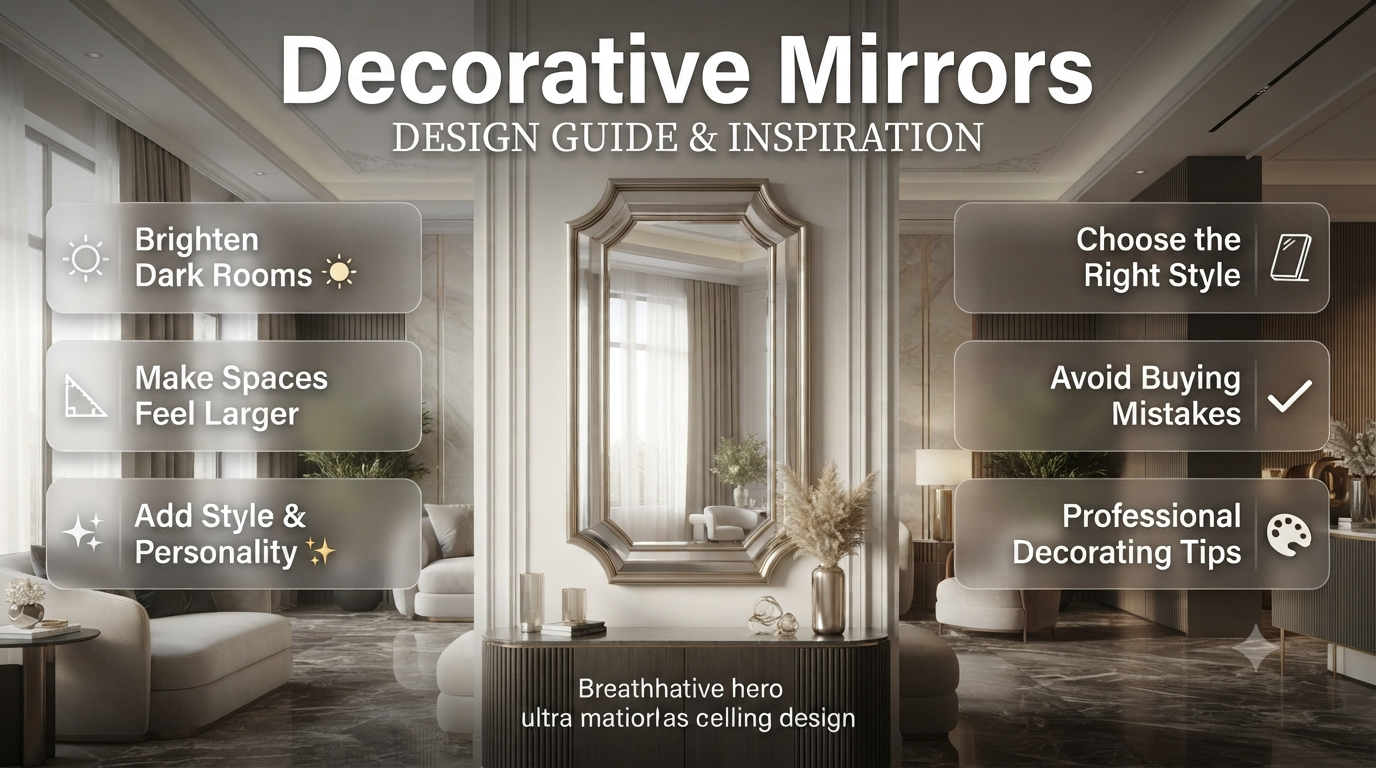
Decorative mirrors do much more than help you check your reflection. The right mirror can brighten a dark room, make a small space feel larger, create a stunning focal point, and add personality to your home. Whether you’re decorating a new house or refreshing an existing space, choosing the perfect decorative mirror can dramatically improve both style and functionality.
In this comprehensive guide, you’ll learn how to choose decorative mirrors for every room, understand different styles and materials, avoid common buying mistakes, and discover professional decorating tips that make mirrors work beautifully in any interior.
Why Decorative Mirrors Are a Must-Have in Modern Homes
Decorative mirrors enhance both the appearance and functionality of a home by reflecting natural light, creating the illusion of more space, and serving as stylish focal points. Available in countless shapes, sizes, and frame designs, they complement nearly every interior design style while making rooms feel brighter and more inviting.
Decorating a room isn’t always about buying more furniture or expensive artwork. Sometimes, one carefully chosen decorative mirror can completely change how a space looks and feels.
Interior designers have relied on mirrors for decades because they solve multiple decorating challenges at once. They reflect light into darker corners, visually expand compact rooms, and introduce texture through beautifully crafted frames.
Unlike many decorative accessories that serve only one purpose, mirrors combine practicality with aesthetics. They are equally useful in a hallway, bedroom, dining room, living room, bathroom, or home office.
Whether your home follows a modern, traditional, Scandinavian, industrial, farmhouse, or luxury design theme, there’s a decorative mirror that fits naturally into the overall look.
📌 Quick Tip: Before purchasing a mirror, decide whether its primary purpose is functional, decorative, or both. This simple decision helps narrow your options quickly.
What Is a Decorative Mirror?
A decorative mirror is a mirror designed to enhance interior aesthetics while also providing practical use. Unlike plain functional mirrors, decorative mirrors feature stylish frames, unique shapes, artistic finishes, or creative arrangements that contribute to the overall design of a room.
A decorative mirror is much more than reflective glass.
Its design plays an important role in the overall appearance of a room. Everything from the frame material to the shape, colour, texture, and placement contributes to the atmosphere of the space.
Some mirrors become statement pieces that immediately catch attention. Others quietly blend into the décor while subtly improving brightness and openness.
Modern decorative mirrors are available in countless styles, making it easy to find one that complements your home’s personality.
Common features include:
- Wood or metal frames
- Bevelled glass
- Antique finishes
- Geometric patterns
- Round, oval, rectangular, or irregular shapes
- LED lighting
- Frameless contemporary designs
- Handmade artistic detailing
Because of this variety, decorative mirrors suit both minimalist apartments and luxurious family homes.
Why Decorative Mirrors Matter in Interior Design
A well-positioned mirror changes how people experience a room.
Rather than occupying visual space like furniture, mirrors create visual depth by reflecting surrounding elements.
Professional interior designers often use mirrors to solve common decorating challenges, including:
- Small rooms that feel cramped
- Hallways lacking natural light
- Blank walls needing visual interest
- Low ceilings
- Narrow entryways
- Dark corners
- Empty fireplace walls
Mirrors also help balance a room by reflecting artwork, plants, windows, chandeliers, or architectural details.
Imagine walking into a living room where sunlight pours through large windows. A decorative mirror placed opposite the window reflects that light throughout the space, making the room feel brighter without adding extra lighting.
This simple technique is one of the oldest—and most effective—interior design tricks.
⭐ Expert Tip: Instead of reflecting an empty wall, position your mirror to reflect something attractive, such as artwork, greenery, a statement light fixture, or a beautiful outdoor view.
Benefits of Decorative Mirrors
Decorative mirrors offer far more advantages than most homeowners realise.
They Make Rooms Feel Larger
One of the biggest reasons people buy decorative mirrors is their ability to create the illusion of extra space.
Although mirrors don’t physically enlarge a room, the reflected image tricks the eye into perceiving greater depth.
This works particularly well in:
- Apartments
- Small bedrooms
- Compact living rooms
- Hallways
- Home offices
- Studio flats
Large wall mirrors can visually double the apparent width of a room when positioned thoughtfully.
They Increase Natural Light
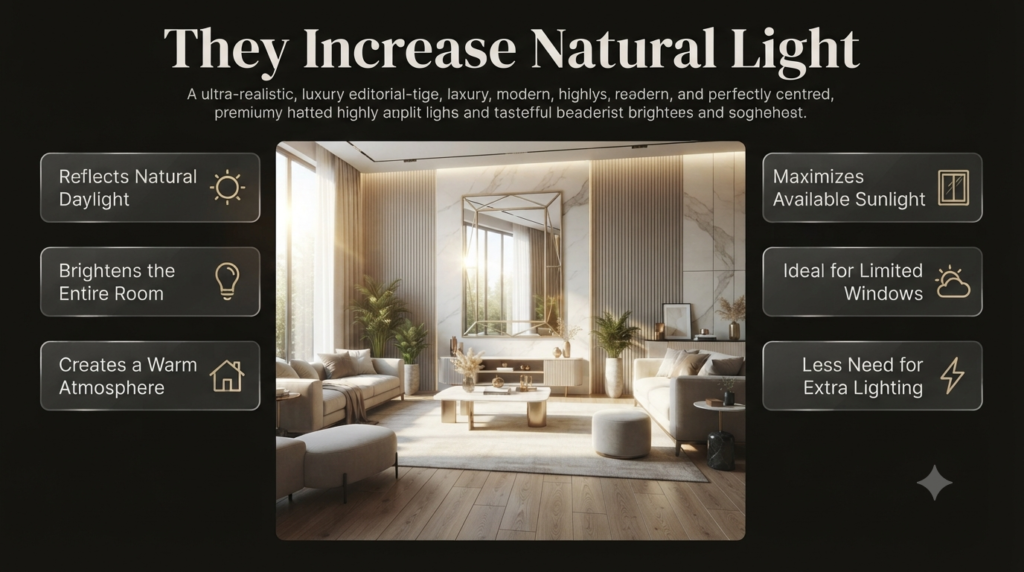
Natural daylight instantly improves a home’s atmosphere.
Mirrors amplify available sunlight by reflecting it across the room.
Even homes with limited windows benefit from strategic mirror placement.
Instead of installing more lighting fixtures, homeowners often achieve impressive brightness simply by hanging a mirror opposite a window.
They Create Beautiful Focal Points
Every room benefits from having one visual centrepiece.
Decorative mirrors often become that feature.
Examples include:
- Above fireplaces
- Behind sofas
- Over console tables
- Dining room walls
- Bedroom headboards
- Grand entryways
An oversized decorative mirror naturally attracts attention while adding elegance.
They Add Texture and Character
Frames contribute as much to the overall design as the mirror itself.
Materials such as reclaimed wood, brushed brass, matte black steel, rattan, carved oak, or antique silver introduce warmth and personality.
Instead of purchasing additional wall décor, one carefully selected decorative mirror can achieve the same visual impact.
They Complement Every Design Style
Decorative mirrors adapt to nearly every decorating trend.
Popular interior styles include:
| Interior Style | Best Decorative Mirror |
|---|---|
| Modern | Thin black metal frames |
| Contemporary | Frameless mirrors |
| Scandinavian | Light oak round mirrors |
| Farmhouse | Rustic wooden frames |
| Industrial | Black steel windowpane mirrors |
| Traditional | Gold carved frames |
| Luxury | Oversized bevelled mirrors |
| Coastal | Whitewashed wood or rattan |
Types of Decorative Mirrors
Decorative mirrors come in many styles, including wall mirrors, floor mirrors, round mirrors, frameless mirrors, antique mirrors, geometric mirrors, sunburst mirrors, and windowpane mirrors. Each style creates a different visual effect and complements specific interior design themes.
Choosing the right type depends on your room size, décor style, and intended purpose.
Let’s explore the most popular options.
Wall Mirrors
Wall mirrors remain the most versatile option for homeowners.
They work in virtually every room and are available in endless sizes and styles.
Perfect for:
- Living rooms
- Hallways
- Bedrooms
- Dining rooms
- Bathrooms
Wall-mounted mirrors also save valuable floor space.
Full-Length Mirrors
These mirrors combine style with everyday practicality.
Ideal locations include:
- Bedrooms
- Dressing rooms
- Walk-in wardrobes
- Entryways
Leaning full-length mirrors are especially popular because they create a relaxed, designer-inspired appearance.
Round Decorative Mirrors
Round mirrors soften interiors dominated by straight lines.
They pair beautifully with:
- Console tables
- Floating vanities
- Fireplaces
- Bedrooms
Their curved silhouette introduces balance and visual harmony.
Sunburst Mirrors
Inspired by the shape of the sun, these mirrors function almost like wall sculptures.
They’re ideal for:
- Traditional homes
- Glam interiors
- Mid-century modern spaces
- Luxury living rooms
Sunburst mirrors often become the room’s standout decorative feature.
Geometric Mirrors
Modern homes frequently use mirrors with hexagonal, diamond, arch, or abstract shapes.
These mirrors add artistic interest while maintaining a clean, contemporary appearance.
They work particularly well in minimalist interiors where every decorative piece matters.
Windowpane Mirrors
Designed to resemble classic window frames, these mirrors create architectural interest.
They’re especially useful in rooms with limited natural light because they imitate the appearance of an additional window.
Windowpane mirrors complement:
- Farmhouse interiors
- Industrial homes
- Rustic décor
- Modern lofts
Antique Mirrors
Rather than perfectly clear reflections, antique mirrors feature subtle ageing effects.
These include:
- Distressed glass
- Vintage finishes
- Smoky reflections
- Soft patina
They create warmth and timeless character without overwhelming the room.
💡 Pro Tip: Antique mirrors are excellent choices if you want elegance without the highly polished look of modern glass.
How to Choose the Right Decorative Mirror
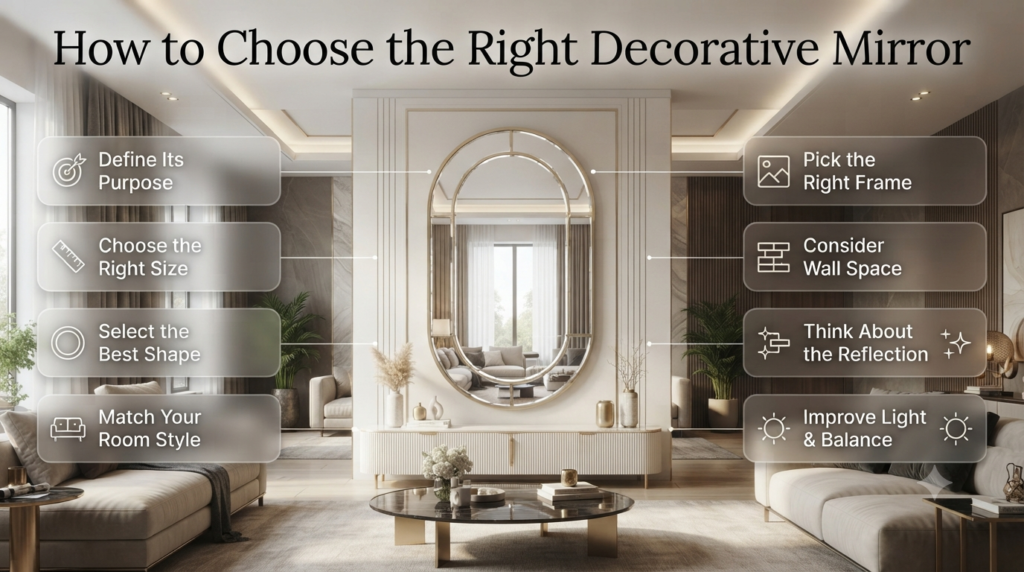
Choose a decorative mirror by considering its purpose, size, shape, frame material, room style, available wall space, and the object it will reflect. A mirror should complement existing décor while improving light, balance, and the overall visual flow of the room.
Buying the first mirror you like isn’t always the best approach.
Professional designers evaluate several factors before selecting the perfect mirror.
1. Decide Its Purpose
Ask yourself:
- Is it mainly decorative?
- Will it be used daily?
- Do you need more natural light?
- Do you want the room to appear larger?
- Should it become the focal point?
Your answers determine the best style and size.
2. Choose the Correct Size
Mirror size significantly affects visual balance.
As a general guideline:
- Above furniture: around two-thirds to three-quarters of the furniture width.
- Entryways: medium to large mirrors create a welcoming impression.
- Large blank walls: oversized mirrors prevent the space from feeling empty.
- Small rooms: larger mirrors often create a greater sense of openness than several small ones.
Avoid choosing a mirror that’s too small for the wall, as it can look disconnected from the surrounding décor.
3. Select the Right Shape
Different shapes influence the mood of a room.
| Shape | Best For | Style Effect |
|---|---|---|
| Round | Bedrooms, hallways | Soft and welcoming |
| Rectangle | Living rooms, dining rooms | Classic and versatile |
| Oval | Bathrooms, dressing areas | Elegant and graceful |
| Square | Offices, modern interiors | Clean and structured |
| Abstract | Contemporary spaces | Artistic and unique |
4. Match the Frame Material
The frame should complement your furniture and existing finishes.
Popular materials include:
- Solid wood
- Oak
- Walnut
- Brass
- Steel
- Aluminium
- Wicker
- Rattan
- Resin
- Frameless glass
Consistency creates a more cohesive interior.
For example, black metal mirrors pair beautifully with industrial shelving, while natural wood frames complement Scandinavian and farmhouse designs.
5. Consider What the Mirror Will Reflect
This is one of the most overlooked design decisions.
A mirror doesn’t just decorate a wall—it doubles whatever faces it.
Ideally, position it to reflect:
- A bright window
- Indoor plants
- Artwork
- Shelving displays
- Architectural features
- Statement lighting
- Outdoor scenery
⚠ Common Mistake: Hanging a mirror where it reflects clutter, storage boxes, or busy walkways can make a room feel more chaotic instead of more spacious.
Internal Resources You May Find Helpful
As you plan your home makeover, you may also enjoy these related guides:
Best Decorative Mirrors for Every Room
Decorative Mirrors for the Living Room
The best decorative mirrors for living rooms are oversized wall mirrors, round statement mirrors, and windowpane mirrors placed above fireplaces, sofas, or console tables. They reflect natural light, create a focal point, and make the room appear larger and brighter.
The living room is usually the largest gathering space in a home, making it the ideal place for a decorative mirror to stand out.
Popular locations include:
- Above the fireplace
- Behind the sofa
- Over a console table
- Adjacent to large windows
- Opposite natural light
Large mirrors help balance furniture while making the room feel more open.
Recommended Styles
- Oversized rectangular mirrors
- Round black-framed mirrors
- Gold statement mirrors
- Antique mirrors
- Windowpane mirrors
💡 Pro Tip: If your living room has a beautiful chandelier, position the mirror where it reflects the lighting fixture. This instantly doubles the room’s elegance.
Decorative Mirrors for Bedrooms
Bedrooms should feel calm and comfortable.
Mirrors should enhance the atmosphere without overwhelming it.
Ideal locations include:
- Above dressers
- Beside wardrobes
- Leaning against the wall
- Opposite windows
- Dressing corners
Many homeowners choose full-length mirrors because they are both decorative and practical.
Best Frame Materials
- Natural oak
- Walnut
- White wood
- Soft gold
- Matte black
Soft curves often work better than sharp geometric shapes in bedrooms.
Decorative Mirrors for Dining Rooms
Dining rooms often benefit from additional light and visual depth.
A decorative mirror reflects table settings, candles, and pendant lighting, creating a more luxurious atmosphere.
Popular choices include:
- Large rectangular mirrors
- Bevelled mirrors
- Antique mirrors
- Contemporary frameless mirrors
A mirror centred above a sideboard creates symmetry and sophistication.
⭐ Expert Tip: Position the mirror high enough that diners aren’t looking directly at themselves during meals.
Decorative Mirrors for Entryways
Your entrance sets the tone for the entire home.
Decorative mirrors make narrow hallways feel more spacious while providing a convenient place for last-minute appearance checks.
Great combinations include:
- Mirror + console table
- Mirror + indoor plants
- Mirror + decorative lighting
- Mirror + artwork
Round mirrors are particularly welcoming because they soften the straight lines often found in hallways.
Decorative Mirrors for Bathrooms
Bathroom mirrors should combine durability with attractive design.
Popular options include:
- Frameless LED mirrors
- Oval mirrors
- Backlit mirrors
- Black metal frames
- Brass-framed mirrors
Look for moisture-resistant materials if your bathroom experiences high humidity.
Decorative Mirrors for Home Offices
A thoughtfully placed mirror can reduce the feeling of confinement in a small office.
Avoid positioning mirrors directly behind computer monitors, as reflections may become distracting during video meetings.
Instead, reflect:
- A window
- Indoor plants
- Bookshelves
- Artwork
This creates a more pleasant working environment.
Decorative Mirror Placement Rules
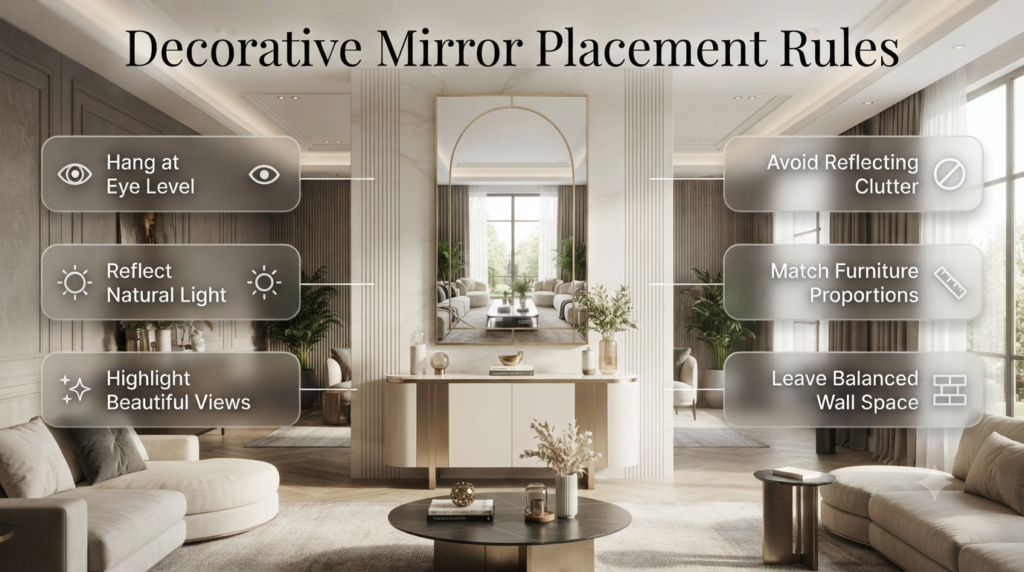
Hang decorative mirrors at eye level whenever possible and position them to reflect light or attractive features rather than clutter. Keep mirrors proportionate to nearby furniture and leave enough surrounding wall space for visual balance.
Professional designers follow several simple rules that consistently produce better-looking interiors.
Rule 1: Reflect Something Beautiful
Always ask yourself:
“What will this mirror reflect?”
Good reflections include:
- Windows
- Trees
- Artwork
- Chandeliers
- Decorative shelves
- Indoor plants
- Architectural details
Poor reflections include:
- Laundry baskets
- Television cables
- Storage areas
- Blank walls
- Busy hallways
Rule 2: Maintain Proper Height
Most decorative mirrors look best when their centre sits roughly at average eye level.
Above furniture, leave approximately 15–25 cm between the furniture and the bottom of the mirror for a balanced appearance.
Rule 3: Match Scale
Large walls deserve large mirrors.
Small mirrors on oversized walls often appear disconnected.
Likewise, an oversized mirror above a tiny table can overwhelm the space.
Balance is more important than strict measurements.
Rule 4: Consider Lighting
Natural daylight dramatically improves a mirror’s effectiveness.
Position mirrors where they can:
- Reflect windows
- Bounce sunlight
- Amplify lighting fixtures
- Brighten darker corners
Even modest mirrors can significantly increase perceived brightness.
📌 Quick Tip: Test a mirror’s position by temporarily leaning it against the wall before hanging it permanently.
Decorative Mirror Styling Ideas
Once you’ve selected the perfect mirror, styling the surrounding area helps it feel intentional rather than isolated.
Above a Console Table
A timeless combination includes:
- Decorative mirror
- Table lamp
- Vase
- Books
- Candle holders
- Small sculpture
Layering accessories of different heights creates visual interest.
Above a Fireplace
This remains one of the most popular mirror placements.
Suitable styles include:
- Oversized round mirrors
- Antique mirrors
- Gold statement mirrors
- Minimalist black frames
Keep surrounding décor relatively simple so the mirror remains the focal point.
Gallery Wall with Mirrors
Mirrors don’t always need to stand alone.
Combine them with:
- Framed artwork
- Family photographs
- Botanical prints
- Floating shelves
- Decorative wall objects
Mixing textures prevents the arrangement from feeling flat.
Leaning Floor Mirrors
Leaning mirrors are increasingly popular because they create a relaxed, designer-inspired look.
Perfect locations include:
- Bedrooms
- Dressing rooms
- Living room corners
- Walk-in wardrobes
For safety, secure very large mirrors to the wall, especially in homes with children or pets.
Decorative Mirror Trends
Interior design trends evolve, but certain mirror styles continue to dominate because they combine beauty with practicality.
1. Organic Shapes
Irregular, flowing outlines inspired by nature create a softer, contemporary feel.
These mirrors work well in minimalist interiors where each decorative piece has greater visual impact.
2. Thin Metal Frames
Slim black, bronze, and brushed brass frames remain favourites for modern homes.
They provide definition without overwhelming the space.
3. Oversized Statement Mirrors
Large mirrors continue to grow in popularity.
Rather than filling walls with multiple decorative pieces, many homeowners now choose one impressive mirror.
Benefits include:
- Cleaner appearance
- Better light reflection
- Stronger focal point
- More spacious feeling
4. Arched Mirrors
Inspired by classic architecture, arched mirrors soften interiors while adding elegance.
They’re particularly effective in:
- Hallways
- Bedrooms
- Living rooms
- Dining areas
5. Sustainable Materials
Eco-conscious homeowners increasingly choose mirrors made from:
- Reclaimed wood
- Bamboo
- Recycled metals
- Responsibly sourced timber
- Handmade natural materials
Sustainable décor often combines timeless style with environmental responsibility.
Decorative Mirror Comparison Table
| Mirror Type | Best Room | Style | Main Benefit | Considerations |
|---|---|---|---|---|
| Round Mirror | Entryway, Bedroom | Contemporary | Softens straight lines | May provide less reflection area |
| Rectangle Mirror | Living Room | Classic | Versatile and practical | Needs proportional placement |
| Full-Length Mirror | Bedroom | Modern | Functional and decorative | Requires sufficient floor space |
| Windowpane Mirror | Living Room | Industrial/Farmhouse | Adds architectural interest | Can appear busy in small rooms |
| Antique Mirror | Dining Room | Traditional | Elegant vintage character | Reflection is intentionally softened |
| Frameless Mirror | Bathroom | Minimalist | Clean, modern appearance | Edges require careful maintenance |
Decision Guide: Which Decorative Mirror Should You Buy?
| Your Goal | Recommended Mirror |
|---|---|
| Make a room feel larger | Oversized wall mirror |
| Brighten a dark room | Mirror opposite a window |
| Add luxury | Gold-framed bevelled mirror |
| Create a modern look | Thin black metal mirror |
| Decorate a hallway | Round mirror above a console |
| Need everyday functionality | Full-length mirror |
| Add rustic charm | Reclaimed wood frame |
| Minimalist décor | Frameless mirror |
Common Decorative Mirror Mistakes
Even expensive mirrors won’t improve a room if they’re used incorrectly.
Understanding these common mistakes helps you achieve a polished, professional look.
Hanging Mirrors Too High
A mirror positioned far above eye level feels disconnected from the rest of the room.
Instead, aim for comfortable viewing height and maintain a visual relationship with nearby furniture.
Choosing the Wrong Size
Many homeowners underestimate the size they need.
Small mirrors often disappear on large walls.
Larger mirrors generally create greater impact and improve light distribution.
Reflecting Clutter
Mirrors double everything they face.
If they reflect untidy shelves, tangled cables, or piles of clothing, they amplify the sense of disorder.
Always tidy the reflected area as carefully as the space around the mirror.
⚠ Common Mistake: Buying a mirror solely because of its frame without considering what it will reflect.
Ignoring Existing Décor
A rustic timber mirror may look out of place in an ultra-modern apartment.
Likewise, a sleek frameless mirror might feel too minimal in a traditional home.
Choose a frame that complements your existing furniture, lighting, and finishes.
Overusing Mirrors
More mirrors don’t necessarily create a better design.
Too many reflective surfaces can make a room feel busy and uncomfortable.
In most rooms, one or two thoughtfully positioned mirrors are enough.
Expert Advice for Choosing Decorative Mirrors
Professional interior designers rarely select mirrors based on appearance alone.
Instead, they consider how the mirror interacts with the room throughout the day.
Here are some proven recommendations:
- Visit the room at different times of day before deciding on placement.
- Measure both the wall and nearby furniture before shopping.
- Use painter’s tape to outline the mirror size on the wall first.
- Consider the reflection as carefully as the mirror itself.
- Match frame finishes with nearby hardware, lighting, or furniture accents.
- Invest in quality glass for a clearer, less distorted reflection.
- Choose durable materials suited to the room’s conditions, especially in bathrooms.
⭐ Expert Tip: When in doubt, choose a slightly larger mirror rather than a smaller one. Larger mirrors usually create a stronger design statement while improving light and spaciousness.
Continue Exploring Home Design
For more decorating inspiration and practical home improvement ideas, explore these related resources:
What are the best placement strategies for decorative mirrors to maximize light and space?
Placing a mirror randomly can ruin a room’s flow. As an SEO and interior consultant, I always advise clients to treat mirrors as moving windows. To make a small room look double its size, you must position the mirror directly opposite a natural light source, like a window or patio door. This bounces the outdoor light deep into the room. If you want to create depth in a narrow hallway, place a large mirror at the very end of the corridor.
The Dining Rule: Hang a mirror at eye level when sitting down to reflect the dining table setup.
The Fireplace Trap: Avoid tilting mirrors over mantels upward, or you will just reflect a blank ceiling.
Double the View: Ensure the mirror reflects a beautiful piece of art or a view, not a cluttered closet.
Which decorative mirror styles are currently trending in modern interior design?
The current market has shifted away from sharp, rigid minimalism toward organic warmth. Statement frames that double as wall art are driving the highest search volume right now. Specifically, irregular “puddle” shapes, oversized floor arch mirrors, and mixed-material frames (like antique brass paired with fluted wood) dominate social media and retail trends. Antique mirroring—where the glass has a distressed, foxed finish—is also seeing a massive resurgence in luxury styling.
Biophilic Shapes: Asymmetrical and wavy frames that mimic natural elements.
Fluted Borders: Wood or metal frames with ribbed textures that add tactile depth.
Convex Mirrors: Domed fish-eye glasses used as singular focal points in entryways.
How do I choose the correct mirror size and scale for a specific wall?
The most common mistake homeowners make is buying a mirror that is far too small, making the wall look empty and cheap. A good rule of thumb is that a wall mirror should occupy two-thirds to three-quarters of the width of the furniture piece below it (like a console table or sofa). If you are hanging a standalone focal mirror on a blank accent wall, it needs to cover at least 30% to 50% of that available wall space to look intentional and high-end. Sofa Matching: A mirror above a 2-meter sofa should ideally be around 1.3 to 1.5 meters wide.
The Weight Test: Heavy, thick frames require expansive walls; thin metal frames suit tighter, minimalist spaces.
Height Clearance: Keep the bottom edge of the frame roughly 15 to 20 centimeters above your furniture.
What is the difference between cheap retail mirrors and high-quality design mirrors?
From a commercial perspective, price tells a story about the glass foundation. Cheap mirrors often use thin sheet glass (around 3mm) with a single layer of low-grade silver backing, which causes a “funhouse” warping effect when you step back. Premium decorative mirrors use 5mm to 6mm thick float glass with a copper-free silvering process and protective topcoats. This prevents the edges from turning black or rusting over time due to ambient moisture.
Distortion-Free: High-quality glass offers 100% accurate reflection from any angle or distance.
Beveled Edges: Premium pieces feature polished, slanted glass edges that catch and refract light.
Backing Security: Top-tier options include solid MDF or wood backing to keep the glass perfectly flat.
How do I safely hang a heavy decorative mirror on drywall?
You cannot just hammer a nail into the wall and hope for the best when dealing with a heavy accent piece. Safety and structural integrity must come first. You need to identify whether you are anchoring into a wooden wall stud or directly into drywall. If no stud aligns with your layout, you must use heavy-duty toggle bolts or threaded drywall anchors rated for double the weight of your specific mirror.
No Picture Wire: Never use hanging wire for mirrors over 10 kilograms; it strains the frame corners.
D-Rings Only: Utilize two separate D-ring hooks mounted directly onto two independent wall anchors.
Cleat Systems: For massive floor-length mirrors, use a French cleat interlocking system for flush, secure mounting.
Conclusion
Decorative mirrors are one of the most versatile design elements you can add to your home. They do far more than provide a reflection—they brighten interiors, create the illusion of extra space, highlight your favourite décor, and bring balance to almost any room. Whether you prefer a sleek modern mirror, a rustic wooden frame, or an elegant antique design, the right choice can completely transform the look and feel of your living space.
The key to success isn’t simply buying the most expensive or trendiest mirror. Instead, focus on selecting the right size, shape, frame, and placement for your room. A well-positioned decorative mirror should reflect natural light or an attractive focal point while complementing your existing furniture and décor. Paying attention to these details will help you achieve a polished, designer-inspired result.
As you plan your next home makeover, think of decorative mirrors as both practical tools and statement pieces. They offer a cost-effective way to refresh a room without major renovations and can easily adapt as your interior style evolves. By following the expert tips, placement guidelines, and styling ideas shared in this guide, you’ll be able to choose decorative mirrors with confidence and create spaces that feel brighter, larger, and more welcoming for years to come.
For more inspiration on home decorating, furniture selection, DIY projects, and interior styling, explore these helpful resources:
- Home Decor
- Interior Design
- Room Design
- Furniture
- Home Improvement Tips
- DIY Crafts
- Outdoor & Garden
- Landscaping: https
- Exterior Design
- Home Page
Whether you’re updating a single wall or redesigning your entire home, investing in the right decorative mirror is a simple yet powerful way to enhance both style and functionality. With thoughtful planning and a clear understanding of your space, you’ll enjoy a home that feels more open, inviting, and beautifully designed every day.