
Introduction
Have you ever walked into a room that felt too dark in some corners and painfully bright in others? Or perhaps your living room looks great during the day but feels flat and uninviting at night. In many homes, poor lighting isn’t caused by a lack of fixtures—it’s the result of relying on just one light source.
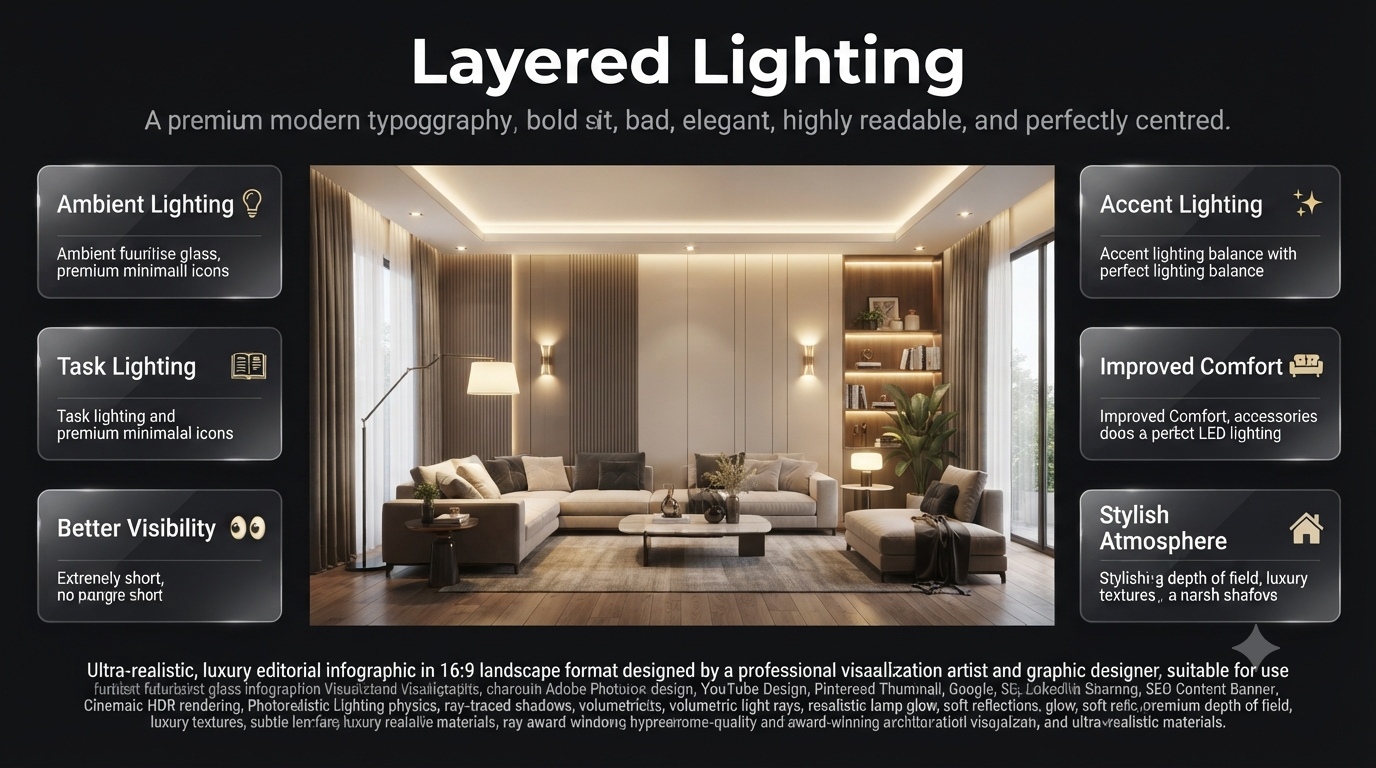
That’s where Layered Lighting makes all the difference. Instead of depending on a single ceiling light, layered lighting combines multiple light sources to improve visibility, comfort, and style. Whether you’re designing a new home, renovating a room, or simply upgrading your lighting, understanding this approach can completely transform how your spaces look and function.
In this guide, you’ll learn what layered lighting is, why interior designers rely on it, the three essential lighting layers every room should have, and how to use them together for a balanced, welcoming home.
Related Reading: Learn more about creating comfortable living spaces in our Interior Design section.
What Is Layered Lighting?
Layered lighting is an interior lighting design method that combines three types of lighting—ambient, task, and accent—to create a comfortable, functional, and visually appealing space. Instead of relying on one overhead fixture, layered lighting uses multiple light sources to improve visibility, reduce shadows, and enhance a room’s overall atmosphere.
Layered lighting is one of the most important principles in modern interior design. Professional designers rarely depend on a single ceiling fixture because one light source cannot meet every need within a room.
Think about your daily routine. You might need bright light to prepare meals, softer lighting to relax in the evening, focused illumination for reading, and decorative lighting to highlight artwork or architectural features. Each activity requires a different type of light.
Rather than flooding a room with uniform brightness, layered lighting distributes illumination strategically throughout the space. This creates a more comfortable environment while giving you greater control over mood, functionality, and energy efficiency.
The concept works in homes of every size, from compact apartments to large open-plan houses. Whether your style is modern, traditional, Scandinavian, industrial, or minimalist, layered lighting adapts to your design preferences.
💡 Pro Tip: Before buying new light fixtures, think about how you actually use each room. Your lighting plan should support your daily activities, not just match your décor.
Why Is Layered Lighting Important?
Layered lighting improves both the appearance and functionality of a room by combining different light sources. It reduces harsh shadows, enhances comfort, highlights design features, supports everyday tasks, and allows homeowners to adjust the atmosphere for different occasions.
Lighting affects much more than visibility. It influences how colours appear, how spacious a room feels, and even how comfortable people feel spending time there.
Many homeowners invest heavily in furniture, flooring, and décor but overlook lighting. As a result, beautifully designed rooms can still feel dull, cramped, or uncomfortable.
A layered lighting plan helps solve these common problems by balancing light throughout the space.
Better Functionality
Every room serves multiple purposes.
For example, your living room may be used for:
- Watching television
- Reading books
- Working from home
- Hosting guests
- Family game nights
- Relaxing after work
Each activity benefits from a different lighting level. Layered lighting allows you to switch between these needs without redesigning the room.
Improved Visual Comfort
One bright ceiling fixture often creates harsh shadows and excessive glare.
By spreading light across several fixtures, layered lighting:
- Reduces eye strain
- Softens shadows
- Creates balanced brightness
- Minimises glare
- Improves visibility
This is especially valuable in home offices, kitchens, and reading areas.
Creates Mood and Atmosphere
Lighting has a powerful effect on how a room feels.
Warm, soft lighting encourages relaxation, while brighter lighting promotes focus and productivity.
With layered lighting, you can easily change the atmosphere depending on the time of day or occasion.
Examples include:
- Bright morning routines
- Cosy family evenings
- Romantic dinners
- Holiday gatherings
- Movie nights
Rather than living with one fixed lighting level, you can customise the experience.
⭐ Expert Tip: Installing dimmer switches on ambient lighting gives you far greater flexibility without replacing existing fixtures.
Highlights Interior Design
One of the biggest advantages of layered lighting is its ability to showcase your home’s best features.
Accent lighting can highlight:
- Artwork
- Decorative mirrors
- Built-in shelving
- Stone fireplaces
- Feature walls
- Indoor plants
- Architectural details
- Display cabinets
Instead of disappearing into the background, these features become attractive focal points.
For more decorating inspiration, explore our Home Decor resources.
Makes Rooms Feel Larger
Strategic lighting creates depth.
Rather than leaving corners in darkness, multiple light sources spread illumination evenly throughout the room.
This visual balance can make:
- Small bedrooms feel more spacious
- Narrow hallways appear wider
- Low ceilings feel higher
- Open-plan spaces feel more organised
Lighting is often one of the easiest ways to improve the perception of space without structural changes.
Saves Energy
Many people assume more light fixtures automatically increase electricity use.
In reality, layered lighting often improves energy efficiency because you only illuminate the areas you actually need.
For example:
Instead of turning on every ceiling light, you might only use:
- A desk lamp while working
- Under-cabinet lighting while cooking
- Reading lamps before bed
- Accent lighting for evening ambience
LED fixtures make this approach even more energy-efficient while lasting significantly longer than traditional bulbs.
📌 Quick Tip: Replace older incandescent bulbs with LED bulbs in all lighting layers to reduce energy consumption and maintenance costs.
The Three Essential Layers of Lighting
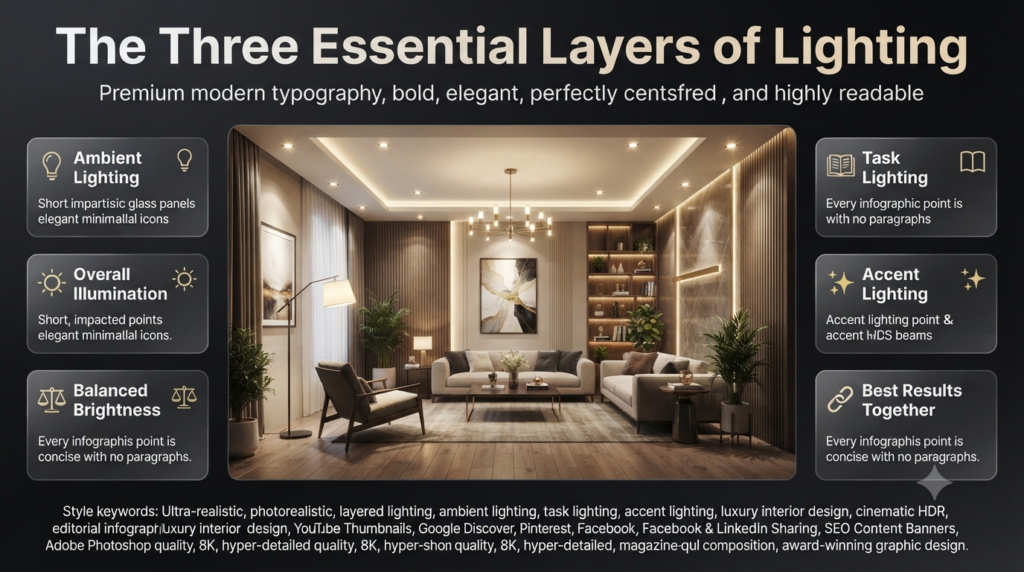
Professional lighting designers build nearly every residential lighting plan around these three core layers.
Each serves a unique purpose, and the best results come from combining all three rather than relying on just one.
1. Ambient Lighting
Ambient lighting is often called general lighting because it provides the overall illumination for a room.
It creates the base level of brightness that allows people to move safely and comfortably.
Common ambient lighting fixtures include:
- Ceiling lights
- Chandeliers
- Pendant lights
- Recessed downlights
- Flush-mount fixtures
- Track lighting
- Cove lighting
Ambient lighting should illuminate the entire room evenly without producing harsh shadows or overly bright spots.
Best Uses
Ambient lighting works well in:
- Living rooms
- Bedrooms
- Kitchens
- Hallways
- Dining rooms
- Entryways
- Bathrooms
Although it’s the foundation of any lighting plan, ambient lighting alone is rarely sufficient.
2. Task Lighting
Task lighting focuses light exactly where it’s needed for specific activities.
Instead of illuminating the entire room, it provides concentrated brightness to improve visibility and reduce eye strain.
Typical task lighting includes:
- Desk lamps
- Reading lamps
- Under-cabinet kitchen lighting
- Vanity lights
- Bedside lamps
- Adjustable wall sconces
- Swing-arm lamps
Task lighting is particularly important when performing detailed work.
Examples include:
- Reading
- Writing
- Cooking
- Food preparation
- Sewing
- Applying makeup
- Computer work
- Craft projects
Without task lighting, people often rely on overly bright overhead lights that can create glare and shadows.
⚠ Common Mistake: Positioning task lights behind you instead of in front or beside you can cast shadows onto your work surface, reducing visibility.
3. Accent Lighting
Accent lighting is primarily decorative.
Its purpose is to draw attention to selected features rather than illuminate the entire room.
Accent lighting adds depth, contrast, and visual interest.
Popular accent lighting options include:
- Wall sconces
- Picture lights
- LED strip lights
- Shelf lighting
- Display cabinet lighting
- Recessed spotlights
- Floor uplights
Accent lighting works particularly well for highlighting:
- Paintings
- Sculptures
- Decorative mirrors
- Indoor plants
- Fireplaces
- Stone walls
- Floating shelves
- Textured surfaces
Interior designers often recommend accent lighting that is slightly brighter than the surrounding area to naturally guide the eye toward focal points.
Comparing the Three Lighting Layers
| Feature | Ambient Lighting | Task Lighting | Accent Lighting |
|---|---|---|---|
| Main Purpose | General room illumination | Supports specific activities | Highlights decorative features |
| Brightness | Medium to High | High and focused | Low to Medium |
| Coverage | Entire room | Small work area | Selected objects |
| Common Fixtures | Ceiling lights, chandeliers | Desk lamps, under-cabinet lights | Wall sconces, LED strips, spotlights |
| Best For | Everyday visibility | Reading, cooking, working | Artwork, shelves, décor |
Benefits of Layered Lighting
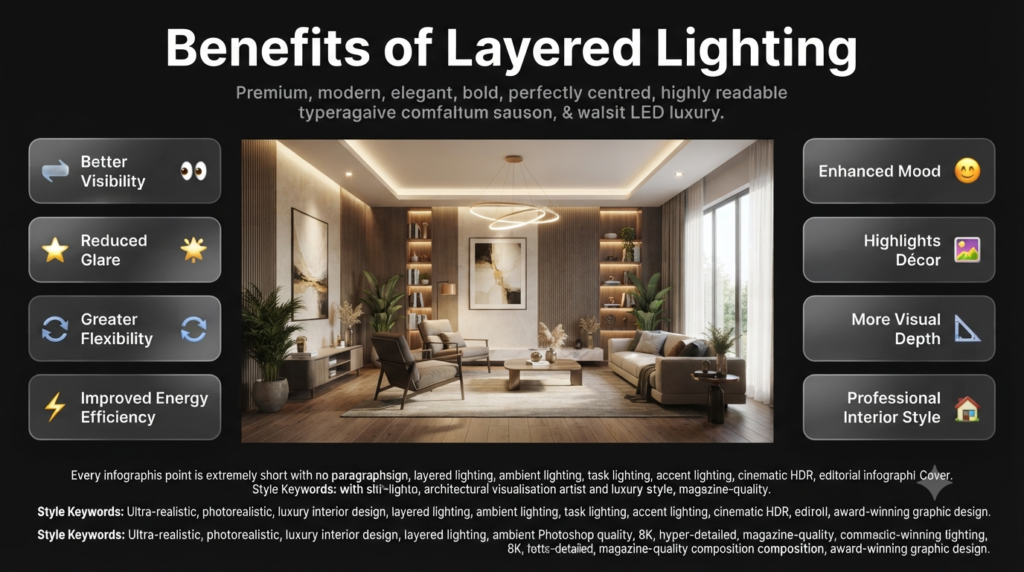
Layered lighting enhances comfort, flexibility, and interior design by combining ambient, task, and accent lighting. It improves visibility, supports different activities, reduces harsh shadows, highlights décor, saves energy with targeted lighting, and creates a welcoming atmosphere throughout the home.
When all three lighting layers work together, they create a home that is not only more attractive but also more practical for everyday living.
Some of the biggest benefits include:
- Better visibility for daily activities
- Reduced glare and eye fatigue
- Greater flexibility throughout the day
- Improved energy efficiency with LEDs and dimmers
- Enhanced mood and ambience
- Better presentation of furniture and décor
- Increased visual depth in every room
- A more professional-looking interior design
Layered lighting is one of the most cost-effective upgrades you can make because it improves both the appearance and functionality of nearly every room without requiring major renovations.
How to Plan Layered Lighting Room by Room
The best way to plan layered lighting is to start with ambient lighting for overall brightness, add task lighting where activities take place, and finish with accent lighting to highlight décor or architectural features. This combination creates balanced, functional, and visually appealing spaces in every room.
Every room in your home serves a different purpose, so your lighting plan should reflect how the space is actually used. While the three lighting layers remain the same, the fixtures and placement vary from room to room.
A well-planned lighting scheme ensures every area feels comfortable throughout the day and evening.
Layered Lighting for the Living Room
The living room is one of the busiest spaces in most homes. It may be used for entertaining guests, watching television, reading, working remotely, or simply relaxing after a long day.
Because it serves multiple purposes, it benefits more than almost any other room from layered lighting.
Ambient Lighting
Your ambient lighting forms the foundation.
Popular choices include:
- Ceiling-mounted fixtures
- Recessed downlights
- Chandeliers
- Semi-flush ceiling lights
- Cove lighting
Aim for even illumination across the room without creating harsh bright spots.
Task Lighting
Add focused lighting near activity areas.
Examples include:
- Floor lamps beside sofas
- Reading lamps next to armchairs
- Adjustable table lamps
- Desk lamps for home office corners
Task lighting reduces eye strain without requiring every ceiling light to be switched on.
Accent Lighting
Accent lighting adds personality.
Good options include:
- LED shelves
- Picture lights
- Wall sconces
- LED strip lighting behind televisions
- Spotlights for artwork
- Uplighting for indoor plants
These fixtures create depth and make the room feel professionally designed.
💡 Pro Tip: Use smart bulbs or dimmers so your living room can easily switch from bright daytime lighting to a cosy evening atmosphere.
Layered Lighting for the Kitchen
Kitchen lighting should combine bright ambient lighting with focused task lighting over work surfaces and subtle accent lighting for cabinets or islands. This improves safety, food preparation, and the overall appearance of the kitchen while creating a welcoming atmosphere.
The kitchen is primarily a workspace.
Unlike bedrooms, kitchens require brighter illumination for safety and efficiency.
Ambient Kitchen Lighting
Good choices include:
- Recessed ceiling lights
- LED ceiling panels
- Flush-mounted fixtures
- Track lighting
These fixtures provide consistent brightness across the room.
Task Kitchen Lighting
Task lighting is especially important here.
Install lighting over:
- Countertops
- Sink
- Stove
- Kitchen island
- Pantry
Under-cabinet LED lighting is one of the most effective upgrades because it removes shadows created by overhead lights.
Accent Kitchen Lighting
Accent lighting makes kitchens look more luxurious.
Examples include:
- Glass cabinet lighting
- Toe-kick LED strips
- Pendant lights above islands
- Floating shelf lighting
These fixtures create visual interest without overpowering the room.
⚠ Common Mistake: Installing beautiful pendant lights but forgetting under-cabinet lighting often leaves worktops in shadow.
Layered Lighting for Bedrooms
The bedroom should feel calm and relaxing while still providing enough light for practical tasks.
Good bedroom lighting balances comfort with functionality.
Ambient Bedroom Lighting
Use soft general lighting such as:
- Ceiling fixtures
- Recessed lights
- Cove lighting
- Modern chandeliers
Avoid lighting that feels excessively harsh.
Warm white LEDs usually create the most relaxing environment.
Task Bedroom Lighting
Task lighting should support activities like:
- Reading
- Getting dressed
- Applying makeup
- Working on a laptop
Popular fixtures include:
- Bedside table lamps
- Swing-arm wall lights
- Vanity lights
- Adjustable reading lamps
Accent Bedroom Lighting
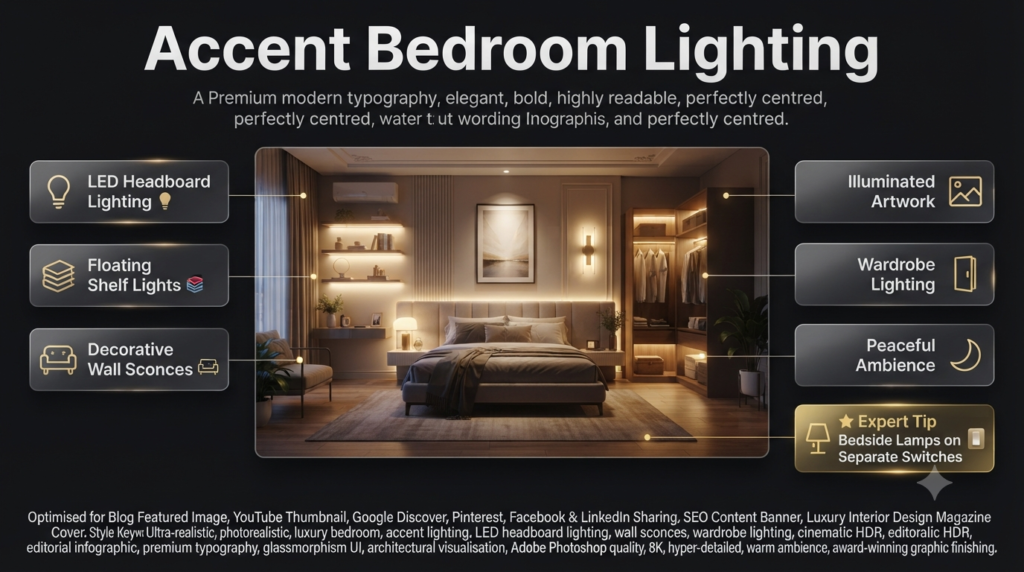
Accent lighting helps create ambience.
Ideas include:
- LED strip lighting behind the headboard
- Floating shelf lighting
- Decorative wall sconces
- Illuminated artwork
- Wardrobe lighting
The result is a bedroom that feels peaceful instead of overly bright.
⭐ Expert Tip: Install bedside lamps on separate switches so each person can control their own lighting without disturbing the other.
Layered Lighting for the Dining Room
Dining rooms benefit from lighting that creates warmth while allowing people to comfortably see one another and enjoy meals.
Ambient Lighting
The dining table is usually the centrepiece.
A pendant light or chandelier positioned above the table provides balanced general illumination.
Task Lighting
Task lighting is less important here but may include:
- Buffet lighting
- Sideboard lamps
- Serving area lighting
Accent Lighting
Accent lighting can highlight:
- Artwork
- Display cabinets
- Wine storage
- Decorative shelving
- Textured walls
Dimmable lighting allows the room to transition from everyday dining to entertaining guests.
Layered Lighting for Bathrooms
Bathroom lighting should combine bright ambient lighting with shadow-free task lighting around mirrors and subtle accent lighting for niches or shelving. This improves safety, grooming, and comfort while creating a spa-like atmosphere.
Bathrooms require careful planning because lighting affects grooming accuracy and safety.
Ambient Bathroom Lighting
Suitable fixtures include:
- Moisture-rated ceiling lights
- Recessed downlights
- LED ceiling panels
Ensure the entire room is evenly illuminated.
Task Bathroom Lighting
Mirror lighting is essential.
Install lighting:
- On both sides of the mirror
- Above the mirror
- Around vanity mirrors
This reduces facial shadows when shaving, applying makeup, or skincare.
Accent Bathroom Lighting
Accent lighting can include:
- LED shower niches
- Floating vanity lighting
- Shelf illumination
- Soft cove lighting
These additions help bathrooms feel more luxurious.
📌 Quick Tip: Choose fixtures specifically rated for damp or wet bathroom locations to ensure long-term safety.
Layered Lighting for a Home Office
Working from home has become increasingly common, making proper office lighting more important than ever.
Poor lighting contributes to fatigue, headaches, and reduced productivity.
Ambient Lighting
Provide comfortable overall illumination using:
- Ceiling lights
- Recessed fixtures
- LED panels
Avoid excessive brightness that causes glare on monitors.
Task Lighting
Desk lighting should provide focused illumination.
Good choices include:
- Adjustable LED desk lamps
- Swing-arm lamps
- Monitor light bars
Position the light to reduce shadows while avoiding reflections on screens.
Accent Lighting
Accent lighting helps create a professional background.
Ideas include:
- Shelf lighting
- Wall washing
- Decorative lamps
- Artwork lighting
- Indoor plant uplighting
This creates visual depth for both daily work and video meetings.
Layered Lighting for Hallways and Entryways
Hallways are often overlooked, yet they create the first impression of your home.
Even small entryways benefit from layered lighting.
Ambient Lighting
Install:
- Flush ceiling fixtures
- Recessed downlights
- Semi-flush mounts
These ensure safe movement throughout the space.
Task Lighting
Although hallways require little task lighting, a console table lamp near the entrance can provide practical illumination for finding keys, sorting mail, or checking bags before leaving.
Accent Lighting
Highlight architectural details with:
- Wall sconces
- Picture lights
- Stair lighting
- LED strip lighting beneath handrails
- Decorative niche lighting
This makes otherwise plain corridors feel inviting and sophisticated.
How to Balance the Three Lighting Layers
Many homeowners install all three lighting types but fail to create harmony between them.
A balanced room doesn’t mean every light is equally bright—it means each layer complements the others.
Follow these guidelines:
| Lighting Layer | Recommended Share | Purpose |
|---|---|---|
| Ambient Lighting | 60–70% | Overall room illumination |
| Task Lighting | 20–30% | Focused work areas |
| Accent Lighting | 10–20% | Decorative emphasis |
This isn’t a strict rule, but it provides a reliable starting point for most homes.
Choosing the Right Colour Temperature
The colour of your light affects both the appearance of your room and how it feels to spend time there.
| Colour Temperature | Appearance | Best Used In |
|---|---|---|
| 2700K | Warm white | Bedrooms, living rooms, dining rooms |
| 3000K | Soft white | Hallways, family rooms, lounges |
| 3500K | Neutral white | Multi-purpose spaces |
| 4000K | Cool white | Kitchens, bathrooms, laundry rooms |
| 5000K–6500K | Daylight | Workshops, garages, home offices |
Matching colour temperatures across a room creates a more cohesive appearance, while intentionally varying them can help distinguish relaxation zones from work areas.
Lighting Placement Tips Professionals Use
Interior designers rarely place lights randomly. Instead, they consider the room’s layout, furniture placement, and natural light.
Some proven placement tips include:
- Layer light at different heights using ceiling fixtures, wall lights, and floor lamps.
- Position task lighting so it falls in front of you or slightly to the side, reducing shadows.
- Highlight focal points such as artwork, fireplaces, or shelving with accent lighting.
- Keep pendant lights centred over dining tables or kitchen islands.
- Use dimmer switches to adapt brightness throughout the day.
- Avoid placing bright lights directly behind television screens, as this can create glare.
- Consider natural daylight when planning artificial lighting so both work together instead of competing.
Continue Learning: If you’re updating multiple spaces, browse our Room Design and Home Improvement Tips categories for more practical ideas.
Step-by-Step Guide to Creating a Layered Lighting Plan
To create a layered lighting plan, assess how each room is used, choose ambient lighting for overall illumination, add task lighting for specific activities, include accent lighting for visual interest, and finish with dimmers or smart controls. This approach creates a balanced, flexible, and comfortable lighting design.
Professional designers rarely choose light fixtures first. Instead, they start by understanding how a room functions and then select lighting that supports those activities.
Follow these practical steps to create a lighting plan that works beautifully in any home.
Step 1: Identify How the Room Is Used
Before buying any fixtures, think about the activities that take place in the room.
Ask yourself:
- Is this room mainly for relaxing?
- Will people read or work here?
- Is food prepared in this space?
- Are guests frequently entertained here?
- Are there decorative features worth highlighting?
The answers determine how much task and accent lighting you’ll need.
Why it matters: Every room has different lighting requirements.
Professional advice: Make a list of daily activities before shopping for lights.
Common mistake: Buying fixtures based only on appearance.
Quick example: A living room used for reading needs floor lamps, while one used mainly for movies benefits from dimmable ambient lighting.
Step 2: Start with Ambient Lighting
Ambient lighting forms the foundation of your design.
Choose fixtures that distribute light evenly throughout the room.
Examples include:
- Chandeliers
- Flush ceiling lights
- Recessed lighting
- Pendant fixtures
- Track lighting
Why it matters: Without good general lighting, additional layers cannot perform effectively.
Step 3: Add Task Lighting
Now identify work zones.
Examples:
- Kitchen countertops
- Reading chairs
- Office desks
- Bathroom mirrors
- Bedside tables
Install focused lighting directly where these activities occur.
Professional advice: Adjustable fixtures provide greater flexibility as your needs change.
Step 4: Add Accent Lighting
Accent lighting creates visual depth.
Highlight features like:
- Artwork
- Shelving
- Indoor plants
- Decorative mirrors
- Fireplaces
- Textured walls
Even subtle accent lighting makes interiors appear more expensive and thoughtfully designed.
Step 5: Install Lighting Controls
The same room rarely needs identical brightness all day.
Consider:
- Dimmer switches
- Smart bulbs
- Motion sensors
- Smart home automation
- Zoned lighting controls
These upgrades improve convenience while reducing unnecessary energy use.
⭐ Expert Tip: Smart lighting systems let you create presets such as “Movie Night,” “Dinner,” “Reading,” or “Morning Routine” with a single tap.
Choosing the Right Light Fixtures
Different fixtures serve different purposes.
| Fixture | Best Lighting Layer | Ideal Location |
|---|---|---|
| Chandelier | Ambient | Dining room, foyer |
| Recessed lights | Ambient | Living room, kitchen |
| Pendant light | Ambient / Task | Kitchen island, dining table |
| Desk lamp | Task | Home office |
| Floor lamp | Task | Living room |
| Wall sconce | Accent | Hallways, bedrooms |
| LED strip lights | Accent | Shelves, cabinets, headboards |
| Picture light | Accent | Artwork |
Mixing fixture types creates a more interesting and balanced lighting scheme.
Layered Lighting for Small vs Large Rooms
Not every home requires the same lighting strategy.
| Small Rooms | Large Rooms |
|---|---|
| Use fewer fixtures with multiple functions | Divide lighting into zones |
| Choose wall-mounted lights to save space | Combine several ceiling fixtures |
| Install mirrors to reflect light | Use accent lighting to define areas |
| Avoid oversized chandeliers | Mix pendants, floor lamps, and wall lights |
| Keep colours light to maximise brightness | Add multiple focal points |
Proper layering helps both compact and spacious rooms feel more comfortable.
Common Layered Lighting Mistakes
The most common layered lighting mistakes include relying on a single ceiling light, ignoring task lighting, using inconsistent colour temperatures, over-lighting a room, and forgetting dimmers. Avoiding these issues creates a more comfortable, attractive, and functional home.
Even expensive fixtures cannot compensate for poor planning.
Here are the mistakes professionals see most often.
1. Using Only One Ceiling Light
A single overhead fixture leaves shadows and creates flat-looking interiors.
Solution: Combine ceiling lights with task and accent lighting.
2. Ignoring Task Lighting
General lighting cannot adequately illuminate reading, cooking, or desk work.
Solution: Add dedicated lighting where activities occur.
3. Mixing Too Many Colour Temperatures
Warm and cool bulbs placed randomly create an inconsistent appearance.
Solution: Keep colour temperatures consistent within each room.
4. Over-Lighting the Room
More brightness isn’t always better.
Too many high-output fixtures can feel uncomfortable.
Solution: Use layered lighting with dimmers instead of excessive brightness.
5. Poor Fixture Placement
Incorrect placement creates glare and awkward shadows.
Solution: Plan fixture positions around furniture and daily activities.
6. Forgetting Accent Lighting
Rooms without accent lighting often appear flat and unfinished.
Solution: Highlight one or two focal points rather than every decorative item.
⚠ Common Mistake: Installing beautiful lighting fixtures without considering where furniture will actually be placed.
Expert Recommendations for Better Layered Lighting
Interior designers often follow a few simple principles that dramatically improve results.
- Layer light from the ceiling, walls, and floor rather than relying on one level.
- Use warm white lighting in living areas to create a welcoming atmosphere.
- Reserve cooler lighting for kitchens, bathrooms, and workspaces where clarity matters.
- Install dimmer switches whenever possible to increase flexibility.
- Choose LED bulbs for longer life and lower energy consumption.
- Highlight architectural details instead of trying to illuminate every corner equally.
- Consider how natural daylight changes throughout the day and plan artificial lighting to complement it.
- Test lighting in the evening before making permanent fixture placements.
💡 Pro Tip: Think of lighting as part of your interior design rather than an afterthought. Well-planned lighting often has a greater impact than buying more expensive furniture.
What are the three essential layers of lighting, and how do they work together?
Think of lighting a room like painting a canvas; you cannot do it all with a single brush stroke. To create a professional scheme, you must blend ambient, task, and accent lighting. Ambient lighting is your foundation, providing general illumination so you can walk around safely. Task lighting targets specific activities like cooking, reading, or applying makeup. Accent lighting adds the drama, drawing the eye to architectural features, artwork, or textured walls. Ambient Sources: Recessed ceiling lights, flush mounts, or large central chandeliers.
Task Sources: Under-cabinet LED strips, adjustable desk lamps, and vanity side-sconces.
Accent Sources: Picture lights, directional spotlights, and LED toe-kick lighting under cabinets.
How do I calculate the right balance of light layers for a living room without over-lighting?
The most common rookie mistake is turning a ceiling into Swiss cheese with too many recessed downlights. As an SEO strategist in the interior niche, I see high search intent around fixing harsh glare. A well-balanced room relies on a mix of heights and directions rather than raw power. You should space your general ambient lights evenly, then use floor lamps to bounce light off the ceiling and table lamps to bring warm pools of light down to eye level.
The Wattage Split: Distribute your total lumen needs across five to seven low-intensity sources instead of two bright ones.
Vertical Harmony: Ensure you have light fixtures at three distinct levels: ceiling, eye level (standing), and table level (sitting).
Shadow Control: Position task lights forward or to the side of seating areas so your body doesn’t cast shadows on your book or laptop.
What role do dimmers and smart controls play in a layered lighting scheme?
If your layers are all connected to a single on/off switch, you don’t actually have a layered system—you just have a very bright room. Dimmers are the secret weapon of high-end design because they allow you to change the function of a space instantly. A modern living room needs to transition from a bright home office during the day to an intimate movie theater at night. Smart lighting control systems take this a step further by letting you program preset “scenes” that adjust every layer simultaneously with one tap.
Scene Customization: Program a “Cooking Scene” for max task light, and an “Entertaining Scene” for soft ambient and high accent tones.
Energy Savings: Dimming any bulb by just 20% cuts your electricity usage and doubles the lifespan of the fixture.
Circadian Rhythm: Smart systems can automatically lower brightness and warm up the color tone as the sun sets to aid sleep.
How do I choose the correct color temperature (Kelvin) when layering lights?
Mixing different color temperatures in the same visual field is a major design crime that ruins the premium feel of a home. If you put a cool daylight bulb next to a warm yellow lamp, the room will look chaotic and disjointed. For a cozy residential feel, you should aim for consistency. Stick to a warm white range of 2700K to 3000K across all your layers. Reserve cooler tones (3500K to 4000K) strictly for high-focus utility spaces like garages, laundries, or deep commercial kitchens.
The 2700K Standard: Perfect for bedrooms and living spaces to evoke relaxation and mimic traditional incandescent glow.
The 3000K Balance: Ideal for kitchens and bathrooms where you need crisp clarity without losing a welcoming atmosphere.
Consistency Check: Always verify the Kelvin (K) rating on bulb packaging before buying replacement lamps for the same room.
How can I implement layered lighting in an old home without rewiring the walls?
Homeowners often panic thinking that layered lighting requires cutting open drywall and spending thousands on electricians. You can easily retrofit a layered look using plug-in options and smart battery technology. Today’s market is flooded with high-end, corded wall sconces that look intentional when anchored cleanly. You can also utilize wireless, rechargeable LED fixtures that stick magnetically under shelves or inside bookcases to create instant accent layers.
Plug-In Sconces: Use decorative cord covers or choose fixtures with fabric-wrapped cords to turn wires into a design feature.
Puck Lights: Stick battery-operated, remote-controlled puck lights inside display cabinets for cheap, instant accenting.
Smart Plugs: Connect existing floor and table lamps to a single smart plug hub to control your ambient layers wirelessly.
Conclusion
Layered lighting is more than an interior design trend—it’s a practical approach to creating a home that feels comfortable, functional, and visually appealing throughout the day. By thoughtfully combining ambient, task, and accent lighting, you can improve visibility, reduce eye strain, highlight your favourite design features, and adapt each room to different activities and moods.
Whether you’re renovating an entire house or updating a single room, start by considering how the space is used rather than choosing fixtures based on appearance alone. Build a strong foundation with ambient lighting, add focused task lighting where it’s needed most, and finish with accent lighting to bring depth and character to the room. Features such as LED bulbs, dimmer switches, and smart lighting controls can further enhance flexibility while improving energy efficiency.
The best lighting plans are those that support your lifestyle. With careful planning and the right combination of light sources, every room can become brighter, more welcoming, and better suited to everyday living. Use the ideas in this guide to create a balanced layered lighting scheme that enhances both the beauty and functionality of your home for years to come.