
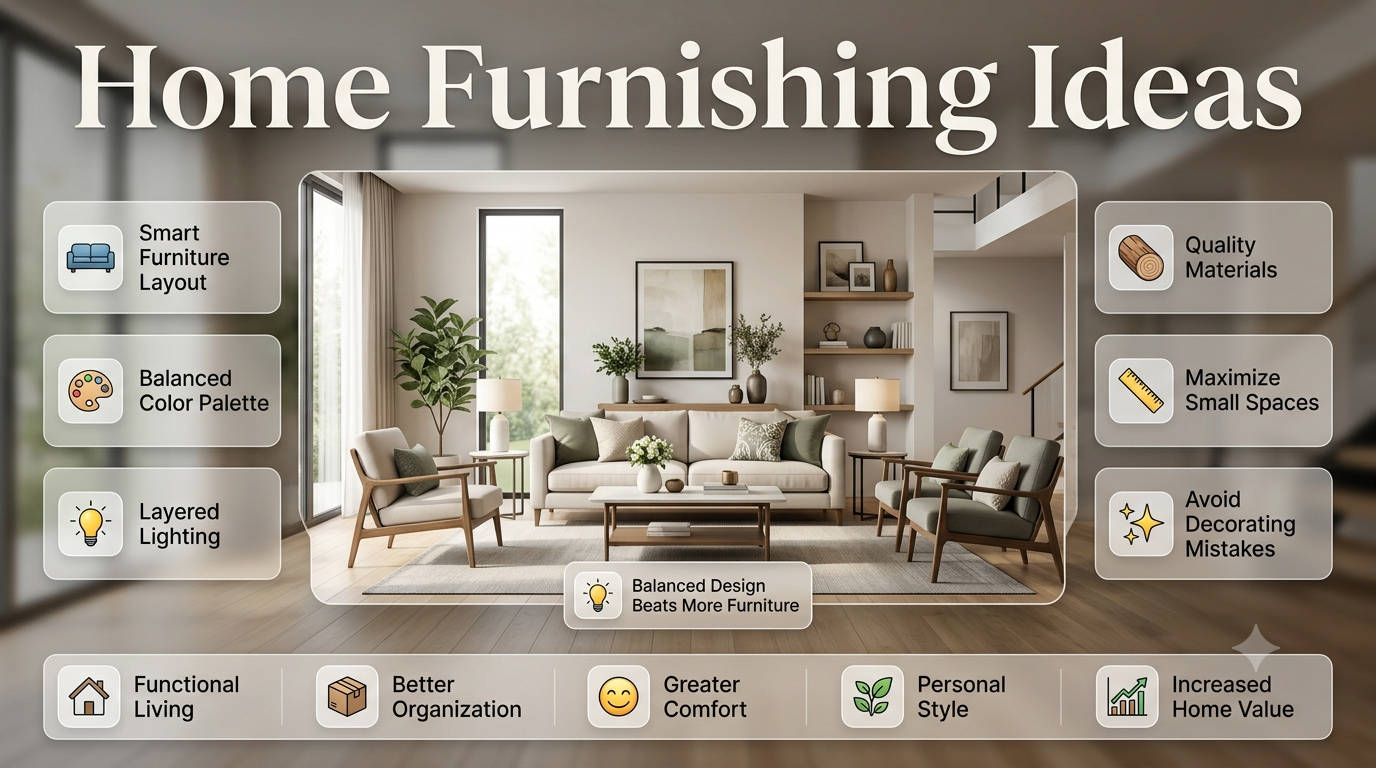
Home Furnishing Ideas: Have you ever walked into a beautifully furnished home and wondered why it feels so inviting while your own space still seems unfinished? The difference usually isn’t about spending more money—it’s about making smarter furnishing decisions. From choosing furniture that fits the room to balancing colors, lighting, textures, and décor, every detail contributes to creating a home that feels comfortable and functional.
Whether you’re furnishing a brand-new house, refreshing a single room, or decorating a compact apartment, the right home furnishing ideas can completely transform your living environment. A well-furnished home improves organization, enhances comfort, reflects your personality, and even increases property value.
In this comprehensive guide, you’ll learn how professional interior designers plan furniture layouts, choose materials, coordinate colors, maximize small spaces, and avoid expensive decorating mistakes. You’ll also discover practical room-by-room furnishing strategies, expert buying advice, measurement tips, and modern design ideas suitable for every budget.
📌 Quick Tip: Great home furnishing is about creating a balanced living experience—not simply filling rooms with attractive furniture.
If you’re new to home improvement, begin by exploring Home Improvement Tips for practical ideas that complement the furnishing techniques explained throughout this guide.
What Are Home Furnishing Ideas?
Home furnishing goes far beyond purchasing a sofa or placing a dining table inside a room. It involves designing spaces that support your lifestyle while creating visual harmony throughout the house.
A successful furnishing plan includes:
- Furniture selection
- Space planning
- Lighting
- Color coordination
- Window treatments
- Rugs
- Decorative accessories
- Wall décor
- Storage solutions
- Indoor plants
- Textiles and fabrics
Each element should complement the others instead of competing for attention.
For example, a minimalist living room might feature clean-lined furniture, neutral fabrics, soft lighting, and hidden storage, while a farmhouse-inspired space could include natural wood, textured fabrics, woven baskets, and vintage accents.
🏡 Interior Designer Advice: Before purchasing any furniture, think about how each room will actually be used every day. Function should always come before decoration.
Why Home Furnishing Matters
Many homeowners focus only on paint colors or decorative items while overlooking the importance of furnishing. In reality, furniture determines how comfortably a room functions.
Well-planned furnishing helps:
- Improve daily comfort
- Increase storage
- Enhance traffic flow
- Make small rooms appear larger
- Create visual balance
- Improve natural lighting
- Reduce clutter
- Increase home value
- Support family activities
- Reflect your personality
Imagine two identical living rooms. One contains oversized furniture blocking windows and walkways. The other uses properly scaled furniture, layered lighting, and coordinated décor. Although both rooms have the same dimensions, the second feels significantly larger, brighter, and more welcoming.
Benefits of Smart Home Furnishing
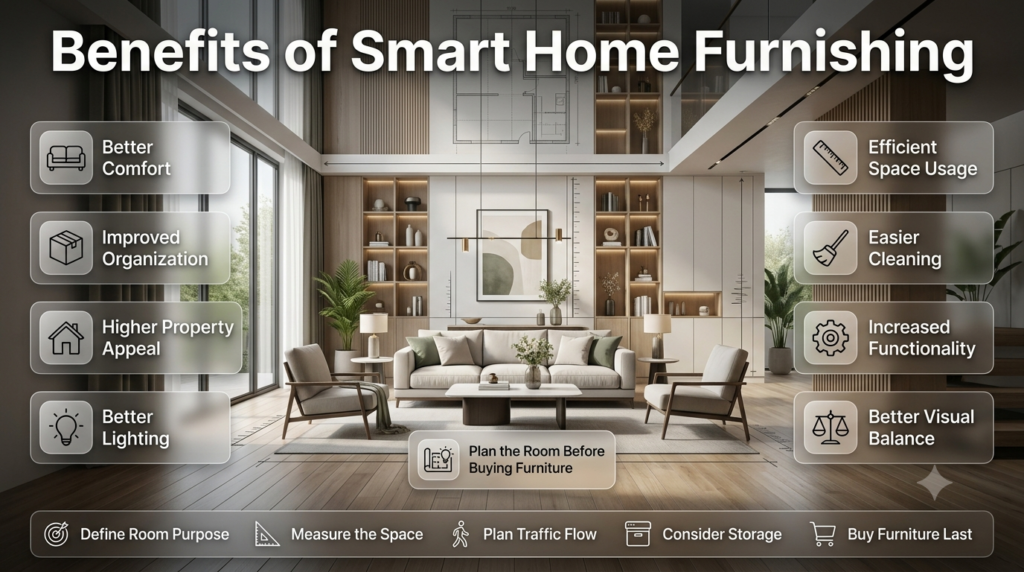
| Benefit | How It Helps |
|---|---|
| Better Comfort | Supports everyday living |
| Improved Organization | Reduces clutter |
| Higher Property Appeal | Makes homes more attractive |
| Efficient Space Usage | Maximizes every square foot |
| Better Lighting | Enhances natural brightness |
| Easier Cleaning | Improves accessibility |
| Increased Functionality | Rooms serve multiple purposes |
| Better Visual Balance | Creates harmony throughout the home |
How to Plan Before Buying Furniture
One of the biggest furnishing mistakes is shopping before planning. Professional interior designers always evaluate the room first.
Planning helps prevent:
- Oversized furniture
- Poor layouts
- Wasted money
- Traffic flow problems
- Style mismatches
- Storage shortages
Instead of asking:
“What sofa should I buy?”
Ask:
“What does this room need to function better?”
That simple change in thinking leads to smarter furnishing decisions.
Step 1: Define the Room’s Purpose
Every room should have a clear purpose.
Examples include:
Living Room
- Family gatherings
- Watching TV
- Entertaining guests
- Reading
- Relaxing
Bedroom
- Sleeping
- Dressing
- Reading
- Storage
- Relaxation
Home Office
- Working
- Video meetings
- Studying
- Filing documents
Understanding the room’s purpose helps prioritize the furniture you truly need.
Step 2: Measure the Room Carefully
Never purchase furniture without measuring your space.
Record:
- Room length
- Room width
- Ceiling height
- Window sizes
- Door openings
- Existing architectural features
For a complete measuring guide, see Furniture Planning before ordering large furniture pieces.
Example Measurement
Room Width = 14 ft

+---------------------------+
|                           |
|                           |
|        Living Room        |
|                           |
|                           |
+---------------------------+

Length = 18 ft
Even a few inches can determine whether furniture fits comfortably or overwhelms the room.
Step 3: Identify a Focal Point
Every room should have one primary visual anchor.
Examples include:
- Fireplace
- Television
- Large window
- Feature wall
- Artwork
- Built-in shelving
Arrange furniture around the focal point rather than scattering pieces randomly.
Step 4: Establish Your Budget
Professional designers often divide furnishing budgets into categories.
| Category | Suggested Share |
|---|---|
| Main Furniture | 50% |
| Lighting | 10% |
| Rugs | 10% |
| Curtains | 10% |
| Accessories | 10% |
| Contingency | 10% |
This approach ensures you don’t spend everything on large furniture while neglecting finishing touches that complete the space.
💡 Pro Tip: Invest more in items you use daily—such as sofas, beds, and dining chairs—and save on accessories that are easier to update over time.
Understanding Your Home’s Interior Style
Choosing furniture becomes much easier when you identify a consistent design style. Mixing too many styles without a clear plan can make rooms feel cluttered or disconnected.
Below are some of the most popular furnishing styles.
| Style | Characteristics |
|---|---|
| Modern | Clean lines, neutral colors, minimal décor |
| Contemporary | Current trends, bold accents, open spaces |
| Scandinavian | Light wood, white walls, cozy textiles |
| Farmhouse | Rustic finishes, natural textures, warm tones |
| Industrial | Metal, exposed brick, reclaimed wood |
| Traditional | Rich wood, classic furniture, elegant fabrics |
| Coastal | Soft blues, natural fibers, airy layouts |
| Bohemian | Layered textures, vibrant patterns, eclectic décor |
The key is consistency. For example, if you love Scandinavian interiors, pair simple wooden furniture with soft fabrics, light-colored walls, and minimal accessories rather than ornate traditional pieces.
If you’re also planning to redesign your interior layout, consider reading [INTERNAL LINK – Interior Design Guide] to better understand how furnishing and overall interior design work together.
Choosing the Right Color Palette
Color has a powerful influence on how spacious, bright, and welcoming a room feels. Before selecting furniture, decide on a cohesive palette that ties every element together.
A simple designer-approved rule is the 60-30-10 principle:
- 60% – Dominant color (walls or large furniture)
- 30% – Secondary color (chairs, curtains, rugs)
- 10% – Accent color (cushions, artwork, décor)
Example
60%  Soft Beige Walls
30%  Gray Sofa + Curtains
10%  Olive Green Cushions + Plants
This balance creates visual harmony without making the room feel overwhelming.
⚠ Mistake to Avoid: Buying colorful furniture first and choosing paint later often leads to clashing tones and an uncoordinated look.
Quick Checklist Before You Buy Any Furniture
✔ Measure every room accurately
✔ Identify the room’s main purpose
✔ Set a realistic budget
✔ Choose an interior design style
✔ Decide on a color palette
✔ Measure doors, hallways, and staircases
✔ Leave enough walking space between furniture
✔ Prioritize comfort over trends
✔ Invest in quality for frequently used pieces
✔ Plan lighting and accessories before finalizing your layout
By laying this foundation first, every furnishing decision becomes easier, more practical, and more cost-effective. In the next section, we’ll explore room-by-room home furnishing ideas, starting with the living room and covering furniture layouts, measurements, décor combinations, and professional design strategies that work for homes of every size.
Living Room Home Furnishing Ideas
Featured Snippet (40–60 Words)
The best living room furnishing ideas focus on balancing comfort, functionality, and style. Start with a properly sized sofa, establish a focal point, add layered lighting, include practical storage, and finish with rugs, artwork, and decorative accessories that create a cohesive and welcoming atmosphere.
The living room is often the heart of the home. It’s where families gather after a long day, guests are welcomed, children play, and special occasions are celebrated. Because this space serves multiple purposes, furnishing it requires careful planning rather than simply buying attractive furniture.
Professional designers always begin by asking one question:
How will this room be used every day?
The answer determines everything—from the sofa size to the lighting arrangement.
For example:
- A family with children needs durable fabrics and extra storage.
- A couple may prefer a stylish conversation area.
- Someone working from home might need a reading corner or flexible seating.
- Large families benefit from modular furniture that adapts to different occasions.
Essential Living Room Furniture
Every living room doesn’t require dozens of furniture pieces. Instead, focus on essentials that support your lifestyle.
| Furniture | Purpose | Priority |
|---|---|---|
| Sofa | Primary seating | ⭐⭐⭐⭐⭐ |
| Coffee Table | Everyday convenience | ⭐⭐⭐⭐⭐ |
| Accent Chairs | Extra seating | ⭐⭐⭐⭐ |
| TV Unit or Media Console | Organization | ⭐⭐⭐⭐ |
| Side Tables | Lamps and décor | ⭐⭐⭐⭐ |
| Area Rug | Defines seating area | ⭐⭐⭐⭐ |
| Bookshelf or Cabinet | Display and storage | ⭐⭐⭐ |
| Floor Lamp | Layered lighting | ⭐⭐⭐⭐ |
| Console Table | Entry styling | ⭐⭐⭐ |
A well-planned room often feels more luxurious than one packed with expensive furniture.
💡 Pro Tip: Leave some empty space. Negative space helps a room feel open, breathable, and professionally designed.
Start with the Largest Piece: The Sofa
The sofa usually becomes the centerpiece of the living room. Everything else should complement it.
When selecting a sofa, consider:
- Room dimensions
- Number of family members
- Daily usage
- Fabric durability
- Cleaning requirements
- Color compatibility
- Future flexibility
Sofa Size Guide
| Room Size | Recommended Sofa |
|---|---|
| Small (Under 150 sq ft) | 2-Seater |
| Medium (150–250 sq ft) | 3-Seater |
| Large (250–350 sq ft) | Sectional |
| Open Concept | Large Modular Sofa |
Neutral shades such as beige, gray, cream, taupe, and soft white remain timeless because they work with changing décor styles over the years.
Choosing the Perfect Furniture Layout
Furniture placement affects both appearance and functionality.
Instead of pushing every item against the wall, create conversation zones.
Layout Example 1: Small Living Room
+--------------------------------------+
|              Window                  |
|                                      |
|  Chair        Coffee Table     Chair |
|                                      |
|         3-Seater Sofa                |
|                                      |
| TV Unit                        Door  |
+--------------------------------------+
This arrangement keeps circulation clear while maintaining a comfortable seating area.
Layout Example 2: Large Living Room
+------------------------------------------------+
|                  Large Window                  |
|                                                |
| Chair      Coffee Table      Chair             |
|                                                |
|        Sectional Sofa                          |
|                                                |
| Side Table          Rug          Side Table    |
|                                                |
|               TV Console                       |
+------------------------------------------------+
The rug visually anchors the furniture, preventing pieces from appearing scattered.
Recommended Clearance Distances
Professional designers follow spacing guidelines to improve comfort.
| Furniture Gap | Recommended Distance |
|---|---|
| Sofa to Coffee Table | 16–18 inches |
| TV to Sofa | 6–10 feet (depending on TV size) |
| Walking Path | 30–36 inches |
| Between Chairs | 24–36 inches |
| Dining Access Near Living Area | 36 inches minimum |
These measurements improve movement without wasting valuable floor space.
If you’re unsure about room measurements, refer to Furniture Planning before finalizing your layout.
Choosing the Right Coffee Table
A coffee table should complement the seating arrangement without obstructing movement.
Popular Shapes
| Shape | Best For |
|---|---|
| Rectangle | Traditional layouts |
| Round | Small rooms and homes with children |
| Oval | Narrow spaces |
| Square | Large seating arrangements |
| Nesting Tables | Flexible modern spaces |
A coffee table should generally measure about two-thirds the length of your sofa for balanced proportions.
🏡 Interior Designer Advice: Glass coffee tables create an illusion of openness, making compact living rooms appear larger.
Add Accent Chairs for Flexibility
Accent chairs provide additional seating without making the room feel crowded.
Popular options include:
- Lounge chairs
- Wingback chairs
- Barrel chairs
- Swivel chairs
- Recliners
- Occasional chairs
Place them at an angle toward the sofa to encourage conversation rather than lining them up against walls.
Area Rugs: The Foundation of the Room
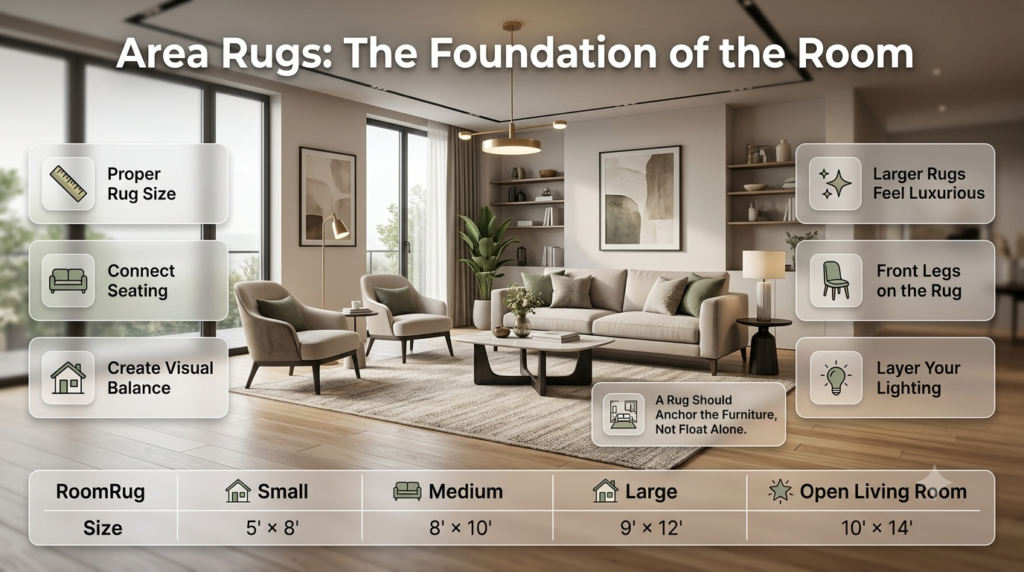
Many homeowners buy rugs that are too small.
The rug should connect all major seating pieces instead of floating in the center.
Rug Size Guide
| Room Size | Recommended Rug |
|---|---|
| Small | 5′ × 8′ |
| Medium | 8′ × 10′ |
| Large | 9′ × 12′ |
| Open Living Room | 10′ × 14′ |
A larger rug usually makes a room feel more luxurious.
Correct Rug Placement
 Sofa
========================

   Chair      Chair

##########################
##########################
######   RUG   ###########
##########################
##########################

      Coffee Table
At least the front legs of sofas and chairs should rest on the rug whenever possible.
Layer Your Lighting Like a Designer
Lighting transforms the mood of a room. Relying on a single ceiling fixture often creates harsh shadows and flat-looking interiors.
Instead, combine multiple light sources.
| Lighting Type | Purpose |
|---|---|
| Ceiling Light | General illumination |
| Floor Lamp | Reading and ambiance |
| Table Lamp | Warm accent lighting |
| Wall Sconces | Decorative focus |
| LED Shelf Lighting | Highlight displays |
Layering light creates depth and makes the room feel warmer and more inviting.
📌 Quick Tip: Choose warm white bulbs (around 2700K–3000K) for living rooms to create a cozy and relaxing atmosphere.
Decorative Accessories That Complete the Space
Accessories personalize your home and bring the furnishing scheme together. However, less is often more.
Consider adding:
- Throw pillows
- Cozy blankets
- Framed artwork
- Decorative trays
- Candles
- Books
- Indoor plants
- Sculptures
- Ceramic vases
- Woven baskets
Stick to a consistent color palette to avoid visual clutter.
For more inspiration on styling decorative elements, explore decoration ideas decoradyard .
Window Treatments Matter More Than You Think
Curtains influence how spacious and elegant a room appears.
Professional tips include:
- Hang curtain rods close to the ceiling.
- Extend rods beyond the window frame.
- Let curtains lightly touch the floor.
- Use sheer curtains to maximize natural light.
- Layer blackout curtains for privacy.
This simple technique creates the illusion of taller ceilings and larger windows.
Add Life with Indoor Plants
Plants soften furniture lines and improve the overall atmosphere.
Excellent low-maintenance options include:
| Plant | Light Requirement |
|---|---|
| Snake Plant | Low to Bright |
| ZZ Plant | Low Light |
| Pothos | Medium Light |
| Rubber Plant | Bright Indirect |
| Peace Lily | Low to Medium |
Place taller plants in empty corners and smaller plants on shelves or side tables to create visual balance.
Smart Storage Solutions for a Clutter-Free Living Room
A beautiful room quickly loses its appeal if clutter takes over. Incorporating hidden storage keeps the space organized while maintaining a clean aesthetic.
Great storage options include:
- Ottoman with hidden compartment
- TV console with drawers
- Floating wall shelves
- Built-in cabinets
- Storage benches
- Decorative baskets
- Console tables with shelving
These pieces help store remote controls, books, blankets, toys, and other everyday essentials without sacrificing style.
Real-Life Example: Furnishing a Medium-Sized Living Room
Imagine a living room measuring 16 × 20 feet for a family of four.
A practical furnishing plan might include:
- One neutral 3-seater sofa
- Two accent chairs opposite the sofa
- An 8′ × 10′ area rug
- Rectangular wooden coffee table
- Media console below a wall-mounted TV
- Two side tables with matching lamps
- One large indoor plant in the corner
- Floor-length curtains in a soft beige tone
- A gallery wall with framed artwork
- Hidden storage ottoman for blankets and games
This layout creates a comfortable conversation area, ensures smooth traffic flow, and provides enough storage for everyday living—all while maintaining a polished, inviting look.
⭐ Expert Tip: Before purchasing any living room furniture, visualize the complete space rather than individual pieces. Furniture, lighting, rugs, curtains, and accessories should work together as one coordinated design instead of competing for attention.
Essential Bedroom Furniture
A well-designed bedroom doesn’t require excessive furniture. Choosing fewer, high-quality pieces often results in a cleaner and more luxurious appearance.
| Furniture | Purpose | Priority |
|---|---|---|
| Bed Frame | Main focal point | ⭐⭐⭐⭐⭐ |
| Mattress | Comfort & sleep quality | ⭐⭐⭐⭐⭐ |
| Bedside Tables | Convenience | ⭐⭐⭐⭐ |
| Wardrobe | Clothing storage | ⭐⭐⭐⭐⭐ |
| Chest of Drawers | Additional storage | ⭐⭐⭐⭐ |
| Dresser with Mirror | Dressing area | ⭐⭐⭐ |
| Accent Chair or Bench | Seating | ⭐⭐⭐ |
| Area Rug | Comfort & warmth | ⭐⭐⭐⭐ |
| Table Lamps | Ambient lighting | ⭐⭐⭐⭐ |
Avoid filling every corner. Open floor space contributes to a calm and inviting atmosphere.
Choose the Right Bed Size
The bed is the centerpiece of every bedroom, so selecting the correct size is essential.
| Bed Size | Dimensions | Ideal For |
|---|---|---|
| Twin | 38″ × 75″ | Kids & Guest Rooms |
| Full | 54″ × 75″ | Teenagers & Small Rooms |
| Queen | 60″ × 80″ | Most Couples |
| King | 76″ × 80″ | Spacious Master Bedrooms |
| California King | 72″ × 84″ | Tall Individuals |
A bed that’s too large can overwhelm a room, while one that’s too small may compromise comfort.
💡 Pro Tip: Leave at least 24–30 inches of walking space around the bed to ensure comfortable movement.
Positioning the Bed Correctly
The bed naturally becomes the room’s focal point. Its placement influences the balance and usability of the entire space.
Best Practices
- Place the headboard against the longest uninterrupted wall.
- Keep both sides accessible whenever possible.
- Avoid blocking windows.
- Don’t position the bed directly in front of the bedroom door if possible.
- Ensure enough space for bedside tables.
Example Layout
+--------------------------------------+
|               Window                 |
|                                      |
|  Bedside   Queen Bed    Bedside      |
|   Table                 Table        |
|                                      |
|                                      |
| Wardrobe                  Dresser    |
|                                      |
| Door                               Chair |
+--------------------------------------+
This arrangement creates symmetry, improves circulation, and keeps the room visually balanced.
Selecting the Perfect Mattress
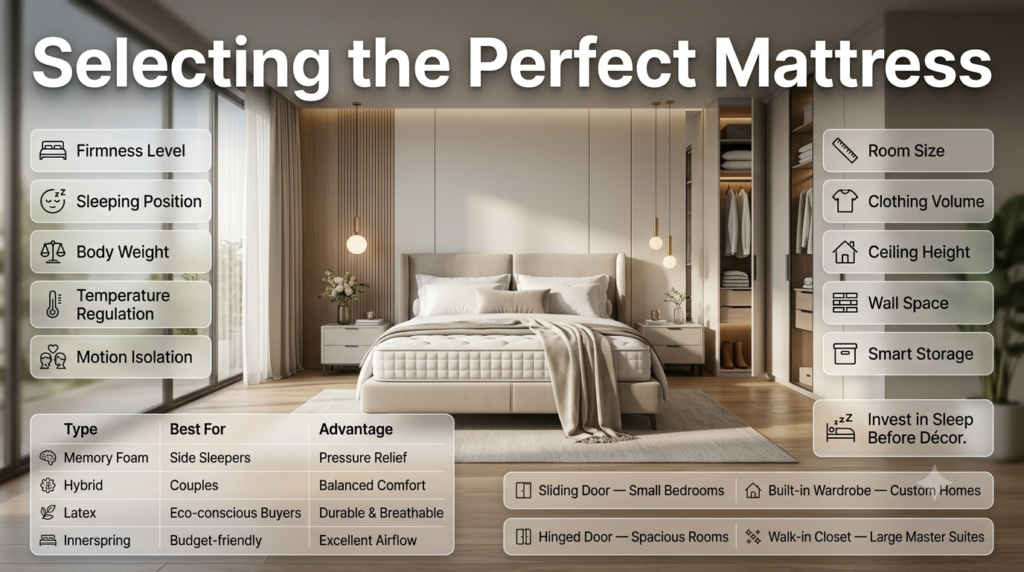
Even the most beautiful bedroom won’t feel comfortable if the mattress doesn’t support quality sleep.
Consider:
- Firmness level
- Sleeping position
- Body weight
- Temperature regulation
- Motion isolation (for couples)
Mattress Comparison
| Type | Best For | Advantages |
|---|---|---|
| Memory Foam | Side Sleepers | Pressure relief |
| Hybrid | Couples | Balanced comfort |
| Latex | Eco-conscious buyers | Durable & breathable |
| Innerspring | Budget-friendly | Excellent airflow |
Investing in a high-quality mattress often provides greater long-term value than purchasing expensive decorative furniture.
Smart Wardrobe Planning
Storage plays a significant role in maintaining a clutter-free bedroom.
Choose a wardrobe based on:
- Room size
- Clothing volume
- Ceiling height
- Available wall space
Wardrobe Types
| Type | Best For |
|---|---|
| Sliding Door | Small Bedrooms |
| Hinged Door | Spacious Rooms |
| Built-in Wardrobe | Custom Homes |
| Walk-in Closet | Large Master Suites |
Built-in wardrobes maximize storage while maintaining a streamlined appearance.
📌 Quick Tip: Use the full height of the room by selecting wardrobes that extend close to the ceiling. The upper shelves are perfect for seasonal items and luggage.
Bedside Tables: Small but Essential
Bedside tables provide both convenience and visual balance.
Use them to hold:
- Reading lamps
- Books
- Glasses
- Alarm clocks
- Charging devices
- Decorative accessories
For symmetry, choose matching tables on both sides of the bed whenever space allows.
Layered Bedroom Lighting
Lighting affects both functionality and mood. Instead of relying on one ceiling fixture, combine several light sources.
| Lighting Type | Purpose |
|---|---|
| Ceiling Light | General lighting |
| Bedside Lamps | Reading |
| Wall Sconces | Space-saving accent lighting |
| LED Strip Behind Headboard | Soft ambient glow |
| Closet Lighting | Practical visibility |
Warm lighting creates a relaxing atmosphere that’s ideal for winding down in the evening.
Color Schemes That Promote Relaxation
Soft, calming colors work best in bedrooms because they encourage rest and reduce visual stimulation.
Popular choices include:
- Warm white
- Beige
- Light gray
- Soft sage green
- Dusty blue
- Pale taupe
- Muted lavender
Add contrast with natural wood furniture or black accent pieces for a modern touch.
Choosing the Right Bedding
Layering textiles enhances both comfort and visual appeal.
Include:
- Quality fitted sheets
- Duvet or comforter
- Decorative throw blanket
- Multiple pillow sizes
- Accent cushions
Mixing textures such as cotton, linen, knit, and velvet creates depth without overwhelming the room.
Area Rugs for Added Warmth
An area rug softens the room and makes getting out of bed more comfortable.
Rug Placement Example
        Headboard

========================
|                      |
|        Bed           |
|                      |
========================

###########################
######### RUG #############
###########################
The rug should extend beyond both sides and the foot of the bed to visually anchor the furniture.
Functional Bedroom Storage Ideas
Storage should be both accessible and discreet.
Practical options include:
- Under-bed storage drawers
- Lift-up storage beds
- Floating nightstands
- Storage benches
- Vertical shelving
- Decorative baskets
- Wall-mounted cabinets
Keeping everyday items organized helps the room feel larger and more relaxing.
Decorating Without Creating Clutter
Decorative elements should enhance the room rather than dominate it.
Consider adding:
- Framed artwork
- Large statement mirror
- Indoor plants
- Soft curtains
- Decorative trays
- Scented candles
- Minimal wall shelves
- Personal photographs
Stick to a consistent color palette to maintain a calm environment.
For additional inspiration on creating cohesive interiors, explore [INTERNAL LINK – Room Design] and [https://homeimprovementtips.online/decoration-ideas-decoradyard/ – decoration ideas decoradyard].
Real-Life Example: Furnishing a 12 × 14 ft Bedroom
Imagine furnishing a 12 × 14-foot bedroom for a young couple.
A practical setup might include:
- Queen-size upholstered bed centered on the main wall
- Two matching bedside tables with warm table lamps
- Sliding-door wardrobe along one side wall
- Six-drawer dresser opposite the bed
- Neutral 8′ × 10′ area rug extending beneath the bed
- Floor-length blackout curtains layered with sheer curtains
- Full-length mirror near the wardrobe
- Indoor snake plant in one corner
- Upholstered storage bench at the foot of the bed
- Soft beige walls with muted green accent cushions
The result is a bedroom that feels spacious, organized, and restful while offering ample storage and functionality.
Common Bedroom Furnishing Mistakes
Even beautifully designed bedrooms can lose their appeal if common planning mistakes are overlooked.
❌ Buying Oversized Furniture
Large beds or bulky wardrobes can make even a medium-sized bedroom feel cramped.
Solution: Always measure the room before purchasing furniture and maintain adequate walking space.
❌ Ignoring Storage Needs
Many homeowners underestimate how much storage they actually require.
Solution: Incorporate multifunctional furniture such as storage beds, built-in wardrobes, or benches with hidden compartments.
❌ Poor Lighting
A single overhead light often creates harsh shadows and an uninviting atmosphere.
Solution: Combine ceiling lights, bedside lamps, and accent lighting for flexibility and comfort.
❌ Too Many Decorative Items
Excessive décor can make a bedroom feel busy rather than relaxing.
Solution: Choose a few meaningful accessories and let open space contribute to the overall design.
⭐ Expert Tip: Professional designers often follow the “less is more” principle in bedrooms. By prioritizing quality furniture, soft textures, and thoughtful lighting over excessive decoration, you create a timeless space that remains comfortable and visually appealing for years.
Essential Dining Room Furniture
Every dining space has different requirements, but these are the core furnishings most homes benefit from.
| Furniture | Purpose | Priority |
|---|---|---|
| Dining Table | Main gathering area | ⭐⭐⭐⭐⭐ |
| Dining Chairs | Comfortable seating | ⭐⭐⭐⭐⭐ |
| Buffet Cabinet | Storage | ⭐⭐⭐⭐ |
| Display Cabinet | Decorative storage | ⭐⭐⭐ |
| Area Rug | Defines dining zone | ⭐⭐⭐ |
| Pendant Light | Focal lighting | ⭐⭐⭐⭐⭐ |
| Bar Cart | Entertaining | ⭐⭐ |
| Wall Mirror | Enhances brightness | ⭐⭐⭐ |
A balanced combination of functional furniture and decorative accents creates a welcoming environment without making the room feel overcrowded.
Choosing the Right Dining Table
The dining table is the centerpiece of the room. Selecting the right shape depends on the available space and how many people typically dine together.
Dining Table Comparison
| Shape | Best For | Advantages |
|---|---|---|
| Rectangle | Medium & Large Rooms | Seats more people |
| Round | Small Spaces | Encourages conversation |
| Square | Compact Rooms | Balanced appearance |
| Oval | Narrow Rooms | Softer traffic flow |
| Extendable | Growing Families | Flexible seating |
If you frequently host guests, an extendable dining table offers excellent versatility without taking up extra space every day.
Dining Table Size Guide
| Number of People | Recommended Length |
|---|---|
| 2 | 30–36 inches |
| 4 | 48 inches |
| 6 | 60–72 inches |
| 8 | 78–96 inches |
| 10 | 108 inches or more |
Leave at least 36 inches of clearance around the table so chairs can be pulled out comfortably and people can move freely.
Dining Room Layout Example
+--------------------------------------+
|             Window                   |
|                                      |
|        Pendant Light                 |
|             ↓                        |
|      +---------------+               |
|      | Dining Table  |               |
|      |      6        |               |
|      +---------------+               |
|                                      |
| Buffet Cabinet              Plant    |
|                                      |
| Door                         Mirror  |
+--------------------------------------+
This layout keeps circulation open while making the dining table the visual focal point.
Selecting Comfortable Dining Chairs
Dining chairs should complement the table while providing enough comfort for extended meals and conversations.
When buying chairs, consider:
- Seat height
- Back support
- Upholstery material
- Ease of cleaning
- Durability
- Armrests (if space allows)
Chair Material Comparison
| Material | Advantages | Considerations |
|---|---|---|
| Wood | Timeless and durable | May benefit from seat cushions |
| Upholstered | Comfortable | Requires more maintenance |
| Metal | Modern appearance | Can feel cold without cushions |
| Rattan | Lightweight and airy | Best suited for dry indoor spaces |
For families with children, stain-resistant fabrics and wipe-clean finishes are practical choices.
💡 Pro Tip: Mix upholstered end chairs with simpler side chairs to add visual interest without making the dining room feel overly formal.
Lighting Above the Dining Table
Lighting has a significant impact on the atmosphere of the dining room.
A well-positioned pendant light or chandelier creates intimacy while highlighting the table as the room’s centerpiece.
Recommended Hanging Heights
| Ceiling Height | Fixture Placement |
|---|---|
| 8 Feet | 30–34 inches above table |
| 9 Feet | 32–36 inches above table |
| 10 Feet | 34–38 inches above table |
Installing a dimmer switch allows you to adjust brightness for everyday meals or special occasions.
Area Rugs in the Dining Room
An area rug helps define the dining space, particularly in open-concept homes.
Choose a rug large enough so that chairs remain on the rug even when pulled out.
Recommended Rug Sizes
| Table Size | Rug Size |
|---|---|
| 4-Seater | 6′ × 9′ |
| 6-Seater | 8′ × 10′ |
| 8-Seater | 9′ × 12′ |
Flat-weave or low-pile rugs are easier to clean and allow chairs to slide more smoothly.
Dining Room Storage Ideas
Storage keeps the dining area organized while displaying attractive dinnerware or decorative pieces.
Practical storage options include:
- Buffet cabinets
- Sideboards
- Glass display cabinets
- Floating shelves
- Built-in cabinetry
- Wine storage units
- Decorative baskets
Store everyday essentials within easy reach while reserving upper shelves for seasonal serving pieces or decorative items.
Decorating the Dining Room
Once the furniture is in place, add accessories that enhance the room without creating clutter.
Popular decorative elements include:
- Statement pendant lighting
- Large artwork
- Decorative mirrors
- Indoor plants
- Ceramic vases
- Linen table runners
- Candlesticks
- Centerpiece bowls
- Seasonal décor
Maintain a consistent color palette to tie the space together.
Real-Life Example: Furnishing a 12 × 12 ft Dining Room
Imagine furnishing a 12 × 12-foot dining room for a family of six.
A practical arrangement could include:
- 72-inch rectangular wooden dining table
- Six upholstered dining chairs
- 8′ × 10′ flat-weave rug
- Modern pendant light centered above the table
- Wooden buffet cabinet against one wall
- Large round mirror above the buffet
- Indoor fiddle-leaf fig in the corner
- Neutral linen curtains
- Ceramic centerpiece with fresh greenery
This layout provides comfortable seating, generous circulation space, and a balanced blend of functionality and style.
Kitchen Furnishing Ideas
Featured Snippet (40–60 Words)
The best kitchen furnishing ideas focus on efficiency, storage, and workflow. Prioritize durable cabinetry, functional seating, practical lighting, organized storage, and easy-to-clean materials to create a kitchen that supports everyday cooking while maintaining a stylish appearance.
The kitchen is one of the hardest-working spaces in any home. Beyond cooking, it often serves as a breakfast area, homework station, and social gathering spot.
Good kitchen furnishing isn’t just about aesthetics—it’s about improving daily routines.
If you’re planning a complete kitchen makeover, you’ll also find valuable inspiration in [https://homeimprovementtips.online/kitchen-upgrading-tips-mintpalment-transform-your-kitchen/ – Kitchen Upgrading Tips].
Essential Kitchen Furnishings
Every kitchen should include furniture and fixtures that maximize efficiency.
| Item | Function |
|---|---|
| Base Cabinets | Storage |
| Wall Cabinets | Vertical organization |
| Kitchen Island | Workspace & seating |
| Pantry Cabinet | Food storage |
| Bar Stools | Casual dining |
| Open Shelves | Decorative display |
| Dining Nook | Family meals |
| Rolling Cart | Flexible storage |
Choose pieces that support your cooking habits rather than following trends alone.
The Kitchen Work Triangle
Professional kitchen designers often use the work triangle concept to improve efficiency.
The three primary work zones are:
- Refrigerator
- Sink
- Stove
These should form a convenient triangle that minimizes unnecessary movement.
          Refrigerator
               ▲
              / \
             /   \
            /     \
       Sink ------- Stove
This arrangement allows smoother meal preparation and reduces fatigue during cooking.
Kitchen Seating Ideas
Modern kitchens frequently include casual seating for quick meals and conversations.
Popular options include:
- Breakfast bars
- Kitchen islands
- Built-in breakfast nooks
- Foldable dining tables
- Counter-height seating
Seating Height Guide
| Surface | Chair Height |
|---|---|
| Dining Table | 18 inches |
| Counter | 24–26 inches |
| Bar | 28–30 inches |
Always leave at least 24 inches of personal space per seated person for comfortable dining.
Smart Kitchen Storage Solutions
Storage is often the biggest challenge in kitchens, especially smaller ones.
Maximize available space by incorporating:
- Pull-out pantry shelves
- Corner carousel units
- Deep drawer organizers
- Hanging utensil rails
- Vertical tray storage
- Drawer dividers
- Under-sink organizers
- Ceiling-height cabinets
Well-planned storage improves efficiency while keeping countertops clean and clutter-free.
⚠ Mistake to Avoid: Leaving countertops overcrowded with small appliances makes even a large kitchen feel cramped. Store rarely used appliances inside cabinets and keep only daily essentials visible.
Kitchen Color and Material Ideas
Durability should be a priority when selecting kitchen finishes.
Popular combinations include:
- White cabinets with oak countertops
- Matte gray cabinetry with black hardware
- Navy blue lower cabinets with white uppers
- Natural wood finishes with stone countertops
- Sage green cabinets with brass accents
Pair these finishes with durable flooring and easy-to-clean backsplash materials for a kitchen that remains beautiful and practical over time.
⭐ Expert Tip: Designers often recommend repeating the same wood tone or accent color in nearby dining and living spaces. This subtle consistency creates visual flow throughout the home, making each room feel connected rather than isolated.
Profesional Recomandations & Reviews
- Home Furnishing Ideas begin with selecting furniture that matches both your lifestyle and available space.
- Home Furnishing Ideas help create comfortable living spaces that balance style and functionality.
- Home Furnishing Ideas encourage choosing quality furniture that remains durable for everyday use.
- Home Furnishing Ideas improve room layouts by arranging furniture for easy movement and comfort.
- Home Furnishing Ideas support selecting color palettes that create warmth and visual harmony.
- Home Furnishing Ideas encourage combining different textures to add depth to interior spaces.
- Home Furnishing Ideas improve living rooms through comfortable seating and balanced furniture placement.
- Home Furnishing Ideas support choosing coffee tables that complement the overall interior design.
- Home Furnishing Ideas encourage maximizing natural light with thoughtfully placed furnishings.
- Home Furnishing Ideas improve bedrooms through functional furniture and organized storage solutions.
- Home Furnishing Ideas support selecting beds that combine comfort with practical design.
- Home Furnishing Ideas encourage using bedside tables that provide convenient everyday storage.
- Home Furnishing Ideas improve dining areas with furniture that accommodates family gatherings comfortably.
- Home Furnishing Ideas support choosing dining chairs that balance comfort and durability.
- Home Furnishing Ideas encourage selecting multifunctional furniture for smaller homes and apartments.
- Home Furnishing Ideas improve storage through ottomans, benches, and furniture with hidden compartments.
- Home Furnishing Ideas support creating organized spaces by combining attractive storage solutions.
- Home Furnishing Ideas encourage selecting rugs that define different living areas.
- Home Furnishing Ideas improve interiors by coordinating curtains with furniture and décor.
- Home Furnishing Ideas support adding decorative cushions that introduce color and comfort.
- Home Furnishing Ideas encourage displaying artwork that complements the room’s overall style.
- Home Furnishing Ideas improve visual appeal through carefully selected decorative accessories.
- Home Furnishing Ideas support choosing lighting fixtures that enhance both function and atmosphere.
- Home Furnishing Ideas encourage layering different light sources for greater flexibility.
- Home Furnishing Ideas improve home offices through ergonomic furniture and efficient layouts.
- Home Furnishing Ideas support creating comfortable reading corners with compact seating.
- Home Furnishing Ideas encourage selecting shelving that combines storage with decorative display.
- Home Furnishing Ideas improve kitchens by incorporating practical seating and organized storage.
- Home Furnishing Ideas support bathroom organization through stylish storage furniture.
- Home Furnishing Ideas encourage maintaining uncluttered interiors with purposeful furniture selection.
- Home Furnishing Ideas improve entryways by adding functional storage benches and coat organizers.
- Home Furnishing Ideas support balancing decorative elements without overcrowding rooms.
- Home Furnishing Ideas encourage choosing timeless furniture instead of following short-term trends.
- Home Furnishing Ideas improve comfort by selecting upholstery suitable for everyday family use.
- Home Furnishing Ideas support sustainable decorating through durable and environmentally friendly materials.
- Home Furnishing Ideas encourage refreshing interiors with seasonal decorative accessories.
- Home Furnishing Ideas improve family living by creating welcoming shared spaces.
- Home Furnishing Ideas support selecting furniture proportions that suit room dimensions.
- Home Furnishing Ideas encourage maintaining consistency throughout the home’s interior style.
- Home Furnishing Ideas improve functionality by organizing furniture around daily routines.
- Home Furnishing Ideas support creating relaxing environments through balanced interior design.
- Home Furnishing Ideas encourage combining modern furnishings with timeless decorative pieces.
- Home Furnishing Ideas improve long-term value by investing in quality craftsmanship.
- Home Furnishing Ideas support flexible interiors that adapt to changing family needs.
- Home Furnishing Ideas encourage thoughtful furniture placement that enhances conversation and comfort.
- Home Furnishing Ideas improve room aesthetics through coordinated finishes and materials.
- Home Furnishing Ideas support practical organization while maintaining elegant interior design.
- Home Furnishing Ideas encourage personalizing spaces with carefully chosen decorative accents.
- Home Furnishing Ideas demonstrate that thoughtful furnishing decisions improve both beauty and everyday functionality.
- Home Furnishing Ideas ultimately transform houses into comfortable, stylish, and functional homes by combining quality furniture, smart layouts, coordinated décor, practical storage, balanced lighting, durable materials, and personalized design choices that enhance daily living while creating inviting spaces for every member of the household.
Most Frequently Asked Faqs
What are home furnishing ideas?
Home furnishing ideas are practical design strategies for selecting and arranging furniture, décor, lighting, textiles, and accessories to create a comfortable, functional, and visually appealing living space. Effective furnishing goes beyond decoration by considering room layout, lifestyle needs, storage, traffic flow, and overall design harmony. A well-furnished home balances aesthetics with everyday usability while reflecting the homeowner’s personality.
Key elements of home furnishing include:
Functional furniture selection.
Coordinated color schemes.
Comfortable seating arrangements.
Proper lighting design.
Decorative accessories.
Smart storage solutions.
Balanced room layouts.
How do I choose the right furniture for my home?
Choosing the right furniture begins with understanding your available space, daily lifestyle, and long-term needs. Measure each room carefully, create a functional layout, and select pieces that fit comfortably without restricting movement. Prioritize quality, durability, and comfort over following short-term trends. Furniture should complement your home’s architectural style while serving practical purposes for everyday living.
Tips for selecting furniture:
Measure every room before buying.
Prioritize comfort and functionality.
Choose durable, high-quality materials.
Match furniture to your design style.
Maintain proper walking space.
Invest in timeless pieces.
What is the biggest mistake people make when furnishing a home?
The most common furnishing mistake is purchasing furniture before creating a complete room plan. Oversized furniture, poor spacing, mismatched styles, and ignoring functionality often make rooms feel cramped and unbalanced. Many homeowners also underestimate the importance of lighting, storage, and proper furniture placement.
Planning the layout first helps ensure every piece contributes to both comfort and visual harmony while maximizing the available space.
Mistakes to avoid:
Buying furniture that’s too large.
Ignoring room measurements.
Blocking natural walkways.
Mixing incompatible styles.
Choosing appearance over comfort.
Overcrowding the room.
How can I furnish a small home without making it feel crowded?
Small homes benefit from furniture that maximizes functionality while minimizing visual clutter. Choose multifunctional pieces such as storage ottomans, sofa beds, nesting tables, and extendable dining tables. Keep the layout open, use light colors, and avoid filling every corner with furniture. Vertical storage and wall-mounted shelving also help preserve valuable floor space.
Thoughtful furniture placement creates a more spacious, organized, and inviting environment without sacrificing comfort.
Space-saving furnishing ideas:
Use multifunctional furniture.
Install wall-mounted shelves.
Choose furniture with built-in storage.
Keep decorations minimal.
Select light-colored furnishings.
Leave clear walking paths.
Which home furnishing style is the most timeless?
Timeless furnishing styles focus on quality craftsmanship, neutral colors, balanced proportions, and durable materials rather than short-lived design trends. Styles such as modern classic, Scandinavian, transitional, and contemporary remain popular because they combine simplicity with functionality. These interiors are easy to update over time by changing accessories instead of replacing major furniture pieces.
A timeless design creates a home that remains elegant, practical, and appealing for many years.
Timeless furnishing features:
Neutral color palettes.
Solid wood furniture.
Comfortable upholstered seating.
Natural materials.
Clean, simple lines.
Quality craftsmanship.