
Introduction
Click here to reach topics instantly
Table of Contents
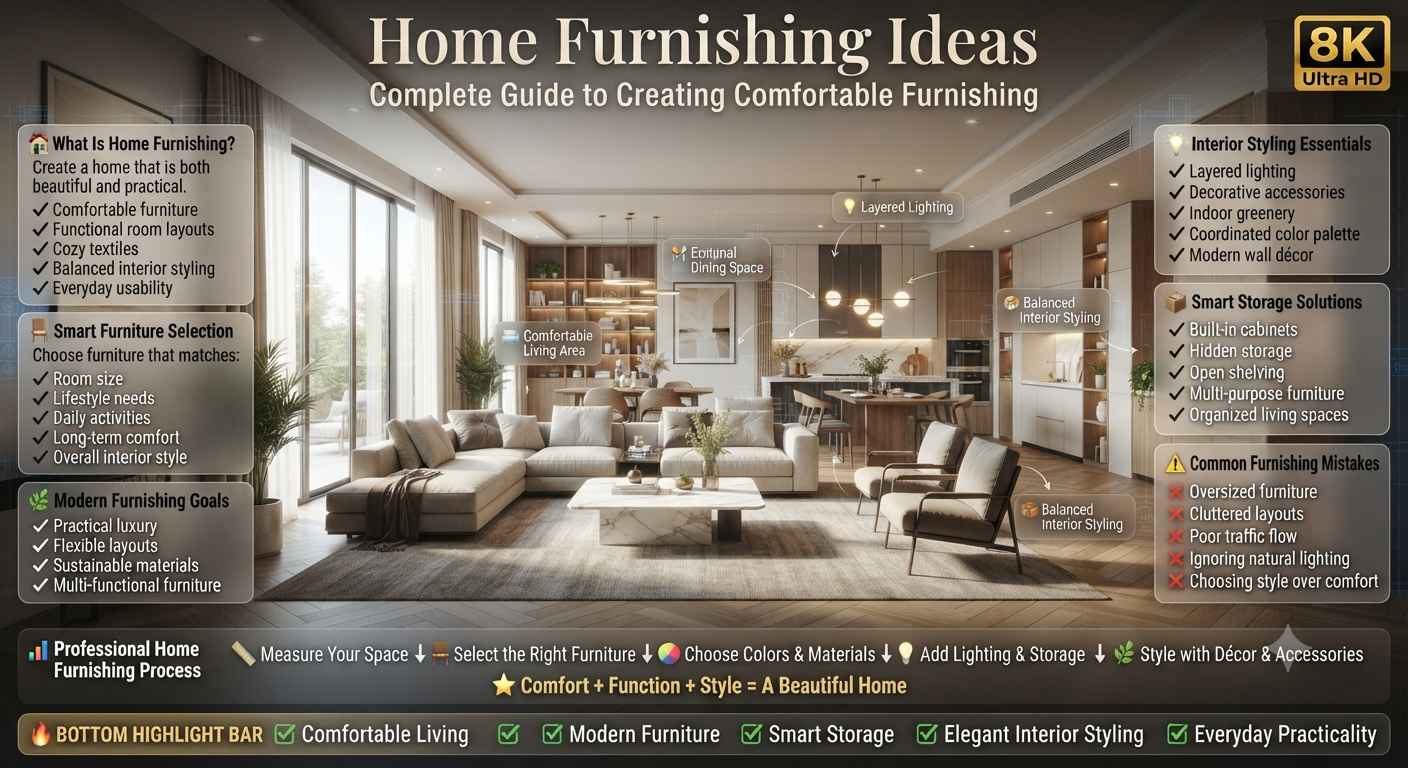
Home Furnishing Ideas-Home furnishing is more than filling rooms with furniture and decorative items. It is the process of selecting, arranging, and combining furniture, textiles, lighting elements, storage solutions, and accessories to create a home that feels comfortable, functional, and visually balanced. The right furnishing choices can transform an empty property into a personalized living environment that reflects lifestyle, personality, and everyday needs.
Home improvement guidance for Modern homeowners are increasingly focusing on practical luxury, flexible layouts, sustainable materials, and multifunctional furniture. A well-furnished home should not only look attractive in photographs but also work efficiently for daily activities such as relaxing, entertaining guests, working remotely, organizing belongings, and spending time with family.
Whether furnishing a new house, refreshing an existing interior, decorating a rental property, or upgrading individual rooms, thoughtful planning helps avoid common mistakes such as buying oversized furniture, creating cluttered layouts, or choosing designs that are difficult to maintain.
This complete guide explores professional home furnishing ideas, furniture selection strategies, room-by-room solutions, material choices, budget planning, styling techniques, maintenance advice, and modern furnishing trends to help homeowners create spaces that are beautiful, comfortable, and built for everyday living.
Understanding the Fundamentals of Home Furnishing
Home furnishing creates the relationship between empty space and everyday living. While interior decoration focuses heavily on appearance, furnishing determines how people interact with a home.
A well-furnished space should achieve three major goals:
| Goal | Meaning |
|---|---|
| Comfort | Furniture supports relaxation and daily activities |
| Functionality | Every item serves a practical purpose |
| Visual Harmony | Colors, materials, and layouts work together |
Professional designers do not begin by choosing furniture based only on trends. They first understand:
- Who lives in the home
- How each room is used
- Available space
- Storage requirements
- Lifestyle preferences
- Maintenance expectations
- Budget limitations
Why Home Furnishing Planning Matters
Many homeowners purchase furniture piece by piece without considering the complete design. This often leads to mismatched styles, poor room balance, and wasted space.
A planned furnishing approach helps prevent:
- Oversized furniture in small rooms
- Lack of storage
- Uncomfortable layouts
- Poor movement flow
- Unnecessary spending
- Short-lived design choices
For example, a beautiful sofa may look attractive in a showroom but become impractical if it blocks walking paths or overwhelms the living room.
The Professional Home Furnishing Process
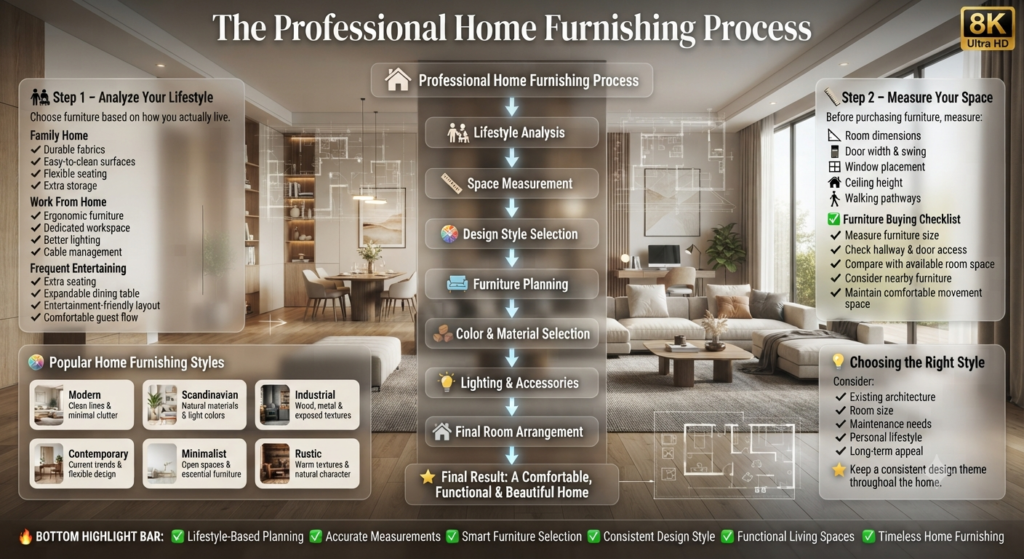
Interior professionals generally follow a structured workflow.
Lifestyle Analysis
        ↓
Space Measurement
        ↓
Design Style Selection
        ↓
Furniture Planning
        ↓
Color & Material Selection
        ↓
Lighting & Accessories
        ↓
Final Arrangement
This approach ensures every furnishing decision supports the overall purpose of the home.
Step 1: Analyze Your Lifestyle Before Furnishing
The best furnishing choices depend on how people actually live.
A family with children may prioritize:
- Durable fabrics
- Easy-clean surfaces
- Flexible seating
- Extra storage
A person working from home may prioritize:
- Ergonomic furniture
- Dedicated workspace
- Better lighting
- Cable organization
A homeowner who frequently hosts guests may need:
- Additional seating
- Expandable dining furniture
- Entertainment-focused layouts
Step 2: Measure Your Space Correctly
Accurate measurements are one of the most important steps in home furnishing.
Before buying furniture, measure:
| Area | What to Measure |
|---|---|
| Room | Length and width |
| Walls | Available placement areas |
| Doors | Opening direction and width |
| Windows | Position and size |
| Ceiling | Height limitations |
| Walkways | Movement space |
Furniture Measurement Checklist
Before purchasing any major item:
✅ Measure the furniture dimensions
✅ Check door and hallway access
✅ Compare with available room space
✅ Consider surrounding furniture
✅ Leave comfortable movement areas
Choosing a Home Furnishing Style
A furnishing style creates consistency throughout the home. Instead of copying trends completely, homeowners should select a style that matches their personality and lifestyle.
Popular Home Furnishing Styles
| Style | Characteristics |
|---|---|
| Modern | Clean lines, simple forms, minimal clutter |
| Contemporary | Current trends with flexible elements |
| Traditional | Classic furniture, detailed finishes |
| Scandinavian | Light colors, simplicity, natural materials |
| Industrial | Metal, wood, exposed structural elements |
| Minimalist | Essential pieces with open space |
| Rustic | Natural textures and warm character |
How to Choose the Right Style
Consider:
- Existing architecture
- Room size
- Maintenance preferences
- Personal taste
- Long-term appeal
A home should feel connected rather than like separate rooms with unrelated themes.
Furniture Selection Principles
Furniture is the foundation of home furnishing. The right pieces improve comfort, organization, and visual balance.
1. Prioritize Function Before Appearance
A furniture piece should solve a real need.
Before buying, ask:
- How often will this be used?
- Who will use it?
- Does it provide comfort?
- Does it fit the available space?
- Is maintenance practical?
2. Consider Furniture Scale
Furniture size must match the room.
| Furniture Issue | Result |
|---|---|
| Oversized sofa | Makes room feel crowded |
| Small furniture in large room | Creates empty appearance |
| Large dining table | Reduces movement |
| Too many accessories | Creates visual clutter |
3. Invest in High-Use Furniture
Some pieces affect daily comfort more than others.
Consider investing carefully in:
- Sofa
- Mattress
- Dining chairs
- Office chair
- Storage furniture
Expert Home Furnishing Recommendations
Professional designers commonly recommend:
- Choose quality over quantity
- Plan storage before decoration
- Mix timeless furniture with updated accessories
- Consider maintenance requirements
- Avoid buying complete matching furniture sets without evaluating the space
- Select materials suitable for your lifestyle
In this guide, you’ll discover 10 creative home improvement ideas, practical budget-friendly tips, expert renovation advice, and smart planning strategies to help you transform every room with confidence.
Living Room Furnishing Ideas
The living room is usually the heart of a home. It is where families relax, guests gather, entertainment happens, and everyday conversations take place. Because of its multiple purposes, living room furnishing requires careful planning to achieve a balance between comfort, appearance, and functionality.
A professionally furnished living room is not created by simply placing a sofa, television unit, and coffee table together. Each piece should support the way the room is used while maintaining proper proportions and visual harmony.
Before selecting furniture, consider:
- Number of people using the room
- Entertainment requirements
- Social activities
- Available floor space
- Storage needs
- Desired atmosphere
Essential Living Room Furniture Elements
| Furniture Element | Purpose | Planning Consideration |
|---|---|---|
| Sofa | Main seating area | Choose size based on room dimensions |
| Coffee Table | Convenience and balance | Maintain comfortable access |
| Accent Chairs | Additional seating | Create flexible arrangements |
| TV Unit | Entertainment and storage | Avoid overwhelming the wall |
| Side Tables | Support lighting and accessories | Place near seating |
| Storage Cabinets | Organization | Reduce visible clutter |
Sofa Selection Guide
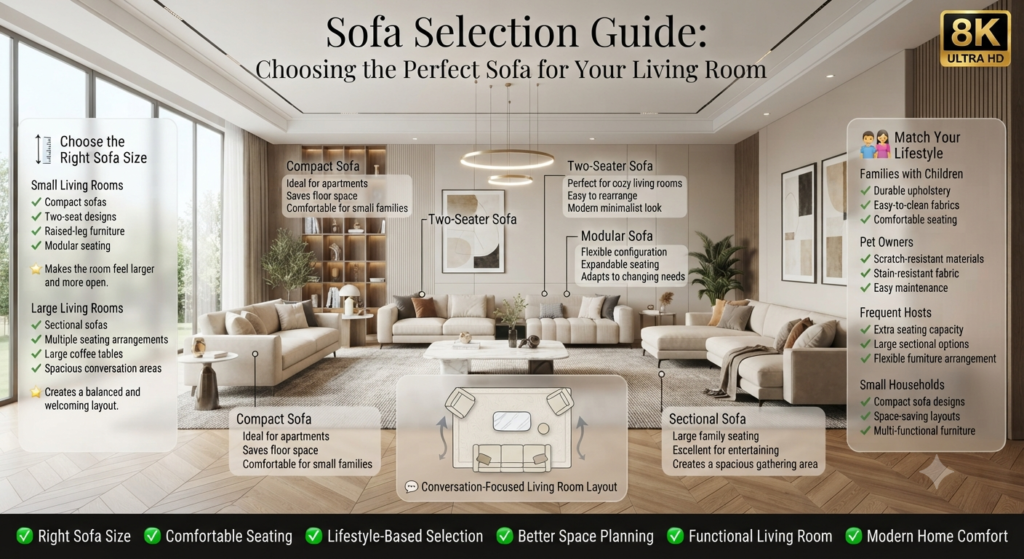
The sofa is often the largest furniture investment in a living room, making the right selection important.
Consider:
Room Size
A large sectional sofa may work beautifully in a spacious family room but make a small apartment feel crowded.
Small rooms often benefit from:
- Compact sofas
- Two-seat designs
- Raised-leg furniture
- Modular pieces
Large rooms can accommodate:
- Sectional sofas
- Multiple seating arrangements
- Larger coffee tables
Lifestyle Requirements
Different households require different sofa features.
| Lifestyle | Recommended Features |
|---|---|
| Families with children | Durable, easy-clean fabrics |
| Pet owners | Scratch-resistant materials |
| Frequent hosts | Extra seating capacity |
| Small households | Flexible compact designs |
Living Room Layout Ideas
Conversation-Focused Layout
Best for:
- Families
- Social gatherings
- Relaxed conversations
Arrangement:
Chair        Sofa        Chair


          Coffee Table
This creates a balanced interaction zone.
Entertainment-Focused Layout
Best for:
- Movie viewing
- Gaming
- Media rooms
Consider:
- Comfortable viewing angles
- Cable organization
- Screen placement
- Lighting control
Living Room Furnishing Accessories
Accessories complete the room but should be added after major furniture decisions.
Useful elements include:
- Area rugs
- Curtains
- Cushions
- Artwork
- Indoor plants
- Decorative lighting
The purpose of accessories is to enhance the design, not overcrowd the space.
Bedroom Furnishing Ideas
A bedroom should create a comfortable environment that supports relaxation and personal well-being. Bedroom furnishing requires a different approach from social spaces because comfort, privacy, and storage are the highest priorities.
A well-furnished bedroom balances:
- Comfortable sleeping area
- Organized storage
- Relaxing atmosphere
- Personal style
Essential Bedroom Furniture
| Furniture | Purpose |
|---|---|
| Bed | Main comfort element |
| Mattress | Sleep quality support |
| Wardrobe | Clothing storage |
| Nightstand | Convenience storage |
| Dresser | Organization |
| Seating | Reading or relaxation |
Choosing the Right Bed
The bed usually determines the entire bedroom layout.
Important considerations:
- Room dimensions
- Sleeping habits
- Storage requirements
- Visual balance
Common options:
| Bed Type | Suitable For |
|---|---|
| Platform Bed | Modern interiors |
| Storage Bed | Small bedrooms |
| Upholstered Bed | Luxury comfort |
| Minimal Frame Bed | Simple designs |
Bedroom Storage Furnishing Ideas
Storage should be planned before adding decorative items.
Effective solutions include:
Built-In Wardrobes
Advantages:
- Maximum use of available space
- Cleaner appearance
- Better organization
Under-Bed Storage
Useful for:
- Seasonal clothing
- Extra bedding
- Less frequently used items
Multi-Purpose Furniture
Examples:
- Storage benches
- Bedside cabinets
- Drawer systems
These improve functionality without adding unnecessary furniture.
Bedroom Comfort Enhancements
Small furnishing details can significantly improve comfort.
Consider:
- Soft textiles
- Layered bedding
- Comfortable rugs
- Adjustable lighting
- Reading chairs
- Window treatments
Dining Room Furnishing Ideas
The dining room combines practical function with social experience. The main goal is creating a comfortable area where people can eat, communicate, and spend time together.
Important planning factors:
- Table size
- Seating comfort
- Lighting placement
- Storage requirements
- Relationship with kitchen
Choosing a Dining Table
The dining table should match both the room size and household needs.
| Table Shape | Advantages |
|---|---|
| Rectangular | Works well for larger families |
| Round | Encourages conversation |
| Square | Suitable for compact spaces |
| Extendable | Flexible for guests |
Dining Chair Selection
Comfort is more important than appearance alone.
Consider:
- Seat height
- Back support
- Material durability
- Cleaning requirements
A beautiful chair that is uncomfortable will reduce the enjoyment of the dining area.
Dining Room Storage Ideas
Useful furnishing options:
- Sideboards
- Display cabinets
- Built-in shelves
- Serving storage units
These provide space for:
- Dinnerware
- Glassware
- Table accessories
Kitchen Furnishing Ideas
Kitchen furnishing combines storage, organization, efficiency, and visual design. Unlike decorative rooms, kitchens require highly practical decisions because every element affects daily workflow.
Kitchen Furniture Elements
| Element | Function |
|---|---|
| Cabinets | Storage organization |
| Drawers | Easy access |
| Pantry systems | Food storage |
| Island units | Preparation and gathering |
| Shelving | Convenience and display |
Kitchen Storage Planning
Good kitchen furnishing reduces unnecessary movement.
A practical kitchen considers relationships between:
- Refrigerator
- Preparation area
- Cooking zone
- Cleaning area
Cabinet Selection Considerations
When selecting kitchen cabinets, consider:
- Storage capacity
- Maintenance requirements
- Hardware quality
- Interior organization
- Long-term durability
Useful additions:
- Pull-out drawers
- Corner storage solutions
- Vertical organizers
- Hidden compartments
Home Office Furnishing Ideas
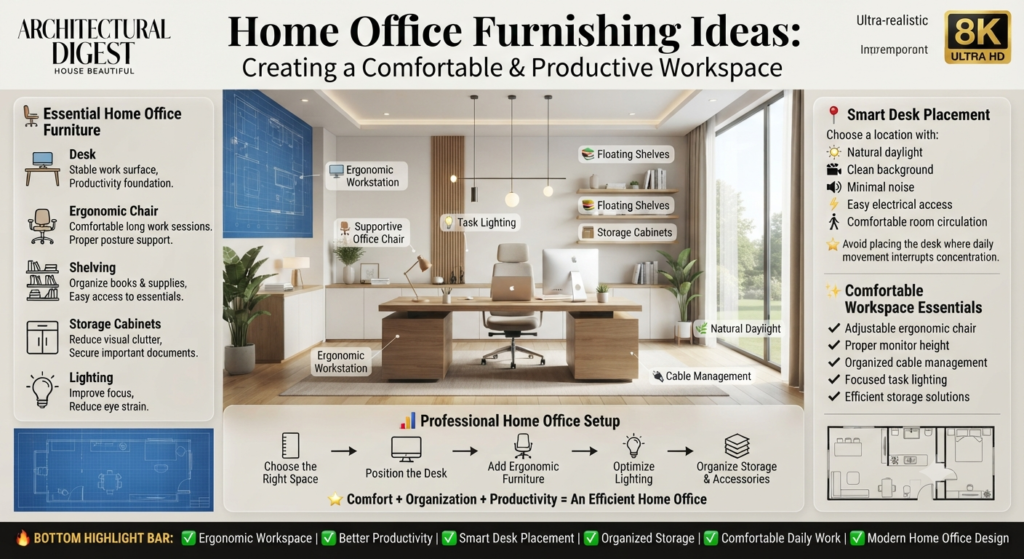
The increase in remote work has changed how homeowners furnish spaces. A home office must support concentration, comfort, and organization.
Essential Home Office Furniture
| Item | Purpose |
|---|---|
| Desk | Workspace foundation |
| Ergonomic Chair | Comfort during long use |
| Shelving | Organization |
| Storage Cabinets | Reduce clutter |
| Lighting | Improve productivity |
Desk Placement Strategies
A good desk position considers:
- Natural light
- Background appearance
- Noise levels
- Electrical access
- Room circulation
Avoid placing desks where movement constantly interrupts work.
Creating a Comfortable Workspace
Important additions:
- Adjustable chair
- Proper monitor height
- Cable management
- Task lighting
- Organized storage
A professional workspace should support both productivity and physical comfort.
Small Home Furnishing Ideas
Small homes require smart furnishing decisions because every piece affects available space.
The objective is:
Maximum Function + Minimum Clutter
Space-Saving Furniture Solutions
| Furniture Type | Benefit |
|---|---|
| Folding Tables | Flexible usage |
| Sofa Beds | Multiple functions |
| Wall Shelves | Uses vertical space |
| Storage Ottomans | Seating + storage |
| Modular Furniture | Adaptable layouts |
Visual Tricks for Small Spaces
To create a more open feeling:
- Use lighter furniture tones
- Avoid oversized pieces
- Keep pathways clear
- Use mirrors strategically
- Select furniture with visible legs
- Reduce unnecessary decoration
Professional Furnishing Checklist
Before completing any room furnishing project:
✅ Furniture fits the available space
✅ Layout supports daily activities
✅ Storage needs are solved
✅ Materials match lifestyle requirements
✅ Lighting supports room function
✅ Colors work together
✅ Furniture allows comfortable movement
✅ Design can adapt to future needs
Furniture Material Selection Guide
Choosing the right furniture material is one of the most important decisions in home furnishing. Materials affect not only the appearance of a room but also durability, maintenance requirements, comfort, and long-term value.
A beautiful piece of furniture may become frustrating if the material does not match the household lifestyle. For example, a delicate fabric may not be practical for a busy family home, while high-maintenance finishes may not suit homeowners who prefer easy cleaning.
Professional furnishing decisions consider:
- Durability
- Maintenance requirements
- Climate conditions
- Usage frequency
- Budget
- Interior style
Common Furniture Materials Comparison
| Material | Advantages | Considerations |
|---|---|---|
| Solid Wood | Durable, natural appearance, long lifespan | Requires maintenance and may cost more |
| Engineered Wood | Affordable and versatile | Quality varies by construction |
| Metal | Strong, modern appearance | Can feel colder visually |
| Glass | Creates openness and elegance | Requires regular cleaning |
| Upholstered Materials | Comfortable and stylish | Fabric care is important |
| Natural Stone | Premium appearance | Heavy and requires proper installation |
Solid Wood Furniture
Solid wood remains one of the most popular choices because of its durability and timeless appearance.
Common uses:
- Dining tables
- Bed frames
- Cabinets
- Shelving
Advantages:
- Long-lasting construction
- Natural texture
- Can often be repaired or refinished
- Works with many design styles
Considerations:
- May require polishing or care
- Can be heavier than other materials
- Quality depends on wood type and craftsmanship
Engineered Wood Furniture
Engineered wood products are commonly used because they provide a balance between appearance, affordability, and practicality.
Examples include:
- Medium-density fiberboard (MDF)
- Particle board
- Laminated panels
Suitable for:
- Storage furniture
- Cabinets
- Shelving systems
When selecting engineered wood furniture, focus on:
- Construction quality
- Surface finish
- Hardware strength
- Expected usage
Upholstery and Fabric Selection
Textiles strongly influence how comfortable and attractive a room feels. Sofas, chairs, curtains, cushions, and rugs all contribute to the overall furnishing style.
Common Upholstery Materials
| Fabric Type | Characteristics |
|---|---|
| Cotton | Soft and breathable |
| Linen | Natural texture and relaxed appearance |
| Velvet | Luxurious visual appeal |
| Leather | Durable and premium appearance |
| Synthetic Fabrics | Often easier maintenance |
Choosing Fabrics Based on Lifestyle
Homes With Children
Prioritize:
- Easy-clean fabrics
- Durable materials
- Practical colors
- Strong stitching
Homes With Pets
Consider:
- Scratch-resistant surfaces
- Easy vacuuming
- Tightly woven fabrics
- Low-maintenance materials
Luxury Interiors
Often focus on:
- Premium textures
- Layered fabrics
- Decorative finishes
- High-quality craftsmanship
Color Coordination for Home Furnishing
Color connects different furniture pieces and creates visual harmony throughout the home.
A successful furnishing palette usually combines:
- Main colors
- Supporting colors
- Accent colors
The 60-30-10 Color Rule
Many designers use a balanced proportion approach:
| Percentage | Role |
|---|---|
| 60% | Main color foundation |
| 30% | Secondary supporting color |
| 10% | Accent highlights |
This helps prevent rooms from feeling either too plain or visually overwhelming.
Creating a Cohesive Home Design
Different rooms should feel connected without looking identical.
Consistency can be created through:
- Similar wood tones
- Repeated accent colors
- Matching hardware finishes
- Related fabric choices
- Complementary styles
Mixing Furniture Styles Successfully
Modern homes often combine different design influences. Mixing styles can create personality when done carefully.
Examples:
- Modern sofa + traditional wooden table
- Minimal furniture + textured accessories
- Contemporary lighting + classic architecture
Professional Styling Principle
Use a balance of:
70% Consistent Foundation + 30% Personal Expression
The foundation creates harmony, while personal items add character.
Decorative Furnishing Ideas
Decorative elements should enhance furniture rather than replace good planning.
Important decorative categories include:
- Rugs
- Curtains
- Artwork
- Mirrors
- Plants
- Decorative objects
- Lighting accessories
Area Rug Selection Guide
A rug helps define space and connect furniture pieces.
A properly selected rug should:
- Match room proportions
- Support furniture arrangement
- Add texture
- Improve comfort
Common mistake:
Choosing a rug that is too small, causing furniture to appear disconnected.
Curtain and Window Treatment Ideas
Window treatments affect:
- Privacy
- Natural light control
- Temperature comfort
- Interior appearance
Options include:
- Curtains
- Blinds
- Shades
- Layered treatments
Selection depends on:
- Room function
- Light requirements
- Style preference
Indoor Plants as Furnishing Elements
Plants add natural texture and improve visual softness.
Suitable locations:
- Living room corners
- Entry areas
- Home offices
- Bedrooms
Consider:
- Available sunlight
- Maintenance requirements
- Room size
Luxury Home Furnishing Ideas
Luxury furnishing is not defined only by expensive furniture. It is created through thoughtful design, quality materials, comfort, and attention to detail.
A luxury home usually focuses on:
- Better proportions
- Premium craftsmanship
- Customized solutions
- Balanced decoration
- Comfortable experiences
Luxury Furnishing Elements
Statement Furniture
Examples:
- Designer chairs
- Unique coffee tables
- Custom sofas
The goal is creating visual interest without overcrowding.
Layered Lighting
Luxury interiors often combine:
- Ambient lighting
- Decorative fixtures
- Accent illumination
- Architectural lighting
High-Quality Textures
Examples:
- Natural fabrics
- Wood finishes
- Stone surfaces
- Custom textiles
Texture creates depth and sophistication.
Sustainable Home Furnishing Ideas
Sustainable furnishing focuses on making responsible choices that reduce waste and improve long-term value.
Important considerations:
- Furniture lifespan
- Material sourcing
- Repair possibilities
- Energy-efficient production
- Reuse and recycling
Sustainable Furniture Strategies
Choose Durable Pieces
A longer-lasting product often creates less waste than frequently replacing cheaper furniture.
Restore Existing Furniture
Updating existing furniture can include:
- Refinishing wood
- Reupholstering chairs
- Changing hardware
- Repairing structures
Buy Flexible Furniture
Adaptable furniture remains useful as lifestyles change.
Examples:
- Modular sofas
- Adjustable shelving
- Extendable tables
Budget-Friendly Home Furnishing Strategies
Creating a beautiful home does not always require purchasing everything at once.
A practical approach is prioritization.
Furnishing Priority Framework
Stage 1: Essential Items
Focus on:
- Bed
- Sofa
- Dining furniture
- Storage solutions
Stage 2: Functional Improvements
Add:
- Lighting upgrades
- Organization systems
- Workspace improvements
Stage 3: Decorative Enhancements
Include:
- Artwork
- Accessories
- Accent furniture
- Seasonal updates
Ways to Save Money Without Reducing Quality
Consider:
- Buying fewer but better pieces
- Mixing affordable and premium items
- Updating accessories instead of replacing furniture
- Measuring carefully before purchases
- Choosing timeless designs
Common Home Furnishing Mistakes
1. Buying Furniture Without Measuring
This can result in:
- Poor movement
- Incorrect proportions
- Installation problems
Always measure the space first.
2. Following Trends Too Quickly
Trends can become outdated.
Better approach:
Choose timeless furniture and update smaller elements.
3. Ignoring Comfort
A beautiful chair or sofa is not successful if it is uncomfortable.
Always consider:
- Support
- Materials
- Usage frequency
4. Over-Furnishing Rooms
Too much furniture creates:
- Crowded appearance
- Difficult cleaning
- Reduced flexibility
Every piece should have a purpose.
Professional Home Furnishing Checklist
Before finalizing your furnishing plan:
✅ Furniture matches room size
✅ Materials fit lifestyle needs
✅ Colors create harmony
✅ Storage requirements are solved
✅ Lighting supports activities
✅ Furniture provides comfort
✅ Design allows future flexibility
✅ Maintenance requirements are realistic
-
What should I consider before furnishing my home?
Before furnishing a home, start by understanding your lifestyle, available space, and daily requirements. Furniture should be selected based on how rooms are used rather than only focusing on appearance. Proper planning helps avoid overcrowding, poor layouts, and unnecessary expenses.
Important considerations include:
Measuring every room accurately
Identifying essential furniture pieces
Understanding storage requirements
Choosing a suitable design style
Setting a realistic budget
Considering future lifestyle changes
A planned furnishing approach creates a home that is both attractive and practical. -
How do I choose the right furniture for my home?
The right furniture depends on room size, lifestyle needs, comfort expectations, and design preferences. Instead of selecting pieces individually based only on appearance, consider how each item works with the entire space.
Before purchasing furniture, evaluate:
Size and proportions
Material durability
Comfort level
Maintenance requirements
Storage benefits
Compatibility with existing interiors
Furniture should improve daily living while maintaining visual balance. -
How can I furnish a small home without making it feel crowded?
Small homes require smart furnishing decisions that maximize functionality while preserving open space. The goal is to select furniture that provides multiple benefits without overwhelming the room.
Helpful strategies include:
Choosing multifunctional furniture
Using vertical storage solutions
Selecting appropriately sized pieces
Keeping walking paths clear
Avoiding unnecessary decoration
Using flexible layouts
Furniture with built-in storage or multiple uses can significantly improve small spaces. -
What furniture should I invest in first?
The priority should be furniture pieces that directly affect comfort and everyday activities. These items usually provide the greatest long-term value.
Important investments include:
Quality mattress
Comfortable sofa
Durable dining furniture
Ergonomic office chair
Functional storage solutions
Decorative items can be added gradually after the essential furniture is selected.
Conclusion: Creating a Home That Feels Comfortable and Personal
Successful home furnishing is about creating a living environment that supports everyday life while reflecting personal style. The best-furnished homes are not simply filled with expensive furniture; they are carefully planned spaces where every item has a purpose.
A strong furnishing strategy begins with understanding the needs of the people living in the home, measuring spaces accurately, selecting suitable furniture, creating functional layouts, and adding decorative elements thoughtfully. Comfort, durability, storage, and visual balance should always work together.
Modern home furnishing is moving toward flexible, sustainable, and personalized interiors. Homeowners are increasingly choosing furniture that adapts to changing lifestyles, supports multiple activities, and provides long-term value rather than following temporary trends.
Whether furnishing a small apartment, family house, rental property, or luxury residence, the most important principle remains the same:
A well-furnished home is not defined by how much furniture it contains, but by how effectively each piece improves the way people live.
With careful planning, smart furniture choices, and attention to comfort and functionality, any home can become a welcoming, organized, and beautiful space.