
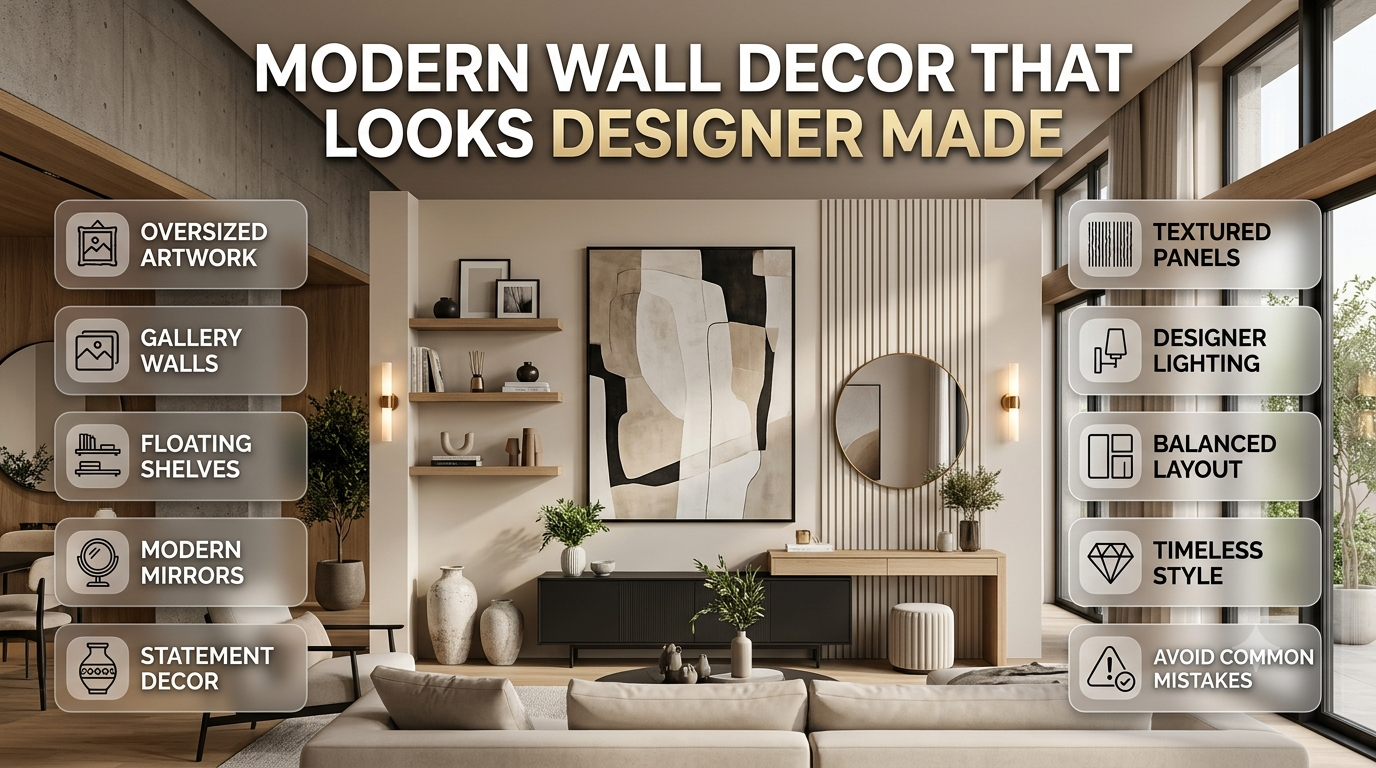
Modern wall decor has the power to completely change how a room feels. A blank wall can make even expensive furniture look unfinished, while thoughtfully designed walls instantly create a polished, high-end appearance. The good news is that achieving a designer-inspired look doesn’t always require a huge budget or professional interior designer.
Whether you’re decorating a new home, updating your living room, refreshing your bedroom, or giving your office a modern makeover, choosing the right wall decor is one of the smartest investments you can make. From oversized artwork and gallery walls to floating shelves, textured panels, mirrors, and statement lighting, modern wall decor offers countless ways to express your personality while improving the overall style of your space.
In this guide, you’ll discover how designers approach wall decoration, which trends are worth following, what mistakes to avoid, and how to create beautiful walls that feel elegant, balanced, and timeless.
What Is Modern Wall Decor?
Modern wall decor refers to decorative elements that combine simplicity, clean lines, balanced colors, and carefully selected artwork or accessories to create stylish, uncluttered interiors. It focuses on quality, proportion, and functionality rather than excessive decoration.
Unlike traditional decorating styles that often use ornate frames, heavy colors, and intricate details, modern wall decor emphasizes:
- Minimal visual clutter
- Clean geometric shapes
- Neutral or balanced color palettes
- Natural materials
- Functional decoration
- Statement pieces instead of excessive accessories
The goal isn’t to fill every inch of the wall.
Instead, it’s to make every decorative element feel intentional.
If you’re exploring broader Interior Design ideas, modern wall styling is often one of the easiest upgrades with the biggest visual impact.
Why Designer Walls Look More Expensive
Many homeowners believe expensive decor creates beautiful interiors.
Professional designers know the opposite is often true.
Great walls come from thoughtful planning—not simply buying expensive artwork.
The biggest difference between amateur decorating and designer decorating is balance.
Professional designers carefully consider:
- Scale
- Color harmony
- Lighting
- Texture
- Visual weight
- Negative space
When these elements work together, even affordable decor can look luxurious.
The Five Principles Designers Always Follow
| Principle | Why It Matters |
|---|---|
| Balance | Prevents the room from feeling crowded or empty |
| Scale | Decor should fit the wall size |
| Contrast | Creates visual interest |
| Texture | Adds depth without clutter |
| Simplicity | Makes every piece stand out |
💡 Pro Tip: Before buying any wall decor, take a photo of your room. Viewing your space through your phone often makes empty areas and design imbalances much easier to notice.
Popular Types of Modern Wall Decor
Modern interiors use a combination of decorative elements instead of relying on a single feature.
Here are the most effective options.
Oversized Wall Art
Oversized artwork creates a strong focal point that immediately attracts attention while making a room appear professionally designed. One large piece often looks cleaner and more elegant than several small decorations.
Large artwork works especially well in:
- Living rooms
- Bedrooms
- Dining rooms
- Home offices
- Hallways
Popular subjects include:
- Abstract art
- Nature photography
- Black-and-white prints
- Minimal line art
- Architectural photography
- Soft landscape paintings
Oversized art also reduces visual clutter because a single statement piece replaces multiple smaller decorations.
Gallery Walls
Gallery walls remain one of the most versatile decorating styles.
Instead of displaying one large artwork, multiple framed pieces work together to tell a visual story.
Popular gallery wall themes include:
- Family photos
- Travel memories
- Botanical illustrations
- Abstract prints
- Vintage artwork
- Inspirational typography
Modern gallery walls usually maintain consistency by using:
- Similar frame colors
- Matching spacing
- Coordinated color palettes
- Balanced layouts
Example Gallery Wall Layout
□   □   □

    □

□   □   □
Keeping equal spacing between frames creates a polished appearance.
⚠ Common Mistake: Hanging frames at random heights is one of the fastest ways to make a gallery wall look disorganized. Plan the arrangement on the floor first before making any holes in the wall.
Decorative Mirrors
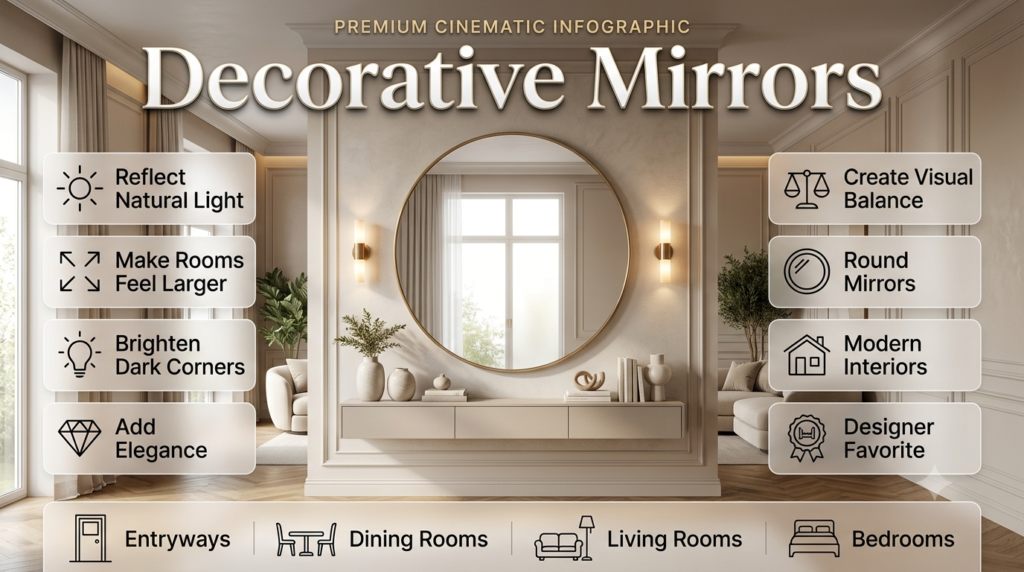
Mirrors do much more than provide reflections.
Professional designers use mirrors because they:
- Reflect natural light
- Make rooms feel larger
- Brighten dark corners
- Add elegance
- Create visual balance
Round mirrors remain especially popular in modern interiors because they soften rooms filled with straight furniture lines.
Large mirrors are ideal for:
- Entryways
- Dining rooms
- Living rooms
- Bedrooms
Floating Shelves
Floating shelves combine decoration with storage.
Instead of displaying random objects, designers carefully style shelves using a balanced mix of:
- Small plants
- Books
- Sculptures
- Candles
- Ceramic vases
- Framed artwork
A useful styling technique is the Rule of Three.
Objects grouped in threes generally appear more balanced than even-numbered arrangements.
For more creative styling inspiration, visit the Home Decor section.
Wooden Wall Panels
Wood panels have become one of the biggest interior design trends because they instantly add warmth and texture.
Popular finishes include:
- Oak
- Walnut
- Ash
- Matte black wood slats
- Natural pine
Vertical wood slats also make ceilings appear higher.
This makes them particularly effective in apartments with lower ceilings.
Textured Wall Panels
Textured panels introduce depth without relying on bold colors.
Common materials include:
- MDF panels
- PVC panels
- Fabric-covered panels
- Acoustic panels
- Concrete-look panels
- Stone veneer
These are often installed behind:
- TVs
- Beds
- Dining tables
- Home office desks
The result is a clean, architectural feature wall that feels custom-designed.
📌 Quick Tip: When creating a feature wall, decorate only one main wall in the room. Too many accent walls compete for attention and reduce the overall impact.
Wall Sconces and Decorative Lighting
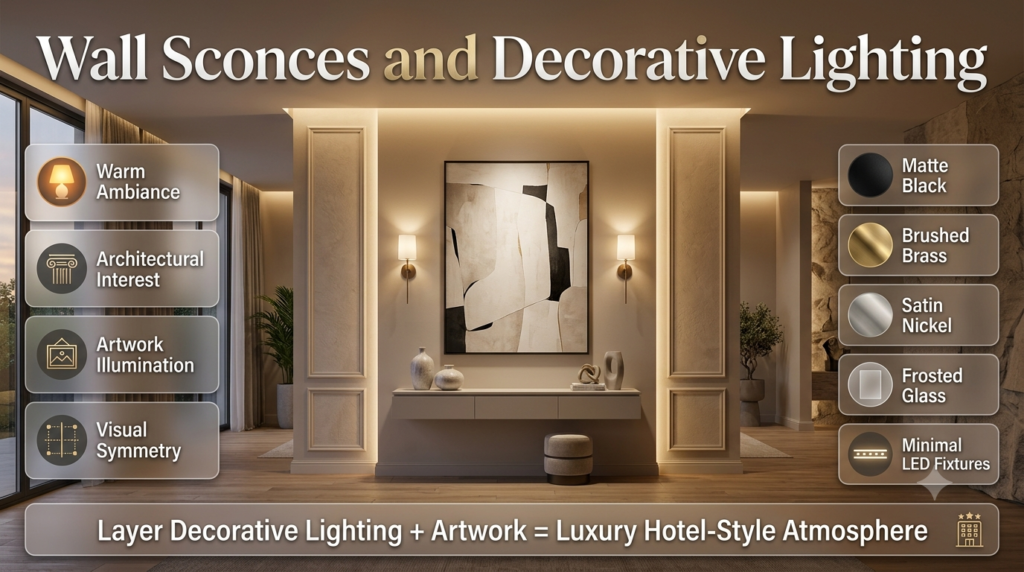
Lighting is often overlooked when decorating walls.
Yet professional designers know that light itself becomes part of the decor.
Wall sconces create:
- Warm ambiance
- Architectural interest
- Better artwork illumination
- Visual symmetry
Modern finishes include:
- Matte black
- Brushed brass
- Satin nickel
- Frosted glass
- Minimal LED fixtures
Layering decorative lighting with artwork creates a premium hotel-style atmosphere.
Metal Wall Sculptures
Metal wall art introduces texture without overwhelming a space.
Popular finishes include:
- Gold
- Matte black
- Bronze
- Brushed steel
- Mixed metals
Geometric metal sculptures work particularly well in modern and contemporary homes.
Unlike paintings, they create shadows that change throughout the day, adding movement and depth.
Woven and Natural Fiber Wall Decor
Natural materials continue to dominate modern interiors.
Handwoven wall hangings, rattan pieces, bamboo panels, and macramé bring warmth while maintaining a minimalist feel.
They’re especially effective in:
- Scandinavian interiors
- Japandi homes
- Boho-modern spaces
- Coastal-inspired rooms
Natural textures also pair beautifully with indoor plants and light wood furniture.
How to Choose Modern Wall Decor for Every Room
Choosing wall decor isn’t just about buying something attractive. The best designer-inspired interiors are planned around the purpose of each room, the available wall space, and how people use the area every day.
Below are practical ideas for decorating every room while maintaining a modern, cohesive style.
Modern Living Room Wall Decor Ideas
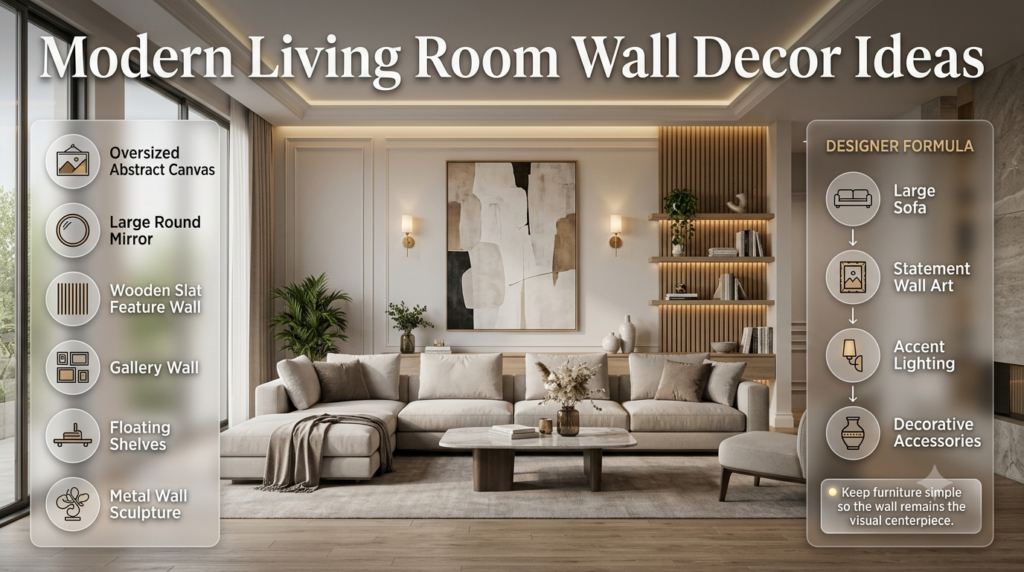
The living room is usually the focal point of a home, so its walls should create visual impact without feeling overcrowded. Large artwork, statement mirrors, textured panels, and floating shelves are among the most effective modern choices.
The wall behind your sofa is often the best place to create a statement.
Popular options include:
- Oversized abstract canvas
- Large round mirror
- Wooden slat feature wall
- Gallery wall with matching frames
- Floating shelves with books and plants
- Metal wall sculpture
Designer Formula for Living Rooms
Large Sofa
      │
      ▼
Statement Wall Art
      │
      ▼
Accent Lighting
      │
      ▼
Small Decorative Accessories
Keep surrounding furniture simple so your wall decor remains the visual centerpiece.
If you’re redesigning an entire living area, you’ll also find inspiration in the Room Design section.
Modern Bedroom Wall Decor
Your bedroom should feel calm and relaxing.
Instead of filling every wall, concentrate on the space above the headboard.
Excellent choices include:
- Three matching framed prints
- Oversized canvas
- Vertical wood slats
- Fabric wall panels
- Minimalist line art
- Soft neutral photography
Choose colors that promote relaxation, such as:
- Warm white
- Beige
- Soft gray
- Sage green
- Light oak
- Dusty blue
Avoid extremely bright artwork that feels overly energetic before bedtime.
⭐ Expert Tip: Designers often repeat one accent color from the bedding in the wall artwork. This simple trick makes the room feel intentionally coordinated.
Dining Room Wall Decor
Dining spaces benefit from artwork that encourages conversation.
Popular choices include:
- Abstract paintings
- Oversized mirrors
- Modern clocks
- Botanical prints
- Sculptural wall pieces
If your dining room receives limited natural light, adding a large mirror opposite a window can instantly brighten the space.
Home Office Wall Decor
A productive workspace should feel inspiring rather than distracting.
Good options include:
- Floating shelves
- Motivational typography
- World maps
- Minimal artwork
- Cork boards
- Wooden shelving
Keep decorations organized.
A cluttered office wall often creates mental clutter as well.
Entryway Wall Decor
The entryway creates the first impression of your home.
Designer entryways commonly include:
- Round mirror
- Console table
- Wall sconces
- Small artwork
- Decorative hooks
- Slim floating shelf
Even a narrow hallway can feel elegant with just a few carefully chosen elements.
Bathroom Wall Decor
Bathrooms are often overlooked, but modern wall decor can make them feel like luxury hotel spaces.
Ideas include:
- Waterproof framed prints
- Small floating shelves
- Decorative mirrors
- Stone wall panels
- Wooden accents
- Black metal shelves
Always choose moisture-resistant materials.
Choosing the Right Wall Decor Based on Interior Style
Not every piece works with every home.
The secret is choosing decor that complements your existing design style.
| Interior Style | Recommended Wall Decor |
|---|---|
| Modern | Abstract art, metal accents, mirrors |
| Scandinavian | Light wood, minimal prints, neutral artwork |
| Japandi | Natural textures, simple line art, wood panels |
| Industrial | Black metal, exposed brick art, concrete finishes |
| Contemporary | Mixed materials, oversized art, sculptural decor |
| Boho Modern | Woven wall hangings, plants, textured fabrics |
| Luxury Modern | Marble panels, gold accents, designer lighting |
Matching your decor style creates a more cohesive appearance than mixing unrelated trends.
How to Create a Designer Feature Wall
A feature wall is a single wall designed to become the room’s focal point. It combines texture, color, artwork, or architectural elements to add depth without overwhelming the space.
Step 1: Choose the Right Wall
The best feature wall is usually the first wall people notice when entering the room.
Examples include:
- Behind the sofa
- Behind the bed
- Fireplace wall
- Dining wall
- TV wall
Step 2: Pick One Statement Element
Choose only one primary focal point.
Examples:
- Wood slats
- Oversized artwork
- Stone panels
- Large mirror
- Wallpaper
- Decorative molding
Trying to combine several statement features usually makes the room feel busy.
Step 3: Add Supporting Decor
Supporting accessories should enhance—not compete with—the main feature.
Consider adding:
- Wall sconces
- Indoor plants
- Decorative vases
- Floating shelves
- Small sculptures
The goal is balance, not excess.
Step 4: Layer Lighting
Professional designers rarely rely only on ceiling lights.
Instead, they layer lighting using:
- Wall sconces
- LED strips
- Picture lights
- Floor lamps
- Table lamps
Proper lighting highlights textures and creates depth after sunset.
💡 Pro Tip: Warm white lighting (around 2700K–3000K) usually makes wall textures, artwork, and wood finishes look richer and more inviting than cool white lighting.
Color Combinations That Look Expensive
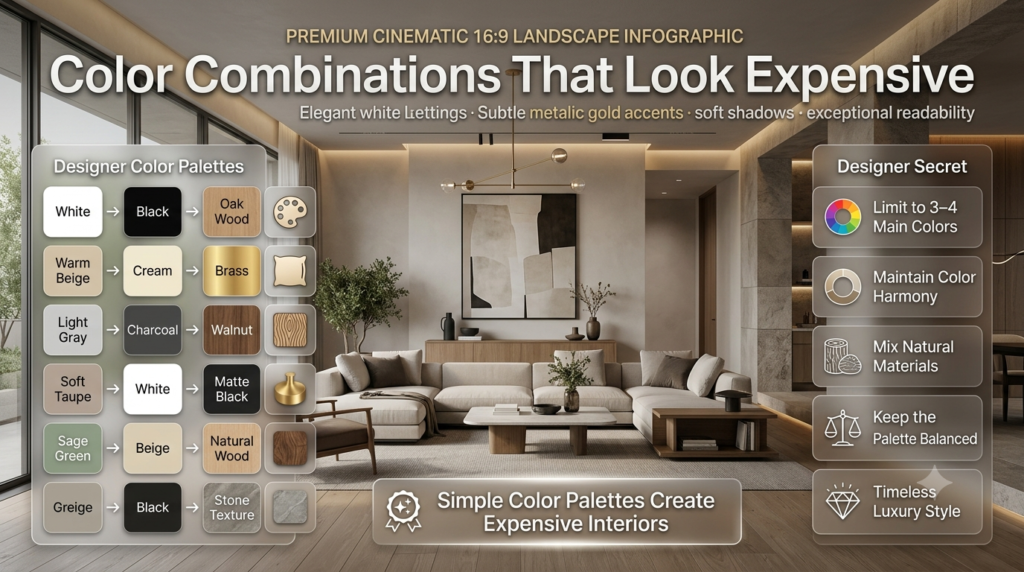
Many luxury interiors rely on surprisingly simple color palettes.
Here are a few combinations designers use repeatedly.
| Wall Color | Decor Color | Accent Material |
|---|---|---|
| White | Black | Oak wood |
| Warm Beige | Cream | Brass |
| Light Gray | Charcoal | Walnut |
| Soft Taupe | White | Matte Black |
| Sage Green | Beige | Natural Wood |
| Greige | Black | Stone Texture |
Keeping your palette limited to three or four main colors creates a polished, designer-inspired look.
Modern Wall Decor Trends for 2026
Interior design trends continue to evolve, but many modern styles remain timeless.
Some of the most popular trends include:
- Oversized statement artwork
- Fluted wood wall panels
- Limewash textured walls
- Curved mirrors
- Sustainable materials
- Sculptural lighting
- Mixed natural textures
- Earth-tone color palettes
- Handmade ceramic wall pieces
- Minimal gallery walls
Rather than following every trend, choose those that match your home’s overall style.
For additional decorating inspiration throughout your home, browse the Interior Design and Home Improvement Tips categories.
⚠ Common Mistake: Buying trendy decor without considering your existing furniture often results in a room that feels mismatched. Always view new wall decor as part of the overall design, not as a standalone purchase.
Modern Wall Decor Materials Compared
| Material | Durability | Maintenance | Best For |
|---|---|---|---|
| Canvas | High | Easy | Living rooms, bedrooms |
| Wood | Very High | Low | Feature walls, offices |
| Metal | High | Easy | Modern and industrial interiors |
| Glass | Medium | Regular cleaning | Small spaces, entryways |
| Stone Veneer | Very High | Low | Luxury feature walls |
| Fabric Panels | Medium | Occasional vacuuming | Bedrooms, media rooms |
| Acrylic | High | Easy | Contemporary interiors |
Choosing quality materials helps your wall decor stay attractive for years while reducing maintenance.
Common Modern Wall Decor Mistakes to Avoid
Even beautiful wall decor can look out of place if it’s not arranged properly. Most decorating mistakes aren’t about buying the wrong items—they’re about placement, proportion, and balance.
Avoid these common errors to achieve a designer-quality result.
1. Hanging Artwork Too High
Artwork should generally be hung at eye level. A common mistake is placing it too close to the ceiling, which disconnects it from the furniture and makes the room feel unbalanced.
Why it happens
Many people assume higher placement makes a room appear larger.
Why it’s harmful
- Creates awkward empty space
- Makes artwork harder to appreciate
- Reduces visual balance
How to avoid it
Position artwork so its center is approximately at eye level, adjusting slightly when hanging it above furniture.
2. Choosing Decor That’s Too Small
Tiny artwork on a large wall often looks lost.
Instead of filling the space with many unrelated pieces, consider:
- One oversized canvas
- A balanced gallery wall
- Decorative wall panels
- A large mirror
Bigger statement pieces usually create a cleaner, more luxurious appearance.
3. Ignoring Wall Proportions
Every wall has its own proportions.
For example:
- Wide walls suit horizontal artwork.
- Tall walls work well with vertical panels.
- Narrow walls benefit from stacked frames.
Matching decor to the wall’s shape creates harmony.
4. Decorating Every Empty Wall
Not every wall needs decoration.
Professional designers intentionally leave some areas empty to create breathing room.
Negative space helps statement pieces stand out.
5. Mixing Too Many Styles
Combining farmhouse, industrial, boho, and luxury styles on one wall often creates visual confusion.
Choose one primary style and introduce small complementary accents instead of unrelated trends.
6. Forgetting About Lighting
Beautiful artwork can disappear in poor lighting.
Wall sconces, picture lights, or warm LED lighting can dramatically improve the appearance of your decor, especially during the evening.
⚠ Common Mistake: Buying wall decor before measuring your space. Always measure your wall first and use painter’s tape to outline the size before purchasing artwork.
Expert Designer Tips for Luxury-Looking Walls
Professional interior designers often rely on simple techniques rather than expensive products.
Here are some of their best recommendations.
Layer Different Textures
Instead of relying only on framed artwork, combine materials such as:
- Wood
- Metal
- Glass
- Linen
- Stone
- Ceramics
Texture creates depth and keeps modern spaces from feeling flat.
Repeat Colors Throughout the Room
If your wall art includes navy blue, repeat that color in:
- Throw pillows
- Rugs
- Curtains
- Decorative vases
This creates a cohesive design.
Use Odd Numbers
Decorating with groups of three or five objects generally feels more natural than arranging items in even numbers.
Examples include:
- Three floating shelves
- Three framed prints
- Three decorative sculptures
Invest in One Statement Piece
Instead of purchasing many inexpensive decorations, choose one high-quality focal point.
Examples:
- Large abstract painting
- Designer mirror
- Wood slat feature wall
- Sculptural artwork
One memorable piece often has more impact than several smaller accessories.
⭐ Expert Tip: Before drilling holes, arrange your artwork on the floor or create paper templates. This allows you to experiment with spacing and layout without damaging your walls.
Modern Wall Decor Checklist
Before finishing your room, ask yourself:
✔ Does the decor match the room’s style?
✔ Is there a clear focal point?
✔ Are colors coordinated?
✔ Is the artwork proportional to the wall?
✔ Have you added texture?
✔ Is the lighting highlighting the decor?
✔ Is there enough empty space?
✔ Does everything feel balanced?
If you answered “yes” to most of these questions, your room is likely to have a polished, designer-inspired appearance.
How do I make cheap wall art look like high-end designer pieces?
The secret to a designer look is not the cost of the art. It is the execution of the presentation. Designers focus heavily on scale, framing, and lighting rather than the price tag of the canvas itself. A budget print can instantly look like a custom gallery piece if you change how it is mounted and styled.
Oversized Matting: Place small prints in large frames with wide, 3-to-5-inch white mats.
Ditch the Plastic: Swap cheap plastic frames for thin, matte black metal or solid oak wood frames.
Add Texture: Apply a clear acrylic gel medium over cheap canvas prints using a paintbrush to mimic real oil-paint texture.
Picture Lighting: Mount a cordless, rechargeable LED picture light directly above the artwork.
What are the biggest modern wall decor trends dominating interior design right now?
We are seeing a massive shift away from flat, single-dimension canvas prints. Current high-end interiors prioritize organic textures, tactile materials, and structural depth. The goal is to make the wall look like an architectural feature rather than just a surface holding a picture frame. 3D Textured Plaster Art: Large-scale, monochromatic canvases featuring heavy plaster waves, arches, or geometric ridges.
Alabaster and Stone Sconces: Hardwired or wireless stone sconces that act as glowing sculptures during the day and ambient lighting at night.
Mixed-Media Wood Slats: Walnut or oak wood paneling integrated with inset metal strips or LED backlighting.
Bespoke Textile Hangings: Heavy, minimalist woven tapestries or framed rug fragments that add warmth to brutalist or modern spaces.
How do I choose the correct scale of wall art for a large living room wall?
The most common mistake amateur decorators make is hanging a piece of art that is far too small, which makes the room look cheap and unfinished. Designers follow strict mathematical proportions to ensure visual balance. The art should feel integrated with the furniture below it, not floating aimlessly on the drywall. The 60-70% Rule: Your artwork or gallery layout should span roughly two-thirds to three-quarters of the width of the furniture below it (like a sofa or sideboard).
Eye-Level Center: The center point of the artwork should sit exactly 57 to 60 inches from the floor, matching human eye level.
Mind the Gap: Leave exactly 6 to 8 inches of space between the bottom of the frame and the top of your furniture cushion or tabletop.
Negative Space: On completely empty accent walls, look for a piece that fills roughly 40% of the total wall area to leave breathing room.
Oversized single art vs. gallery walls: Which looks more expensive?
While gallery walls had a massive run over the last decade, oversized single art pieces currently command a much higher “designer” premium. A singular, massive focal point creates an immediate sense of luxury, museum-like scale, and minimalist confidence. Gallery walls can easily look cluttered if not executed with perfect symmetry. Impact over Clutter: One large 40×60-inch frame creates an instant anchor, whereas multiple small frames can fracture the visual flow of a modern room.
Symmetrical Grid Alternative: If you prefer multiple pieces, use a strict 4×4 or 3×3 grid of identical frames with matching black-and-white photography for a cleaner, upscale look.
Fewer Sightlines: Modern minimalist design relies on fewer visual distractions; a single piece keeps the room feeling calm and cohesive.
How do I style a minimalist accent wall without making it look empty or cold?
The challenge with modern minimalism is balancing simplicity with warmth. To achieve a designer aesthetic without clutter, you must introduce depth through material changes rather than adding more objects. The wall should rely on shadow, light reflection, and natural grain to create visual interest.
Tone-on-Tone Molding: Install modern floor-to-ceiling box trim or picture rail molding painted in the exact same color and sheen as the wall.
Micro-Cement Finish: Apply a subtle micro-cement or lime-wash paint to give the drywall a velvety, stone-like texture that catches daylight.
Asymmetrical Placement: Instead of centering one item, hang a long, low floating shelf off-center and lean one large framed sketch against it, overlapping a small vase.
Reflective Elements: Use an oversized, irregularly shaped frameless mirror (like a pebble or fluid organic shape) to bounce light and simulate architectural depth.
Conclusion
Modern wall decor is one of the easiest and most effective ways to transform your home into a space that feels stylish, welcoming, and professionally designed. Whether you choose oversized artwork, elegant mirrors, floating shelves, textured wall panels, or a carefully planned gallery wall, the key is to focus on balance, proportion, and quality rather than filling every empty space.
A designer-inspired look doesn’t require a luxury budget—it comes from thoughtful choices, cohesive colors, layered textures, and smart placement. By selecting decor that complements your home’s style and avoiding common decorating mistakes, you can create walls that feel timeless instead of trendy.
As you update your space, remember that the best interiors reflect your personality while maintaining simplicity and harmony. Start with one room, experiment with a statement feature wall, and build your design gradually. For even more inspiration, explore our Home Decor, Interior Design, and Room Design guides, or visit the Home Improvement Tips homepage for expert decorating ideas and practical home improvement advice.