
Introduction
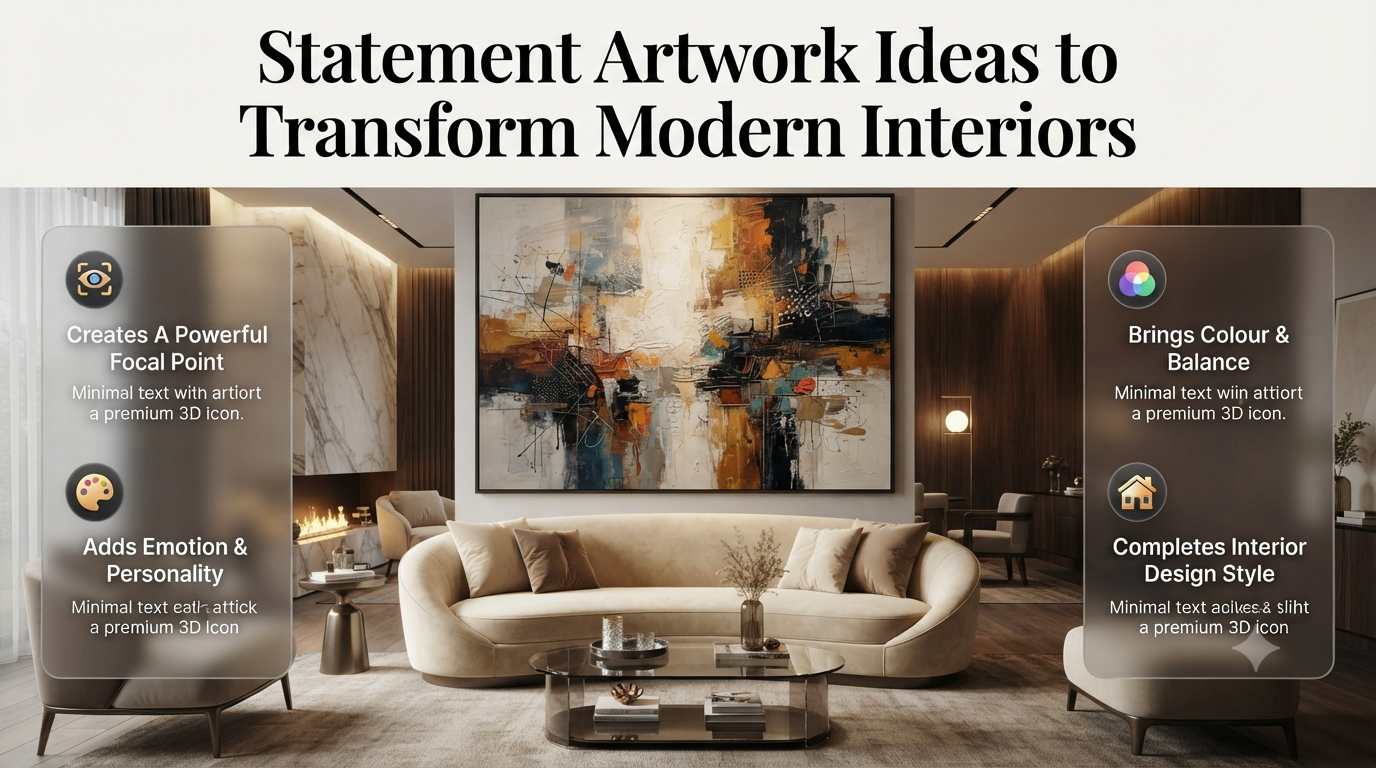
Have you ever walked into a room and immediately noticed one incredible piece of art? Before you saw the sofa, lighting, or furniture, your eyes were drawn to a striking painting, oversized canvas, or dramatic sculpture. That’s the power of Statement Artwork.
Many homeowners spend thousands on furniture and décor but still feel that something is missing. Often, the missing element isn’t another decorative accessory—it’s a carefully chosen artwork that creates a memorable focal point and gives the room personality.
Whether you’re decorating a new home, refreshing a single room, or looking for a way to express your personal style, Statement Artwork can instantly elevate your interior. The right piece adds emotion, colour, balance, and character while making the entire room feel intentional and complete.
In this guide, you’ll learn what statement artwork is, why designers love using it, how to choose the right piece for your home, and which styles work best for different interiors. You’ll also discover practical tips to help you avoid expensive decorating mistakes and create a space that feels uniquely yours.
What Is Statement Artwork?
Statement Artwork is a bold, visually striking piece of art designed to become the main focal point of a room. It captures attention through its size, colour, subject, texture, or artistic style while enhancing the overall interior design and reflecting the homeowner’s personality.
Unlike small decorative pieces that blend into the background, statement artwork is meant to stand out. It becomes the visual centre of the room and often influences other design choices, including furniture placement, accent colours, lighting, and accessories.
Statement artwork can include:
- Large canvas paintings
- Oversized framed prints
- Abstract artwork
- Modern sculptures
- Mixed-media wall art
- Metal wall installations
- Textile art
- Photography
- Gallery-scale illustrations
- Hand-painted murals
Its purpose isn’t simply to fill an empty wall. Instead, it creates emotion, tells a story, and gives your room a distinct identity.
Why Statement Artwork Matters in Interior Design
A beautifully designed room isn’t just about matching colours or buying expensive furniture. Great interiors create emotion, and artwork plays a major role in achieving that goal.
Statement artwork helps a room feel complete because it connects all the design elements together.
Some of its biggest benefits include:
- Creates a clear focal point
- Adds personality to otherwise neutral spaces
- Introduces colour without repainting walls
- Makes rooms feel professionally designed
- Reflects your interests and lifestyle
- Encourages conversation when guests visit
- Adds visual balance
- Softens modern minimalist interiors
- Gives large empty walls purpose
Interior designers often choose artwork after selecting furniture because it helps bring every element together naturally.
💡 Pro Tip: Instead of choosing artwork that perfectly matches your furniture, choose pieces that complement the room while adding contrast. A little visual tension often creates a more interesting and sophisticated design.
What Makes Artwork a “Statement” Piece?
Not every painting qualifies as statement artwork. Several characteristics help certain pieces command attention.
Size
Large artwork naturally attracts the eye.
An oversized canvas above a sofa or bed immediately becomes the room’s centrepiece because of its scale.
Examples include:
- Extra-large abstract paintings
- Floor-to-ceiling artwork
- Oversized photography
- Large framed botanical prints
Bigger doesn’t always mean better, but the artwork should feel proportionate to the wall.
Bold Colours
Bright colours instantly create visual energy.
Popular colour combinations include:
- Navy and gold
- Emerald green and white
- Black and beige
- Terracotta and cream
- Deep blue with burnt orange
Even in neutral interiors, colourful artwork can introduce excitement without overwhelming the room.
Unique Subject Matter
People remember artwork that tells a story.
Subjects might include:
- Dramatic landscapes
- Wildlife portraits
- Contemporary portraits
- Geometric abstractions
- Architectural photography
- Ocean scenes
- City skylines
Interesting subject matter keeps viewers engaged long after they enter the room.
Texture
Texture creates depth that flat artwork sometimes lacks.
Examples include:
- Layered acrylic paintings
- Hand-painted canvases
- Mixed-media artwork
- Fabric wall hangings
- Wood panel art
- 3D wall sculptures
Textured pieces look particularly impressive under natural or directional lighting.
Emotional Impact
Some artwork simply makes people stop and look.
Whether it inspires calm, excitement, curiosity, or nostalgia, emotional connection is one of the defining characteristics of successful statement artwork.
Different Types of Statement Artwork
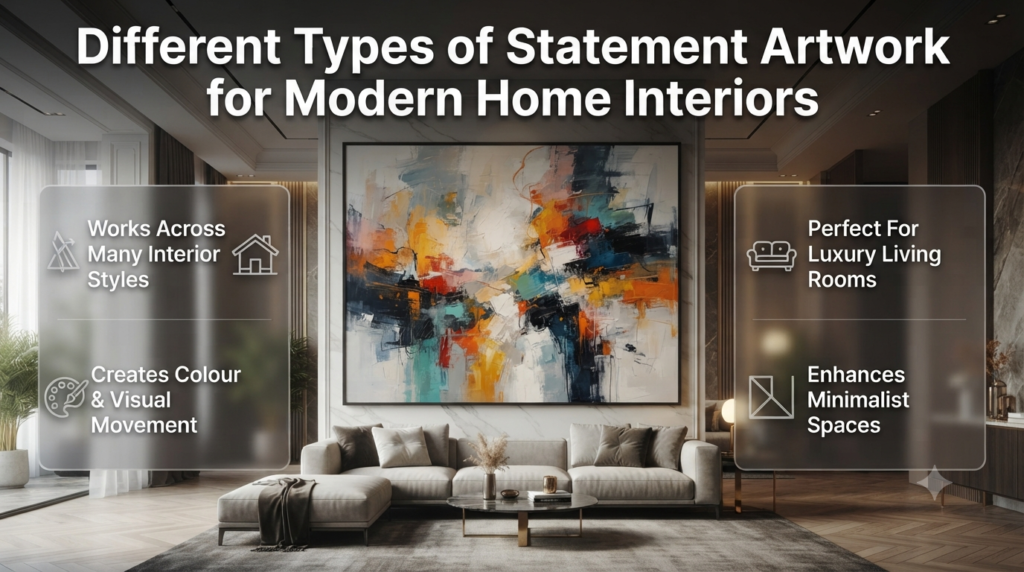
The right artwork style creates a powerful connection between architecture, décor, and personal taste.
There isn’t one correct style. The best choice depends on your home’s architecture, décor style, and personal taste.
Oversized Abstract Art
Abstract artwork remains one of the most popular choices because it works in almost every design style.
It fits well in:
- Modern homes
- Contemporary apartments
- Scandinavian interiors
- Luxury living rooms
- Minimalist spaces
Abstract art focuses on colour, movement, and emotion rather than recognisable objects.
Landscape Paintings
Nature-inspired artwork creates a peaceful atmosphere.
Popular themes include:
- Mountains
- Forests
- Beaches
- Waterfalls
- Desert landscapes
- Countryside scenes
Large landscapes help small rooms feel more open and inviting.
Black-and-White Photography
Photography offers timeless sophistication.
It works especially well in:
- Industrial interiors
- Modern homes
- Home offices
- Hallways
- Bedrooms
Large monochrome prints create elegance without adding visual clutter.
Botanical Artwork
Plants remain one of the biggest interior design trends.
Botanical artwork brings natural beauty indoors without requiring maintenance.
Examples include:
- Palm leaves
- Wildflowers
- Tropical plants
- Fern illustrations
- Watercolour florals
Botanical pieces pair beautifully with natural wood furniture and indoor plants.
Contemporary Portraits
Portraits add personality and artistic character.
Today’s designs often feature:
- Minimal facial details
- Bold colours
- Graphic illustrations
- Fashion-inspired art
- Mixed-media portraits
These work especially well in modern living rooms and creative spaces.
Sculptural Wall Art
Statement artwork doesn’t always have to be flat.
Three-dimensional wall décor includes:
- Metal installations
- Wooden carvings
- Ceramic panels
- Resin artwork
- Floating geometric sculptures
These create depth and become even more striking when illuminated by accent lighting.
How to Choose Statement Artwork
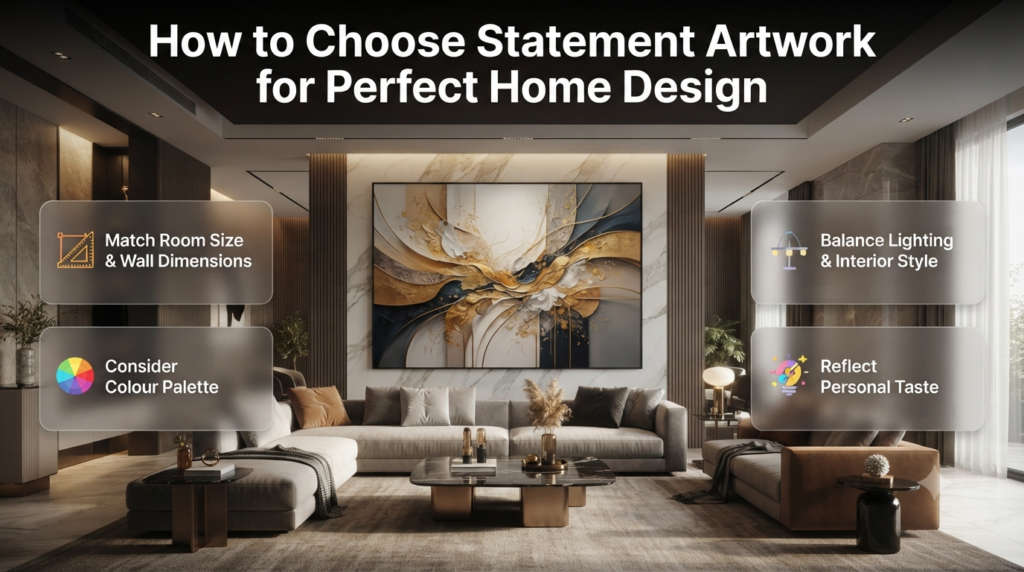
A carefully selected piece creates a stunning focal point while enhancing the overall harmony of your room.
Choose statement artwork by considering your room size, wall dimensions, colour palette, lighting, decorating style, and personal taste. The artwork should complement your furniture while creating a strong focal point that feels balanced rather than overwhelming.
Let’s break the process into manageable steps.
Step 1: Identify the Room’s Purpose
Different rooms create different moods.
Ask yourself:
- Is this room for relaxing?
- Entertaining guests?
- Working?
- Sleeping?
- Family gatherings?
The artwork should support that atmosphere.
Examples:
Living room:
Large conversation-starting artwork.
Bedroom:
Calming colours and peaceful imagery.
Home office:
Motivational or inspiring artwork.
Dining room:
Elegant and sophisticated pieces.
Step 2: Measure the Wall
One of the biggest decorating mistakes is choosing artwork that’s too small.
As a general rule:
- Artwork above furniture should occupy around two-thirds to three-quarters of the furniture’s width.
- Leave breathing space around the edges.
- Consider ceiling height before selecting oversized pieces.
Proper proportions create visual balance.
Step 3: Consider Your Existing Colour Palette
Your artwork doesn’t need to match everything.
Instead, look for colours that:
- Repeat accent colours
- Complement existing tones
- Add gentle contrast
- Introduce one new highlight colour
This creates harmony without making the room feel overly coordinated.
⭐ Expert Tip: Pull one or two colours from your artwork into cushions, rugs, or decorative accessories. This simple technique helps the entire room feel cohesive and professionally styled.
Step 4: Think About Lighting
Artwork looks different depending on the lighting.
Natural daylight highlights colour variations, while warm artificial lighting enhances texture and creates depth.
For valuable or original pieces:
- Avoid prolonged direct sunlight.
- Use soft accent lighting where possible.
- Position artwork to minimise glare from windows.
Good lighting can dramatically improve how artwork is experienced.
Step 5: Choose Something Personal
Trends come and go, but meaningful artwork stays relevant.
Rather than selecting a piece solely because it’s fashionable, choose something that genuinely resonates with you.
Ask yourself:
- Does it remind me of a favourite place?
- Does it evoke a positive emotion?
- Would I still enjoy looking at it in five years?
- Does it reflect my personality or lifestyle?
The most successful statement artwork often has a personal story behind it.
How Statement Artwork Reflects Your Personality
Your home tells visitors who you are before you say a single word. Statement artwork is one of the clearest ways to express that personality.
For example:
| Personality | Artwork Style |
|---|---|
| Calm and minimalist | Neutral abstract paintings |
| Nature lover | Botanical or landscape artwork |
| Traveller | Cityscapes and cultural photography |
| Creative thinker | Colourful mixed-media pieces |
| Luxury enthusiast | Large textured canvas with metallic accents |
| Traditional homeowner | Classic oil paintings or timeless portraits |
Choosing artwork that reflects your interests creates a home that feels authentic rather than staged.
For more inspiration on styling your living spaces, explore Interior Design, browse fresh Home Decor ideas, or discover practical Room Design guides that complement your statement artwork choices.
Where Should You Place Statement Artwork?
The best place for statement artwork is where it naturally becomes the room’s focal point. Common locations include above a sofa, bed, fireplace, dining table, entryway console, or staircase. The artwork should be positioned at eye level and proportionate to the surrounding furniture and wall space.
Placement is just as important as the artwork itself. Even a beautiful piece can lose its impact if it’s hung too high, squeezed into a corner, or surrounded by visual clutter.
Statement Artwork Ideas for Every Room
Living Room
The living room is often the first space guests see, making it the ideal location for bold artwork.
Popular placement ideas include:
- Above the main sofa
- Over a fireplace mantel
- Behind accent chairs
- On a large feature wall
- Beside floor-to-ceiling windows
Large abstract canvases, landscape paintings, or textured wall art work especially well because they anchor the seating area and create a welcoming atmosphere.
Best styles:
- Oversized abstract art
- Contemporary paintings
- Nature-inspired canvases
- Mixed-media artwork
- Large photographic prints
Bedroom
The bedroom should feel peaceful and relaxing.
Choose artwork that promotes calm rather than overstimulating the space.
Ideal locations include:
- Above the headboard
- Opposite the bed
- Above a dresser
- Beside a reading corner
Soft colours, gentle textures, and nature-inspired pieces create a restful environment.
Good choices include:
- Watercolour artwork
- Botanical prints
- Soft abstract paintings
- Ocean photography
- Neutral textured canvases
📌 Quick Tip: Artwork above the bed should usually be around two-thirds the width of the headboard for balanced proportions.
Dining Room
Artwork can completely change the atmosphere during meals.
Consider pieces that encourage conversation without overwhelming the room.
Popular choices include:
- Modern abstracts
- Black-and-white photography
- Wine-themed artwork
- Cityscape prints
- Elegant geometric designs
Warm colours often work well because they make dining spaces feel more inviting.
Home Office
Artwork in a workspace should inspire creativity and focus.
Avoid cluttered or distracting images.
Instead, choose artwork that reflects your goals or interests.
Examples include:
- Inspirational typography
- Architectural photography
- Minimalist abstract art
- World maps
- Contemporary illustrations
Professional-looking artwork also improves the appearance of virtual meetings.
Entryway
The entrance creates your home’s first impression.
Statement artwork in an entryway immediately welcomes visitors while introducing your decorating style.
Popular ideas include:
- Oversized framed artwork
- Gallery-scale photography
- Large mirrors combined with artwork
- Sculptural wall installations
Even a relatively small hallway feels more luxurious with one impactful piece.
Hallways and Staircases
Long walls often become forgotten spaces.
Instead of hanging numerous small frames, consider one dramatic oversized artwork that guides the eye through the space.
This creates visual continuity and prevents hallways from feeling empty.
How High Should Statement Artwork Be Hung?
One of the most common decorating questions involves hanging height.
As a general guideline:
| Location | Recommended Height |
|---|---|
| Standard wall | Centre approximately 145–150 cm from the floor |
| Above sofa | 15–25 cm above furniture |
| Above bed | 15–20 cm above the headboard |
| Above fireplace | Leave 15–30 cm clearance |
| Dining room | Keep artwork visually connected to the table |
The goal is to make the artwork feel connected to the furniture rather than floating independently on the wall.
Choosing the Right Artwork Size
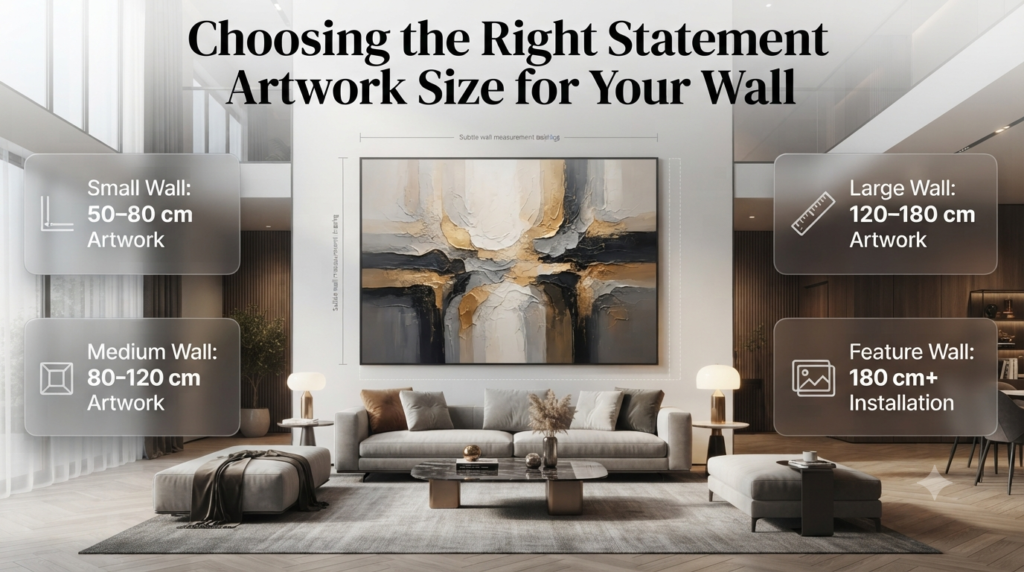
Measuring your space before purchasing helps achieve a polished and professionally styled look.
Statement artwork should be proportionate to both the wall and the furniture beneath it. Oversized pieces create impact on large walls, while medium-sized artwork works best in smaller rooms. Avoid artwork that is too small, as it can make the entire space feel unbalanced.
Quick Size Guide
| Wall Size | Recommended Artwork |
|---|---|
| Small wall | 50–80 cm |
| Medium wall | 80–120 cm |
| Large wall | 120–180 cm |
| Feature wall | 180 cm or larger |
| Double-height wall | Extra-large canvas or multi-panel installation |
Always measure before purchasing.
Many professionals tape the artwork dimensions onto the wall first to visualise the final appearance.
Matching Statement Artwork to Interior Design Styles
Every decorating style has artwork that naturally complements it.
Modern Interiors
Modern homes often feature:
- Clean lines
- Neutral colours
- Minimal accessories
Recommended artwork:
- Bold abstract paintings
- Geometric designs
- Monochrome photography
- Large colour-block canvases
Scandinavian Style
Scandinavian interiors emphasise simplicity and natural materials.
Artwork should remain understated while adding warmth.
Good options include:
- Minimal line drawings
- Botanical illustrations
- Nature photography
- Soft neutral abstracts
Industrial Design
Industrial interiors pair beautifully with dramatic artwork.
Popular choices:
- Black-and-white city photography
- Metal sculptures
- Vintage typography
- Architectural sketches
- Concrete-inspired artwork
Traditional Homes
Classic interiors often feature timeless artwork.
Examples include:
- Oil paintings
- Landscape scenes
- Floral artwork
- Historic architecture
- Classical portraits
Elegant framing enhances the traditional look.
Bohemian Interiors
Boho spaces celebrate creativity.
Artwork often includes:
- Handwoven textiles
- Colourful abstracts
- Global-inspired prints
- Handmade ceramics
- Cultural artwork
Layering different art forms creates personality without looking overly structured.
Colour Coordination Tips
Many homeowners worry that artwork must perfectly match the room.
Professional designers rarely follow this rule.
Instead, they aim for harmony.
Option 1: Complement Existing Colours
Choose artwork containing colours already found in:
- Cushions
- Rugs
- Curtains
- Decorative accessories
This creates a cohesive appearance.
Option 2: Introduce a New Accent Colour
Artwork can become the inspiration for the rest of the room.
For example:
Artwork includes deep blue.
Later you add:
- Blue cushions
- Decorative vases
- Throw blankets
- Accent chair
The room instantly feels professionally coordinated.
Option 3: Neutral Room + Bold Artwork
This is one of today’s most popular design strategies.
Example:
| Room | Artwork |
|---|---|
| White walls | Bright abstract painting |
| Beige furniture | Emerald green artwork |
| Grey sofa | Colourful oversized canvas |
| Cream bedroom | Ocean-inspired painting |
The artwork becomes the visual hero without requiring major renovations.
💡 Pro Tip: If your room already has many patterns, choose artwork with simpler compositions. In minimalist spaces, don’t be afraid to introduce bold colours or dramatic textures.
Framed vs Frameless Statement Artwork
Both options have advantages.
| Framed Artwork | Frameless Canvas |
|---|---|
| More traditional | More contemporary |
| Extra protection | Cleaner appearance |
| Greater design flexibility | Lightweight |
| Easy to match furniture | Creates a gallery feel |
Choose the option that best suits your home’s style.
Single Large Artwork vs Gallery Wall
Many homeowners struggle with this decision.
Single Statement Piece
Best for:
- Modern homes
- Open-plan spaces
- Large walls
- Luxury interiors
Advantages:
- Strong visual impact
- Easy to decorate around
- Less visual clutter
Gallery Wall
Best for:
- Family homes
- Personal photography
- Eclectic interiors
- Hallways
Advantages:
- Tells a personal story
- Easy to expand
- Budget-friendly over time
If your goal is maximum visual impact, one oversized artwork usually outperforms several small pieces.
Lighting Makes Statement Artwork Shine
Lighting dramatically affects how artwork is perceived.
Professional designers often use:
- Adjustable picture lights
- Ceiling spotlights
- Wall washers
- LED accent lighting
Good lighting highlights colours, textures, and brushstrokes while creating depth and atmosphere.
Avoid placing valuable artwork in direct sunlight, which may cause colours to fade over time.
⭐ Expert Tip: Use warm white lighting (around 2700K–3000K) to bring out the richness of artwork without altering its natural colours.
Simple Artwork Placement Checklist
Before hanging your artwork, ask yourself:
- ✔ Is it centred properly?
- ✔ Is the size proportional to the wall?
- ✔ Does it relate to nearby furniture?
- ✔ Is the lighting suitable?
- ✔ Does it complement the room’s colour palette?
- ✔ Does it reflect your personal style?
- ✔ Is there enough empty space around it?
If you answer “yes” to most of these questions, your artwork is likely positioned for maximum impact.
Helpful Resources for More Home Inspiration
Statement artwork works best when it’s part of a thoughtfully designed home. If you’re planning a complete makeover, these guides can help:
- Explore more Home Decor ideas.
- Discover practical Interior Design inspiration for every room.
- Learn how to improve layouts with Room Design.
- Find stylish Furniture guides to complement your artwork.
- Get expert Home Improvement Tips for your next renovation.
- Browse creative DIY Crafts projects to personalise your décor.
- Enhance outdoor spaces with Outdoor & Garden ideas and Landscaping inspiration.
- Improve curb appeal with Exterior Design tips.
- Visit the Home Improvement Tips Homepage to explore all home décor, renovation, and design categories in one place.
Common Statement Artwork Mistakes to Avoid
Even the most beautiful artwork can lose its impact if it’s chosen or displayed incorrectly. Avoiding these common mistakes will help your investment enhance your home rather than detract from it.
Buying Artwork That Is Too Small
The most common decorating mistake is choosing artwork that is too small for the wall. A statement piece should feel proportionate to the surrounding furniture and become the room’s visual focal point rather than appearing lost in empty space.
Small artwork on a large wall often makes the room feel unfinished.
Instead:
- Measure your wall before shopping.
- Consider the size of nearby furniture.
- Use painter’s tape to outline the artwork dimensions before hanging it.
Matching Everything Too Perfectly
Many people think artwork must exactly match their sofa, curtains, or rug.
Professional designers rarely decorate this way.
Instead, they create balance through complementary colours, contrast, and texture.
A room with slight colour variation usually feels more natural and sophisticated.
⚠ Common Mistake: Choosing artwork solely because it matches the cushions often results in a room that lacks personality.
Hanging Artwork Too High
Artwork should connect visually with the furniture below it.
If it’s placed too high, it feels disconnected from the room.
A simple rule:
- Keep artwork approximately 15–25 cm above furniture.
- Position the centre of the artwork close to eye level whenever possible.
Ignoring Lighting
Even premium artwork can appear dull under poor lighting.
Without proper illumination:
- Colours lose vibrancy.
- Textures become less noticeable.
- Fine details disappear.
Simple picture lights or adjustable ceiling spotlights can dramatically improve the viewing experience.
Buying Art Only Because It’s Trendy
Interior design trends constantly change.
Instead of following every new style, choose artwork that genuinely reflects your personality and lifestyle.
Artwork with personal meaning remains enjoyable long after trends fade.
Expert Advice for Choosing Statement Artwork
Professional interior designers often follow a few timeless principles that consistently produce beautiful results.
Think Long-Term
Large artwork is usually a long-term investment.
Rather than asking:
“Is this fashionable?”
Ask:
“Will I still enjoy seeing this every day in five years?”
Timeless pieces often provide greater satisfaction than trend-driven purchases.
Let One Piece Lead the Design
Sometimes homeowners buy furniture first and artwork last.
Professionals often reverse this process.
Choosing a stunning statement artwork first allows you to build the room’s colour palette around it, creating a more cohesive design.
Don’t Be Afraid of Large Scale
People frequently underestimate the amount of wall space available.
A larger artwork often creates a stronger visual impact than several smaller pieces combined.
When in doubt, slightly larger is usually the better option—provided the proportions remain balanced.
⭐ Expert Tip: Before purchasing, print the artwork dimensions on paper or mark them with masking tape on the wall. This simple trick helps you visualise the final result accurately.
Mix Different Textures
A room feels richer when different materials work together.
Combine artwork with:
- Wood furniture
- Natural stone
- Linen fabrics
- Metal accents
- Glass accessories
- Indoor plants
Layering textures creates depth and prevents interiors from feeling flat.
Invest in Quality Framing
If you choose framed artwork, the frame matters almost as much as the art itself.
Quality framing:
- Protects the artwork
- Enhances presentation
- Extends longevity
- Improves the room’s overall appearance
A poorly chosen frame can reduce the impact of even exceptional artwork.
Statement Artwork Buying Checklist
Before purchasing, ask yourself:
✔ Does it suit the room?
✔ Is the size appropriate?
✔ Does it reflect my personality?
✔ Will I enjoy it for years?
✔ Does it complement my existing décor?
✔ Is the wall large enough?
✔ Does the colour palette work?
✔ Is proper lighting available?
✔ Is the artwork high quality?
✔ Does it create the focal point I want?
If most answers are “yes,” you’re making a confident decorating decision.
How do I determine the correct scale and placement for a statement artwork?
A statement piece that is too small looks like an afterthought, while one that is too large will completely crush the room’s proportions. From a digital search and spatial design perspective, users struggle constantly with scale. Your statement art should dominate the wall it lives on. If you are hanging a piece over a major furniture anchor like a sofa or a sideboard, the artwork must span roughly two-thirds to three-quarters of the furniture’s total width.
The 57-Inch Rule: Always hang the horizontal center of your artwork 145 centimeters (57 inches) from the floor, which is the standard human eye level.
The Breathing Room: Leave at least 15 to 20 centimeters of blank space between the bottom of the frame and the top of your furniture.
The Ceiling Factor: In rooms with high ceilings, opt for vertical orientations to draw the eye upward and fill the negative vertical volume.
What are the top trending styles of statement artwork in modern luxury interiors?
The market has shifted sharply away from generic, mass-produced digital prints toward pieces with high tactile depth and raw character. Search trends show an explosive demand for three-dimensional texture and organic minimalism. Large-scale plaster canvas art, raw textile wall hangings, and oversized color-field paintings dominate high-end portfolios. Consumers want art that reacts to the changing light in a room throughout the day.
Textural Minimalist: Monochromatic white or earth-toned canvases featuring heavy plaster, clay, or impasto brushwork.
Biophilic Abstracts: Large-scale works utilizing organic fluid shapes, moss elements, or raw unrefined wood grains.
Moody Maximalism: Rich, dark oil portraits or oversized expressionist pieces that create a dramatic focal point in dining rooms.
Should the colors in a statement artwork match the existing room decor?
Matching your art perfectly to your throw pillows is a classic design mistake that strips a home of its character. A statement piece is meant to lead the room, not blend into the background. The artwork should introduce a fresh, dominant color or texture while sharing just one or two subtle undertones with your existing rug, drapery, or accent furniture. Think of the artwork as the anchor, and your decor as the supporting cast.
The 60-30-10 Rule: Let your room’s dominant color take 60%, the secondary take 30%, and use the artwork to introduce the final vibrant 10%.
High Contrast: Place a bold, vibrant abstract painting on a dark, moody accent wall to make the colors pop off the surface.
Texture Over Color: If your room is strictly neutral, use a textured monochromatic piece to add depth without breaking the color palette.
How do I choose between a framed artwork and a gallery-wrapped canvas for a statement wall?
The choice between a frame and a raw canvas completely alters the architectural vibe of a room. Gallery-wrapped canvases—where the fabric wraps around the wooden stretcher bars without a visible border—offer a modern, floating aesthetic that suits clean minimalism. Framed artwork provides an intentional boundary that pulls the viewer’s eye inward. For high-end statement art, a floating frame is the premium compromise, encasing the canvas while leaving a thin gap around the edges.
Floating Frames: Best for large abstract canvases, giving them a museum-quality finish without feeling heavy.
Glass Considerations: For framed prints or photography over 1 meter wide, always specify non-reflective museum glass to eliminate glare.
The Traditional Edge: Thick, ornate wooden frames should be reserved for classical oil landscapes or traditional portraits to respect the style.
What is the best way to light a large statement artwork to maximize its impact?
You can buy a magnificent piece of art, but if it sits in the dark or under flat ceiling light, its value drops to zero. Proper lighting brings out the texture, brushstrokes, and true color accuracy of the piece. Avoid relying on generic ambient downlights, which cast harsh shadows downward over the face of the art. Instead, utilize dedicated directional lighting that treats the artwork like a gallery installation.
Picture Lights: Mount a brass or matte black LED picture light directly above the frame for an intimate, classic library aesthetic.
Gimbal Spotlights: Install adjustable ceiling recessed lights angled at 30 degrees toward the canvas to prevent glare from bouncing into your eyes.
Track Lighting: Perfect for industrial or ultra-modern spaces, allowing you to easily adjust multiple light heads as you change art sizes.
Conclusion
Statement Artwork is more than just wall décor—it is a powerful design element that brings personality, emotion, and visual balance into your home. The right artwork can transform an empty wall into a stunning focal point while connecting your furniture, colours, and decorative elements into one cohesive design.
When selecting statement artwork, focus on important factors such as scale, placement, lighting, and your personal style. A bold abstract canvas, elegant photography, or textured wall installation can completely change the atmosphere of a room when chosen correctly.
A successful interior design approach combines artwork with other elements such as furniture selection, colour planning, and decorative accessories. Explore more ideas in our Interior Design guides to understand how artwork works together with different design styles, layouts, and room concepts.
For living spaces, combining statement artwork with the right Home Decor choices—such as rugs, cushions, lighting, and accessories—helps create a balanced and professionally styled look.
If you are redesigning a specific area of your home, our Room Design resources can help you plan artwork placement, furniture arrangement, and overall visual flow for different spaces.
The right furniture also plays an important role in making artwork stand out. Learn more about choosing complementary pieces through our Furniture guides.
For homeowners working on larger renovation projects, additional inspiration can be found through our Home Improvement Tips, DIY Crafts, Outdoor & Garden, Landscaping, and Exterior Design resources.