
Introduction
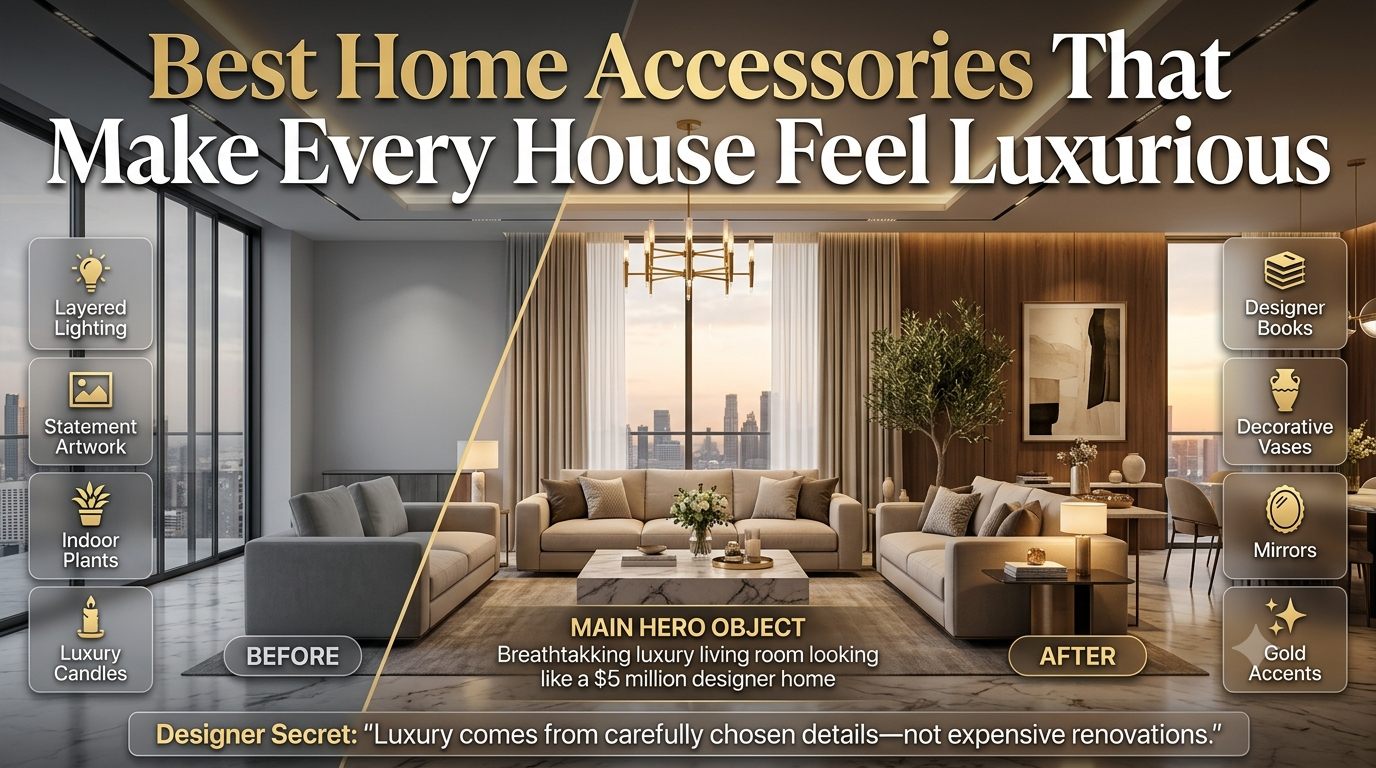
Luxury isn’t always about spending thousands of dollars on designer furniture or renovating an entire home. Often, it’s the thoughtful finishing touches that make the biggest difference. The right accessories can transform an ordinary room into a space that feels elegant, inviting, and professionally designed.
If you’ve ever walked into a beautiful home and wondered why it feels so polished, chances are the secret lies in carefully chosen details rather than expensive renovations. Decorative accents, quality textiles, layered lighting, statement artwork, and stylish organization all work together to create a refined atmosphere.
In this guide, you’ll discover the best home accessories that make every house feel luxurious, how professional interior designers use them, and practical tips for choosing pieces that elevate your home without overspending. Whether you’re decorating a new home or refreshing your current space, these ideas will help you create a sophisticated look that feels both timeless and personal.
Why Do Home Accessories Matter More Than Expensive Furniture?
Well-chosen accessories add personality, texture, warmth, and visual balance to a room. They often have a greater impact on the overall atmosphere than replacing large furniture pieces, making them one of the most cost-effective ways to elevate your home’s style.
Many homeowners assume that creating a luxurious interior requires replacing sofas, dining tables, or cabinetry. In reality, professional designers often begin with accessories because they’re flexible, affordable, and capable of dramatically changing a room’s appearance.
Accessories help connect every design element. They introduce color, soften hard surfaces, improve balance, and create focal points that naturally draw attention.
Think about a hotel suite. The furniture is often simple, but the layered lighting, plush textiles, elegant artwork, and decorative objects make the space feel upscale.
Quality accessories also allow you to update your home’s style over time without committing to expensive renovations.
📌 Quick Tip: Focus on improving one room at a time. Even a few carefully selected accessories can completely transform the space.
What Makes a Home Look Luxurious?
A luxurious home isn’t defined by price tags. Instead, it’s created through thoughtful design choices that make spaces feel comfortable, cohesive, and visually balanced.
Several characteristics appear repeatedly in professionally designed homes:
- Consistent color palettes
- High-quality materials
- Layered lighting
- Rich textures
- Decorative styling
- Proper proportions
- Clutter-free surfaces
- Meaningful statement pieces
- Natural elements
- Attention to small details
Rather than filling every corner with decorations, luxury interiors embrace intentional styling. Every accessory serves a purpose, whether it’s adding warmth, introducing contrast, or enhancing functionality.
For more decorating inspiration, browse our Interior Design section.
How Interior Designers Create Luxury with Accessories
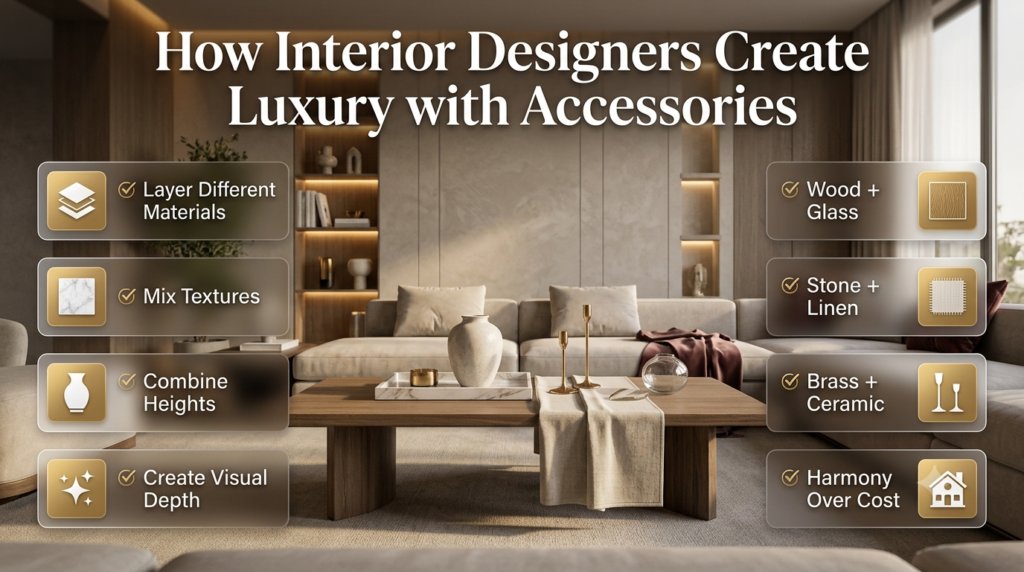
Professional designers focus on layering rather than decorating. They combine different textures, heights, materials, and shapes to create depth that makes a room feel richer and more inviting.
Luxury styling isn’t about buying the most expensive objects.
It’s about creating harmony.
Interior designers often follow several timeless principles:
Layer Different Materials
Mixing wood, glass, stone, linen, velvet, leather, ceramic, and metal creates visual richness.
For example:
- Marble tray
- Linen runner
- Brass candle holders
- Ceramic vase
- Wooden coffee table
Each material reflects light differently, making the room feel dynamic.
Use the Rule of Three
Instead of placing two matching decorations together, designers frequently group items in threes.
Example:
- Tall vase
- Medium candle
- Small decorative sculpture
The varying heights naturally create visual interest.
Leave Empty Space
Luxury interiors rarely feel crowded.
Negative space allows beautiful accessories to stand out instead of competing for attention.
Avoid filling every shelf or tabletop.
Sometimes less truly is more.
⭐ Expert Tip: After styling a room, remove one or two decorative items. If the room looks cleaner and more balanced, you’ve likely achieved a more sophisticated look.
Best Home Accessories That Make Every House Feel Luxurious
1. Decorative Mirrors
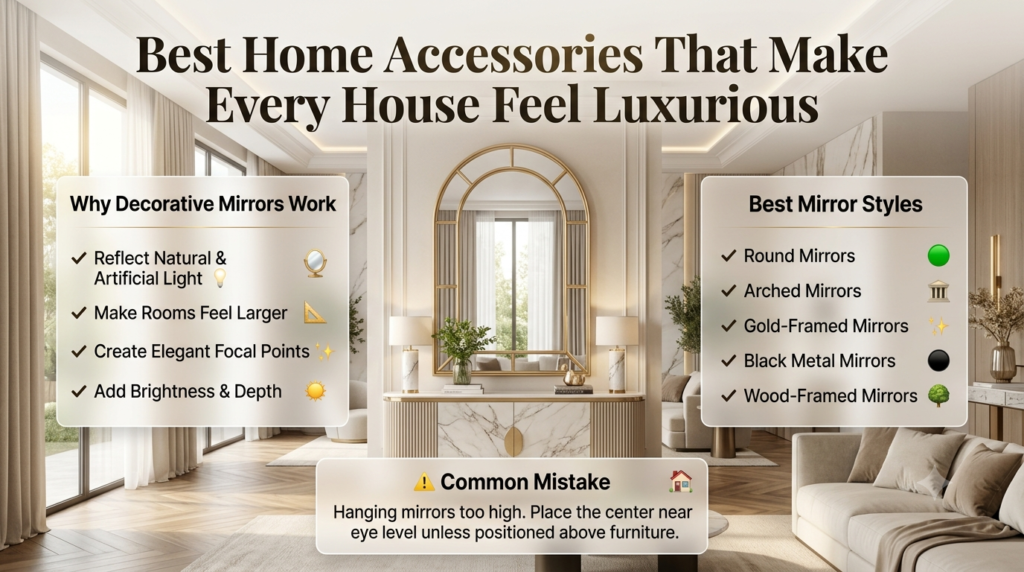
Decorative mirrors reflect light, create the illusion of more space, and become striking focal points. A well-placed mirror instantly makes a room feel brighter and more elegant.
Mirrors are one of the oldest tricks in interior design.
They’re especially useful in:
- Small living rooms
- Narrow hallways
- Entryways
- Dining rooms
- Bedrooms
Large mirrors bounce both natural and artificial light throughout the room, making interiors appear larger than they actually are.
Best Mirror Styles
| Style | Best For |
|---|---|
| Round mirrors | Modern homes |
| Arched mirrors | Luxury interiors |
| Gold-framed mirrors | Classic elegance |
| Black metal mirrors | Contemporary homes |
| Wood-framed mirrors | Farmhouse and rustic spaces |
Common Mistake
⚠ Common Mistake: Hanging mirrors too high.
The center of the mirror should generally align with eye level unless it’s positioned above furniture like a console table or fireplace.
2. Layered Lighting
Luxury homes rarely rely on a single ceiling light. Instead, they combine multiple light sources to create warmth, depth, and flexibility throughout the day.
Lighting dramatically changes how colors, furniture, and accessories appear.
Professional designers typically combine three types of lighting:
Ambient Lighting
Provides general illumination.
Examples:
- Ceiling fixtures
- Recessed lighting
- Chandeliers
Task Lighting
Supports specific activities.
Examples:
- Desk lamps
- Reading lights
- Kitchen pendants
Accent Lighting
Highlights decorative features.
Examples:
- Wall sconces
- Picture lights
- LED shelf lighting
- Table lamps
Layering these light sources creates a soft, welcoming atmosphere that feels far more luxurious than relying on one bright overhead fixture.
💡 Pro Tip: Choose warm white bulbs (around 2700K–3000K) for living rooms and bedrooms to create a cozy, upscale ambiance.
3. Luxury Curtains and Drapes
Floor-to-ceiling curtains instantly make windows appear larger and ceilings taller, adding elegance and softness to any room.
Curtains do much more than provide privacy.
They:
- Add texture
- Improve acoustics
- Frame windows beautifully
- Filter natural light
- Enhance comfort
Designer-inspired curtain choices include:
- Linen drapes
- Velvet curtains
- Layered sheer panels
- Neutral woven fabrics
- Blackout curtains for bedrooms
Designer Rules for Curtains
- Hang rods close to the ceiling.
- Extend rods beyond the window frame.
- Allow curtains to gently touch the floor.
- Choose fullness that’s 2–3 times the window width.
These simple techniques make windows appear significantly larger.
For additional window styling ideas, visit Room Design.
4. Decorative Throw Pillows
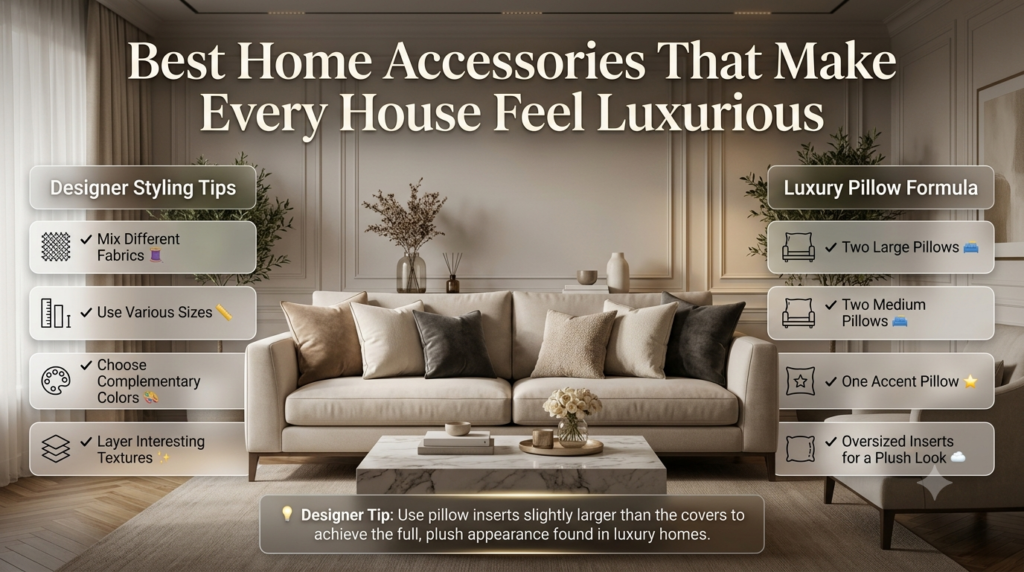
Throw pillows are one of the easiest ways to refresh a room, introduce texture, and make furniture look more luxurious.
Many people purchase pillow sets that are identical.
Professional designers rarely do.
Instead, they mix:
- Different fabrics
- Various sizes
- Complementary colors
- Interesting textures
Popular luxury fabrics include:
- Velvet
- Linen
- Bouclé
- Faux fur
- Cotton blends
Easy Pillow Formula
For a standard sofa:
- Two large pillows
- Two medium pillows
- One accent pillow
This arrangement creates balance without feeling overly formal.
Choose inserts that are slightly larger than the pillow cover to achieve the full, plush appearance seen in luxury homes.
5. Area Rugs
An area rug anchors furniture, defines spaces, improves comfort, and adds warmth. A properly sized rug can completely transform a room’s appearance.
One of the most common decorating mistakes is choosing a rug that’s too small.
Small rugs make rooms feel disconnected.
Instead, select a rug large enough for at least the front legs of all major furniture pieces to rest on it.
Rug Size Guide
| Room | Recommended Placement |
|---|---|
| Living Room | Front legs of sofas and chairs on rug |
| Dining Room | Chairs remain on rug when pulled out |
| Bedroom | Rug extends beyond both sides of bed |
| Entryway | Large enough to define the entrance |
Popular Luxury Rug Materials
- Wool
- Silk blends
- Cotton
- Jute
- High-quality synthetic fibers
Each material offers different benefits depending on durability, maintenance, and budget.
Well-chosen rugs also reduce noise and make hard flooring feel warmer underfoot.
6. Statement Artwork
Statement artwork gives a room personality, creates a focal point, and makes the space feel professionally designed. One large piece often has a greater impact than several small decorations scattered across a wall.
Artwork is one of the first things people notice when they enter a room. It reflects your personality while helping tie together your furniture, colors, and accessories.
You don’t need original paintings worth thousands of dollars. High-quality prints, framed photography, abstract canvases, or local artwork can look equally sophisticated when displayed properly.
Choosing the Right Artwork
Consider these factors before buying:
- Room size
- Wall dimensions
- Existing color palette
- Overall decorating style
- Frame material
- Lighting conditions
Popular Artwork Styles
| Style | Best For |
|---|---|
| Abstract Art | Modern and contemporary homes |
| Landscape Prints | Traditional interiors |
| Black & White Photography | Minimalist spaces |
| Botanical Art | Scandinavian and farmhouse designs |
| Textured Canvas | Luxury and transitional homes |
💡 Pro Tip: Instead of hanging multiple tiny frames, choose one oversized artwork above your sofa or bed. It creates a cleaner, more expensive look.
7. Decorative Trays
Decorative trays organize everyday items while making tables, countertops, and dressers look intentional rather than cluttered.
Professional designers rarely place accessories randomly.
Instead, they group objects together using trays.
A simple tray instantly transforms scattered items into a cohesive display.
Perfect places for decorative trays include:
- Coffee tables
- Kitchen islands
- Bathroom counters
- Bedroom dressers
- Entryway consoles
Coffee Table Styling Formula
Try combining:
- Small plant
- Candle
- Decorative object
- Coffee table book
Arrange everything on a beautiful tray to create a polished centerpiece.
Popular tray materials include:
- Marble
- Wood
- Glass
- Brass
- Woven rattan
8. Elegant Candles and Candle Holders
Candles bring warmth, fragrance, and soft lighting that instantly makes any room feel more inviting and luxurious.
Luxury hotels almost always use candles because they create a welcoming atmosphere.
Even when unlit, beautiful candles act as decorative accessories.
Look for candles made with:
- Soy wax
- Coconut wax
- Beeswax
- High-quality fragrance oils
Popular luxury scents include:
- Sandalwood
- Cedarwood
- White Tea
- Vanilla
- Bergamot
- Linen
- Amber
- Jasmine
Styling Tips
Mix candles with:
- Decorative books
- Small sculptures
- Flowers
- Trays
- Mirrors
Vary the heights to create visual balance.
⚠ Common Mistake: Using too many different scented candles in one room. Competing fragrances can become overwhelming.
9. Indoor Plants
Indoor plants soften interiors, improve visual balance, and introduce natural textures that make homes feel fresh and welcoming.
Nature is one of the easiest ways to create a luxury interior.
Large plants especially help fill empty corners while adding height and movement.
Popular choices include:
- Fiddle Leaf Fig
- Olive Tree
- Snake Plant
- Rubber Plant
- Monstera
- Bird of Paradise
- ZZ Plant
Choosing Plants by Room
| Room | Best Plants |
|---|---|
| Living Room | Monstera, Olive Tree |
| Bedroom | Snake Plant, Peace Lily |
| Bathroom | Ferns, Bamboo |
| Home Office | ZZ Plant, Pothos |
| Entryway | Fiddle Leaf Fig |
If maintaining live plants isn’t practical, invest in realistic artificial plants. Modern faux plants often look remarkably convincing.
For more decorating inspiration, explore Home Decor.
10. Coffee Table Books
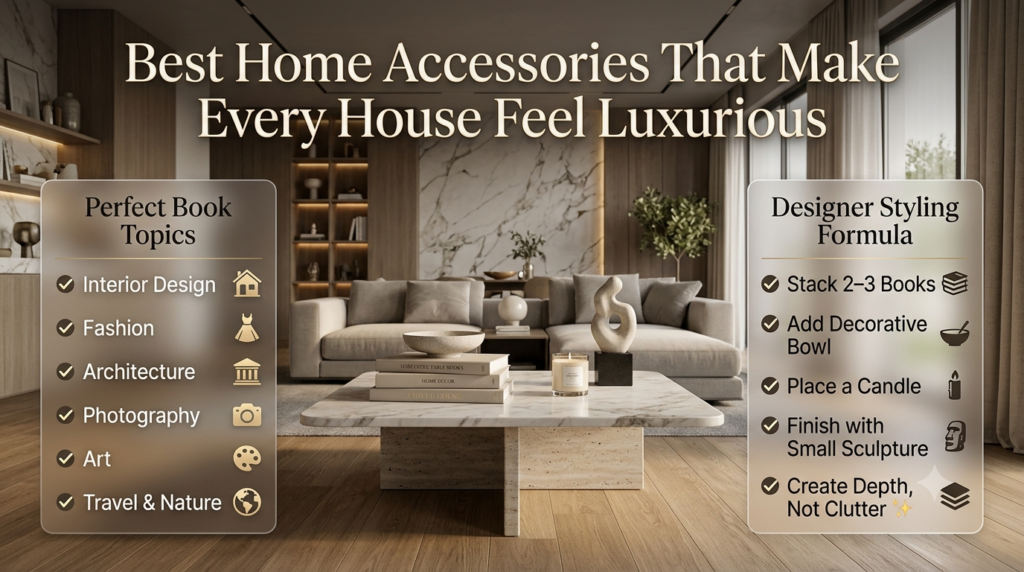
Coffee table books add sophistication while reflecting your interests, making them both decorative and conversational.
Large hardcover books immediately elevate coffee tables, consoles, and shelves.
Choose books about:
- Interior design
- Fashion
- Architecture
- Photography
- Art
- Travel
- Nature
Designer Styling Formula
Stack:
- Two or three books
- Decorative bowl
- Candle
- Small sculpture
The layered arrangement adds depth without appearing cluttered.
11. Decorative Vases
Decorative vases look beautiful with or without flowers and add sculptural interest throughout the home.
Luxury interiors rarely rely on flowers alone.
Empty ceramic or glass vases often serve as standalone art pieces.
Popular materials include:
- Ceramic
- Stone
- Glass
- Terracotta
- Porcelain
Try mixing:
- Tall vase
- Medium vase
- Small vase
Different heights naturally create balance.
Fresh greenery, dried branches, and pampas grass also work beautifully.
12. Metallic Accents
Metallic finishes reflect light and introduce subtle elegance without overwhelming a room.
Professional designers usually repeat one or two metal finishes throughout a space for consistency.
Popular finishes include:
- Brushed brass
- Matte black
- Polished nickel
- Antique bronze
- Chrome
Use metallic accents in:
- Lamp bases
- Mirror frames
- Cabinet hardware
- Picture frames
- Candle holders
- Decorative bowls
⭐ Expert Tip: Repeat the same metallic finish at least three times throughout a room. This creates a cohesive designer look.
13. Stylish Storage Baskets
Beautiful storage keeps everyday essentials organized while contributing to your home’s overall style.
Luxury homes appear calm because clutter is hidden.
Storage baskets help organize:
- Blankets
- Toys
- Magazines
- Laundry
- Pillows
- Shoes
Popular materials include:
- Wicker
- Rattan
- Cotton rope
- Leather
- Canvas
Organization itself becomes part of the décor.
14. Decorative Bowls and Sculptures
Small decorative objects fill empty surfaces without overwhelming them.
Popular decorative pieces include:
- Marble bowls
- Wooden sculptures
- Stone ornaments
- Crystal accessories
- Handcrafted ceramics
These accessories add personality while introducing texture and contrast.
When styling shelves, vary:
- Height
- Shape
- Material
- Color
Avoid placing identical objects side by side.
15. Luxury Throws and Blankets
A soft throw blanket makes a room feel warmer, cozier, and more inviting while adding texture to sofas and beds.
Luxury throws work well when casually draped instead of folded perfectly.
Choose fabrics like:
- Cashmere
- Wool
- Cotton
- Knit blends
- Faux fur
- Linen
Neutral colors remain timeless, while seasonal throws allow you to refresh your décor affordably.
Comparison Table: Which Home Accessories Have the Biggest Impact?
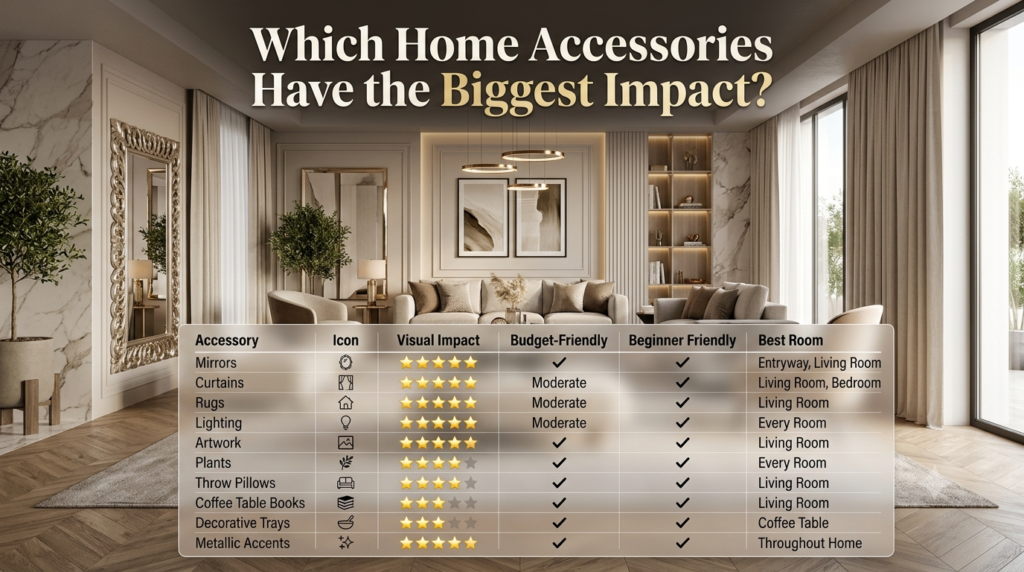
| Accessory | Visual Impact | Budget-Friendly | Beginner Friendly | Best Room |
|---|---|---|---|---|
| Mirrors | ⭐⭐⭐⭐⭐ | ✔ | ✔ | Entryway, Living Room |
| Curtains | ⭐⭐⭐⭐⭐ | Moderate | ✔ | Living Room, Bedroom |
| Rugs | ⭐⭐⭐⭐⭐ | Moderate | ✔ | Living Room |
| Lighting | ⭐⭐⭐⭐⭐ | Moderate | ✔ | Every Room |
| Artwork | ⭐⭐⭐⭐ | ✔ | ✔ | Living Room |
| Plants | ⭐⭐⭐⭐ | ✔ | ✔ | Every Room |
| Throw Pillows | ⭐⭐⭐⭐ | ✔ | ✔ | Living Room |
| Coffee Table Books | ⭐⭐⭐ | ✔ | ✔ | Living Room |
| Decorative Trays | ⭐⭐⭐ | ✔ | ✔ | Coffee Table |
| Metallic Accents | ⭐⭐⭐⭐ | ✔ | ✔ | Throughout Home |
How to Style Accessories Like an Interior Designer
Creating a luxurious home isn’t about buying more accessories—it’s about arranging them thoughtfully.
Step 1: Start with Large Items
Place larger accessories first, such as:
- Rugs
- Curtains
- Mirrors
- Artwork
These anchor the room.
Step 2: Add Medium-Sized Pieces
Next, introduce:
- Lamps
- Plants
- Storage baskets
- Floor vases
These build structure and balance.
Step 3: Finish with Small Accessories
Complete the look using:
- Candles
- Decorative bowls
- Sculptures
- Books
- Trays
Small accents provide the finishing touch.
Step 4: Vary Heights
Avoid arranging everything at the same height.
Instead combine:
Tall → Medium → Short
Example:
Tall Vase
     ▲

 Candle
    ▲

Decorative Bowl
      ▲
This creates natural visual movement.
Step 5: Leave Space
Not every surface needs decoration.
Empty space highlights your favorite pieces and prevents the room from feeling crowded.
📌 Quick Tip: If every shelf is full, remove 20–30% of the accessories. The remaining pieces will stand out more.
Expert Advice: Decorating Secrets Professionals Use
Experienced interior designers focus on quality over quantity. Rather than filling a room with inexpensive decorations, they invest in a few well-made accessories that create lasting impact.
Here are some professional techniques:
- Stick to a consistent color palette throughout your home.
- Repeat materials like wood, brass, or glass to create visual harmony.
- Mix smooth and textured surfaces for added depth.
- Layer lighting instead of relying on one overhead fixture.
- Display meaningful items instead of random decorations.
- Refresh accessories seasonally rather than redesigning entire rooms.
- Use oversized pieces where appropriate instead of many small ones.
- Prioritize symmetry in formal spaces and asymmetry in casual settings.
For more inspiration on furnishing your home beautifully, visit Furniture and Home Improvement Tips.
Common Mistakes That Prevent a Home from Looking Luxurious
Many decorating mistakes are easy to avoid once you know what to look for.
Buying Everything at Once
Rushing to decorate often leads to mismatched accessories.
Solution: Build your collection gradually.
Choosing Tiny Rugs
Small rugs make rooms feel disconnected.
Solution: Buy the largest rug your space and budget allow.
Hanging Artwork Too High
Artwork placed too close to the ceiling feels disconnected from the furniture.
Solution: Keep artwork at eye level or about 6–8 inches above furniture.
Ignoring Lighting
One bright ceiling fixture creates harsh shadows.
Solution: Layer ambient, task, and accent lighting.
Overdecorating Every Surface
Too many accessories create visual clutter.
Solution: Focus on a few quality pieces and leave breathing room.
Using Too Many Colors
A mix of unrelated colors makes rooms feel chaotic.
Solution: Choose a cohesive palette with two or three dominant colors.
What is the most cost-effective accessory to instantly make a living room look expensive?
The single most high-impact, budget-friendly accessory you can introduce is oversized, high-quality throw pillows with feather-down inserts. Flat, limp, or synthetic pillows immediately cheapen a space. High-end designers focus on scale and fill rather than price tag. Swapping standard 18×18-inch pillows for larger 22×22 or 24×24-inch covers in heavy, rich textures like linen, velvet, or bouclé creates an instant custom-built look. Crucially, choosing a feather or down-alternative insert allows you to do the designer “chop,” which creates a plump, inviting, and organic silhouette that mimics a luxury hotel lobby.
Size Up: Always buy pillow inserts that are 2 inches larger than your pillow covers for a stuffed, high-end look.
Textural Variety: Mix smooth velvet with chunky bouclé or raw linen rather than matching everything.
The Karate Chop: Give the top of the pillow a gentle downward strike to create a natural crease that signals luxury.
How do luxury homes use scent as a decor accessory?
Luxury is an all-sensory experience, and high-end homes treat scent as an invisible, foundational accessory. Instead of relying on cheap aerosol sprays or mass-market plug-ins—which omit synthetic, overwhelming chemical odors—high-end spaces utilize signature home fragrances delivered via reed diffusers and luxury poured candles. Designers strategically place heavy-bottomed glass reed diffusers in transitional spaces like entryways and hallways so the scent greets guests immediately. The trending luxury scent profile has shifted away from sweet, sugary notes toward earthy, complex combinations like amber, sandalwood, fig, cedarwood, and tobacco leaf.
Placement Strategy: Position diffusers at hip-height near natural airflow points (doors or windows) to circulate the scent.
Vessel Aesthetics: Choose candles in ceramic, concrete, or frosted glass vessels that double as sculptural decor when unlit.
Scent Families: Look for sophisticated “hotel-style” notes like oud, bergamot, leather, and smoked vetiver.
What role does hardware play in making a kitchen or bathroom feel upscale?
In interior design, hardware is widely recognized as the “jewelry of the room.” Replacing builder-grade, lightweight cabinet pulls and faucets with solid, unlacquered brass or matte black statement hardware is the ultimate shortcut to luxury. High-end hardware is distinguished by its weight, tactile feel, and craftsmanship, such as knurled or reeded textures. Unlacquered brass is particularly trending because it develops a natural patina over time, giving a home a sense of history, authenticity, and old-world luxury that modern, shiny finishes simply cannot replicate.
Tactile Texture: Choose knurled (cross-hatched) or reeded handles to add a tactile, engineered feel to cabinet doors.
Scale and Proportion: Opt for longer pulls (6 to 8 inches or more) rather than small, standard knobs to create a cleaner, modern line.
Finish Continuity: Keep metals consistent within the same visual field—your faucet, cabinet pulls, and light fixtures should harmonize.
How can I use lighting accessories to create a high-end atmosphere without rewiring?
Luxury homes avoid relying on harsh, overhead “boob lights” or recessed ceiling cans. Instead, they use a technique called “low-level ambient layering,” which can be achieved entirely through plug-in accessories. Introducing cordless, rechargeable LED lamps and oversized statement table lamps allows you to diffuse warm light at eye level. Placed on sideboards, kitchen counters, or bookshelves, these fixtures eliminate dark corners and cast a soft, flattering glow. The current trend focuses on lamps made from organic, heavy materials like travertine, alabaster, or pleated fabric shades that diffuse light warmly.
Warm Color Temperature: Always equip your luxury lamps with bulbs rated between 2700K and 3000K for a warm, amber glow.
Cordless Freedom: Use rechargeable, wireless mini-lamps on kitchen islands, bar carts, or deep shelves where outlets aren’t available.
Shade Materials: Choose linen or pleated paper shades to soften the glare and add an extra layer of upscale texture.
What type of window treatments give a room a custom, high-end look?
The difference between a basic room and a luxury room often comes down to how the window drapery is hung. Ready-made, lightweight polyester curtains that stop short of the floor look cheap. To achieve a luxury look, opt for floor-to-ceiling, heavy-weight linen or cotton blend drapery panels hung on a hidden or architectural rod. Designers use the “high and wide” rule: mount the curtain rod as close to the ceiling as possible (not right above the window frame) and extend the rod 10 to 12 inches past the sides of the window. This tricks the brain into thinking the ceilings are soaring and the windows are massive.
The “Kiss” or “Puddle”: Ensure curtains either perfectly “kiss” the floor or puddle slightly (1 to 2 inches) for a romantic, custom look.
Hang High and Wide: Mount your curtain rod 4 to 6 inches below the ceiling line to visually maximize your wall height.
Incorporate Lining: Look for curtains with a blackout or privacy lining; the extra weight makes the fabric drape in clean, heavy pleats.
Conclusion
Creating a luxurious home doesn’t require an unlimited budget or a complete renovation. More often than not, it’s the carefully chosen accessories and thoughtful styling that transform an ordinary space into one that feels elegant, comfortable, and timeless.
From statement mirrors and layered lighting to plush rugs, decorative trays, coffee table books, indoor plants, and beautifully styled textiles, every accessory plays a role in adding warmth, texture, and personality. The secret is to focus on quality over quantity, maintain a cohesive color palette, and arrange décor with purpose instead of filling every available space.
Remember, luxury is as much about how a home feels as how it looks. A well-organized room with balanced lighting, meaningful décor, and a few standout pieces will always leave a stronger impression than one filled with unnecessary decorations.
As you refresh your home, take it one room at a time. Invest in timeless accessories, experiment with layering textures and materials, and don’t be afraid to edit your décor as your style evolves. Small, intentional changes can have a remarkable impact, helping your home feel more welcoming, refined, and uniquely yours.
For more decorating ideas, styling inspiration, and practical renovation advice, explore our Home Decor, Interior Design, Room Design, and the Home Improvement Tips homepage to continue creating a home you’ll love for years to come.