

Imagine spending thousands of dollars on a home renovation, only to discover halfway through the project that you’ve exceeded your budget, chosen the wrong materials, or forgotten an important repair. Unfortunately, this happens to many homeowners every year—not because they lacked enthusiasm, but because they skipped proper planning.
Whether you’re updating a single room or transforming your entire home, having a clear renovation strategy can save you time, money, and stress. A successful remodel isn’t just about beautiful finishes; it’s about smart budgeting, realistic planning, and avoiding expensive mistakes before they happen.
In this Home Renovation Guide: Budget, Planning & Mistakes to Avoid, you’ll learn how to set a practical renovation budget, create a step-by-step plan, prioritize projects, avoid common pitfalls, and make informed decisions from start to finish. You’ll also find expert advice, practical examples, comparison tables, and helpful checklists designed to keep your renovation on track.
If you’re planning your first renovation—or simply want to improve the way you approach your next project—this guide will help you renovate with confidence.
What Is Home Renovation?
Home renovation means improving an existing home by repairing, remodeling, replacing, or upgrading different areas. Renovations can range from painting a bedroom to remodeling an entire kitchen or adding new living space. The goal is to create a safer, more comfortable, attractive, and valuable home.
Home renovation involves making improvements that enhance the way your home looks, functions, and feels. Unlike building a new house, renovation focuses on upgrading what already exists while preserving the property’s structure whenever possible.
Some projects are purely cosmetic, while others improve safety, energy efficiency, or long-term durability.
Common renovation projects include:
- Kitchen remodeling
- Bathroom upgrades
- Flooring replacement
- Interior painting
- Roof replacement
- Window upgrades
- Smart home installation
- Exterior improvements
- Basement finishing
- Outdoor living spaces
Each project comes with different costs, timelines, and levels of complexity. Understanding the scope of your renovation before starting helps prevent unnecessary surprises later.
If you’re planning to refresh your living spaces, you may also find inspiration in Interior Design and Home Decor ideas that complement your renovation goals.
Renovation vs. Remodeling vs. Remodeling Repair
Many homeowners use these terms interchangeably, but they have different meanings.
| Project Type | Purpose | Example |
|---|---|---|
| Renovation | Improve or restore existing features | New flooring, fresh paint |
| Remodeling | Change layout or structure | Removing walls for an open floor plan |
| Repair | Fix damaged components | Repairing a leaking roof |
| Restoration | Return a home to its original condition | Restoring a historic property |
Knowing the difference helps you estimate costs more accurately and communicate clearly with contractors.
💡 Pro Tip
Start by defining whether your project is a renovation, remodel, or repair. This simple step helps you estimate costs, choose the right professionals, and avoid unrealistic expectations.
Why Planning Matters Before Renovating
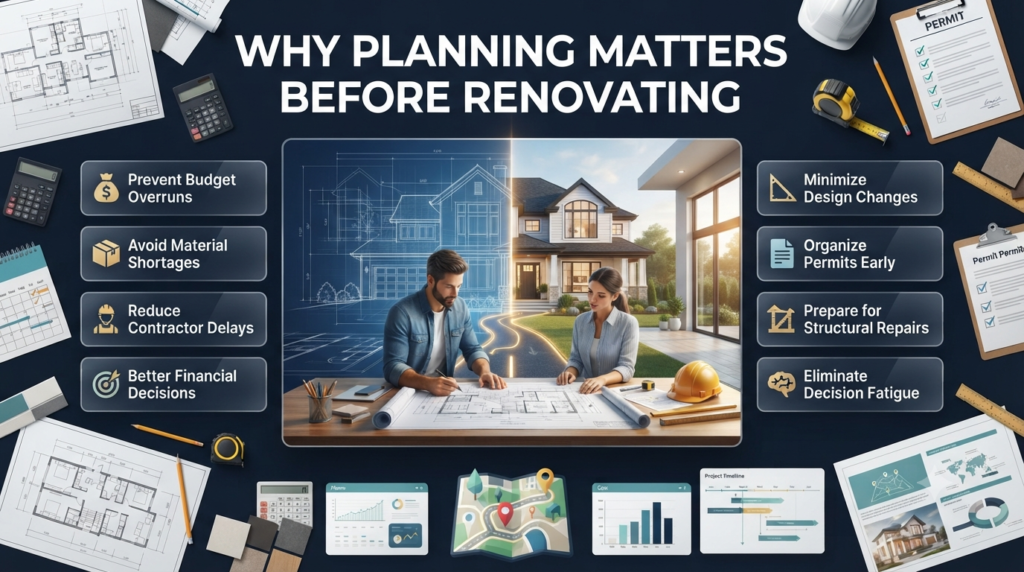
Planning before renovation reduces unexpected costs, shortens project timelines, prevents design mistakes, and helps homeowners make better financial decisions. A well-planned renovation keeps every stage organized, making it easier to stay within budget while achieving the desired results.
Many renovation problems don’t happen during construction—they begin months earlier because of poor planning.
Without a detailed plan, homeowners often face:
- Budget overruns
- Material shortages
- Contractor delays
- Design changes midway
- Permit issues
- Unexpected structural repairs
- Decision fatigue
Good planning allows you to solve these issues before work begins.
Think of renovation like planning a long road trip. If you know your destination, route, budget, and possible obstacles, the journey becomes much smoother.
Benefits of Planning Ahead
Proper planning offers several advantages:
Better Financial Control
Creating a realistic budget helps you allocate funds wisely and reduces the risk of running out of money before the project is complete.
Faster Project Completion
Ordering materials early and scheduling contractors in advance minimizes delays.
Higher Quality Results
Taking time to compare materials and finishes often leads to better long-term value rather than rushed decisions.
Reduced Stress
Knowing what happens next removes much of the uncertainty that makes renovations overwhelming.
Better Return on Investment
Thoughtful renovations can improve comfort while increasing resale value.
Projects with strong ROI often include:
- Kitchen updates
- Bathroom improvements
- Energy-efficient windows
- Modern lighting
- Exterior enhancements
- Landscaping
For ideas that improve curb appeal, explore Exterior Design and Landscaping resources.
⭐ Expert Tip
Professional contractors rarely begin demolition before finalizing budgets, material selections, and timelines. Homeowners should adopt the same disciplined approach to avoid costly mid-project changes.
How to Create a Home Renovation Budget
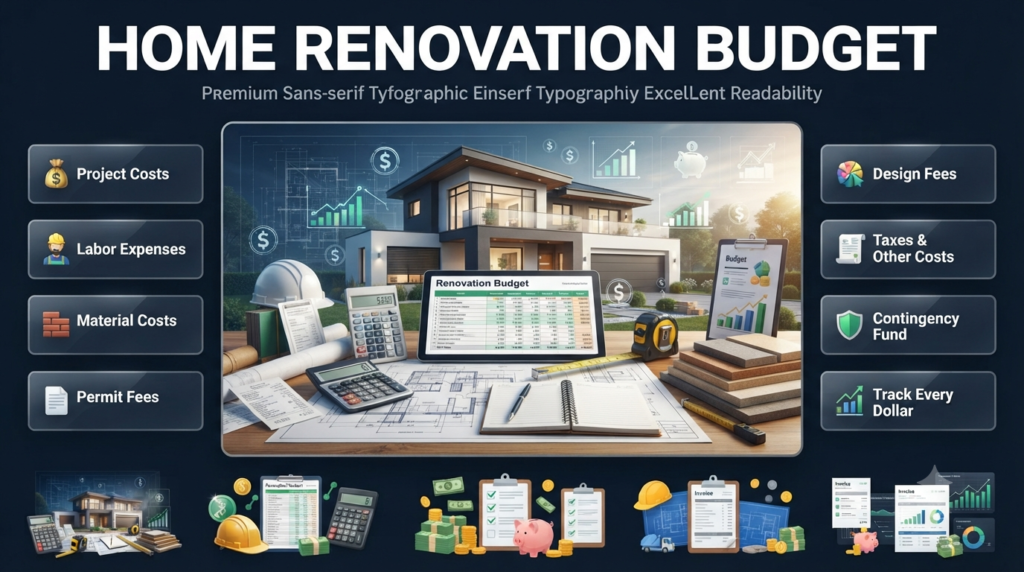
A home renovation budget should include project costs, labor, materials, permits, design fees, taxes, and a contingency fund for unexpected expenses. Breaking your budget into categories helps you monitor spending, prioritize upgrades, and avoid running out of money before the renovation is complete.
Budgeting isn’t about guessing how much you’ll spend.
It’s about understanding exactly where every dollar goes.
The best renovation budgets include both expected and unexpected costs.
Step 1: Define Your Renovation Goals
Start by asking yourself:
- What problems am I trying to solve?
- Which rooms need attention first?
- What upgrades are essential?
- Which improvements can wait?
Your answers will determine how your budget should be divided.
For example:
Instead of saying,
“I want a nicer kitchen.”
Say,
“I want better storage, improved lighting, durable countertops, and energy-efficient appliances.”
Specific goals produce better budgeting decisions.
Step 2: Research Average Costs
Every renovation project has a different price range depending on:
- Home size
- Material quality
- Labor costs
- Local market
- Structural work
- Custom features
Never rely on a single estimate.
Instead:
- Compare multiple contractor quotes.
- Visit local suppliers.
- Check recent renovation projects in your area.
- Build your budget using realistic averages.
Step 3: Separate Needs From Wants
One of the smartest budgeting techniques is prioritization.
| Needs | Wants |
|---|---|
| Roof repairs | Designer fixtures |
| Electrical upgrades | Premium wallpaper |
| Plumbing repairs | Luxury appliances |
| Structural repairs | Decorative ceiling designs |
| Insulation | Smart mirrors |
This approach ensures critical work is completed before cosmetic upgrades.
Step 4: Add a Contingency Fund
Unexpected expenses are common in renovation projects.
You might discover:
- Water damage
- Mold
- Outdated wiring
- Plumbing leaks
- Foundation issues
- Termite damage
Most professionals recommend reserving 10–20% of your total renovation budget for unforeseen costs.
For example:
| Planned Budget | Recommended Contingency |
|---|---|
| $10,000 | $1,000–$2,000 |
| $25,000 | $2,500–$5,000 |
| $50,000 | $5,000–$10,000 |
| $100,000 | $10,000–$20,000 |
Having this financial cushion helps prevent stressful decisions if unexpected repairs arise.
📌 Quick Tip
Track every renovation expense in a spreadsheet or budgeting app from day one. Small purchases like screws, paint brushes, delivery fees, and disposal costs can add up surprisingly fast.
Sample Home Renovation Budget Breakdown
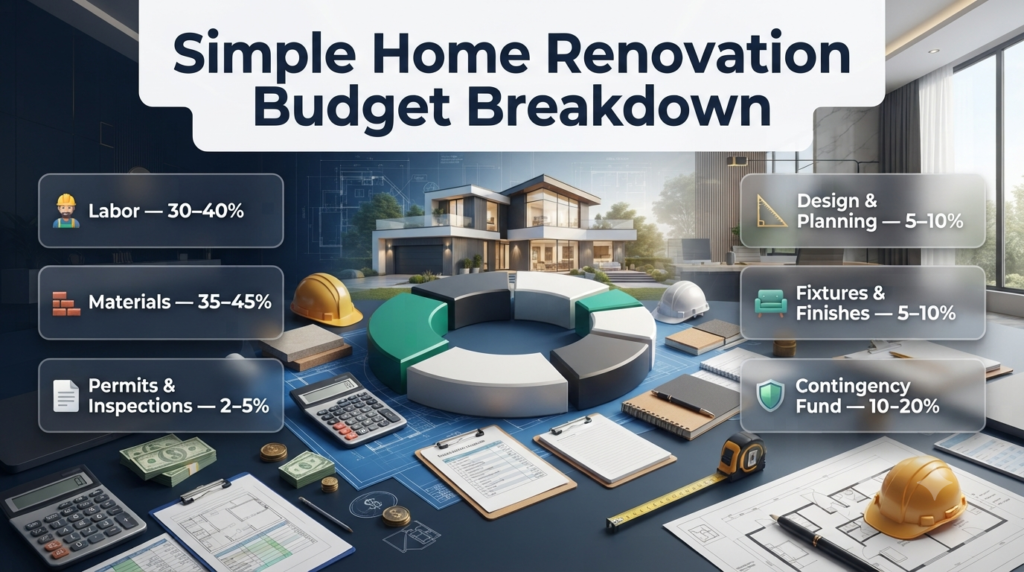
A simple budget framework can help you stay organized throughout your project.
| Budget Category | Suggested Share |
|---|---|
| Labor | 30–40% |
| Materials | 35–45% |
| Permits & Inspections | 2–5% |
| Design & Planning | 5–10% |
| Fixtures & Finishes | 5–10% |
| Contingency Fund | 10–20% |
The exact percentages will vary depending on your home’s condition and the type of renovation, but this structure provides a reliable starting point.
Mini Renovation Budget Flow
Set Goals
     │
     ▼
Estimate Costs
     │
     ▼
Get Contractor Quotes
     │
     ▼
Prioritize Needs
     │
     ▼
Add 10–20% Contingency
     │
     ▼
Track Spending Weekly
⚠ Common Mistake
Many homeowners spend most of their budget on visible finishes like flooring, cabinets, or countertops before addressing hidden issues such as electrical systems, plumbing, or insulation. If unexpected repairs are discovered later, they may be forced to cut corners or exceed their budget. Always prioritize structural and safety-related work before cosmetic upgrades.
Step-by-Step Home Renovation Planning Guide
A successful home renovation starts with setting clear goals, creating a realistic budget, prioritizing projects, designing your space, hiring qualified professionals, ordering materials early, and following a structured timeline. Breaking the project into manageable stages helps reduce delays, control costs, and improve the final outcome.
Planning isn’t just about making lists—it’s about making smart decisions before the first wall is painted or the first tile is installed.
Professional contractors rarely “figure it out as they go.” They follow a proven process, and homeowners can benefit from doing the same.
Step 1: Define Your Renovation Goals
Before spending any money, decide exactly what success looks like.
Ask yourself:
- Why am I renovating?
- What problems need to be solved?
- Which improvements will add the most value?
- Is this my forever home or am I planning to sell?
- What’s my maximum budget?
Your renovation goals will influence every decision that follows.
Example
Instead of saying:
❌ “I want a modern kitchen.”
Say:
✅ “I need more storage, better lighting, a larger island, durable countertops, and energy-efficient appliances.”
The second goal is measurable and easier to budget.
💡 Pro Tip
Create two lists:
Must-Have
- Electrical safety
- Roof repair
- Kitchen cabinets
- Plumbing upgrades
Nice-to-Have
- Wine cooler
- Premium backsplash
- Smart refrigerator
- Decorative lighting
If your budget becomes tight, you’ll know what can wait.
Step 2: Inspect Your Home Before Renovating
Inspecting your home before renovation helps identify hidden problems such as water damage, foundation cracks, mold, outdated wiring, or plumbing leaks. Fixing these issues first prevents expensive repairs later and protects the quality of your renovation investment.
Many homeowners focus on finishes while ignoring what lies behind the walls.
That mistake can become very expensive.
Inspect:
- Roof
- Plumbing
- Electrical system
- HVAC
- Windows
- Foundation
- Drainage
- Insulation
- Flooring
- Exterior walls
If you’re unsure, consider hiring a professional inspector before finalizing your renovation plan.
Home Inspection Checklist
| Area | What to Check |
|---|---|
| Roof | Missing shingles, leaks |
| Plumbing | Pipe leaks, water pressure |
| Electrical | Old wiring, overloaded circuits |
| HVAC | System age, airflow |
| Foundation | Cracks or movement |
| Windows | Drafts, broken seals |
| Exterior | Siding damage, moisture |
| Insulation | Energy efficiency |
⭐ Expert Tip
Professionals fix structural issues before cosmetic upgrades. A beautiful kitchen won’t stay beautiful if hidden plumbing problems cause water damage later.
Step 3: Create a Renovation Timeline
Without a timeline, projects often stretch from weeks into months.
A realistic schedule helps everyone stay on track.
Sample Timeline
| Week | Tasks |
|---|---|
| 1 | Planning & budgeting |
| 2 | Design decisions |
| 3 | Contractor selection |
| 4 | Permits |
| 5 | Material ordering |
| 6–8 | Demolition |
| 8–14 | Construction |
| 15–16 | Painting & flooring |
| 17 | Final inspection |
| 18 | Cleanup & move-in |
Remember that delays happen.
Weather, shipping issues, labor shortages, and permit approvals can all affect your schedule.
Always allow extra time.
📌 Quick Tip
Avoid scheduling your renovation around important family events, holidays, or vacations. Unexpected delays are common, and giving yourself flexibility can significantly reduce stress.
Hiring the wrong contractor is one of the biggest reasons renovations fail.
Before signing a contract:
✔ Verify licenses
✔ Check insurance
✔ Read online reviews
✔ Ask for references
✔ Review previous projects
✔ Compare detailed estimates
✔ Understand payment schedules
⚠ Common Mistake
Never pay the full project cost upfront. A reasonable payment schedule tied to project milestones protects both you and the contractor.
Room-by-Room Renovation Priorities
Not every room delivers the same return on investment.
If your budget is limited, prioritize wisely.
| Room | Priority | ROI Potential |
|---|---|---|
| Kitchen | Very High | Excellent |
| Bathroom | Very High | Excellent |
| Living Room | High | Good |
| Bedroom | Medium | Moderate |
| Exterior | High | Excellent |
| Basement | Medium | Good |
| Garage | Low–Medium | Moderate |
Kitchen and bathroom renovations often provide the greatest balance between everyday enjoyment and resale value.
If you’re looking for layout inspiration, browse Room Design or Interior Design before making final decisions.
DIY vs. Hiring Professionals
DIY projects can save money on simple cosmetic improvements, while licensed professionals are better suited for structural work, plumbing, electrical systems, roofing, and major remodeling. Choosing the right approach depends on your skills, the project’s complexity, and the risks involved.
Many homeowners enjoy DIY projects.
But knowing your limits can save thousands of dollars.
DIY Projects
Suitable for:
- Painting
- Installing shelves
- Landscaping
- Basic decorating
- Cabinet hardware
- Wallpaper
- Minor repairs
Explore creative ideas in DIY Crafts and Home Decor for beginner-friendly projects.
Professional Projects

Better left to experts:
- Electrical work
- Plumbing
- Foundation repairs
- Roofing
- HVAC installation
- Structural walls
- Gas lines
- Major kitchen remodels
These jobs often require permits, specialized tools, and technical expertise.
DIY vs Professional Comparison
| DIY | Professional |
|---|---|
| Lower cost | Higher quality |
| Flexible schedule | Faster completion |
| Learn new skills | Warranty protection |
| Good for simple work | Better for complex projects |
| Risk of mistakes | Lower long-term risk |
Smart Ways to Save Money Without Sacrificing Quality
Saving money doesn’t mean choosing the cheapest materials.
It means spending wisely.
Here are proven strategies professionals use:
Buy Materials During Seasonal Sales
Major retailers often discount flooring, appliances, and fixtures during holiday sales or end-of-season clearances.
Reuse What Still Works
Instead of replacing everything:
- Refinish cabinets
- Paint existing doors
- Upgrade cabinet handles
- Restore hardwood flooring
- Repaint furniture
You can also refresh your interiors with ideas from Furniture and Home Decor.
Keep the Existing Layout
Moving plumbing or electrical systems can significantly increase labor costs.
If the current layout functions well, updating finishes instead of relocating utilities can save a substantial amount.
Compare Multiple Quotes
Never accept the first estimate.
Compare:
- Scope of work
- Material quality
- Labor costs
- Warranty
- Timeline
The cheapest quote isn’t always the best value.
Invest in Energy Efficiency
Although efficient windows, insulation, and LED lighting may cost more initially, they can reduce utility bills and improve comfort over time.
Learn more about energy-conscious upgrades in Home Improvement Tips.
⭐ Expert Tip
Spend more on items that are difficult or expensive to replace later—such as flooring, plumbing, insulation, and windows. Decorative items like light fixtures or paint colors can always be updated in the future.
Home Renovation Decision Table
| Situation | Best Choice |
|---|---|
| Limited budget | Renovate one room at a time |
| Planning to sell soon | Focus on kitchen, bathroom, and curb appeal |
| Forever home | Prioritize comfort and durability |
| Older home | Inspect structure before cosmetic upgrades |
| DIY beginner | Stick to painting and décor |
| Large renovation | Hire a project manager or experienced contractor |
Mini Renovation Planning Flow

Set Goals
     │
     ▼
Inspect Home
     │
     ▼
Create Budget
     │
     ▼
Prioritize Projects
     │
     ▼
Hire Contractor
     │
     ▼
Order Materials
     │
     ▼
Start Renovation
     │
     ▼
Final Inspection
Common Home Renovation Mistakes to Avoid
The most common home renovation mistakes include setting an unrealistic budget, skipping proper planning, hiring contractors based only on price, ignoring hidden repairs, choosing trendy materials over durable ones, and making frequent design changes during construction. Avoiding these mistakes saves time, money, and unnecessary stress.
Even experienced homeowners make renovation mistakes. The good news is that most of them are preventable with careful planning and informed decisions.
1. Starting Without a Clear Plan
Beginning demolition before finalizing your design, budget, and material selections often leads to delays and expensive changes.
Why It Happens
- Excitement to start quickly
- Underestimating project complexity
- Lack of preparation
Why It’s Harmful
- Increased labor costs
- Material waste
- Longer project timelines
How to Avoid It
Complete your planning before any work begins. Confirm measurements, choose materials, and create a realistic schedule.
⚠ Common Mistake
Changing your mind halfway through a renovation is one of the fastest ways to increase costs. Every design change can affect labor, materials, and project deadlines.
2. Underestimating the Budget
Many homeowners only calculate visible expenses and forget about permits, demolition, disposal fees, delivery charges, or hidden repairs.
Best Practice
Include a contingency fund of 10–20% for unexpected costs.
3. Choosing the Cheapest Contractor
The lowest quote isn’t always the best value.
A contractor with limited experience may:
- Miss deadlines
- Use lower-quality materials
- Produce poor workmanship
- Require costly repairs later
Instead, compare experience, references, warranties, communication, and detailed estimates—not just price.
4. Ignoring Structural Problems
Fresh paint won’t solve foundation cracks or leaking pipes.
Always repair:
- Roofing issues
- Plumbing leaks
- Electrical hazards
- Water damage
- Mold
- Structural weaknesses
These should take priority over cosmetic improvements.
5. Following Trends Instead of Your Lifestyle
Trendy designs can become outdated quickly.
Ask yourself:
- Will this still look good in 10 years?
- Is it practical for my family?
- Is it easy to maintain?
Choose timeless materials for permanent features and use décor to introduce current trends.
6. Buying Low-Quality Materials
Cheap flooring, cabinets, or fixtures may save money initially but often require replacement much sooner.
Focus on long-term value rather than the lowest upfront cost.
7. Forgetting Storage
Beautiful spaces lose functionality when storage is overlooked.
Include:
- Built-in cabinets
- Pantry shelving
- Closet organizers
- Garage storage
- Multi-purpose furniture
Browse practical ideas in Furniture and Room Design.
8. Neglecting Energy Efficiency
Modern renovations should improve comfort as well as appearance.
Consider:
- LED lighting
- Better insulation
- Energy-efficient windows
- Smart thermostats
- Water-saving fixtures
These upgrades can lower utility bills while increasing your home’s value.
Expert Advice: Renovation Tips Professionals Swear By
Successful renovations aren’t about spending the most money—they’re about making smart decisions.
Here are practical recommendations used by experienced professionals:
⭐ Plan every room before purchasing materials.
⭐ Order long-lead items, such as cabinets and custom windows, well in advance.
⭐ Keep a detailed renovation file with contracts, receipts, warranties, and product information.
⭐ Photograph plumbing and electrical systems before closing walls. These photos can be invaluable for future repairs.
⭐ Visit the project regularly and communicate openly with your contractor.
⭐ Choose durable materials for high-traffic areas instead of focusing only on appearance.
⭐ Invest in quality insulation and ventilation to improve comfort and reduce energy costs.
⭐ Think about how your family’s needs may change over the next five to ten years before finalizing your design.
💡 Pro Tip
A successful renovation balances beauty, functionality, durability, and budget. If you have to compromise, prioritize structural quality and everyday usability over decorative upgrades.
How do I accurately calculate a home renovation budget without hidden costs?
Most homeowners fail their budgets because they plan for the best-case scenario instead of reality. A professional budget requires breaking the project down into hard costs (materials, fixtures) and soft costs (permits, architectural fees, delivery charges). The absolute golden rule of renovation budgeting is the contingency fund. You must automatically deduct 15% to 20% of your total available cash and set it aside for “hidden surprises” like outdated wiring, rot behind walls, or plumbing code violations. If you do not see it, you cannot budget for it perfectly, so expect the unexpected.
Line-Item Detail: Create a spreadsheet itemizing every single knob, tile, and labor hour rather than estimating by the room.
The 20% Rule: Always allocate one-fifth of your total budget strictly for structural surprises or delivery delays.
Labor vs. Materials: Expect labor to consume roughly 45% to 50% of your total project cost.
What is the correct chronological order of steps when planning a whole-house renovation?
Inverting the renovation sequence is the fastest way to flush money down the drain. You cannot paint before drywall, and you should never install beautiful new hardwood floors before ripping out old plumbing. A successful renovation follows a strict “inside-out, top-bottom” sequence. Planning starts with design and permits, followed by structural demolition. Next comes the “rough-in” phase (electrical, plumbing, HVAC) while the walls are open. Only after these systems pass inspection do you close the walls, paint, and finish with flooring and fixtures.
Design & Permitting: Secure all architectural plans and local city approvals before buying a single hammer.
Structural & Mechanical Rough-Ins: Complete framing, plumbing, and electrical work while the wall cavities are fully exposed.
Closing & Finishes: Install insulation and drywall, paint the walls, lay the flooring, and install final trim and cabinetry last.
Which home renovations offer the highest Return on Investment (ROI)?
From a resale perspective, not all renovations are created equal. Highly personalized projects, like adding a luxury home theater or a backyard swimming pool, frequently offer terrible returns. Conversely, functional upgrades that improve energy efficiency or curb appeal consistently top the ROI charts. Modernizing a dated kitchen or primary bathroom yields the highest emotional and financial return, but even minor upgrades like replacing an old garage door or upgrading to fiber-cement siding can recover over 80% to 90% of their costs at resale.
Kitchen and Bath Minor Remodels: Focus on cosmetic upgrades like refacing cabinets and replacing countertops for a 70-80% ROI.
Curb Appeal Enhancements: Replacing old front doors, garage doors, or manufactured stone veneer yields nearly a 90% cost recovery.
HVAC & Insulation Upgrades: Buyers heavily prioritize energy-efficient homes with updated, lower-utility-cost systems.
What are the most common renovation mistakes that ruin budgets and timelines?
The single biggest mistake homeowners make is hiring the cheapest contractor based solely on a lowball bid. This almost always leads to change orders, delays, or subpar work that costs double to fix later. Another major timeline killer is “scope creep”—changing your mind about a tile pattern or a wall placement midway through construction. Every single change order stops production, requires new materials, and pushes your completion date back by weeks.
Hiring on Price Alone: Cheap bids often omit essential costs that reappear later as mandatory, expensive change orders.
Changing Designs Mid-Project: Altering plans during active construction causes a domino effect of labor delays and material waste.
Ignoring Local Permits: Skipping permits can halt your project via city fines and make your home incredibly difficult to sell legally.
How do I properly vet and choose a reliable general contractor?
Never rely on a contractor’s website testimonials alone; those are curated assets. To truly vet a professional, you need to check their active liability insurance, worker’s compensation compliance, and state licensing board for past complaints. Ask for three references from projects completed within the last 12 months, and actually call them. When evaluating bids, make sure they are “apples-to-apples.” A vague bid that says “remodel kitchen: $30,000” is a massive red flag. You want a detailed scope of work outlining specific materials, milestones, and payment terms.
Verification Check: Confirm active licenses and comprehensive general liability insurance directly with the issuing bodies.
Past Client Interviews: Ask references specifically about the contractor’s punctuality, communication style, and cleanliness.
Milestone-Based Contracts: Never pay more than 10-15% upfront; tie subsequent payments strictly to verified stages of completed work.
Conclusion
A successful home renovation doesn’t begin with demolition—it begins with thoughtful planning.
By setting clear goals, creating a realistic budget, prioritizing essential repairs, and choosing quality materials and experienced professionals, you can avoid many of the costly mistakes that frustrate homeowners. Every decision you make before construction starts has a direct impact on the final result.
Remember that renovation is more than improving appearances. It’s an opportunity to create a home that better suits your lifestyle, improves comfort, increases efficiency, and adds long-term value. Whether you’re updating a single room or transforming your entire property, patience, preparation, and informed decision-making will help you achieve results you’ll enjoy for years to come.
For more inspiration and practical advice, explore additional resources on Home Improvement Tips, Interior Design, Home Decor, Exterior Design, Landscaping, Outdoor & Garden, or visit the Home Page to browse all available categories.